
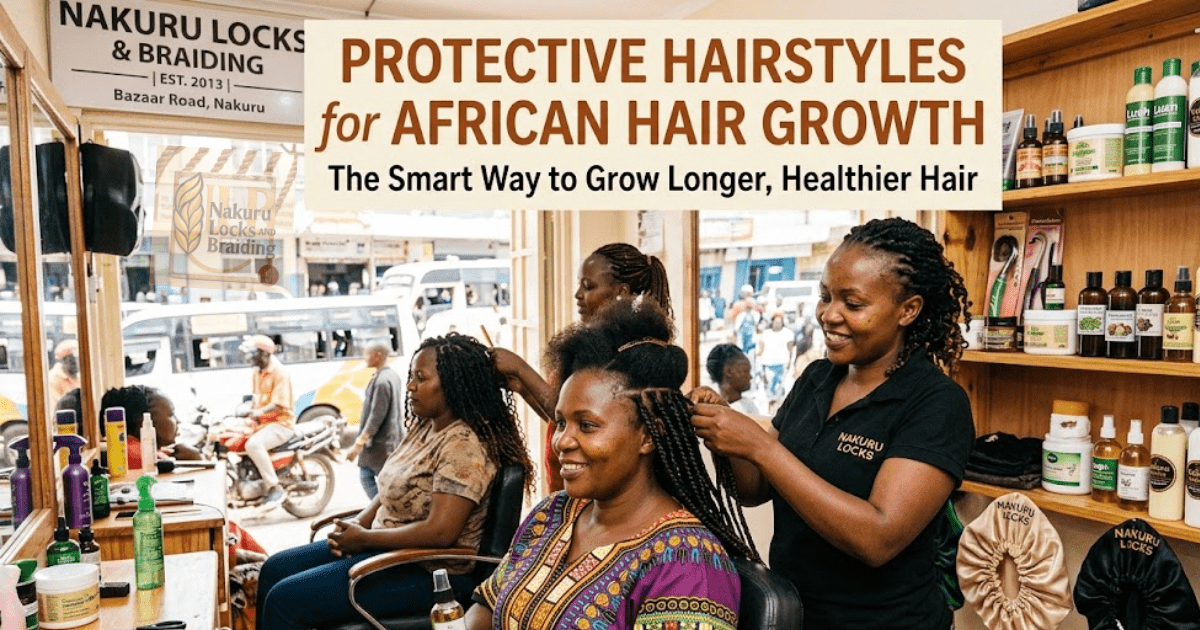
Protective Hairstyles for African Hair Growth: The Smart Way to Grow Longer, Healthier Hair
Best protective hairstyles for African Black hair growth, low maintenance protective hairstyles, braids with attachments, and the most protective hairstyle for African hair – real Nakuru salon insights.
It was a warm Saturday morning in Nakuru. The sun was already high, and the salon at Mt. Sinai Building on Bazaar Road was alive with the soft hum of conversation, the click of crochet hooks, and the scent of shea butter mixed with fresh peppermint oil. Outside, bodas zipped past while women shared stories of weddings, new jobs, and the eternal quest for longer, healthier hair.
Then Mama Akinyi walked in. A teacher in her late 30s from Lanet, she had been battling breakage and thinning edges for years after years of tight weaves and relaxers. She sat down, removed her scarf, and looked at me with tired but hopeful eyes.
“Ann,” she said, “I want length. But I’m scared of more damage. What are the best protective hairstyles for African Black hair growth that won’t destroy my edges? I need something low maintenance that actually works in this heat and dust.”
That question is one we hear almost every week at Nakuru Locks and Braiding. After 13 years braiding in Nakuru, I’ve seen protective hairstyles transform not just hair, but confidence. They are the smartest, most effective way to retain length and promote healthy growth for African hair.
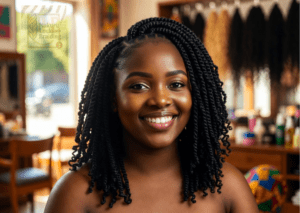
What Are Protective Hairstyles for African Hair Growth?
Protective hairstyles are styles that minimize daily manipulation, tuck away fragile ends, and shield natural hair from environmental damage (sun, dust, wind, and friction). For African hair — especially tight coils and kinks common in Kenya — they are essential because the hair’s structure makes it prone to dryness and breakage.
At Nakuru Locks and Braiding, we’ve observed that clients who consistently use proper protective hairstyles for African hair growth retain 30–50% more length over 12 months compared to those who wear their hair loose daily. The key is choosing styles that are low-tension and moisture-friendly.
Best Protective Hairstyles for African Black Hair Growth
1. Knotless Box Braids & Feed-In Braids
These are among the most protective hairstyles for African Black hair growth because they start with your own hair (no knots at the root), reducing tension dramatically. They last 6–10 weeks and allow easy scalp access for moisturizing. Many of our clients see visible new growth along the hairline after consistent wear.
2. Senegalese & Marley Twists
Lightweight, elegant, and excellent for length retention. The twists protect ends while allowing movement. Ideal for Nakuru’s hot climate because they dry quickly after washing.
3. Crochet Braids & Faux Locs
Crochet styles (including faux locs) are highly protective when installed with low tension. They cover the hair completely, reducing exposure to dust and UV. We recommend them with soft synthetic hair like Lush or Kanekalon for best results.
4. Protective Hairstyles for African Hair with Attachment
Adding extensions (attachments) via crochet or braiding extends length instantly while protecting natural hair underneath. The most popular in our salon: knotless braids with human or high-quality synthetic hair for a natural look and feel.
5. Low Maintenance Protective Hairstyles for African Hair Growth
– High puff with edge control
– Braided crown or halo braids
– Bantu knots or flat twists tucked into a bun
These require minimal daily styling — perfect for busy mothers and professionals in Nakuru.

What Is the Most Protective Hairstyle for African Black Hair?
The most protective hairstyle for African Black hair is generally knotless box braids or Senegalese twists with medium-to-large sections, installed with low tension and good moisture retention underneath. Why? They minimize manipulation, protect ends completely, and allow easy scalp care. Faux locs are a close second for those who want a loc-like look without the permanence.
At Nakuru Locks and Braiding, we’ve seen knotless braids give the best before-and-after results for length retention, especially when combined with weekly scalp oiling and satin bonnets at night.
Practical Tips for Protective Hairstyles That Promote Growth
Tip 1: Choose Low-Tension Installation
Tight braids cause traction alopecia. Always ask for “two-finger tension” — stylists should be able to slide two fingers easily under the braid. This is non-negotiable for long-term growth.
Tip 2: Moisturize the Scalp & Hair Regularly
Even in protective styles, hair needs moisture. Use the LOC method (Liquid, Oil, Cream) every 2–3 days. At Nakuru Locks, we recommend lightweight oils like jojoba or grapeseed for Kenyan climates.
Tip 3: Nighttime Protection Is Essential
Satin or silk bonnet every single night. Friction from cotton pillowcases is one of the biggest silent killers of length. This simple habit can add weeks to the life of your style.
Tip 4: Schedule Retouches Wisely
Retouch every 6–8 weeks for braids/twists. Leaving styles too long leads to matting and breakage when removed.
DIY Treatments to Boost Growth Under Protective Styles
1. Nutritive Rosemary Scalp Oil
4 tbsp coconut oil + 8 drops rosemary essential oil. Warm gently, massage into scalp 2–3×/week for 10 minutes, leave on or rinse. Boosts circulation. Safety: Patch test.
2. Cosmetic Aloe & Honey Soothing Spray
½ cup aloe vera gel + 1 tbsp honey + ½ cup distilled water. Spray on scalp and braids daily. Soothes irritation and adds shine. Safety: Use fresh; refrigerate.
3. Nutritive Avocado Deep Treatment
1 ripe avocado + 2 tbsp olive oil + 1 tbsp honey. Mash, apply to scalp and exposed hair, cover 30 min, rinse weekly. Strengthens strands. Safety: Patch test.
Nakuru Locks & Braiding Best Practices
Our 3-step retention routine: Low-tension installation, weekly scalp oiling, and monthly deep conditioning — observed to reduce breakage significantly. We personalize every style — lighter for active clients, fuller for special occasions — and always check scalp health first.
Before/After Expectations & Realistic Timeline
3 Months: Reduced shedding, healthier scalp, braids still fresh.
6 Months: 2–4 cm extra retention, stronger edges, visible new growth.
12 Months: 8–12 cm growth possible with consistent care — many clients reach shoulder or waist length.
Warnings & When to See a Professional
Pain lasting more than 3 days, redness, bumps, or patchy hair loss? Remove the style immediately and consult a dermatologist or trichologist. Traction alopecia is preventable but serious if ignored.
Your Protective Hairstyles Checklist
- Daily: Scalp oil mist + satin bonnet at night
- Weekly: Gentle cleanse + deep treatment
- Every 6–8 Weeks: Professional retouch or removal
- Monthly: Scalp health check at the salon
FAQ – Protective Hairstyles for African Hair Growth
Knotless box braids or Senegalese twists with low tension — they protect ends while allowing scalp care.
Yes, when installed loosely. They reduce daily manipulation and protect fragile ends.
6–10 weeks maximum. Longer increases matting and breakage risk.
Yes — anyone with textured or dry hair benefits from reduced manipulation and moisture retention.
High puffs, braided crowns, flat twists in a bun, and loose Senegalese twists.
Ready to Grow Your Healthiest Hair Yet?
Book Your Protective Style Consultation Today
WhatsApp Us NowAddress: Mt. Sinai building, Bazaar Rd, Nakuru City, Kenya
Phone: 0723 168 188
WhatsApp: +254 723 168 188
Email: ann@nakurulocksandbraiding.com
References
- Journal of Cosmetic Dermatology (2023). Protective styles and traction alopecia.
- American Academy of Dermatology (2024). Protective hairstyles guide.
- International Journal of Trichology (2022). Low-tension braiding and hair retention.
- Clinical, Cosmetic and Investigational Dermatology (2021). Moisture retention in textured hair.
- Byrd & Tharps (2014). Hair Story – cultural significance of protective styles.
Leave a Reply