
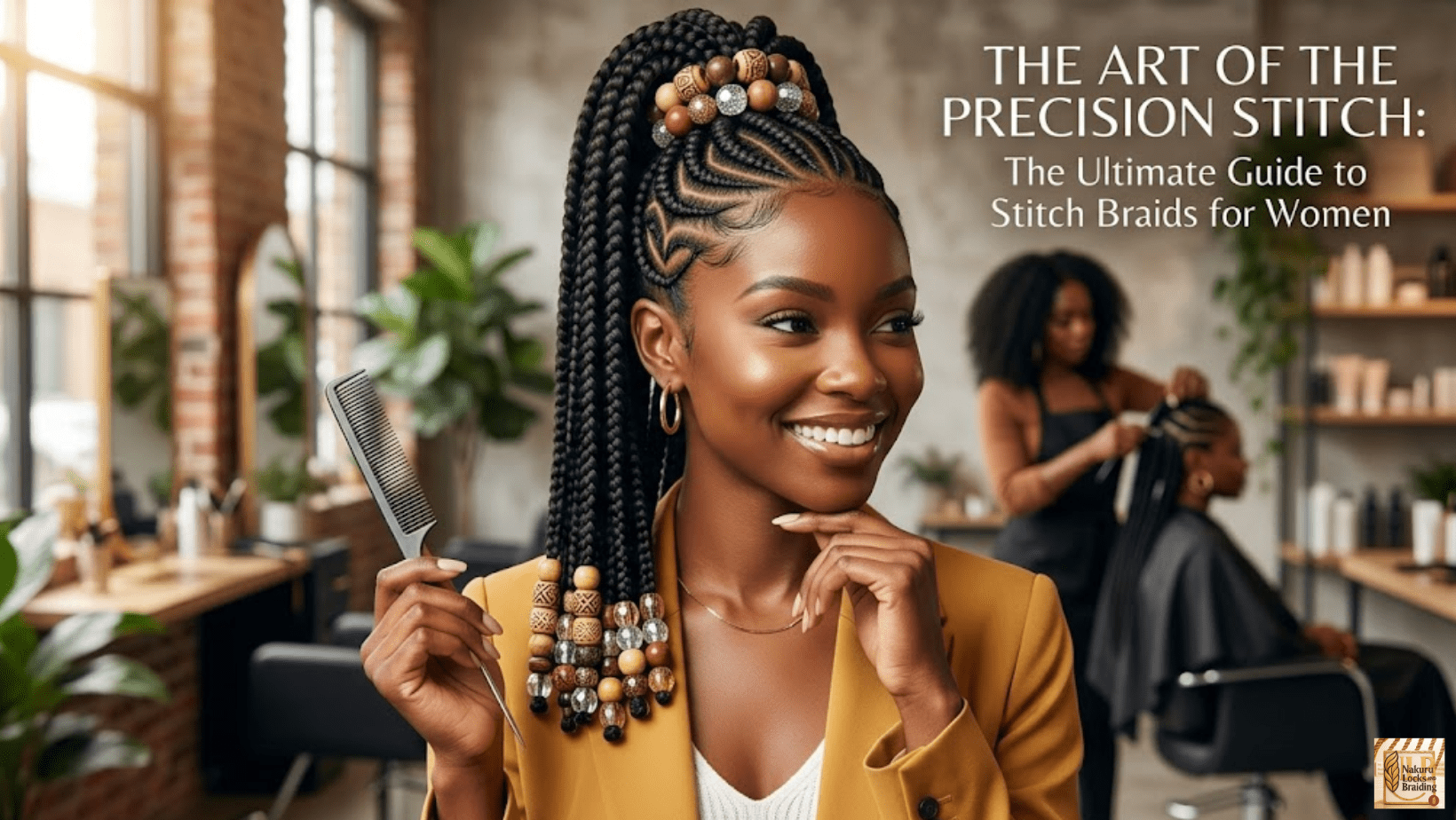
The Art of the Precision Stitch: The Ultimate Guide to Stitch Braids for Women
In the bustling heart of global fashion, where heritage meets high-definition precision, one hairstyle has emerged as the gold standard for the modern woman: Stitch Braids.
From the red carpets of New York to the vibrant streets of Nakuru, this technique is more than just a trend; it is a masterclass in geometric artistry and follicular care.
Whether you are navigating a high-powered boardroom or enjoying a weekend retreat, stitch braids offer a sleek, “clean-girl” aesthetic that traditional cornrows simply cannot replicate.
But beyond the razor-sharp lines lies a deeper story of cultural evolution and hair health. This guide explores the intricate world of stitch braids, ensuring your next style is as protective as it is breathtaking.
What Are Stitch Braids?
Stitch braids are an advanced evolution of the traditional feed-in cornrow. The hallmark of this style is the “stitch” — a horizontal line created by a precise parting technique (often using a pinky nail or a fine-tooth tail comb) that gives the illusion of hair being sewn or “stitched” into the scalp.
Unlike standard braids, which can sometimes appear bulky, stitch braids lie remarkably flat. This is achieved through a tension-aware feed-in method, where small increments of extension hair are integrated gradually.
This results in a seamless transition from the natural hairline to the length of the braid, creating a sophisticated silhouette that highlights the wearer’s facial features.
Stitch Braids for Women with Natural Hair
For those with natural hair—ranging from Type 3 curls to Type 4C coils—stitch braids are a premier protective style.
The Science of Protection
Natural hair is inherently prone to dryness and mechanical breakage due to its unique structure. A 2025 trichology-informed study highlights that “encasing natural hair in a structured braid minimizes daily manipulation and shields the ends from environmental stressors” (Lemon8, 2025).
At Nakuru Locks and Braiding, our philosophy is rooted in Trichology-Informed Braiding. We prioritize:
-
Scalp Hydration: Before the first stitch is made, natural hair must be thoroughly cleansed and deep-conditioned.
-
Low-Tension Techniques: Excessive pulling can lead to traction alopecia. By using the “Safe-Stitch” protocol, we ensure the weight of the extension is distributed evenly, preventing stress on the hair follicles.
-
Seamless Integration: For naturalistas, the goal is to hide the “start” of the braid. This requires a level of precision that only a trained stylist with years of experience can provide.
Exploring Stitch Braid Styles for Women
The versatility of the stitch technique allows for endless creativity. Here are the most sought-after variations in 2026:
1. The Classic Straight-Back
The foundation of the stitch movement. These braids run from the forehead to the nape of the neck in perfectly parallel lines. They are ideal for professional settings and can be styled into a low bun for an elegant evening look.
2. Freestyle and Geometric Patterns
Why settle for straight lines when your scalp can be a canvas? Freestyle stitch braids incorporate zig-zags, swirls, and even “heart” patterns. According to The Right Hairstyles (2026), “heart stitch braids possess a natural ability to effortlessly enhance one’s cool appearance,” making them a favorite for festive seasons and special occasions.
3. The Stitch Braid Ponytail
Perfect for the active woman, the stitch ponytail braids hair upward toward the crown. This style lifts the face and provides a youthful, energetic vibe. It is often paired with “curly ends” or “bohemian wisps” for added texture.
Stitch Braids with Beads: A Cultural Celebration
Incorporating beads into stitch braids is more than an accessory choice; it is an homage to African heritage. Historically, beadwork in braids signified age, marital status, and tribal affiliation (StyleSeat, 2026).
-
Traditional Beads: Wooden or earth-toned beads offer a grounded, organic look.
-
Contemporary Glamour: Crystal or metallic beads add a “jewelry” effect to the hair, perfect for weddings or high-profile events.
-
Safety Tip: When adding beads, ensure they are not too heavy. Excess weight at the ends of braids can cause unnecessary tension on the roots.
Length Matters: Short vs. Medium Stitch Braids
Choosing the right length for your stitch braids depends on your lifestyle and the health of your edges.
| Feature | Short Stitch Braids | Medium Stitch Braids |
| Ideal For | High-activity lifestyles, gym-goers, and hot climates. | Versatile styling; can be tied up, braided, or left down. |
| Maintenance | Low; less weight on the scalp. | Moderate; requires more hydration at the ends. |
| Duration | 4–6 weeks. | 6–8 weeks. |
| Aesthetic | Chic, “braided bob” or “pixie” look. | Classic, feminine, and glamorous. |
Short stitch braids are particularly effective for women transitioning from chemically treated hair to natural hair, as they provide protection without the “tugging” sensation often associated with waist-length extensions.
The Nakuru Locks Professional Protocol
Located at the Mt. Sinai Building on Bazaar Road, Nakuru City, we have spent over 13 years perfecting the art of the stitch. Our process is designed for the woman who values both beauty and the long-term health of her hair.
-
The Consultation: We assess the density of your hair and the health of your “edges” (the hairline).
-
The Preparation: We use high-quality, lightweight extensions that mimic the texture of natural hair.
-
The Execution: Using our signature tension-aware method, we create clean, surgical-grade partings.
-
The Aftercare: We provide every client with a personalized moisture regimen to ensure their natural hair thrives underneath the style.
Frequently Asked Questions (FAQ)
How long do stitch braids last?
Typically, stitch braids last between 4 to 8 weeks. Thinner braids (small stitch) tend to last longer than jumbo styles, as they have more anchor points on the scalp.
Do stitch braids hurt?
If performed by a trained professional, there should be no pain. At Nakuru Locks and Braiding, we advocate for the “No-Pain” rule. If a braid feels tight enough to cause a headache, it is too tight and can lead to hair loss.
Can I wash my hair with stitch braids?
Yes. Use a diluted shampoo or a cotton ball dipped in cleanser to gently wipe the “ditches” between the braids. Always ensure the hair is 100% dry afterward to prevent “braid funk” or mildew.
Are stitch braids better than regular cornrows?
Aesthetically, stitch braids are much neater and provide a more “modern” look. Functionally, the feed-in method used in stitch braids is often lighter and more protective for the hairline than traditional methods.
Related Masterclasses from Nakuru Locks and Braiding
Ready to transform your look? Experience the legacy of 13 years of expertise. Visit us at Nakuru Locks and Braiding, Mt. Sinai Building, Bazaar Road, Nakuru City, and let us craft a style that speaks to your power and your heritage.
References
-
American Academy of Dermatology (2023): Guidelines on preventing traction alopecia through low-tension styling.
-
Journal of Cosmetic Dermatology (2022): Comparative analysis of per-follicle stress in various braiding patterns.
-
International Journal of Trichology: Research on the benefits of protective styling for Type 4 hair textures.
Leave a Reply