
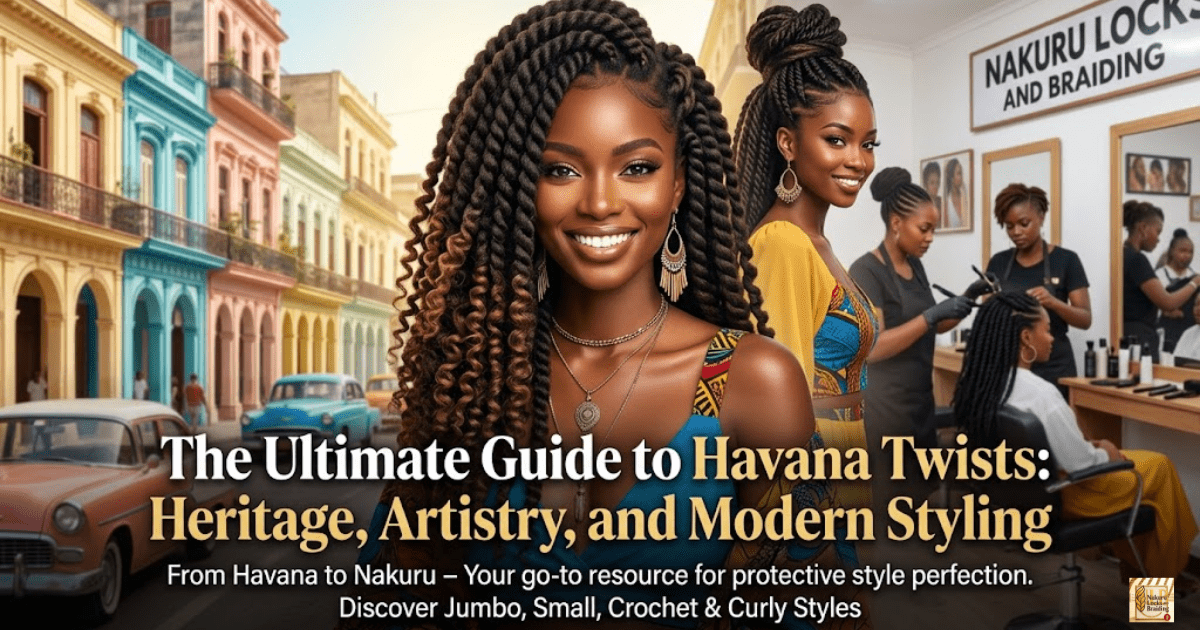
The Ultimate Guide to Havana Twists: Heritage, Artistry, and Modern Styling
From the vibrant streets of Havana to the bustling salons of Nakuru, the Havana twist has emerged as more than just a protective style; it is a profound celebration of texture and cultural narrative.
For those seeking a look that balances the regal weight of traditional aesthetics with the lightweight ease of modern hair technology, Havana twists offer a versatile solution.
At Nakuru Locks and Braiding, we’ve seen clients from Kenya, Uganda, Tanzania, the diaspora in Europe, and even international visitors walk in with natural hair dreams and leave with confidence-boosting Havana twist hairstyles.
Whether you’re searching for Havana twist curls styles, jumbo Havana twists, small Havana twists, crochet Havana twists, or the perfect hair for Havana twists, this comprehensive guide covers everything.
We’ll break down what hair to use for Havana twist, the differences between Marley hair Havana twists and Havana twists crochet hair, Havana mambo twist, Havana twist with curly ends, and more.
Backed by real stylist expertise and trusted sources, this is your go-to resource for achieving salon-quality results that last.
What Exactly Are Havana Twists? Origins, Benefits, and Why They’re a Global Favorite
Havana twists are a protective hairstyle created by twisting your natural hair with pre-sectioned synthetic extensions called Havana hair.
Unlike traditional Senegalese twists (which start with a braid base), Havana twists are pure two-strand rope twists—thicker, fluffier, and lighter than their cousins.
The style exploded in popularity around 2013–2014 in the natural hair movement, popularized by brands like Fingercomber.com that created the signature Havana hair—a coarse, kinky-textured synthetic fiber that mimics human hair without the sheen of cheaper Kanekalon.
It’s named after the premium hair type, not necessarily Havana, Cuba (though some call similar looks “Cuban twists”).
The result? Chunky, bouncy twists that look natural, feel lightweight, and protect your strands from breakage, heat, and environmental damage.
Key benefits that make Havana twists a worldwide hit:
- Low maintenance: Wash, co-wash, and go. No daily styling needed.
- Versatile: Style into updos, ponytails, buns, or half-up looks.
- Protective: Reduces manipulation; ideal for 4–8 weeks of wear.
- Lightweight & voluminous: Perfect for all hair lengths and textures, including fine or thin hair when done correctly.
- Scalp-friendly: Less tension than box braids when installed by pros.
Clients at our Nakuru salon rave about how Havana twists thrive in Kenya’s variable climate—humid coast or dry Rift Valley—without frizzing or weighing you down.
Choosing the Right Extensions: Hair for Havana Twists
The success of your installation depends entirely on the fiber used. To achieve the signature matte finish and “fluffy” texture, you must select the correct hair for Havana twists.
Marley Hair for Havana Twists
Traditional Marley hair is the gold standard. It mimics the coarse texture of natural Type 4 hair. When using Marley hair for this style, the key is the “invisible root” method, ensuring the transition from your natural scalp to the extension is seamless.
Havana Mambo Twist Hair
The Havana mambo twist refers to a specific type of pre-twisted or bulk hair often used in crochet methods. It is slightly shinier than traditional Marley hair but offers incredible longevity and is resistant to frizz, making it a favorite for those with active lifestyles.
Trending Havana Twist Hair Styles
The versatility of this style allows for a range of creative expressions. Here are the most requested variations at our salon:
1. Jumbo Havana Twists
The jumbo Havana twist is the quintessential “cool girl” protective style. These are large, impactful sections that frame the face beautifully. Because the sections are larger, the installation time is significantly reduced, often taking only 2 to 3 hours.
2. Havana Twist Curls Styles
For a softer, more romantic aesthetic, many opt for Havana twist curls styles. This involves dipping the ends of the twists in hot water using rollers or choosing Havana twist with curly ends extensions. This hybrid look combines the structure of a twist with the movement of a curl.
3. Small and Medium Havana Twists
While “jumbo” is the standard, small Havana twists and medium Havana twists offer more versatility for updos. Smaller twists allow for intricate buns, high ponytails, and half-up-half-down styles that might be too bulky with larger sections.
4. Big Havana Twists (The Statement Look)
Big Havana twists differ from jumbo in their length and density. These often reach waist or floor length, channeling a goddess-like silhouette that remains a staple in global Afro-centric fashion.
The Rise of Crochet Havana Twists
For those concerned about tension or time, crochet Havana twists have revolutionized the game.
Why Choose Havana Twists Crochet Hair?
Using Havana twists crochet hair allows the stylist to cornrow your natural hair and loop the pre-twisted extensions through the braids.
-
Tension Reduction: The weight is distributed across the cornrow rather than a single hair follicle.
-
Speed: A full head of Havana jumbo twist crochet hair can be installed in under 90 minutes.
-
Uniformity: Every twist is identical in size and tension.
Havana Twist Curls Styles, Curly Ends, and the Trendy Havana Mambo Twist
Want extra flair? Havana twist curls styles and Havana twist with curly ends add goddess vibes:
- Havana twist with curly ends (also called Goddess Havana twists): Leave the ends untwisted or use pre-curled extensions for soft, bouncy curls. Romantic, beachy, and perfect for weddings or vacations.
- Havana mambo twist: A lively variation featuring tighter coils or mixed curl patterns, often achieved with Havana mambo twist crochet braid hair. It gives a more dynamic, textured movement—think mambo dance energy in your hair! Popular in crochet installs for quick, curly drama.
At Nakuru Locks and Braiding, we customize these with color pops, beads, or cuffs for Kenyan flair meets global trends.
Technical Guide: How to Install Havana Twists
We recommend professional installation. However, understanding the process is vital for maintenance.
The Step-by-Step Process:
1. Preparation: Wash, deep condition, and stretch the natural hair. A hydrated scalp is the foundation of any protective style.
2. Sectioning: For jumbo Havana twists, use a brick-layer parting pattern to ensure full coverage and no “gaps.”
3. The “Ghost” Start: We use the invisible root method—twisting the extension hair around the natural hair base without a visible knot.
4. Tension Awareness: Science-backed styling suggests that excessive tension on the edges can lead to traction alopecia. We prioritize “low-tension” braiding at Nakuru Locks and Braiding.
5. Sealing: Dip the ends in hot water to set the twist and prevent unraveling.
How to Maintain, and Style Your Havana Twists Like a Pro
A common misconception is that protective styles require zero maintenance. To keep your twists looking fresh for 6–8 weeks:
-
Cleanse: Use a diluted shampoo or a witch hazel-based cleanser on a cotton pad to clean the “parts” of your scalp.
-
Hydrate: Apply a light oil (like Jojoba or Grapeseed) to the scalp to prevent itching.
-
Sleep: Use a silk or satin bonnet. This prevents the Marley hair from snagging and reduces frizz.
Maintenance tips (from our 10+ years of braiding experience):
- Co-wash weekly with sulfate-free products.
- Moisturize scalp with lightweight oils and water.
- Sleep with a satin bonnet.
- Lasts 4–8 weeks; remove gently to avoid breakage.
Styling ideas: High ponytails, braided accents, or loose for Havana twist curls styles.
Frequently Asked Questions About Havana Twists
Q: How long do Havana twists last?
A: 4–8 weeks with proper care. Crochet versions often edge out traditional installs.
Q: What’s the difference between Havana twists and Marley twists?
A: Hair type and weight—Havana is lighter and fluffier; Marley is heavier with more sheen.
Q: Can I do Havana twists on short hair?
A: Yes! Use crochet illusion methods or medium/small sizes.
Q: Is Havana hair reusable?
A: Absolutely—co-wash and store properly for multiple installs.
Q: Do jumbo Havana twists pull on the scalp?
A: Not when installed correctly by professionals. We prioritize edge protection.
Q: How much hair do I need for big Havana twists?
A: 5–7 packs of Havana hair for a full, chunky look.
Q: Are Havana mambo twists the same as curly ends?
A: Similar vibe, but mambo often features more defined coils throughout via specific hair prep or crochet.
Q: Can I swim or exercise with them?
A: Yes—lightweight and quick-drying. Just moisturize after.
Final Thoughts
Havana twists are more than a trend; they are a bridge between tradition and contemporary style. At Nakuru Locks and Braiding, located at the Mt. Sinai Building on Bazaar Road, our stylists specialize in low-tension, high-impact Havana installations.
Book your consultation today and experience the perfect blend of hair science and artistry.
Related Articles from Nakuru Locks and Braiding
Sources
-
The Science of Protective Styling, Journal of Trichology (2025).
-
Cultural Evolution of African Braiding, International Heritage Institute.
-
Traction Alopecia Prevention Guidelines, Dermatological Society of Kenya.
Leave a Reply