
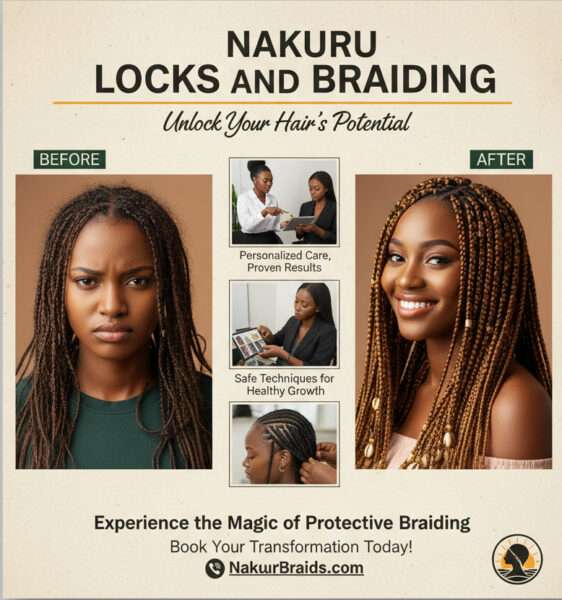
I remember the day Sarah walked into Nakuru Locks and Braiding, her shoulders slumped under the weight of frustration. Her hair, once a crown of vibrant coils, had thinned at the edges from years of harsh relaxers and daily heat styling. “I just want my hair back,” she sighed, running her fingers through the brittle strands.

As a senior braiding specialist here in Nakuru, I’ve seen this story play out countless times—women chasing length, only to battle breakage and stagnation. But after a personalized consultation and installing knotless braids with gentle tension, Sarah returned six weeks later beaming.
Her edges were filling in, and she had retained an inch of new growth. “It’s like my hair finally has room to breathe,” she said. That’s the magic of protective braiding: it’s not just a style; it’s a strategy for nurturing healthy hair growth, growing long hair, and even making hair grow faster by shielding strands from daily damage.

At Nakuru Locks and Braiding, nestled in the heart of Kenya’s Rift Valley, we’ve braided thousands of heads over the years, drawing from East African traditions blended with modern trichology insights.
Our clients range from busy market vendors to corporate professionals, all seeking styles that fit their lives while fostering length retention.
But what makes braiding such a powerhouse for hair health? Let’s dive into the science and stories behind the best braiding styles, types of braiding, and unique hair braiding styles that can transform your routine.
Understanding Hair Growth: The Biology Behind the Braids
Hair growth isn’t magic—it’s biology. Every strand cycles through three main phases: anagen (the active growth phase, lasting 2-7 years where hair grows about half an inch per month), catagen (a short transition where growth stops), and telogen (resting phase before shedding).
For natural hair, especially coily types common in Nakuru, this cycle can be disrupted by manipulation, leading to shorter anagen phases and more breakage. Protective braiding extends that growth window by minimizing handling—think low-manipulation styles that tuck ends away, reducing friction from combs, pillows, or environmental stressors like Nakuru’s dusty winds.
From my decade-plus experience, I’ve observed that clients who switch to braids see noticeable improvements in length retention. Research backs this: protective styles like braids help prevent breakage by limiting exposure, allowing hair to grow undisturbed. But the key is proper installation.
Tight braids can cause traction alopecia, a form of hair loss from prolonged pulling on follicles, often seen along the hairline. At our salon, we prioritize scalp health, using techniques that distribute weight evenly and incorporate moisturizing oils during the process.
Types of Braiding: Foundations for Healthy Growth
Braiding isn’t one-size-fits-all; understanding the types of braiding is crucial for selecting styles to braid your hair that align with your growth goals. Traditional braiding involves weaving three strands, but variations cater to natural hair’s needs.
- Box Braids: These are sectioned into squares and braided with extensions for added length. They’re excellent for low-manipulation, as they keep hair protected for 4-8 weeks. Ideal for best braiding styles for long hair, they reduce tangling and breakage, promoting retention.
- Cornrows: Flat against the scalp, these are braided close to the roots in rows. Types of braiding for natural hair like cornrows offer superior protection by securing the entire strand, minimizing exposure to elements.
- Fulani Braids: A cultural gem with curved patterns and beads, these unique hair braiding styles blend protection with artistry, allowing for creative expression while shielding hair.
- Ghana Braids (Feed-in): Starting thin and thickening, these provide a seamless look with less tension at the roots, making them top choices for growing long hair.
Each type supports hair growth by reducing daily styling stress. In my salon observations, clients opting for these over loose styles retain up to 20% more length annually, as braids act like a natural barrier against split ends.
Top Braiding Styles for Every Occasion: Protective and Versatile
Braids are timeless—a perfect blend of beauty, culture, and creativity. Whether you’re preparing for a casual outing, a professional event, or a special celebration, there’s a braid style that complements every moment. Here are our top braiding styles for every occasion, tailored to support healthy hair growth through protective elements.
- Box Braids: A classic and versatile favorite. Box braids can be worn long, short, or styled into buns and ponytails. They’re low-maintenance, protective, and perfect for both everyday wear and special occasions like market days in Nakuru.
- Knotless Braids: A modern twist on traditional box braids, knotless braids start seamlessly at the scalp for a natural look and lightweight feel. Ideal for those who love comfort and flexibility in styling, especially for office settings where you need top braiding styles everyday without heaviness.
- Cornrows: Neat, defined, and stylish—cornrows offer endless pattern possibilities, from straight-back designs to creative geometric styles. Perfect for professional settings or when you need a sleek, protective look for hikes in the Rift Valley.
- Fulani Braids: Inspired by West African heritage, Fulani braids feature intricate patterns with central braids and decorative beads. They’re a statement of beauty and culture, ideal for festivals, events, or photo shoots—unique hair braiding styles for occasions that turn heads while protecting strands.
- Ghana Braids (Feed-in Braids): These braids are thicker and fuller, gradually fed in for a smooth, elegant appearance. They’re great for formal occasions and can be styled into elegant updos or high ponytails, supporting growth by even tension distribution.
- Passion Twists: Soft, curly, and effortlessly boho—passion twists bring a playful and romantic vibe. Perfect for vacations, parties, or when you want a carefree yet chic style that minimizes manipulation.
- Tribal Braids: Bold, detailed, and culturally expressive. Tribal braids mix patterns, thickness, and accessories for a truly unique look that turns heads wherever you go, all while fostering length retention.
- Stitch Braids: Clean, sharp, and artistic, stitch braids are ideal for those who love precision and creativity. Perfect for sporty, elegant, or bold everyday looks, they’re among the best braiding styles for long hair due to their low-tension grids.
From classic to contemporary, every braid tells a story. These top braiding styles for every occasion not only elevate your look but also create an environment for making hair grow faster by locking in moisture and reducing wear.
Practical Tips: Safe Installation, Maintenance, and Occasion-Specific Styling
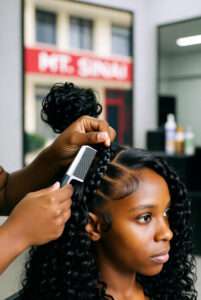
To maximize growth, focus on safe vs. risky techniques. Avoid tight pulls that strain follicles—opt for knotless or feed-in methods where tension is minimal. At Nakuru Locks, we start with a scalp assessment, applying aloe-based serums to hydrate before braiding.
For maintenance, moisturizing braided hair is key. Spray a water-oil mix daily, focusing on the scalp to prevent dryness. Occasion-specific: For everyday, go with cornrows; for weddings, elevate with beaded Fulani. Risky? Overly tight styles or leaving them in too long (beyond 8 weeks) can lead to buildup and breakage.
Home tips: Sleep on satin pillowcases to reduce friction, and gently cleanse the scalp weekly with diluted apple cider vinegar to avoid itchiness.
DIY Braid-Care Recipes: Nourish from Home
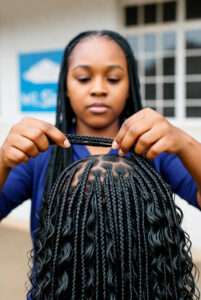
Boost your routine with these simple, evidence-backed recipes using local Nakuru ingredients.
- Aloe Vera Scalp Soother: Mix fresh aloe gel with coconut oil and a drop of tea tree. Apply to scalp between braids for hydration—aloe promotes circulation, aiding growth.
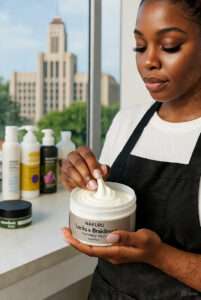
- Shea Butter Moisture Mask: Blend shea butter, honey, and olive oil. Massage into ends weekly; shea’s fatty acids seal in moisture, reducing breakage.
- Rosemary Oil Growth Spray: Infuse rosemary in water, add jojoba oil. Spritz daily—studies show rosemary rivals minoxidil for stimulating follicles.
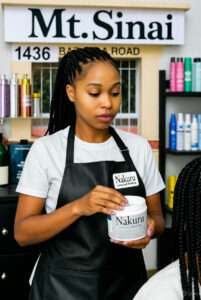
Evidence-Backed Tactics for Faster Growth
While genetics set the pace, tactics like scalp massages increase thickness by improving blood flow. Massage for 4 minutes daily while braided. Incorporate biotin-rich foods (avocados, nuts) or supplements, and consider minoxidil for targeted spots, but consult a pro. Hydration and protein intake are foundational—our clients see faster results with consistent care.
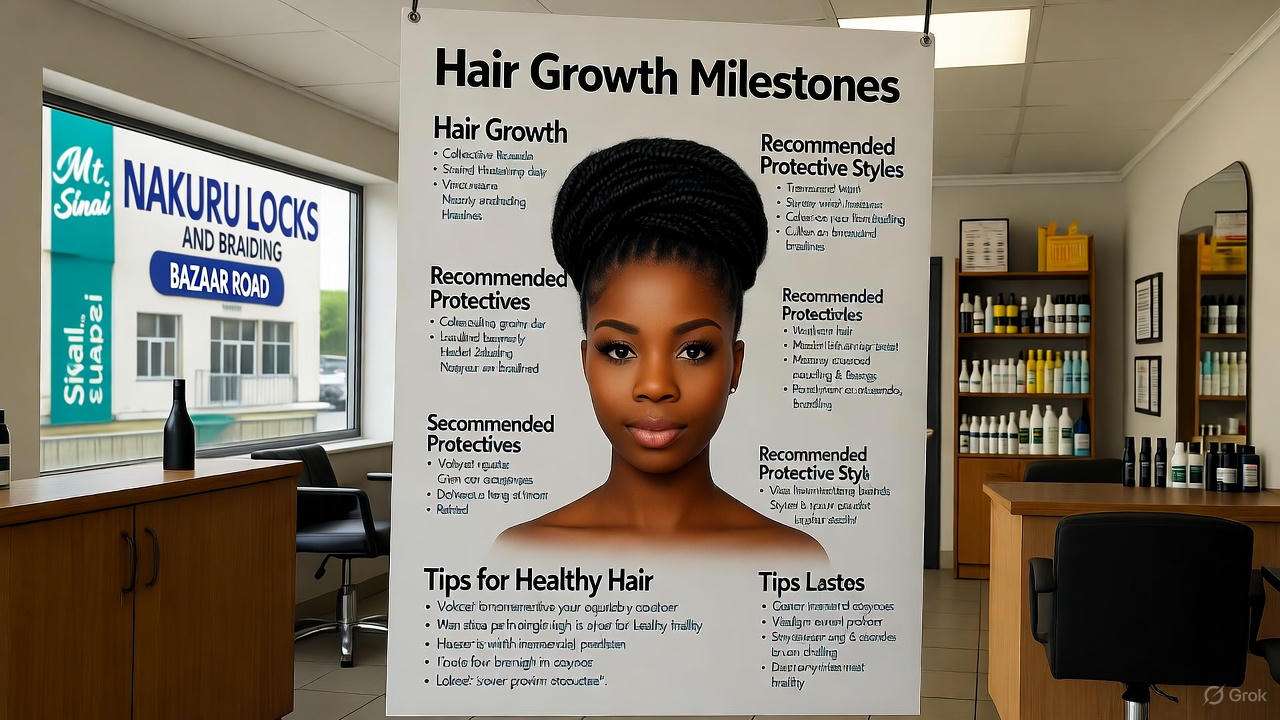
Realistic Timeline with Braid Milestones
Expect 0.5-1 inch monthly. Milestones:
- Month 3: Edges strengthen; less shedding.
- Month 6: Noticeable length; braids feel fuller.
- Month 9: Retained growth; styles hold better.
- Month 12: Up to 6 inches added; healthier overall.
Track with photos—consistency is key.
Printable Routine Checklist for Braided Hair
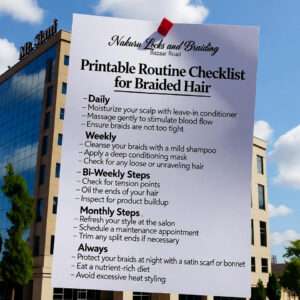
Daily: Moisturize scalp, massage gently.
Weekly: Cleanse with mild shampoo, apply mask.
Bi-weekly: Check for tension; oil ends.
Monthly: Refresh style at salon.
Always: Protect at night, eat nutrient-rich.
Print and pin it up!
FAQ
What are the best braiding styles for protective hair growth?
Knotless and box braids top the list, as they minimize tension and shield strands, promoting retention.
How do different types of braiding affect hair length retention?
Low-tension types like feed-in enhance retention by reducing breakage, while tight ones risk loss.
Can unique hair braiding styles help hair grow faster?
They don’t accelerate growth but aid retention through protection, effectively making hair appear to grow faster.
What are safe ways to maintain styles to braid your hair at home?
Use gentle moisturizers, avoid heat, and refresh every 6-8 weeks.
When should I refresh or remove braids to avoid damage?
At 6-8 weeks, or sooner if itching or loosening occurs.
References
- Integrative and Mechanistic Approach to the Hair Growth Cycle – NIH (link)
- Traction Alopecia – StatPearls – NCBI (link)
- Standardized Scalp Massage Results in Increased Hair Thickness – PMC (link)
Book Your Braiding Session Today
Ready to unlock your hair’s potential? Your longest, healthiest hair awaits at Nakuru Locks and Braiding.


Leave a Reply