
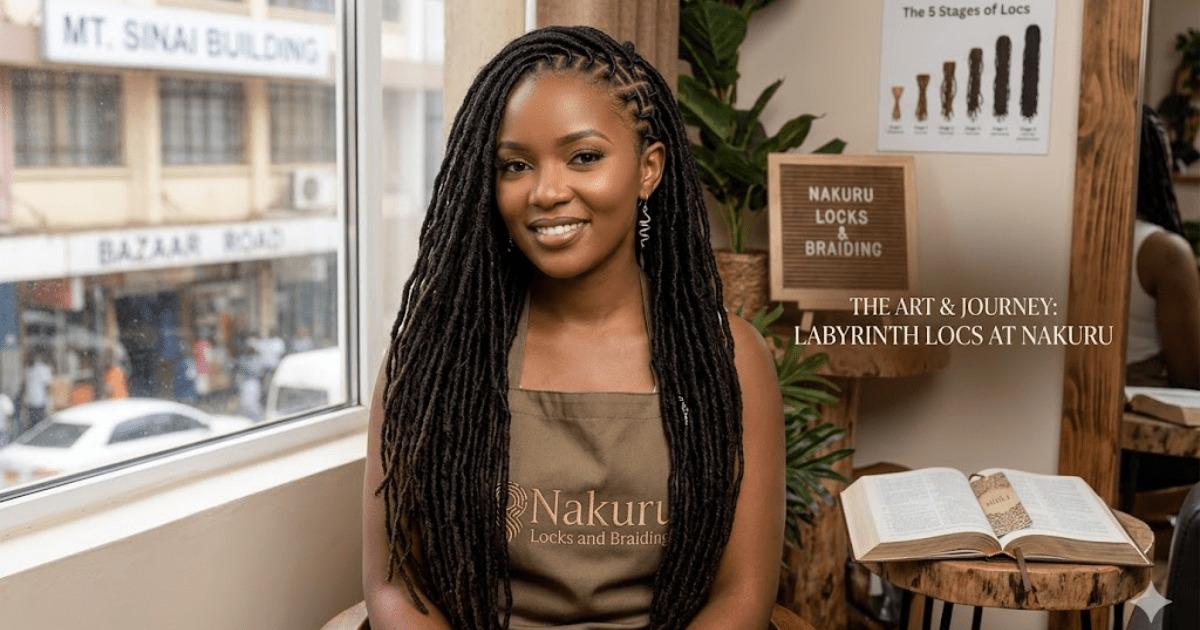
Labyrinth Locs: Timeless Styles, Spiritual Roots, and Expert Care at Nakuru Locks and Braiding
Stepping into a salon, especially one as vibrant as Nakuru Locks and Braiding, is much like entering a labyrinth.
You are surrounded by a myriad of choices—textures, lengths, parting patterns, and styling techniques—each path offering a different version of yourself.
For those seeking a hairstyle that mirrors this beautiful complexity, “Labyrinth Locs” have emerged as an evocative term for intricate, maze-like parting patterns and sophisticated braiding designs that transform standard locs into a work of art.
Whether you are looking to embrace a new look or refine your current style, this guide explores the artistry of complex loc styling, the spiritual roots of dreadlocks, and the natural journey of loc maturation.
What Are Labyrinth Locs? Understanding the Style
Labyrinth locs (also called labyrinth dreadlocks) are a distinctive variation of traditional locs. Unlike uniform, tightly packed dreadlocks, labyrinth locs feature longer, chunkier strands formed farther apart on the scalp.
This spacing creates a visual “labyrinth” or maze-like pattern, adding depth, dimension, and an artistic flair.
The style suits those with established locs seeking a refresh or dramatic look. The wider parting allows scalp breathing and easier maintenance while highlighting texture and movement. For men and women, it blends professional polish with bold cultural expression.
Simple labyrinth locs styles emphasize clean lines and minimal accessories. Think neat, uniform chunks with subtle parting patterns—ideal for daily wear, work, or low-maintenance routines. These avoid complex braiding or heavy extensions, focusing on natural texture.
Simple Labyrinth Locs Styles Pictures and Inspiration
While we can’t embed every image here, visualize (and search Pinterest/Instagram for visuals):
- Classic Chunky Labyrinth: Wide square or diamond parts with thick locs hanging freely. Perfect for medium-to-long hair.
- Half-Up Labyrinth: Top section styled in a bun or ponytail, showcasing the maze pattern on sides and back.
- Beaded or Wrapped Simple Versions: Subtle beads or thread wraps at ends for texture without overwhelming the pattern.
These styles appear elegant and structured yet organic, appealing across cultures.
Labyrinth Locs for Long Hair: Versatility and Elegance
Labyrinth locs simple locs styles for long hair shine with length. Long locs (waist or beyond) amplify the labyrinth effect through flowing movement. Styles include:
- Loose and flowing for everyday.
- High ponytails or buns to manage weight and show parting artistry.
- Braided accents or partial updos for events.
Long hair requires diligent care to prevent breakage, but the wider spacing in labyrinth styles aids this by reducing tension.
At Nakuru Locks and Braiding, we customize for your hair type, density, and lifestyle, using premium extensions when needed for added length and volume.
Labyrinth Locs with Attachments: Instant Transformation
For shorter hair or instant length, labyrinth locs simple locs styles with attachment or short labyrinth locs simple locs styles with attachment for long are popular.
Techniques include:
- Crochet or Interlock Attachments: Secure synthetic or human hair extensions to natural starters, forming the labyrinth pattern seamlessly.
- Faux/Artificial Locs: Pre-made loc extensions installed via crochet, braid fusion, or wrap methods for temporary or semi-permanent looks.
These suit clients wanting quick results without waiting through growth stages. Our salon excels in natural-looking attachments that blend with your texture, offering distressed, soft, or defined finishes.
Benefits:
Immediate length, protection for natural hair, customizable color/length, easier styling during early stages.
Considerations:
Proper installation prevents pulling; regular maintenance (every 6-8 weeks) is key.
What Does the Bible Say About Dreadlocks?
Many wonder about the spiritual significance of locs. The Bible does not explicitly mention “dreadlocks” as a modern hairstyle but references “locks” of hair in contexts of vows and consecration.
Key passages include:
- Numbers 6:5 (Nazirite Vow): “All the days of his vow of separation, no razor shall touch his head… he shall let the locks of hair of his head grow long.” This describes uncut hair as a sign of devotion to God, often interpreted as supporting natural, matted styles like locs. Samson’s strength came from his uncut hair (Judges 16).
- Other references (e.g., Ezekiel 44:20, Song of Solomon) discuss hair length and grooming for priests or beauty, but emphasize inner holiness over outward appearance.
Overall, the Bible views hair neutrally or positively in covenant contexts. Dreadlocks/locs are not condemned; they can express cultural identity, faith, or personal style when rooted in positive intent. Many Christians wear locs proudly as symbols of faith and heritage.
At Nakuru Locks and Braiding, we respect all spiritual journeys, providing styles that honor your beliefs.
Styling Your Labyrinth: Simple and Sophisticated
While the name suggests complexity, you can achieve a “Labyrinth” look that is manageable for everyday wear. Here are common ways to adapt the trend:
1. Simple Labyrinth Locs Styles
For a “simple” look, focus on the perimeter. By creating a more complex “labyrinth” pattern only along the hairline or at the crown, and keeping the back in standard rows, you achieve the aesthetic impact without the high maintenance of an all-over intricate design.
2. Styles for Long Hair
When you have length, gravity becomes your ally. Using “labyrinth” parting at the base allows you to gather the hair into high, architectural updos. The complex parts become hidden in the structure, but the weight and volume of the locs create a dramatic, regal silhouette.
3. Incorporating Attachments
If you are starting your journey with extensions (often referred to as “attachments” or “faux locs”), you have the freedom to pre-plan your labyrinth. Using high-quality, lightweight extensions allows for more intricate, tighter patterns without adding unnecessary strain to the scalp.
The 5 Stages of Locs: Your Journey Explained
Understanding the 5 stages of locs prepares you for the commitment. Timelines vary by hair type, density, and care.
1. Starter (Baby) Stage (0-6 months): Coils, twists, or braids form initial “locs.” Hair is neat but fragile. Focus on gentle cleansing and avoiding manipulation. “Ugly duckling” phase common.
2. Budding Stage (6-12 months): Hair swells, frizzes, and “buds” as it mats. New growth appears fluffy. Retwist every 6-8 weeks.
3. Teen Stage (12-18 months): Locs firm up but may unravel or shrink unevenly. Rebellious phase—patience needed. More defined shape emerges.
4. Mature Stage (18-24+ months): Locs are fully formed, sturdy, and predictable. Less frequent retwisting required.
5. Rooted Stage: Locs are mature and rooted deeply. Ultimate versatility in styling; minimal maintenance for healthy hair.
Pro Tips from Nakuru Experts:
Moisturize regularly, use residue-free products, wash weekly with loc-friendly shampoo, and schedule professional maintenance. Healthy scalp = healthy locs.
Expert Styling and Care at Nakuru Locks and Braiding
Our services include natural/artificial locks, sisterlocks installation/retie, crochet faux locs, butterfly locs, and more. We offer personalized consultations, scalp treatments, and post-install care guidance.
Whether simple labyrinth styles, long hair transformations, or attachment-enhanced looks, our team delivers E-E-A-T standards: proven experience, expert techniques, authoritative advice, and trustworthy results.
FAQ
Q: How long do labyrinth locs take to install?
A: 4-8+ hours depending on length and attachments. Consult for exact timing.
Q: Are labyrinth locs suitable for short hair?
A: Best with attachments/extensions for full effect; natural short hair works for starters.
Q: How do I maintain simple labyrinth locs?
A: Regular retwists, moisturizing, and protective styling. Avoid heavy products.
Q: Can I color my locs?
A: Yes, but use gentle methods on mature locs to prevent damage.
Q: What’s the difference between locs and dreadlocks?
A: Terms often used interchangeably; “locs” emphasizes intentional, maintained styles.
Q: Biblical views on locs for Christians?
A: Supportive in Nazirite contexts; focus on heart intent.
Related Articles from Nakuru Locks and Braiding
References
- Byrdie, StyleSeat, and FroHub on loc stages and styles.
- GotQuestions.org on biblical perspectives.
- Professional loctician insights from Dr. Locs and salon expertise.
Leave a Reply