
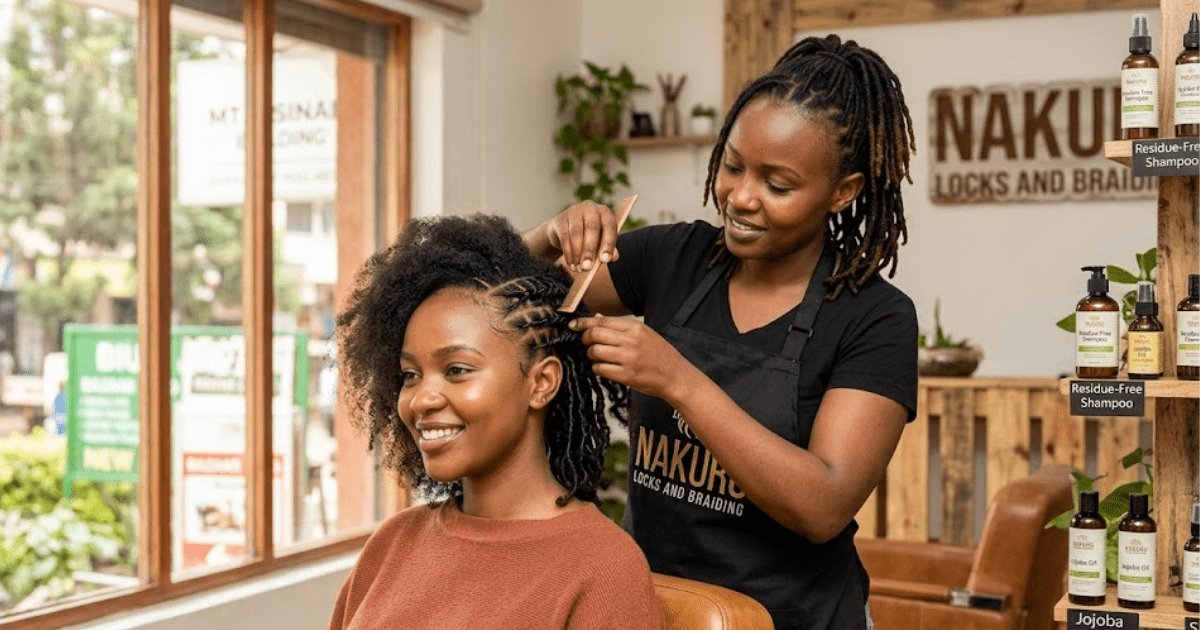
Starter Locs Hairstyles: The Complete Beginner’s Guide to Starting Your Loc Journey
Imagine waking up every morning knowing that your hair tells a story—your story. For millions of people around the world, locs represent far more than a hairstyle. They symbolize identity, cultural heritage, self-expression, and natural beauty.
From the ancient warriors of East Africa to global icons such as Stevie Wonder and Janet Jackson, locs have stood the test of time as one of the most powerful and meaningful hairstyles in history.
If you’re considering starting your loc journey, you probably have plenty of questions:
- What is the best style for starter locs?
- Which starter loc method works best?
- What are the seven types of locs?
- How do you care for starter locs properly?
- How long does it take for locs to mature?
This comprehensive guide answers all those questions and more. Drawing from professional experience at Nakuru Locks and Braiding, you’ll learn everything you need to know about choosing, maintaining, and enjoying healthy starter locs.

What Are Starter Locs?
Starter locs are the foundation of every successful loc journey. They are the initial coils, twists, braids, or sections installed on your hair that will gradually mature into fully developed locs.
At this stage, your hair is only beginning to mat and lock together. The locs are still soft, loose, and vulnerable to unraveling, making proper care essential.
Think of starter locs as the seedling stage of a tree. With patience and proper maintenance, they develop into strong, healthy mature locs.
Key Characteristics of Starter Locs
- Freshly installed coils, twists, or braids
- Hair remains soft and not fully locked
- Frizz and swelling are completely normal
- Requires gentle handling and consistent maintenance
- Usually takes between 6–18 months to mature
What Is the Best Style for Starter Locs?
The best starter loc style depends on several factors, including:
- Hair texture
- Hair length
- Lifestyle
- Desired appearance
- Maintenance preferences
However, professional locticians consistently recommend two-strand twists as one of the best options for beginners.
Why Two-Strand Twists Are Ideal for Starter Locs
| Advantage | Explanation |
|---|---|
| Less Unraveling | Twists generally hold better than coils, especially for textured hair. |
| Beginner-Friendly | Easy to install and maintain. |
| Visible Definition | Creates a neat and defined appearance early in the journey. |
| Versatile | Suitable for thick, coily, and medium-textured hair. |
For people with tighter curl patterns (4A–4C), comb coils are also highly recommended. They create a clean, defined look, although they may unravel more frequently during the early stages.
Individuals with longer hair or looser curl patterns often benefit from braids or plaits, which provide excellent hold and reduce unraveling. The only drawback is that the braid pattern can remain visible longer as the locs mature.
For very short hair, the sponge method and comb coils are often the most effective choices.
Which Starter Loc Method Is Best?
There are six primary starter loc methods. Each offers unique advantages depending on your hair type and lifestyle.
1. Coil Method
Best For: Tight curl patterns (4A–4C)
Pros
- Neat and defined appearance
- Easy to start
Cons
- May unravel during the early stages
2. Two-Strand Twists
Best For: Thick and coily hair
Pros
- Excellent beginner option
- Less unraveling than coils
Cons
- Twist pattern remains visible initially
3. Braids or Plaits
Best For: Long hair or loose curls
Pros
- Excellent hold
- Minimal unraveling
Cons
- Braid pattern may take longer to disappear
4. Comb Coils
Best For: Short hair and tightly coiled textures
Pros
- Clean sections
- Uniform appearance
Cons
- Requires proper technique
5. Interlocking
Best For:
- Active lifestyles
- Swimmers
- Softer hair textures
Pros
- Prevents unraveling
- Low maintenance
Cons
- Less volume during early stages
6. Freeform or Semi-Freeform
Best For: Individuals seeking a natural look
Pros
- Minimal maintenance
- Organic appearance
Cons
- Less control over size and shape
Professional Recommendation
For most clients with African hair textures, two-strand twists and comb coils provide the best balance between appearance, maintenance, and locking speed.
What Are the 7 Types of Locs?
When people refer to the “seven types of locs,” they are usually talking about the major categories of mature loc styles.
| Type of Locs | Description | Best For |
| Traditional Locs | Classic locs formed through natural matting | Most hair types |
| Micro Locs | Small, thin locs with high density | Those wanting many locs |
| Sisterlocks | Uniform micro-sized locs created using a specialized method | Fine to medium hair |
| Freeform Locs | Locs formed naturally without structured parting | Low-maintenance lifestyles |
| Wicks | Thick, chunky locs often square-shaped | Bold statement styles |
| Instant Locs | Crochet-created locs that appear mature immediately | Immediate results |
| Palm-Rolled Locs | Maintained using palm-rolling techniques | Traditional loc wearers |
Important Note
The terms “locks” and “locs” refer to the same hairstyle. However, “locs” has become the preferred modern spelling within many natural hair communities.
Understanding the 5 Stages of Loc Development
Every loc journey progresses through five major stages.
Stage 1: Starter or Baby Locs (0–6 Months)
- Freshly installed coils or twists
- Hair remains soft and unlocked
- Frizz and swelling are common
- Highest chance of unraveling
Stage 2: Budding Stage (6–12 Months)
- Hair begins matting internally
- Small buds develop within the locs
- Frizz increases before gradually reducing
- Locs begin gaining structure
Stage 3: Teen Locs (12–18 Months)
- Loc shape becomes more visible
- Less unraveling occurs
- Locs become firmer and thicker
Stage 4: Mature Locs (18–24+ Months)
- Fully formed locs
- Reduced frizz
- Increased density and weight
- Stable locking pattern
Stage 5: Rooted or Aged Locs (24+ Months)
- Maximum maturity
- Significant length retention
- Strong and healthy structure
- Can last for decades with proper care
Important Reminder
Everyone’s loc journey is unique. Hair texture, maintenance habits, and installation methods all influence maturation speed.
Best Beginner Hairstyles for Starter Locs
Starter locs themselves are the beginner hairstyle, but there are several safe ways to wear them while they mature.
Recommended Styles
- Natural Down Style: Allow the locs to hang freely with minimal manipulation.
- Loose Ponytail: Use soft hair ties without metal parts.
- Half-Up, Half-Down Style: A polished look without excessive tension.
- Headband Style: Fabric headbands help manage frizz while protecting the locs.
- Beads and Lightweight Accessories: Use wooden or lightweight plastic beads.
Hairstyles to Avoid
- Tight buns
- Braiding locs together
- Excessive updos
- Heavy accessories
Golden Rule
Less manipulation equals faster and healthier locking.
Starter Locs Hairstyles for Short Hair
Short hair can absolutely be started into locs successfully.
Best Starter Loc Styles for Short Hair
| Style | Description | Why It Works |
| Sponge Method | Uses a loc sponge to create coils | Designed specifically for short hair |
| Comb Coils | Tight coils created with a comb | Clean and uniform appearance |
| Micro Twists | Small two-strand twists | Creates a fuller look |
| Short Freeform Locs | Natural locking process | Minimal manipulation |
| Button Locs | Tiny starter locs | Excellent for hair under 2 inches |
Styling Tips for Short Starter Locs
- Use clips sparingly for temporary styles
- Sleep with a satin bonnet
- Moisturize regularly
- Avoid heavy products
- Be patient with growth
Professional Insight
For hair under three inches, comb coils and the sponge method typically produce the cleanest sections and fastest locking results.
Essential Starter Loc Do’s and Don’ts
✅ Do’s
| Do | Why |
| Wash every 2–4 weeks | Promotes scalp health |
| Use lightweight moisturizers | Prevents buildup |
| Retwist every 4–6 weeks | Maintains neatness |
| Dry locs thoroughly | Prevents mildew |
| Sleep with satin protection | Reduces frizz |
| Separate locs when necessary | Prevents conjoining |
| Maintain a nutritious diet | Supports hair growth |
| Massage your scalp | Improves circulation |
❌ Don’ts
| Don’t | Why |
| Over-twist locs | Causes thinning and breakage |
| Use heavy products | Leads to buildup |
| Constantly restyle | Weakens roots |
| Touch locs excessively | Interrupts locking |
| Overwash during month one | Encourages unraveling |
| Sleep without protection | Causes frizz |
| Use conditioner initially | Promotes unraveling |
| Dye locs too early | Weakens new locs |
Critical Warning
The most common beginner mistake is over-manipulation. Excessive touching, twisting, and styling slows the locking process and may permanently damage your locs.
How to Prepare for Starter Locs
Pre-Installation Checklist
- Thoroughly shampoo your hair
- Avoid deep conditioning before installation
- Ensure the scalp is clean and healthy
- Choose a parting pattern
- Schedule a professional consultation
Choosing the Right Starter Loc Size
| Size | Appearance | Best For |
| Small/Micro | Dense and detailed | Fine strands and neat styles |
| Medium | Balanced and versatile | Most beginners |
| Large | Fuller appearance | Lower-maintenance lifestyles |
Pro Tip
Smaller locs typically require more maintenance, while larger locs are easier to manage long-term.
Starter Locs Maintenance Routine
1. Cleansing
Frequency: Every 2–4 weeks
Best Practices
- Use a gentle shampoo
- Avoid aggressive scrubbing
- Focus on scalp cleanliness
2. Moisturizing
Recommended Products
- Water-based hydration sprays
- Lightweight oils
Avoid
- Heavy butters
- Thick gels
3. Retwisting or Interlocking
Frequency: Every 4–6 weeks
The goal is to maintain neat roots without creating tension or thinning.
4. Thorough Drying
Always dry your locs completely after washing.
Why It Matters
Damp locs can develop mildew, odors, and scalp issues.
Best Products for Starter Locs
Lightweight Moisturizing Spray
Purpose: Hydration and frizz control
Features
- Water-based
- Residue-free
- Suitable for daily use
Lightweight Oils
Purpose: Nourishment and scalp health
Recommended Options
- Jojoba oil
- Argan oil
- Lightweight coconut oil
Application
2–3 times per week
Scalp Oils
Purpose: Scalp comfort and itch relief
Benefits
- Reduces dryness
- Controls irritation
- Supports healthy growth

Signs Your Starter Locs Are Progressing Properly
Watch for these positive signs:
✅ Budding inside the locs
✅ Puffy appearance
✅ Healthy frizz
✅ Reduced unraveling
✅ Increased density and weight
Remember, frizz is often a sign that your hair is locking successfully.
Frequently Asked Questions
How long do starter locs take to lock?
Most starter locs take between 6–18 months to mature fully.
Can I wash my hair with starter locs?
Yes. Wash gently every 2–4 weeks to maintain a healthy scalp.
Should I use conditioner on starter locs?
Not initially. Conditioner may encourage unraveling during the early stages.
How often should I retwist?
Every 4–6 weeks. Retwisting too frequently can weaken the roots.
What helps relieve an itchy scalp?
Lightweight oils and hydrating sprays can provide relief while maintaining healthy loc development.
Will starter locs unravel?
Some unraveling is completely normal during the first few months.
Can I style starter locs?
Yes, but choose low-manipulation styles that avoid excessive tension.
How do I know my locs are maturing?
Look for:
- Budding
- Reduced frizz
- Increased density
- Greater weight
- Improved structure
Related Articles
Visit Nakuru Locks and Braiding in Nairobi
Ready to begin your loc journey with professional guidance?
At Nakuru Locks and Braiding, we specialize in starter loc installation, maintenance, retwisting, and styling for clients throughout Nairobi and beyond.
Why Clients Choose Us
- Certified locticians with over 10 years of experience
- Customized parting systems
- Premium natural hair products
- Flexible scheduling
- Affordable pricing
Final Thoughts
Your loc journey is unique, personal, and rewarding. Along the way, you will experience frizz, swelling, budding, and moments when you question the process.
Trust the journey.
With patience, consistency, and proper care, your starter locs will evolve into strong, healthy, and beautiful mature locs that reflect your individuality and natural beauty.
Patience + Consistency = Healthy Locs.
References
For further reading on starter locs and loc maintenance:
- Hairobics – Complete Starter Locs Guide
- Aaliyah Beauty Bar – Starter Loc Styles Guide
- How to Grow Locks – Starter Locs Resource
- Lion Locs – Starter Locs Do’s and Don’ts
- Dreadlocks Wig – Different Types of Locs
- Loving Kinky Curls – Stages of Loc Development
- Crowned in Locs – Starter Loc Methods Guide
Leave a Reply