
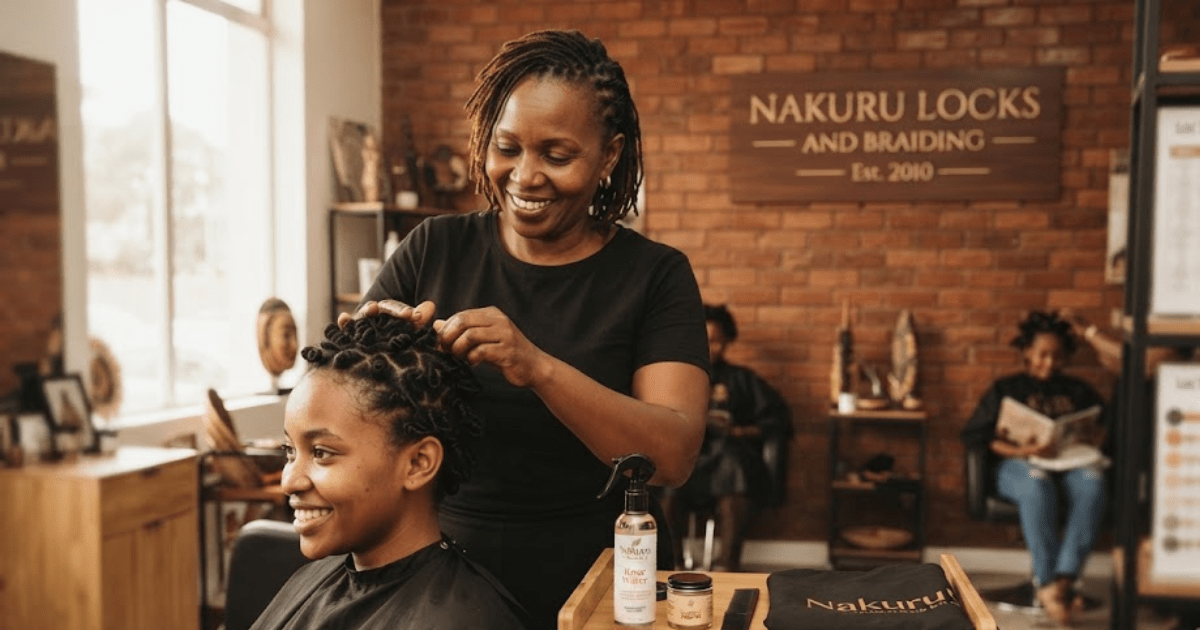
Transitioning to Locs: What to Expect for Beginners
The decision to transition to locs is more than just a hairstyle change—it is a journey of patience, self-discovery, and a commitment to honoring your crown’s natural texture.
Whether you are seeking a low-maintenance lifestyle, a protective style to support healthy hair growth, or a deeper connection to your heritage, your path to fully matured locs is a transformative experience.
At Nakuru Locks and Braiding, we believe in “trichology-informed” care. We don’t just style hair; we nurture the follicle. As a lead stylist with 14 years of experience, I have guided countless clients through this beautiful evolution.
In this guide, we will break down exactly what to expect, how to start, and how to maintain your locs with scientific precision.
Why Transition to Locs? A Global Perspective
Locs (also called dreadlocks or locks) have deep cultural significance across Africa, the Caribbean, and beyond.
They symbolize strength, spirituality, and freedom from Eurocentric beauty standards. For beginners, the decision often stems from a desire for low-maintenance styling, hair growth retention, or simply celebrating texture.
However, the journey requires realistic expectations: it’s not overnight magic but a gradual maturation process that can take 18–24+ months for full maturity.
At Nakuru Locks and Braiding, our certified locticians emphasize healthy hair foundations first. We assess your hair type, lifestyle, and goals during consultations to ensure a successful transition.
How to Start Locs on Natural Hair: Step-by-Step Guide
How to start locs on natural hair is one of the most common queries. Natural hair (typically Type 4 textures common in African heritage) responds beautifully to locs due to its coil pattern, which aids matting.
Step-by-Step Process (Best done by professionals for precision):
- Consultation and Prep: Cleanse with a clarifying shampoo to remove buildup. Detangle gently. Assess porosity, density, and length (minimum 2–4 inches recommended, ideally more for stability).
- Choose a Method:
-
- Comb Coils: Ideal for shorter natural hair. Use a fine-tooth comb to twist small sections from root to tip.
-
- Two-Strand Twists: Twist two sections together; great for definition.
-
- Braids or Interlocking: For more security in some cases.
-
- Freeform: Minimal parting, letting hair loc organically.
- Sectioning: Create uniform parts (square, diamond, or organic) for even locs. Smaller sections yield thinner locs.
- Styling and Maintenance Start: Apply lightweight gel or cream. Avoid heavy products initially.
For how to start locs on straight hair (Types 1–3), methods like twist and rip or back-combing help create tangles since straight hair lacks natural coils. It may take longer to mature but is achievable with patience.
Pro Tip from Nakuru Locks and Braiding:
Always prioritize scalp health. We use residue-free products tailored to East African climates.
Types of Locs
Understanding types of locs helps tailor your journey:
- Traditional Locs: Larger sections (pencil to thumb thickness). Bold, versatile.
- Microlocs: Smaller than traditional (pencil-lead to small pencil size). More locs, elegant look, versatile styling.
- Sisterlocks: A patented interlocking method creating uniform, small locs. Low maintenance, lightweight.
- Freeform/Organic Locs: No deliberate parting; hair mats naturally. Unique, low manipulation.
- Semi-Freeform: Hybrid with some guidance.
Choose based on hair density, desired maintenance, and aesthetics. Our salon specializes in all, with expertise in microlocs and traditional for diverse clients.
The 5 Stages of Locs: What to Expect
What are the 5 stages of locs? Most experts outline these key phases. Timelines vary by hair type, care, and genetics.
1, Starter/Baby Stage (Months 0–3/6): Locs are neat but fragile. They may unravel when washing. Expect shrinkage and frizz. Low manipulation is crucial.
2. Budding Stage (Months 6–12): Hair begins matting internally. New growth looks puffy/fuzzy. Buds form—signs of locking. More defined but still “messy.”
3. Teenage Stage (Months 12–18): “Ugly duckling” phase for many. Locs fatten unevenly, with frizz and loops. Patience peaks here as they rebel.
4. Mature Stage (Months 15–24+): Locs firm up, lie flatter, and require less retwisting. They look polished and feel strong.
5. Rooted/Elder Stage (2+ Years): Fully mature, thick, and versatile. New growth integrates seamlessly. Locs are “permanent” in structure.
Loc Stages by Month (Approximate Chart Overview):
- Month 1–3: Uniform starter twists/coils; possible unraveling.
- Month 4–8: Budding; increased frizz, shrinkage.
- Month 9–15: Teenage chaos; uneven thickness.
- Month 16–24: Maturing; cleaner appearance.
- 24+: Rooted beauty.
Visualize a loc stages chart with progressive photos—many clients at Nakuru Locks and Braiding track theirs this way for motivation.
How Long Does It Take for Locs to Look Good?
This is subjective, but many see aesthetic improvement by 12–18 months, with full “wow” factor in the mature stage (18–24 months).
Early stages can feel challenging due to the “ugly phase,” but consistent care accelerates positive results. Thicker, curlier hair often matures faster.
Are Locs Good for Low Porosity Hair?
Yes, with adjustments. Low porosity hair resists moisture absorption but retains it well once penetrated. Locs can thrive as they protect strands, but buildup is a risk.
Use the LOC method (Liquid, Oil, Cream) with lightweight products (e.g., aloe water, grapeseed oil).
Avoid heavy butters; opt for clarifying washes and steam/heat for penetration. Many with low porosity successfully wear locs long-term.
Consult experts like those at Nakuru Locks and Braiding for personalized routines.
What Not to Do When Starting Locs
Avoid common pitfalls for a smoother journey in transitioning to locs:
- Don’t overwash or use heavy products (beeswax is a big no—causes buildup).
- Don’t over-manipulate or retwist too frequently (every 4–8 weeks max initially).
- Don’t compare journeys—hair is unique.
- Avoid tight styles or extensions too soon on fragile starters.
- Don’t neglect moisture or scalp health.
How to Lock Hair Permanently
This involves consistent maintenance until the locs mature and new growth naturally integrates without unraveling.
It’s not “permanent” like chemical processing but a stable matted state. Interlocking or proper twisting helps. Once rooted, they require minimal intervention beyond washing and moisturizing.
Maintenance Tips for All Stages of Transitioning to locs
- Wash 1–2 times weekly with loc-friendly shampoo.
- Moisturize daily with water-based sprays.
- Retwist/palm roll as needed.
- Protect at night with a silk scarf.
- Diet, hydration, and stress management impact growth.
FAQ: Transitioning to Locs
Q: How painful or damaging is the process?
Minimal if done professionally. Healthy transition avoids damage.
Q: Can I undo locs?
Yes, but it takes time and effort, especially after maturity. Early stages are easier to comb out.
Q: What’s the best age or length to start?
Any age with sufficient length (2+ inches). Patience matters more.
Q: Cost at Nakuru Locks and Braiding?
Varies by type and length—contact us for consultations.
Q: Will my locs smell or attract lint?
Proper washing prevents this. Use residue-free products.
Related Articles from Nakuru Locks and Braiding
Conclusion:
Embrace Your Loc Journey with Nakuru Locks and Braiding Transitioning to locs is a beautiful, transformative experience filled with growth—literally and figuratively.
From the initial starter stage uncertainties to the confidence of mature locks, patience and proper care are your allies.
At Nakuru Locks and Braiding, we combine traditional techniques with modern expertise to support clients globally, ensuring your locs not only look good but thrive.
Ready to begin? Visit us in Nakuru or reach out for virtual consultations. Your crown awaits—trust the process.
References
-
Journal of Clinical and Aesthetic Dermatology: Studies on traction-related hair loss in protective styles.
-
Trichology Principles for Natural Hair: Guidelines on moisture retention in low-porosity hair follicles.
-
The History of African Hair Artistry: Cultural significance and maintenance of locs.

Leave a Reply