
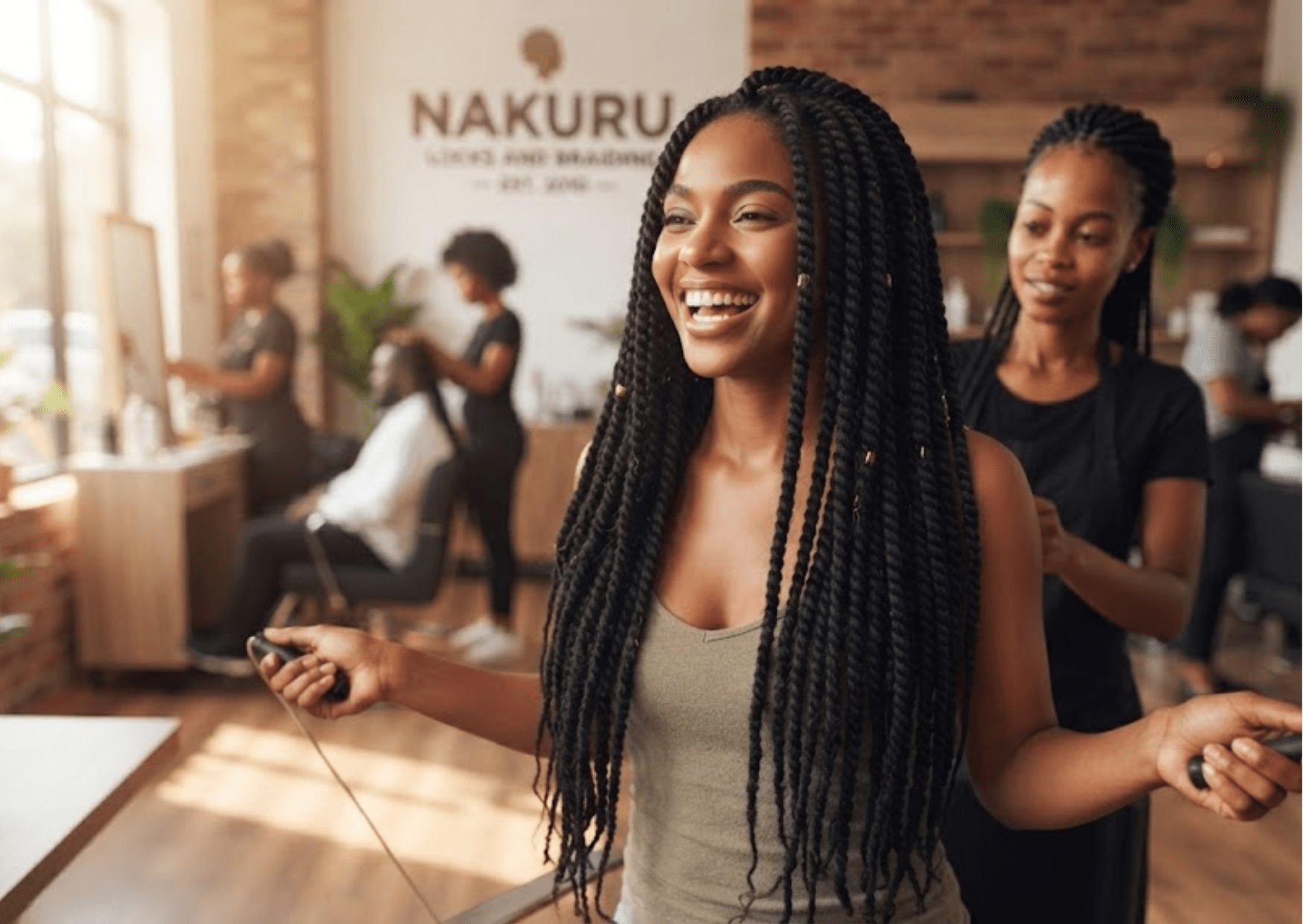
Rope Twists Hairstyles: The Complete Guide to Styles, Benefits, Care, and Maintenance
Rope twists hairstyles are a protective, rope-like two-strand style created by first twirling individual sections of hair (or hair plus extensions) and then twisting those pre-twirled strands together in the opposite direction.
The result is tighter, plumper, longer-lasting coils that resemble actual rope, often called Senegalese twists when done with smooth synthetic hair.
Picture this: You wake up in a humid climate—whether Nairobi’s highlands, Atlanta’s summer heat, or London’s unpredictable rain—and your natural curls or coils need a break from daily manipulation.
You want something polished yet low-maintenance, something that protects length while looking intentional from the office to a night out.
Rope twists deliver exactly that. At Nakuru Locks and Braiding in the heart of Nakuru City, Kenya, stylists see clients of every age and gender request this style because it bridges tradition and modern versatility.
From short natural rope twists on men to long, flowing versions on women, the technique travels well across cultures and hair textures.
This guide covers what rope twists are, how they differ from regular twists, their benefits, step-by-step installation, styles for men and women (including short and Black hair looks), types, ideal hair, and practical FAQs—all grounded in established hair-care knowledge.

What Are Rope Twists?
Rope twists (sometimes labeled rope braids or Senegalese twists) start with two sections of hair.
Each section is individually twirled or finger-coiled in the same direction, then the two pre-twirled pieces are twisted around each other in the opposite direction.
This counter-rotation locks the strands into a firm, rope-like cylinder that holds shape better than a simple wrap.
They can be done on natural hair alone or with extensions for length and fullness. On natural hair the finish is more textured; with smooth Kanekalon or pre-stretched braiding hair the look becomes sleek and glossy.
The style works on Type 3 and Type 4 hair especially well because the natural curl pattern grips the twist, though it can be adapted for looser textures with extra product or end-sealing.
Historically, twisted protective styles have deep roots in African hair traditions, where coiling and twisting protected hair from environmental stress while expressing identity. Today the same principle applies worldwide.
What Is the Difference Between Twists and Rope Twists?
Classic two-strand twists simply wrap two sections of hair around each other from root to tip. Rope twists add the preliminary individual twirl (often called “rope twisting” or the double-twirl method).
Key distinctions:
- Technique: Regular twists = direct wrap. Rope twists = twirl each half first, then wrap opposite.
- Appearance: Rope versions look plumper, more uniform, and distinctly rope-like; regular twists can appear looser or flatter.
- Longevity: Rope twists typically stay neat 2–3 weeks (sometimes longer with extensions), while basic two-strand twists often frizz or loosen after 1–2 weeks.
- Finish: Rope twists lay flatter against the scalp and produce sharper, more defined waves when unraveled into a twist-out.
- Feel: The extra tension from pre-twirling creates a firmer hold without necessarily increasing scalp tension if installed correctly.
Senegalese twists are essentially rope twists made with smooth synthetic hair and sealed ends; the terms are often used interchangeably in salons.

What Are the Benefits of Rope Twists?
Rope twists rank among the most practical protective styles for several reasons:
- Protection and length retention: Ends stay tucked and shielded from friction, weather, and daily handling, reducing breakage so natural growth shows.
- Low daily manipulation: Once installed, morning routines shrink to a light oil on the scalp and a satin scarf or bonnet at night.
- Moisture retention: The tightly coiled structure creates a micro-environment that slows moisture loss.
- Versatility: Wear them down, in high or low ponytails, buns, half-up styles, or updos. They transition easily from casual to formal.
- Defined twist-out payoff: Taking them down yields uniform, elongated waves or curls that last days with proper product.
- Scalp-friendly option: When tension is controlled, they place less stress on edges than tight cornrows or heavy braids—especially useful during recovery from traction concerns.
- Longevity: Properly installed and maintained sets last 2–8 weeks depending on size, hair type, and whether extensions are used.
These benefits make rope twists ideal for travel, busy schedules, or anyone prioritizing hair health alongside style.
How Do You Make a Rope Twist?
Professional installation at a salon like Nakuru Locks and Braiding ensures even tension and healthy roots, but the technique can be learned at home. Always start with clean, conditioned, detangled hair.
Prep Wash and deep-condition. Apply leave-in conditioner or a light twisting cream section by section. Detangle thoroughly. Work on damp (not soaking) hair for better hold.
Step-by-step
1. Section hair into uniform parts (size determines final twist thickness—smaller for mini looks, larger for jumbo).
2. Split one section into two equal halves.
3. Twirl each half tightly from root to tip in the same direction (both clockwise or both counterclockwise). Keep a firm grip so they do not unravel.
4. Cross the two pre-twirled strands over each other in the opposite direction, continuing the twist all the way to the ends. This counter-motion creates the rope effect.
5. Seal the ends by coiling the last inch around a finger or (with synthetic hair) dipping in hot water. A small clear elastic can be used if needed.
6. Repeat across the head. Moisturize as you go to prevent dryness.
Time varies: 2–6+ hours depending on density, length, and size. For beginners, practice on a small section first. Professional stylists refine parting, tension, and product choice for lasting comfort.
Rope Twists for Men / Rope Twist Hair Male
Men’s rope twists (often simply called two-strand or rope twists) deliver clean definition with minimal daily effort. Popular variations include:
- Medium or thin boxed rope twists with a fade or taper on the sides for a sharp, professional outline.
- Longer hanging rope twists paired with a temple fade.
- Short natural rope twists that sit close to the head and grow out gracefully.
- Color-tipped or ombre ends for subtle personality.
They suit textured hair (3C–4C ideal) with at least a couple of inches of length.
Maintenance centers on scalp oiling, nighttime silk or satin protection, and occasional refreshing of the roots.
Many men pair them with a lineup for a polished barbershop finish that lasts weeks.
Rope Twists for Ladies / Girls / Rope Twists Hairstyles for Ladies
Women and girls enjoy the full range: long flowing Senegalese-style rope twists, shoulder-length medium sets, or playful short styles. Common looks include:
- Classic long rope twists worn down or in a high ponytail.
- Updos and elegant buns for formal events.
- Half-up styles or side parts that frame the face.
- Colored or ombre versions (caramel, burgundy, blonde tips) that add dimension without permanent dye.
For girls the style can be lighter and smaller for comfort during school or play. At Nakuru Locks and Braiding, stylists emphasize gentle tension so young scalps stay comfortable.

Short Rope Twists Hairstyles
Short rope twists prove you do not need long hair. Options include:
- Mini or micro twists on a TWA (teeny weeny afro) or short natural hair.
- Chin- or jaw-length twist bobs.
- Short ponytail or top-knot variations.
- Natural short rope twists that define the shape while protecting ends.
These styles are lightweight, quick to install relative to longer sets, and excellent for length retention during a grow-out phase.
Rope Twists Hairstyles for Black Hair / Rope Twist Braid Black Hair
On Black hair—especially coily and kinky textures—rope twists excel because the natural curl pattern locks the twist securely.
They celebrate texture while offering protection against dryness and breakage common in Type 4 hair.
Whether pure natural or blended with extensions, the style maintains cultural resonance and modern versatility. Proper moisturizing and gentle installation keep edges healthy.
What Are the Different Types of Rope Twists?
- Natural two-strand rope twists: Pure natural hair, more textured finish.
- Senegalese twists: Smooth synthetic (Kanekalon) hair for a sleek, shiny rope look; often sealed with hot water.
- Marley twists: Coarser Marley hair for a fuller, more natural, loc-like appearance.
- Havana twists: Softer, fluffier, often chunkier extensions that feel lighter.
- Mini / micro rope twists: Tiny sections for denser coverage and longer wear on short hair.
- Jumbo rope twists: Fewer, thicker sections for faster install and bold volume.
Size, extension type, and parting pattern create endless variation.
What Hair Is Best for Rope Twists?
- Natural hair alone: Best for those wanting zero added weight; works well on medium-to-long Type 3–4 hair.
- Smooth Kanekalon or pre-stretched braiding hair: Ideal for classic Senegalese/rope shine and longevity.
- Marley hair: Preferred for textured, fuller, natural-looking volume.
- Havana or similar soft kinky hair: For lightweight, fluffy results.
Choose quality, lightweight fibers to avoid excess tension. Human hair extensions are possible but less common for pure rope styles. Always match texture and density to your natural hair for the most seamless blend.
Side Notes on Related Searches
“Rope twists exercise” usually refers to battle-rope or cable torso-twist movements that train the core and obliques, unrelated to hair.
“Rope twists candy” points to twisted candy ropes or similar confections—again, not a hairstyle. These terms surface in searches but sit outside the protective-style conversation.
FAQ
How long do rope twists last?
Typically 2–3 weeks on natural hair and 4–8 weeks with quality extensions when protected at night and kept clean.
Do rope twists damage hair?
When installed with controlled tension and removed carefully, they protect rather than damage. Excessive tightness or prolonged wear without cleansing can cause issues.
Can I wash my hair in rope twists?
Yes—focus on the scalp with diluted shampoo, rinse thoroughly, and re-moisturize.
Are rope twists suitable for short hair?
Absolutely; mini and short versions work on a few inches of length.
How much do they cost?
Prices vary by length, density, and location. Consult a salon such as Nakuru Locks and Braiding for a personalized quote based on your hair.
Can men and women both wear them?
Yes—the technique is gender-neutral and highly adaptable.
References and Further Reading
Reliable information draws from established beauty brands and stylists (Pattern Beauty, Carol’s Daughter, Byrdie) and trichology-informed sources that emphasize protective styling principles. Always prioritize scalp health and professional consultation for personalized advice.
Leave a Reply