

Burgundy vs. Honey Blonde Locs: Which Color Suits Your Skin Tone?
Imagine walking into a room with the same locs you have always loved—but suddenly, every strand catches the light differently. Burgundy gives your look a deep wine-inspired richness, while honey blonde creates a warm, sun-kissed glow.
The right choice can refresh your entire appearance without changing your loc length, parting pattern, or favourite styles.
So, which is better: burgundy vs. honey blonde locs? Burgundy is ideal if you want depth, drama, and a jewel-toned finish.
Honey blonde is a strong choice if you prefer brightness, warmth, and a softer appearance. Your skin tone, undertone, maintenance routine, and desired level of attention should guide the final decision.
At Nakuru Locks and Braiding, we help clients choose loc colours that complement their features while protecting the health and structure of their natural hair.
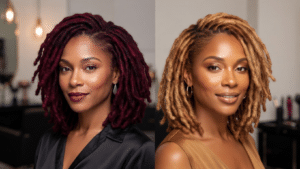
Burgundy vs. Honey Blonde Locs
Burgundy and honey blonde create two very different impressions.
Burgundy is a dark red shade with brown, violet, or plum influences. It can range from subtle burgundy-brown to vivid cherry wine.
It usually looks especially dimensional on dark natural hair because the colour appears deeper indoors and brighter in sunlight.
Burgundy also works well as a full colour, ombre, balayage-style placement, or a few strategically placed highlights.
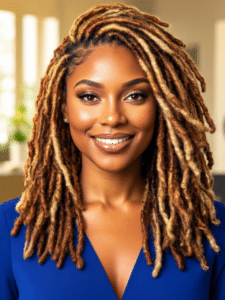
Honey blonde is a warm blonde positioned between golden blonde, caramel, and bronde. It is lighter than brown but generally softer and deeper than platinum or pale ash blonde.
Professional colour resources describe honey blonde as a flexible shade that can be adjusted from buttery and golden to caramel and bronzed.
Neither shade is universally “better.” The best colour is the one that matches your undertone, lifestyle, wardrobe, and willingness to maintain it.
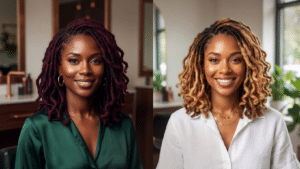
What Skin Tone Does Honey Blonde Look Good On?
Honey blonde looks good on many skin tones because it can be customised. The important factor is not only whether your complexion is light, medium, or deep, but also whether your undertone is warm, cool, neutral, or olive.
Warm undertones
Warm undertones often have golden, yellow, peach, or orange qualities. Honey blonde usually complements this colouring naturally because both the hair and skin contain warmth.
Good options include:
-
Golden honey blonde.
-
Amber honey.
-
Caramel blonde.
-
Buttery blonde.
-
Bronze-toned bronde.
On deep or medium-dark skin, a rich honey or caramel shade can create a glowing contrast without looking excessively pale. A darker root can make the colour appear more natural and reduce the amount of lightening required.
Neutral undertones
Neutral undertones can usually wear both warm and cool colours. If you are unsure whether burgundy or honey blonde suits you, neutral skin gives you room to experiment.
Try:
-
Beige honey blonde.
-
Neutral caramel.
-
Soft golden blonde.
-
Burgundy-brown.
-
Balanced wine burgundy.
Neutral honey blonde can brighten the face without becoming too yellow. A balanced burgundy can add colour without pulling too red or too purple.
Cool undertones
Cool undertones often show pink, red, blue, or rosy qualities. Very yellow blonde may sometimes look disconnected from cool skin, but honey blonde can still work when it is softened.
Choose:
-
Beige honey.
-
Champagne honey.
-
Neutral dark blonde.
-
Soft caramel with less yellow.
-
Plum-leaning burgundy.
-
Violet burgundy.
A cool or smoky burgundy can complement rosy undertones particularly well. If you want honey blonde, ask your colourist to avoid an overly orange or yellow finish.
Olive undertones
Olive skin can have green, golden, or slightly neutral qualities. Medium bronzed honey, caramel, and muted golden shades often work well. Burgundy can also be flattering, especially when it contains brown or plum rather than bright orange-red.
For olive skin, consider:
-
Bronzed honey blonde.
-
Dark caramel.
-
Honey-brown ombre.
-
Burgundy-brown.
-
Mulled-wine burgundy.
L’Oréal’s shade guidance similarly identifies variations of honey blonde for warm, cool, olive, fair, and deep complexions, showing why the shade should be personalised rather than treated as one fixed colour.
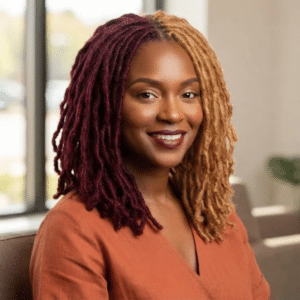
Is Burgundy or Honey Blonde Better for Dark Skin?
Both colours can look beautiful on dark skin, but they create different levels of contrast.
Honey blonde locs produce a noticeable light-to-dark contrast. Golden and caramel variations can reflect light around the face and make long locs especially eye-catching.
If you prefer blonde without an icy or highly artificial appearance, honey blonde is often a more wearable starting point than platinum.
Burgundy locs create a richer, lower-contrast effect. Deep wine, plum, and burgundy-brown shades blend beautifully with dark roots while still showing visible colour in sunlight.
This can make burgundy a practical option for someone who wants a bold colour that remains relatively grounded.
For dark skin:
-
Choose honey blonde for brightness and contrast.
-
Choose burgundy for richness and sophistication.
-
Choose burgundy-to-honey ombre for both depth and light.
-
Choose dark roots with either shade for easier regrowth.
-
Choose caramel honey rather than pale yellow blonde for a softer result.
The final result also depends on the starting colour of your locs, the porosity of your hair, the chosen product, and whether the colour is added to natural locs or installed as extensions.
Burgundy Locs: Best Shades and Placement Ideas
Burgundy is not one single colour. Your stylist can adjust it to create a warmer, cooler, darker, or brighter result.
Deep burgundy locs
Deep burgundy combines wine, red, and brown. It is a good choice if you want colour that looks subtle indoors but becomes more visible outdoors.
This shade works well for:
-
Mature or professional styles.
-
Full-head colour.
-
Medium and long locs.
-
Dark-rooted installations.
-
Clients who want colour without neon brightness.
Plum burgundy locs
Plum burgundy contains more violet. It can create a cooler, more dramatic finish and may complement neutral or cool undertones.
Try plum burgundy as:
-
Face-framing locs.
-
Alternating red and purple sections.
-
Peekaboo colour beneath darker locs.
-
Ombre ends.
-
Small highlights around the front.
Burgundy-brown locs
Burgundy-brown is one of the easiest versions to wear because the brown base reduces the intensity of the red. It can look polished, natural, and dimensional.
It is particularly useful when you want:
-
A first colour change.
-
A low-contrast transformation.
-
Colour that blends with dark roots.
-
A shade suitable for both casual and formal styling.
Burgundy locs with highlights
If a full burgundy installation feels too intense, burgundy highlights provide a lower-commitment option. Fine wine-red pieces can be placed around the face, through the top layer, or at the ends.
Possible combinations include:
-
Black locs with burgundy highlights.
-
Dark brown locs with plum highlights.
-
Burgundy locs with cherry-red pieces.
-
Burgundy-brown locs with copper accents.
-
Wine locs with lighter red ends.
Highlight placement can change the visual shape of your hairstyle. Face-framing highlights draw attention toward the eyes and cheekbones, while scattered highlights create movement throughout the locs.
Honey Blonde Locs: Shades and Installation Ideas
Honey blonde can be installed as a solid shade or combined with darker colours to create dimension.
Full honey blonde locs
Full-colour honey blonde locs create the brightest effect. They work especially well when the shade is blended with a darker root or slightly deeper pieces.
Ask for:
-
Golden honey blonde.
-
Caramel honey blonde.
-
Amber blonde.
-
Honey bronde.
-
Beige honey blonde.
A darker root can make the installation look more natural and reduce the visibility of new growth.
Honey blonde highlights
Honey blonde highlights can brighten black, brown, burgundy, or dark blonde locs without colouring every strand.
Popular placements include:
-
Front and side highlights.
-
Tips only.
-
Alternating honey and natural locs.
-
A few bold statement locs.
-
Thin highlights distributed throughout the head.
Honey blonde highlights are also useful if you want to test the shade before committing to a full installation.
Honey blonde ombre locs
Ombre is a gradual transition from one colour at the roots to another colour toward the ends. Common combinations include dark brown to honey blonde, black to caramel, and brown to blonde.
For locs, ask your stylist to create one of these effects:
-
Black roots fading into caramel honey.
-
Dark brown roots fading into golden blonde.
-
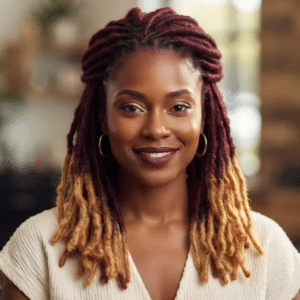
Burgundy roots fading into honey blonde.
-
Natural locs with honey-blonde tips.
-
Dark locs with a soft honey-to-blonde gradient.
Ombre is especially attractive on long locs because the colour transition has enough length to appear gradual. On shorter locs, a two-tone block effect may be more noticeable.
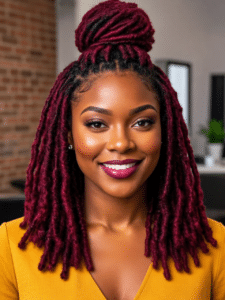
Burgundy and Honey Blonde Ombre
Combining burgundy and honey blonde creates a distinctive colour story. Burgundy provides depth at the roots or middle sections, while honey blonde adds light toward the ends.
Some combinations to discuss with your stylist include:
-
Black to burgundy to honey blonde: A dramatic three-tone gradient.
-
Burgundy roots with honey-blonde ends: Bold at the top and bright at the bottom.
-
Honey blonde highlights through burgundy locs: Warm flashes of light without removing the wine tone.
-
Dark brown roots to burgundy mids to caramel tips: A softer, more blended version.
-
Burgundy and honey blonde alternating locs: A graphic, high-impact installation.
This combination works best when the shades are intentionally balanced. If the burgundy is very cool and the blonde is strongly yellow, the transition may appear disconnected. A colourist can bridge the shades with caramel, copper, brown, or neutral blonde.
What Is the Best Hair Color for Locs?
The best hair colour for locs is the one that delivers your preferred appearance without compromising the health of the locs. For many people, the best practical options are:
-
Burgundy-brown for rich colour with moderate contrast.
-
Honey blonde for warmth and brightness.
-
Dark brown for a natural-looking enhancement.
-
Caramel for a softer lightening effect.
-
Burgundy and honey ombre for a customised statement look.
-
Coloured loc extensions for a temporary transformation.
Natural locs are dense, and colour may not process evenly if product is not applied and rinsed thoroughly. Lightening to blonde may require more chemical processing than depositing burgundy over a dark base. This distinction matters because dryness and breakage are major concerns when colouring locs.
The American Academy of Dermatology advises following product instructions, testing colour before use, and stopping if you experience rash, redness, swelling, burning, or itching. Professional loc-colouring guidance also emphasises hydration, deep conditioning, protein support where appropriate, and avoiding repeated over-processing.aad+2
For that reason, a professional consultation is recommended, especially if your locs are:
-
Thin or newly formed.
-
Weak around the roots.
-
Brittle or breaking.
-
Previously bleached.
-
Coloured several times.
-
Very long and heavy.
-
Combined with extensions.
What Is the Prettiest Blonde Hair Color?
There is no single prettiest blonde hair colour for everyone. However, honey blonde is one of the most flattering and versatile options because it sits between golden blonde and caramel. It has enough warmth to look lively but enough depth to avoid the starkness of very pale blonde.
The prettiest blonde for you may be:
-
Honey blonde if you want warmth and glow.
-
Caramel blonde if you want a deeper, softer blonde.
-
Champagne blonde if you prefer a neutral or slightly cool finish.
-
Ash blonde if you want a smoky, muted appearance.
-
Platinum blonde if you want maximum brightness and contrast.
-
Bronde if you want blonde blended with brown.
For locs, honey blonde often gives a more forgiving result than extremely pale blonde. It can also be combined with brown roots, caramel lowlights, or darker locs to create visual depth.
What Hair Color Is Darker Than Honey Blonde?
Several shades are darker than honey blonde:
-
Caramel blonde.
-
Dark golden blonde.
-
Bronde.
-
Light brown.
-
Caramel brown.
-
Chestnut brown.
-
Medium brown.
-
Golden brown.
-
Burgundy-brown.
If honey blonde feels too bright, move one or two levels darker rather than abandoning warmth completely. Caramel blonde is a natural next step. Bronde gives you a balanced blend of brown and blonde. Golden brown provides warmth with more depth.
For locs, darker shades can also reduce the amount of lightening needed. This may help preserve moisture and strength, although every colouring service still requires an individual assessment.
How to Choose Between Burgundy and Honey Blonde
Use your desired visual effect as the starting point.
Choose burgundy if you want:
-
A dramatic but wearable transformation.
-
A darker, richer colour.
-
A shade that blends naturally with dark roots.
-
Wine, plum, or red undertones.
-
Colour that looks especially vibrant in sunlight.
-
A lower-lightening option than blonde in many cases.
Choose honey blonde if you want:
-
A bright, warm transformation.
-
Sun-kissed colour.
-
A shade that highlights loc texture.
-
Golden or caramel undertones.
-
Strong contrast against dark skin or dark roots.
-
A soft alternative to platinum blonde.
Choose both if you want a personalised, editorial-style installation. Burgundy and honey blonde can be blended through ombre, highlights, or alternating locs.
Caring for Coloured Locs
Colour-treated locs need consistent care because locs can hold moisture and product differently from loose hair.
Follow these practices:
-
Wash with a colour-safe cleanser suited to your scalp and locs.
-
Use lukewarm or cool water rather than very hot water.
-
Moisturise regularly with a lightweight product that does not create buildup.
-
Dry locs completely after washing to reduce the risk of lingering dampness.
-
Use deep-conditioning treatments when recommended by your loctician.
-
Protect locs from excessive heat and prolonged sun exposure.
-
Avoid colouring repeatedly before the locs have recovered.
-
Schedule maintenance based on hair health rather than colour urgency.
-
Do not apply bleach over fragile, thinning, or severely dry locs.
Colour-care guidance commonly recommends colour-safe products, regular conditioning, cooler water, and heat or UV protection to help preserve vibrancy.
If your locs feel unusually rough, snap easily, develop weak spots, or show scalp irritation, pause chemical services and consult a qualified loctician or dermatologist.
Frequently Asked Questions
Does honey blonde suit dark skin?
Yes. Warm honey blonde is widely considered one of the most flattering blondes on medium-to-deep skin with warm or neutral undertones because the gold creates complementary contrast rather than washing out the complexion.
Is burgundy safer for locs than honey blonde?
Often yes, because it typically requires less aggressive lifting. Always prioritize current hair health over color preference.
Can I do ombre or highlights without full bleaching?
Yes. Partial techniques and pre-colored extensions make dimensional color accessible with reduced risk.
How long does color last on locs?
It varies with porosity, aftercare, and sun/water exposure. Expect more frequent refresh for lightened honey blonde than for burgundy or deposit-only shades.
What if I change my mind?
Ombre and highlights grow out more gracefully than full-color lightening. Extensions can simply be removed.
Related Nakuru Locks and Braiding Articles
For readers planning their next loc transformation, explore related content from Nakuru Locks and Braiding:
-
Braided Styles for Round Faces: Expert Tips & Long-Lasting Looks
-
Artificial Dreadlocks & Locs 2026: Styles, Prices & Removal Guide
Replace these internal links with the exact live Nakuru Locks and Braiding URLs before publishing. If the website uses different URL slugs, retain the article titles but update the links to prevent broken pages.
Final Verdict
Burgundy and honey blonde locs can both be stunning, but they communicate different styles. Burgundy offers depth, richness, and a sophisticated wine-inspired finish. Honey blonde offers warmth, radiance, and a soft sunlit effect.
For a bold custom look, combine them with burgundy roots, honey-blonde ends, or carefully placed highlights.
Before colouring natural locs, prioritise a consultation, patch testing, realistic maintenance planning, and a professional assessment of your loc health.
At Nakuru Locks and Braiding, the goal is not only to create beautiful colour—it is to help you choose a shade that remains wearable, healthy-looking, and suited to your personal style.
Leave a Reply