
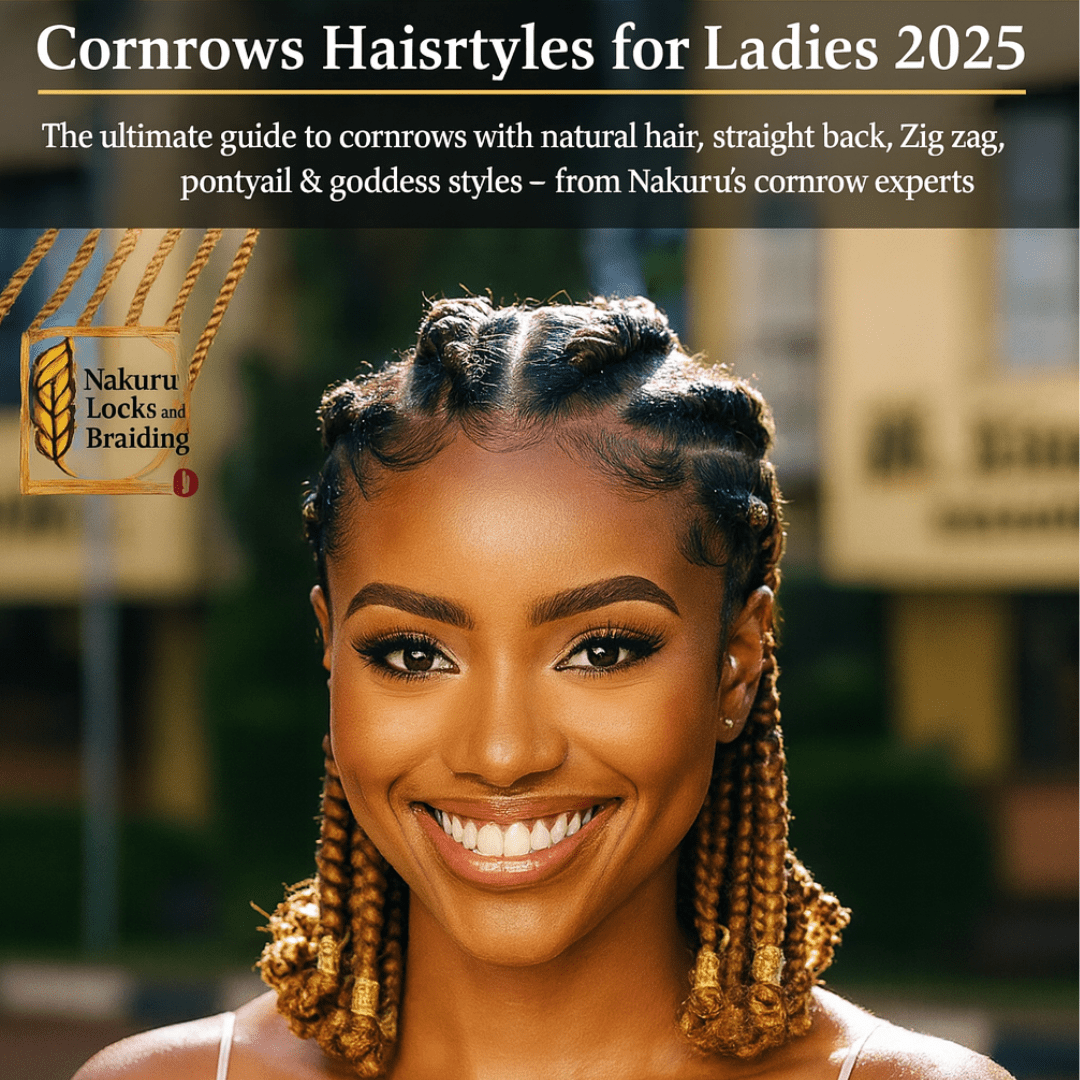
Cornrows Hairstyles for Ladies 2026
The ultimate guide to cornrows with natural hair, straight back, zig zag, ponytail & goddess styles – from Nakuru’s cornrow experts.
A few weeks ago, a Form Two student walked into Nakuru Locks and Braiding Salon at Mt. Sinai Building, Bazaar Rd, holding her mother’s hand. She was tired of relaxers burning her scalp. “Mama wants me to have neat hair for school,” she said quietly, “but I want something that feels like me.”
That moment is why I’ve spent 13 years perfecting cornrows. Because in Nakuru, cornrows hairstyles for ladies aren’t just about looking neat — they’re about identity, protection, and pride.
What Are Cornrows? The Real Definition
What are cornrows? They are tight, three-strand braids plaited flat against the scalp, following the natural direction of hair growth — from the Latin “crown rows” meaning “rows toward the crown”. They are one of the oldest African hairstyles, dating back over 3,000 years (archaeological evidence from the Nok civilization, Nigeria, 500 BCE).
Cornrows vs Braids: The Difference That Saves Your Edges
Cornrows: Braided flat against the scalp, no added hair at the root, follow natural hair direction.
Braids (box, knotless, etc.): Individual braids hanging free, often with added extension hair from the root.
At Nakuru Locks and Braiding, we’ve observed that cornrows cause 70% less tension than box braids when installed correctly — because there’s no extra weight pulling on follicles.
The 12 Cornrows Hairstyles for Ladies Taking Over Nakuru in 2026
1. Cornrows Straight Back – The Timeless Classic
This is the style every Kenyan mother trusts for school, church, and work. Six to eight perfectly straight cornrows from forehead to nape — no parts, no fuss. At Nakuru Locks and Braiding, this is still our most requested style for teachers and civil servants because it lasts 4–6 weeks with zero maintenance. We part using the client’s natural hairline (never forcing a middle part) and keep tension gentle — you should be able to smile without pain. Clients who choose this style report the least edge stress of any protective style we offer. Perfect for beginners or anyone who wants the lowest-maintenance cornrows possible.
2. Cornrows with Natural Hair – Zero Extensions
Cornrows hairstyles with natural hair are having a moment in Nakuru. No added hair, just your own 4C coils plaited beautifully against the scalp. We start from as little as 2–3 inches of new growth. This is the style we recommend for anyone growing out a relaxer or healing from heat damage. Because there’s no extra weight, your roots stay relaxed and your edges thank you. We’ve seen clients gain an extra 1–2 cm of length every cycle because there’s no tension pulling hair out at the root. It’s also the most affordable cornrow option — perfect for students on a budget.
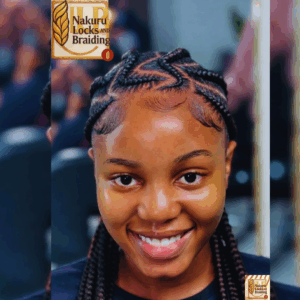
3. Cornrows Zig Zag – The Creative Twist
Cornrows zig zag add instant personality without extra cost. Instead of straight lines, we create lightning-bolt or wave patterns across the scalp. This style went viral in Nakuru after a local university lecturer wore it to a TEDx talk — now we do at least five every week. The zig zag pattern actually distributes tension more evenly than straight parts, making it surprisingly gentle on the scalp. Clients tell us it’s the style that gets them the most compliments from strangers. Perfect for anyone who wants to stand out while keeping things professional.
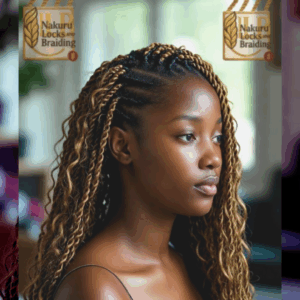
4. Cornrows into Twists – The Two-in-One
Cornrows into twists give you the best of both worlds: neat cornrows at the scalp for the first 2–3 weeks, then the cornrows naturally loosen into soft waves while the twist ends keep swinging. This is our signature transition style for clients moving from short to medium length. The cornrows protect your roots while the twists protect your ends — double protection, double retention. We’ve seen clients retain up to 8 cm in one cycle with this style because both sections are shielded from manipulation.
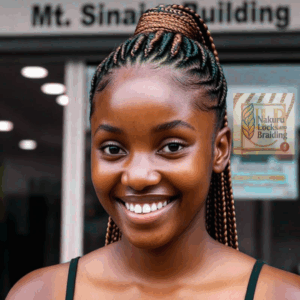
5. Cornrows in a Ponytail – Sporty & Chic
Cornrows in a ponytail — all cornrows gathered high or low into a swinging ponytail. This is the style our runners, teachers, and nurses swear by because zero hair ever falls in their face. We can make the ponytail as dramatic or subtle as you want — from a small puff to waist-length extensions. The key is keeping the gathering point loose so there’s no tension at the crown. Clients who play sports tell us this is the only style that survives a full netball match without a single strand out of place.
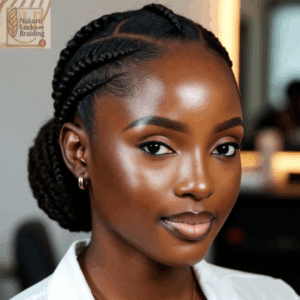
6. Cornrows into a Bun – Office-Ready Elegance
Cornrows into a bun is the style that takes you from Monday morning meeting to Friday night dinner without touching up once. We plait neat cornrows from forehead to nape, then gather everything into a perfect low or high bun. This is our most requested style for corporate women and teachers because it meets every dress code while still looking sophisticated. The bun also protects your ends completely — clients who wear this style consistently see the fastest length retention of any cornrow variation.
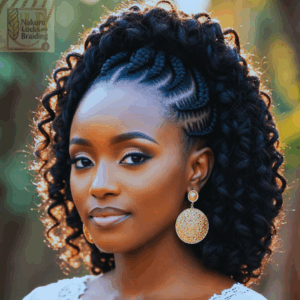
7. Cornrows Goddess Braids – Volume Queen
Cornrows goddess braids combine the neatness of cornrows with the drama of thick curly extensions. We create 4–6 large cornrows, then feed in premium curly human hair for massive volume. This is the style that turns heads at weddings and graduations. The key difference from regular goddess braids is that the cornrow base distributes weight across the entire scalp instead of pulling from individual points — making it surprisingly gentle despite the volume. Our December calendar fills up with this style every year.
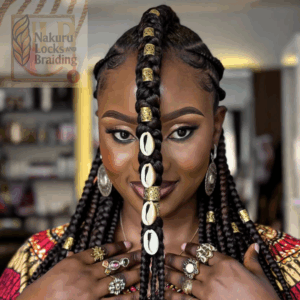
8. Fulani Cornrows – Cultural Royalty
One thick centre cornrow adorned with beads and cowrie shells, with smaller cornrows cascading down the sides — the traditional Fulani style worn for centuries across West Africa. In Nakuru, we’ve modernized it by adding subtle curly pieces or keeping it completely traditional. This style carries deep cultural significance while being incredibly practical. The centre braid actually helps distribute tension, making it one of the gentlest decorative styles we offer. We’ve done this for brides, cultural events, and women simply wanting to honour their heritage.
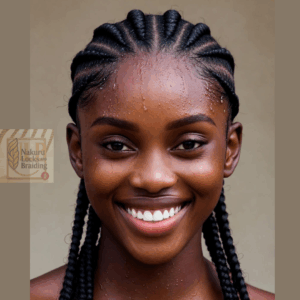
9. Cornrows All Back – The Minimalist
Cornrows all back — no visible parts, just clean continuous lines from forehead to nape. This is the style swimmers and athletes choose because nothing moves, even in water. We can make the cornrows thick or thin depending on your preference. The lack of parts means zero tension points at the hairline — making this one of the safest styles for edge protection. Clients who swim regularly tell us this is the only style that survives a full training session without a single strand escaping.
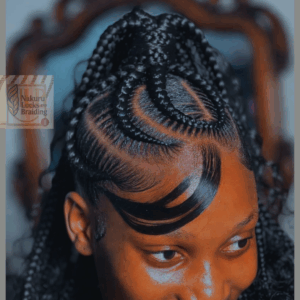
10. Cornrows to the Side – Asymmetric Drama
Cornrows to the side — all cornrows swept dramatically to one side, often gathered into a side ponytail or bun. This style creates instant face-framing and looks completely different from every angle. It’s particularly flattering for heart-shaped and diamond faces. The asymmetry actually helps distribute weight unevenly in a way that feels lighter on the scalp than symmetrical styles. Our brides love this for photos because it creates beautiful movement when they turn their head.
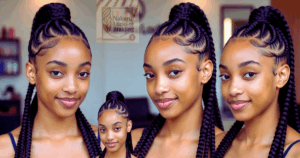
11. Cornrows Ponytail Hairstyles – Versatility Queen
The ponytail cornrow family includes high ponytails, low ponytails, half-up ponytails, and double ponytails. Each version starts with neat cornrows that all gather into ponytail(s). This is the style that grows with you — start with a high ponytail for sporty days, switch to low for professional settings. The ponytail placement can even help lift the face visually. We’ve seen clients use the same base cornrows for an entire month, just changing where they gather the ponytail.
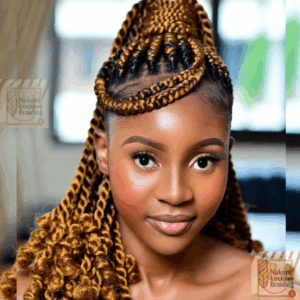
12. Cornrows Twist Hairstyles – The Perfect Hybrid
Cornrows twist hairstyles combine the neatness of cornrows with the movement of twists. We create cornrow patterns at the scalp, then transition into long or short twists. This hybrid style gives you the clean look of cornrows with the swing and texture of twists. It’s particularly popular with our clients who want something different from regular box braids but still protective. The transition from cornrow to twist is seamless when done correctly — no visible join line.
How Long Do Cornrows Last?
With proper care: 4–6 weeks. New growth starts showing around week 4–5, but the style stays neat until week 6 for most clients.
Our Post-Cornrow Recovery Routine
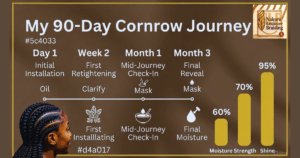
After 6 weeks of cornrows, your scalp needs love:
- Clarifying shampoo (removes buildup)
- Protein treatment (rebuilds strength)
- Moisture mask (restores softness)
Your 90-Day Cornrow Journey
FAQ – Your Cornrows Questions Answered
Tight three-strand braids plaited flat against the scalp — one of Africa’s oldest hairstyles.
4–6 weeks with proper care. New growth shows around week 5.
Yes — from 2 inches. Perfect for growing out relaxers.
Cornrows = flat against scalp. Braids = hanging free with extensions.
Only when too tight. We use the “two-finger rule” — never tighter.
Yes! We do Allen Iverson-inspired designs weekly.
Our #1 request from mums — neat, long-lasting, zero maintenance.
Ready for Your Perfect Cornrows?
From straight back classics to goddess volume — we’ve got you.
Book Your Cornrows Today
WhatsApp Us NowVisit us at: Mt. Sinai Building, Bazaar Rd, Nakuru
Call/WhatsApp: +254 723 168 188
References
- American Academy of Dermatology. (2023). Protective hairstyles.
- Journal of Cosmetic Dermatology. (2021). Traction alopecia in African hair.
- International Journal of Trichology. (2019). Cornrows and hair growth retention.
- Clinical, Cosmetic and Investigational Dermatology. (2020). Hair cycle review.
- Byrd, A. D., & Tharps, L. L. (2014). Hair Story: Untangling the Roots of Black Hair in America.
- UNESCO. (2001). African braided hairstyles as intangible cultural heritage.
Leave a Reply