
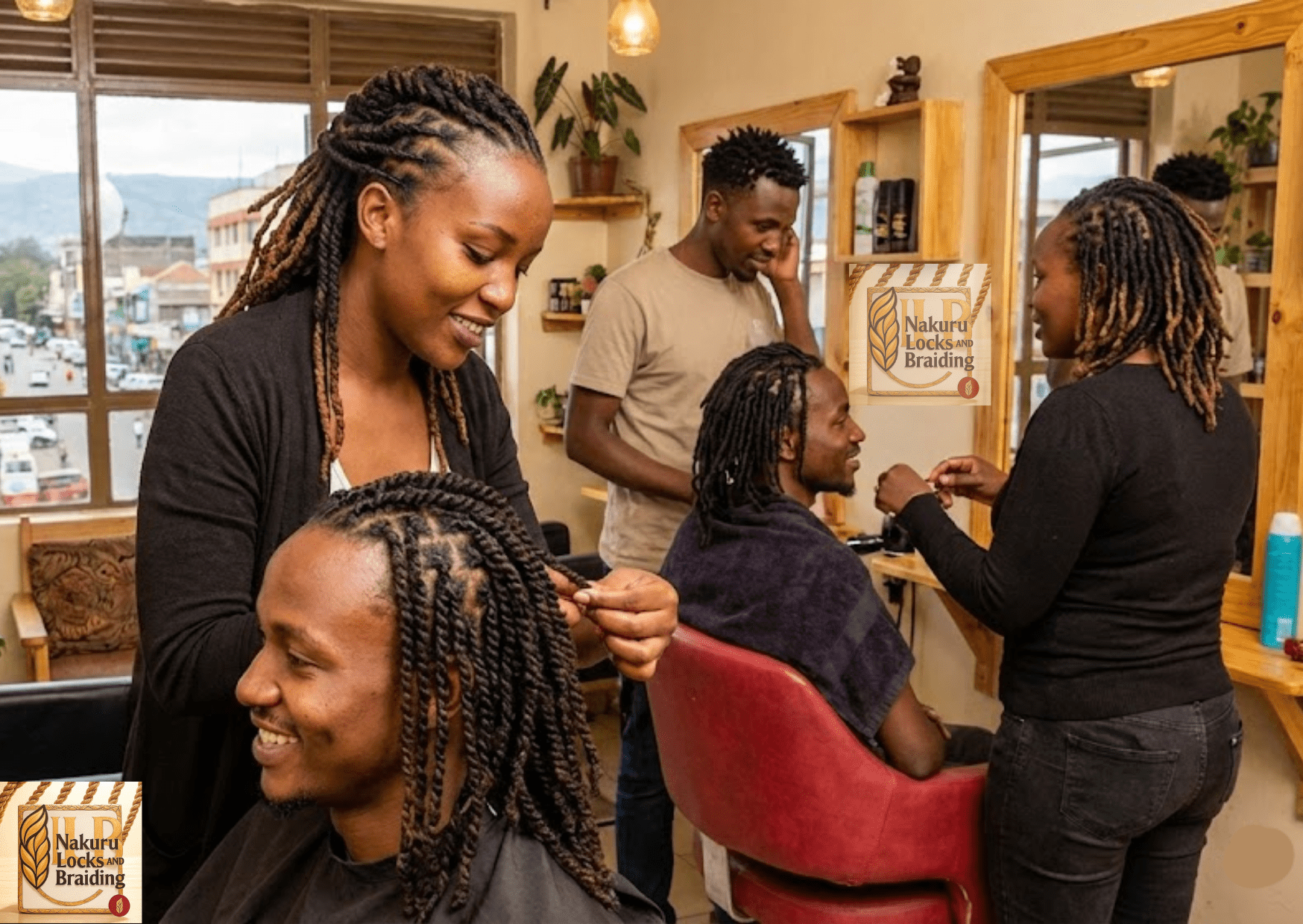
Dreadlocks Braids for Men & Short Dreads Styles: The Nakuru Loctician’s Guide
Six months later, he returned, his locs matured enough for his first intricate style: barrel twists. That evolution—from the patience of short starters to the versatility of dreadlocks braids for men—is what we specialize in at Nakuru Locks and Braiding Salon.
This isn’t just about aesthetics; it’s about understanding hair biology, managing tension, and respecting the journey. Whether you are starting from scratch here in the Rift Valley or looking for maintenance tips globally, this guide blends our salon expertise with dermatological insights to help you navigate the world of men’s locs.
Defining the Terms: Braids to Locs vs. Braiding Over Locs
In the world of natural hair, terminology gets confusing. When clients ask for “dreadlocks braids,” they usually mean one of two very different things. It is crucial to distinguish between them for the health of your hair.
1. Braids as Starter Locs
This is using small plaits (three-strand braids) on loose natural hair to begin the locking process. The braid pattern eventually mattes and fuses internally to form a loc. This is a viable “short dreads style” for beginners, especially those with softer hair textures that unravel easily with coils.
2. Braiding Existing Dreadlocks
This is the primary focus of current trends in dreadlocks braids hairstyles. Once your locs have matured (usually 6–12 months in), we manipulate the actual dreadlocks into braided patterns—cornrows, barrel twists, or intricate designs.
“I thought I had to wait years to style my locs. The team at Nakuru Locks showed me that even with relatively short locs, braiding them back instantly makes me look professional for client meetings.” – James M., Nakuru Business Owner
Authoritative Insight: According to trichological studies on hair fiber architecture, coily hair (Type 4) is most prone to breakage at points of high tension. When braiding existing dreadlocks, the expertise of the stylist is vital to ensure tension is distributed evenly along the scalp, preventing traction alopecia (hair loss caused by pulling) [1].
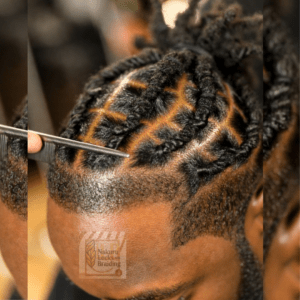
Close-up of fresh comb coil starter dreadlocks on a man’s scalp at Nakuru Locks and Braiding Salon.
The Foundation: Short Dreads Styles for Guys
Before you can have elaborate braided locs, you need a foundation. In Nakuru, many men prefer starting short. It’s practical for the dusty season, easy to wash after a workout, and looks intentional in professional settings during the awkward “frizz stage.”
Here are the top short styles we recommend:
- Comb Coils (Gel Twists): The most popular starter method. Single strands are coiled around a comb with a locking gel. They look like tiny, uniform springs.
-
- Pros: Very neat, cylindrical uniform locs.
- Cons: Can unravel easily when washed in the first few months.
- Two-Strand Twists: Hair is twisted like a rope. These are durable and lock faster than coils for some textures.
-
- Pros: Holds up better during early washes; gives a slightly thicker appearance initially.
- Cons: The twist pattern remains visible for months before fully matting.
- Semi-Freeform Sponge Method: Using a hair sponge to rub the hair in circular motions, encouraging natural clumping.
-
- Pros: Low maintenance, organic, “rugged” look.
- Cons: Less uniform; takes longer to look “groomed.”
The Evolution: Dreadlock Braids Hairstyles
Once your locs reach chin or shoulder length, the styling game changes. Dreadlocks braids for men are not just about looking good; they are a protective measure. By braiding the locs together, you reduce individual movement, minimize snagging, and keep them out of your face.
However, a word of caution from our salon floor: Do not keep braided styles in for longer than 4 weeks. Your hair needs to breathe, and dirt accumulates where the locs cross each other.
1. The Barrel Twist (Barrel Rolls)
This is currently the king of men’s loc styles. We take two or more strands of locs and twist them around each other flat against the scalp, creating thick, tube-like rows.
Why it works: It’s masculine, incredibly neat, and lasts for weeks. It works well for medium-length locs that might not be long enough for a full ponytail.
2. Cornrows Over Locs
Similar to traditional cornrows, but using the dreadlocks themselves instead of loose hair. These can be straight back, zig-zagged, or designed into intricate geometric patterns.
Why it works: Maximum hold and a very clean profile. Ideal for athletes.
3. Individual Plaits or Twists
Taking three (for plaits) or two (for twists) individual dreadlocks and braiding them together from root to tip.
Why it works: It gives the hair a wavy texture when taken down (a “twist-out” on locs) and reduces the overall volume of the hair drastically.
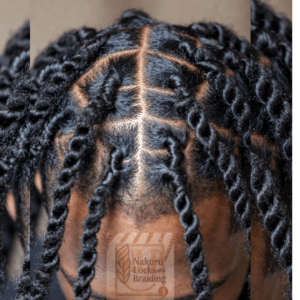
Intricate barrel twist dreadlock braids hairstyle for men viewed from the back.
Expertise in Action: Salon vs. Home Maintenance
The biggest mistake men make with braided locs is neglecting them while they are in the style. Just because they are braided down doesn’t mean they don’t need moisture. In fact, the scalp is more exposed when braided.
We believe in empowering our clients. Here is what we do in the salon, and what you must do at home.
The Salon Protocol (What you pay us for)
When you come to Nakuru Locks and Braiding Salon for maintenance, we aren’t just retwisting. We are assessing scalp health. We use professional-grade clarifyers to remove buildup that regular shampoo misses. Also, We ensure the retwist is firm but never painful. Pain means damage.
“We often have to correct ‘DIY fails’ where clients used heavy waxes like beeswax that trap dust and never wash out. We use light, water-soluble gels that provide hold without the buildup.” – Sarah, Senior Loctician at Nakuru Locks
Your Home Routine (The E-E-A-T approach to hair health)
The key to healthy locs, cited by dermatologists globally, is maintaining the hydrolipid film of the scalp—the natural balance of oil and water [2].
- Hydration is Daily: Your locs are like a sponge. In the dry Nakuru heat, they dry out fast. Dry locs snap. You must mist your hair daily.
- Oiling the Scalp vs. The Hair: Oil seals in moisture; it doesn’t create it. Apply lightweight oils to your scalp after hydrating with water or a water-based spray.
- Cover It Up: Sleeping without a satin durag or bonnet is a guarantee for lint buildup and breakage from cotton pillowcase friction.

DIY dreadlock maintenance kit including rosewater spray, jojoba oil, and a satin durag.
From the Loctician’s Vault: DIY Hydration Recipes
You don’t need expensive imported products to keep your short dreads or braided styles thriving. Here are two recipes we recommend to our clients using accessible ingredients.
1. The Daily Rift Valley Refresher Mist
- Purpose: Daily hydration without buildup.
- Ingredients:
- 1 cup Distilled Water (Tap water often has minerals that cause buildup).
- 2 tablespoons pure Rosewater (Natural humectant).
- 5 drops Peppermint Essential Oil (Stimulates blood flow to the scalp, which some studies suggest aids growth phases [3]).
- Instructions: Mix in a spray bottle. Shake well before spritzing your locs and scalp every morning.
2. The Itch-Relief Scalp Oil
- Purpose: Soothing the scalp when hair is in tight dreadlocks braids.
- Ingredients:
- 2 oz Jojoba Oil (Closest to natural scalp sebum).
- 1 oz Jamaican Black Castor Oil (For sealing thicker textures).
- 5 drops Tea Tree Oil (Natural antimicrobial, helps with dandruff [4]).
- Instructions: Mix in an applicator bottle with a nozzle. Apply sparingly between the braids directly to the scalp twice a week.
The Realistic Timeline: Managing Expectations
Trustworthiness is about honesty. If a loctician tells you you’ll have mature dreadlocks in three months, run. This is a journey.
- The Starter Phase (Months 1–4): Your hair is getting used to being parted. The coils or twists will get fuzzy. They will unravel when washed. This is normal.
- The Budding/Frizz Phase (Months 4–10): The most challenging phase. The hair is expanding and matting internally. It looks puffy and “messy.” Many men quit here. Don’t. This frizz is the internal structure forming.
- The Teen Phase (Months 10–18): The locs start to feel solid. They have some weight. They might look lumpy in places. You can start doing simple dreadlocks braids here.
- The Mature Phase (18 Months+): The locs are uniform, solid, and smooth. Now you can handle complex styles like tight barrel twists without fear of unraveling.
Your Printable Routine Checklist
| Frequency | Action | Focus |
|---|---|---|
| Daily | Hydrate Mist | Spray locs and scalp lightly. |
| Daily | Satin Protection | Sleep with a durag or satin pillowcase. |
| Weekly | Scalp Oiling | Apply light oil to the scalp to seal moisture. |
| Bi-Weekly | Light Wash (Optional) | Focus on scalp cleansing if active/sweaty. |
| Monthly | Deep Wash & Retwist | Professional salon cleanse and maintenance. |
| Monthly | Style Change | Take down braids, let hair rest for a week. |
Frequently Asked Questions (FAQ)
Q: Will braiding my existing dreadlocks make them thin out?
A: Only if done incorrectly. If braids are too tight at the root, they cause traction alopecia, thinning the base of the loc. A professional ensures the tension is spread across the anchor fibers of the hair [5].
Q: Can I start dreadlocks if my hair is very short?
A: Yes. For methods like comb coils, you only need about an inch of hair. The shorter the hair, the harder the initial stage, as they unravel faster, but it is entirely possible.
Q: How do I wash my hair when it’s in barrel twists or braids?
A: We recommend not doing a full deep wash while an intricate style is in, as it will fuzzy up the style fast. Focus on cleaning the exposed scalp with a diluted shampoo on a cloth, and use an antiseptic scalp spray to keep it fresh between salon visits.
Q: My short starter locs look messy for work. What can I do?
A: This is a common concern in Nakuru’s professional circles. During the messy phase, regular retwists (every 3–4 weeks) help keep the roots neat. Getting a sharp fade haircut on the sides and back while leaving the top locked also significantly cleans up the look.
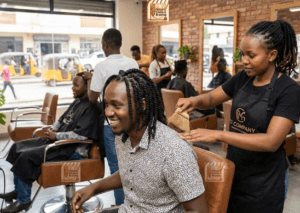
Happy client with finished braided dreadlocks at Nakuru Locks and Braiding Salon.
Conclusion
Whether you are just beginning your journey with short dreads styles or you are ready to elevate your mature locs with intricate dreadlocks braids, the process requires patience, respect for your hair’s biology, and skilled hands.
Your crown is a statement. Don’t trust it to just anyone.
At Nakuru Locks and Braiding Salon, we combine deep local experience with global best practices in hair health to ensure your locs don’t just look good today, but remain healthy for years to come.
Ready to transform your look?
📞 Call/WhatsApp us today at 0723 168 188 or 📍 Visit us at Mt. Sinai building, Bazaar Rd, Nakuru City to book your consultation. Let’s start your journey!.
Authoritative References
- American Academy of Dermatology Association. (n.d.). Hairstyles that pull can lead to hair loss. (Focuses on Traction Alopecia caused by tight braiding).
- Gavazzoni Dias M. F. (2015). Hair cosmetics: an overview. International journal of trichology, 7(1), 2–15. (Discusses the hydrolipid film and hair hydration).
- Oh, J. Y., Park, M. A., & Kim, Y. C. (2014). Peppermint Oil Promotes Hair Growth without Toxic Signs. Toxicological research, 30(4), 297–304.
- Satchell, A. C., Saurajen, A., Bell, C., & Barnetson, R. S. (2002). Treatment of dandruff with 5% tea tree oil shampoo. Journal of the American Academy of Dermatology, 47(6), 852–855.
- Khumalo, N. P., Jessop, S., Gumedze, F., & Ehrlich, R. (2007). Hairdressing and the prevalence of scalp disease in African adults. The British journal of dermatology, 157(5), 981–988. (Discusses the impact of salon practices on scalp health).
Leave a Reply