
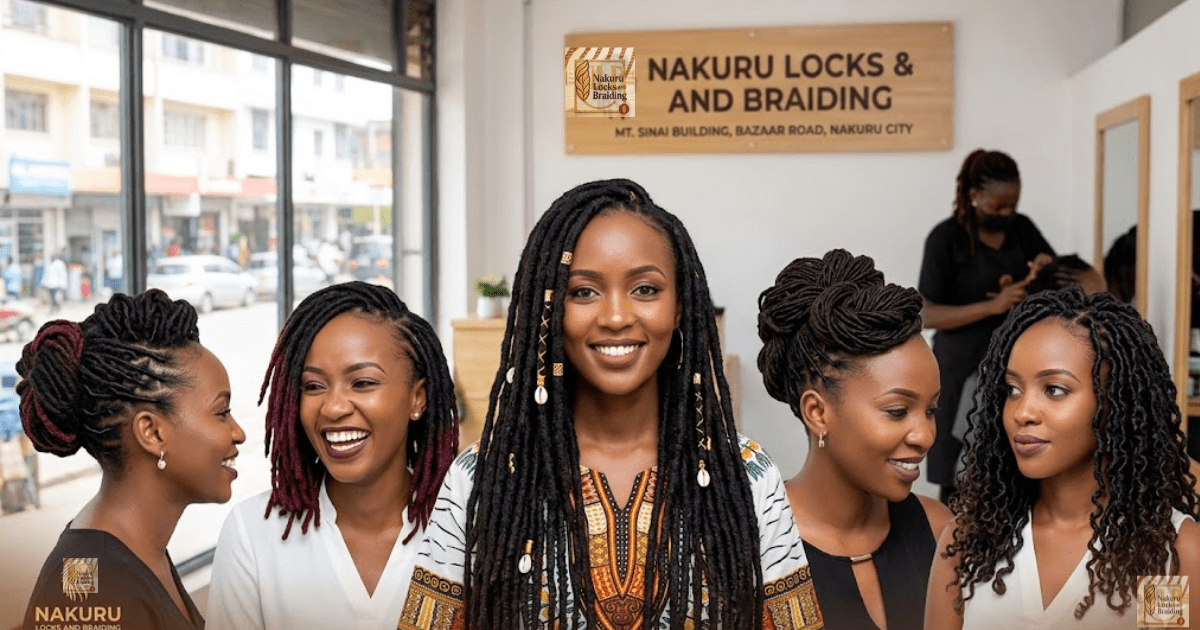
Best Dreadlocks Styles: Latest Trends, Types, and How to Choose Your Perfect Look
Every set of locs tells a story. Picture yourself standing in front of a mirror, staring at hair that’s been your identity for years, wondering if there’s a style that could honor your heritage while embracing modern trends.
For millions worldwide, dreadlocks represent more than a hairstyle—they’re a powerful symbol of culture, heritage, and personal expression with roots tracing back many centuries.
Whether you’re a beginner curious about starting your loc journey or a seasoned loc wearer looking to refresh your style, choosing the “best” dreadlocks style depends on your hair type, lifestyle, maintenance preferences, and the statement you want to make.
At Nakuru Locks and Braiding in Nakuru City, Kenya, we’ve helped over 1,000 clients transform their hair with eco-friendly, afrocentric services that celebrate natural beauty.
In this comprehensive guide, we’ll explore the best dreadlocks styles, latest trends for 2025-2026, short dreadlocks options, the 7 types of dreadlocks, and everything you need to know to make an informed decision about your loc journey.
What Are Dreadlocks and Why Do They Matter?
Dreadlocks are formed by braiding or interlocking hair into rope-like strands. Alternatively, some people allow their hair to naturally knot and mat over time, resulting in locs.
Unlike temporary styles such as faux locs or soft locs, traditional dreadlocks are typically a more permanent commitment.
The term “dreadlocks” has its roots in the Rastafari movement, which originated in Jamaica in the 1930s. The word “dread” was used by the Rastafari to describe the fear and respect they had for God, and “locks” referred to the matted hair that they grew as a symbol of their spirituality.
The Rastafari movement was influenced by African and Jamaican cultural traditions, and the use of dreadlocks was a way for them to embrace their African heritage and reject European standards of beauty imposed during colonization.
Today, dreadlocks have evolved into a versatile hairstyle embraced globally for their beauty, cultural significance, and low-maintenance nature.

The 7 Types of Dreadlocks: Complete Breakdown
Understanding the different types of dreadlocks is essential for choosing the right style. Based on expert research and industry standards, here are the 7 main types of dreadlocks:
1. Traditional Rasta Dreadlocks
Rasta dreadlocks are one of the more traditional loc styles, featuring rope-like strands of hair formed by locking or braiding hair.
The style is visually similar to braids, but unlike braids that finish immediately, most dreadlocks require a period of maturation.
Key characteristics:
-
Formed organically without unnatural interference
-
Thick, rope-like strands that hang freely
-
Middle part not even new curly growth can spoil
-
Associated with the Rastafarian movement
Maintenance:
Use low-lather shampoo that rinses cleanly, natural oils like olive, jojoba, or rosemary to condition, and palm roll each dreadlock clockwise after every wash. Expect 10 months to 2 years to reach the rooted stage.
2. Freeform Dreadlocks
The freeform method allows dreadlocks to form organically, introduced to pop culture by musical icon Bob Marley. All freeform locs require is letting them grow with minimal hair products and little to no manipulation.
Key characteristics:
-
Naturally formed without manipulating new hair growth
-
Low-maintenance, no salon retwisting needed
-
Embrace natural hair texture
-
Can be grown into intricate up-dos, Bantu knots, or loose locs
Maintenance:
Wash every 1-2 weeks, use natural oils and creams, massage scalp to stimulate circulation, and keep heavy pomades and waxes out to avoid buildup. Freeform dreads save money since you won’t need many products or costly salon visits.
3. Sisterlocks
Sisterlocks are tiny, uniform locs that closely resemble loose strands of hair, offering a lightweight and versatile look. They’re created using a precise interlocking method with a latch hook tool.
Key characteristics:
-
Micro-sized, uniform locs
-
Lightweight and versatile styling options
-
Professional installation required
-
Can be taken down with considerable time and effort
Maintenance:
Unlike traditional dreadlocks, Sisterlocks are more flexible and can be removed with significant effort. They’re designed as a long-term style but offer more adaptability than traditional dreads.
4. Twisted Dreadlocks (Two-Strand Twist Locs)
This style is achieved by taking two individual dreads and twisting them using the two-strand twist technique. This style is fairly common, especially for those starting with longer hair.
Key characteristics:
-
Classic dreadlocks with a modern twist
-
Twisted two individual locs together to form one
-
Easy to start, doesn’t require professional installation
-
Looks fresh when first installed and when taken out
Maintenance:
One of the best things about this method is the technique is easy to maintain. Avoid over-moisturizing during beginning stages to prevent unraveling. Expect 6-12 months to 2 years for twists to appear like traditional locs.
5. Bohemian (Boho) Dreadlocks
Bohemian dreadlocks combine faux locs wrapped with different textured braiding hair to create a distressed, messy look. Think Lisa Bonet’s iconic style.
Key characteristics:
-
Faux locs with curly or wavy strands coming out
- Gives a boho, ethereal look
-
May have waves or curls hanging from each loc
-
Random in length with shorter accent pieces at the front
Maintenance:
Bohemian locs are low-maintenance and very long-lasting. They age well since they’re meant to look worn and frizzy. With proper care (silk bonnet or scarf at night), they can last 2-3 months.
6. Faux Locs (Including Soft Locs, Butterfly Locs, Goddess Locs)
Faux locs are a protective hairstyle designed to mimic the look of traditional locs. The term refers to various imitation loc styles, including soft locs and butterfly locs.
Subtypes include:
Maintenance: Faux locs are temporary protective styles, unlike permanent traditional dreadlocks.
7. Microlocks and Comb Coils
Microlocks are similar to sisterlocks but can vary in size and are often created using a different method. Comb coils are made by twisting small sections of hair with a comb, leading to tightly coiled locks.
Key characteristics:
-
Very thin, uniform locs
-
Resemble loose strands of hair
-
Lightweight appearance
-
Professional installation recommended
Maintenance:
Require regular retwisting and careful moisture management to prevent breakage.
Best Dreadlocks Styles for 2025-2026: Latest Trends
The latest dreadlocks styles for 2025-2026 combine traditional techniques with modern aesthetics. Here are the trending styles you’ll see everywhere:
1. Wick Locs
Wick locs are one of the thickest dread styles out there—you can have as few as 4-10 wicks on your entire head. The style takes its name from candle wicks, which stand straight up, though longer wicks hang downward.
2. Viking Locs
The modern-day interpretation features long locs (typically tied back in a ponytail or braid) paired with an intense undercut.
While dreadlocks are often associated with the peace-loving Rastafarian movement, many believe locs were a preferred style for historical Vikings as well.
3. High Pony Locs
Piling your dreadlocks into a neat high ponytail is an easy way to achieve eye-catching style. This works particularly well for mid-length locs that are easier to manage than classic long dreadlocks.
4. Braided Locs
Braided dreadlocks are similar to cornrows, but braided locs are thicker, locked hair braided together. This style can be executed from root to tip or only on the scalp, transitioning into your chosen loc style.
5. Chunky Locs
Once your dreadlocks are more mature and full, you can start forming them into larger, chunkier locs. Try a mix of both thin and thick locs for a personalized style.
6. Ombre and Blonde Locs
With today’s dye techniques, it’s easy to add contrast to dark dreads with bright blonde streaks. Ombre locs feature gradient coloring from dark roots to lighter ends.
7. Curly Locs
If you love naturally curly hair, you don’t need to sacrifice texture for locs. Dreads can be curled using rollers or perm rods to bring more texture and dimension to the classic style.
8. Labyrinth Locs
Labyrinth locs feature long, chunky classic locs, but each dreadlock is formed farther apart on the scalp. For those who’ve been growing locs for a while, this is a great way to shake up your look.
9. Knotless Dreadlocks
Knotless dreadlocks eliminate the uncomfortable knot at the root, providing a more natural, painless installation that’s gentler on the scalp.
10. Crinkle Dreadlocks
Crinkle Dreadlocks are achieved by braiding your dreads and leaving the braids in place until they dry. After removing braids, you’ll have a crinkled locs hairstyle. You can also achieve a spiral pattern with perm rods or pipe cleaners.
Short Dreadlocks Styles: Perfect for Beginners
Short dreadlocks styles are ideal for beginners or those who prefer low-maintenance, versatile looks. Here are the best options:
Starter Locs Hairstyles
Beginner short locs styles include:
-
2-strand twist starter locs – “hands down the best style you can get since it looks fresh when you first get them”
-
Neatly parted short locs – Clean sectioning with short, uniform locs
-
Tapered short locs – Shorter at the sides, longer on top
Benefits of Short Dreadlocks
Short dreadlocks can still be styled into high ponytails, top knots, or buns, and they’re a lot easier to manage (and lighter) than classic long dreadlocks.
What Is the Best Style for Dreadlocks? Choosing Your Perfect Match
The question “what is the best style for dreadlocks?” doesn’t have a single answer—the best style depends on multiple factors:
For Low-Maintenance Lovers:
Freeform dreadlocks are the best style if you want minimal manipulation. “All natural and freeform dreadlocks is the best style” according to loc enthusiasts.
For Beginners:
Two-strand twist locs are “hands down the best style you can get” for beginners. They’re easy to start, don’t require professional installation, and look fresh both when installed and when removed.
For Professional Settings:
Sisterlocks or microlocks offer a polished, lightweight look perfect for office environments. Their uniform, thin appearance resembles loose strands of hair.
For Protective Styling:
Faux locs (soft locs, butterfly locs, goddess locs) provide temporary protection without permanent commitment.
For Bold Statements:
Wick locs (4-10 thick locs) or Viking locs (undercut with long locs) make dramatic statements.
For Cultural Authenticity:
Rasta dreadlocks honor traditional Rastafarian heritage with rope-like, organic strands.
Key Factors to Consider:
1. Hair type and texture – Tighter textured hair is best for freeform style locks
2. Maintenance willingness – How often can you retwist? (Freeform: none, Traditional: every 4-6 weeks)
3. Commitment level – Permanent (traditional) vs. temporary (faux locs)
4. Lifestyle – Active lifestyle may benefit from shorter, neater styles
5. Budget – Sisterlocks require professional installation; freeform is most economical
6. Desired look – Thin/uniform (sisterlocks) vs. thick/organic (freeform/Rasta)
Dreadlock Styles Photo Gallery: Visual Inspiration
While this article provides detailed descriptions, seeing is believing. Here are the key visual elements to look for when exploring dreadlock styles:
For Men:
-
Two-strand twist locs with clean parting
-
High top dread styles with geometric patterns
-
Twisted, braided, tapered, and colored designs
-
Classic dreadlocks with undercut
For Women:
-
Short, sectioned dreadlocks with neat parting lines
-
Bohemian locs with curly accents
-
Goddess locs with wavy strands
-
Butterfly locs with loop details
Style Variations to Explore:
-
Crinkle, Rasta, Twisted, High-top, Microlocs, and Bohemian
-
Braided locs, basket weave locks, cornrows combined with dreadlocks
-
Side-swept locs, knotted dreadlocks, curly locs
How to Maintain Your Dreadlocks: Expert Tips
Regardless of which style you choose, proper maintenance is essential for healthy locs:
General Maintenance Rules:
1. Hydrate your hair – Keep locs moisturized with water-based products
2. Dry properly – Dry your locs completely after washing to prevent odor and rotting
3. Don’t retwist too often – Over-retwisting can cause breakage
4. Use residue-free shampoo – Low-lather shampoo that rinses cleanly
5. Natural oils – Use olive, jojoba, or rosemary oil to condition and prevent breakage
6. Protect at night – Wear silk or satin bonnet or scarf to protect locs while sleeping
Style-Specific Maintenance:
Common Mistakes to Avoid:
-
Washing dreadlocks too frequently when first created (wait 1-2 weeks)
-
Using heavy waxes that cause buildup
-
Not drying locs completely (causes internal rotting)
-
Comparing your hair maturation to others (everyone’s hair is different)
-
Over-moisturizing during beginning stages
FAQ: Frequently Asked Questions About Dreadlocks
1. What are the 7 types of dreadlocks?
The 7 main types are: (1) Traditional Rasta Dreadlocks, (2) Freeform Dreadlocks, (3) Sisterlocks, (4) Twisted Dreadlocks (Two-Strand Twist), (5) Bohemian Dreadlocks, (6) Faux Locs (including Soft Locs, Butterfly Locs, Goddess Locs), and (7) Microlocks/Comb Coils.
2. What is the best style for locs?
The best style depends on your needs:
-
Low-maintenance: Freeform dreadlocks
-
Beginners: Two-strand twist locs
-
Professional settings: Sisterlocks or microlocks
-
Protective styling: Faux locs
-
Bold statement: Wick locs or Viking locs
3. How long does it take for dreadlocks to fully mature?
It can take anywhere from 10 months to 2 years to reach the rooted stage for traditional dreadlocks. Twisted dreads may take 6-12 months to 2 years to appear like traditional locs.
4. Can I wash my dreadlocks?
Yes! It’s a misconception that you shouldn’t wash dreadlocks. Unwashed dreadlocks can cause frizz, odor, and break due to internal rotting. When first creating dreadlocks, wait 1-2 weeks before first wash, then maintain a once-a-week regimen.
5. What’s the difference between dreadlocks and faux locs?
Dreadlocks are typically a permanent commitment formed by braiding or interlocking hair. Faux locs are temporary protective styles designed to mimic traditional locs and can be removed.
6. Are dreadlocks suitable for all hair types?
Tighter textured hair is best for freeform style locks. However, various dreadlock styles can work on different hair types with proper technique and products.
7. How much do dreadlocks cost at Nakuru Locks and Braiding?
At Nakuru Locks and Braiding, we offer personalized pricing. Final cost depends on hair length, thickness, product usage, time required, and stylist expertise. For complex services, we offer a free consultation to provide a precise quote.
8. Can dreadlocks be removed?
Traditional dreadlocks are typically permanent, but Sisterlocks can be taken down with considerable time and effort. Faux locs are temporary and easily removed after 6-8 weeks.
9. What products should I use for dreadlocks?
Only use products created specifically for dreadlocks. Use natural oils like olive, jojoba, or rosemary to condition. Avoid heavy pomades and waxes that cause buildup.
10. How often should I retwist my locs?
Traditional dreadlocks should be re-waxed frequently to maintain smooth look and reduce frizz; mature dreadlocks only need waxing every few weeks. Sisterlocks typically require retwisting every 4-6 weeks.
Why Choose Nakuru Locks and Braiding for Your Dreadlock Journey?
At Nakuru Locks and Braiding, located at Mt. Sinai building, Bazaar Rd, Nakuru City, Kenya, we specialize in hair braiding, locks (including artificial dreadlocks, sister locks, and thread twists), extensions, and rejuvenating spa services.
Our Unique Value Proposition:
Contact Us:
-
Phone/WhatsApp: +254 723 168 188
-
Email: ann@nakurulocksandbraiding.com
-
Hours: Mon–Sat: 8AM–8PM | Sunday: By Appointment Only
-
Location: Mt. Sinai Building, Bazaar Rd, Nakuru, Kenya
Final Thoughts: Your Dreadlock Journey Starts Here
Choosing the best dreadlocks style is a personal decision that balances aesthetics, maintenance, cultural significance, and lifestyle.
Whether you’re drawn to the organic beauty of freeform dreadlocks, the precision of sisterlocks, the versatility of two-strand twists, or the trendy appeal of butterfly locs, there’s a style that’s perfect for you.
Remember that the “best” style is one that makes you feel confident, honors your heritage, and fits your lifestyle.
As loc enthusiast wisely said, “All natural and freeform dreadlocks is the best style” if you value authenticity and low maintenance. Or if you’re starting fresh, the two-strand twist is “hands down the best style you can get” for beginners.
At Nakuru Locks and Braiding, we’re here to guide you through every step of your loc journey. With eco-friendly products, expert stylists, and over 1,000 successful transformations, we’re Nakuru’s trusted destination for dreadlock care.
Ready to transform your hair?
Contact us at +254 723 168 188 or visit us at Mt. Sinai Building, Bazaar Rd, Nakuru to book your consultation. Mon–Sat: 8AM–8PM | Sunday: By Appointment Only .
Your perfect dreadlock style is waiting—let’s create it together.
References:
- Cultural histories from Wikipedia and scholarly sources on dreadlocks.
- Style trends from InStyle, The Right Hairstyles, and salon compilations.
- Nakuru Locks and Braiding services.
Leave a Reply