
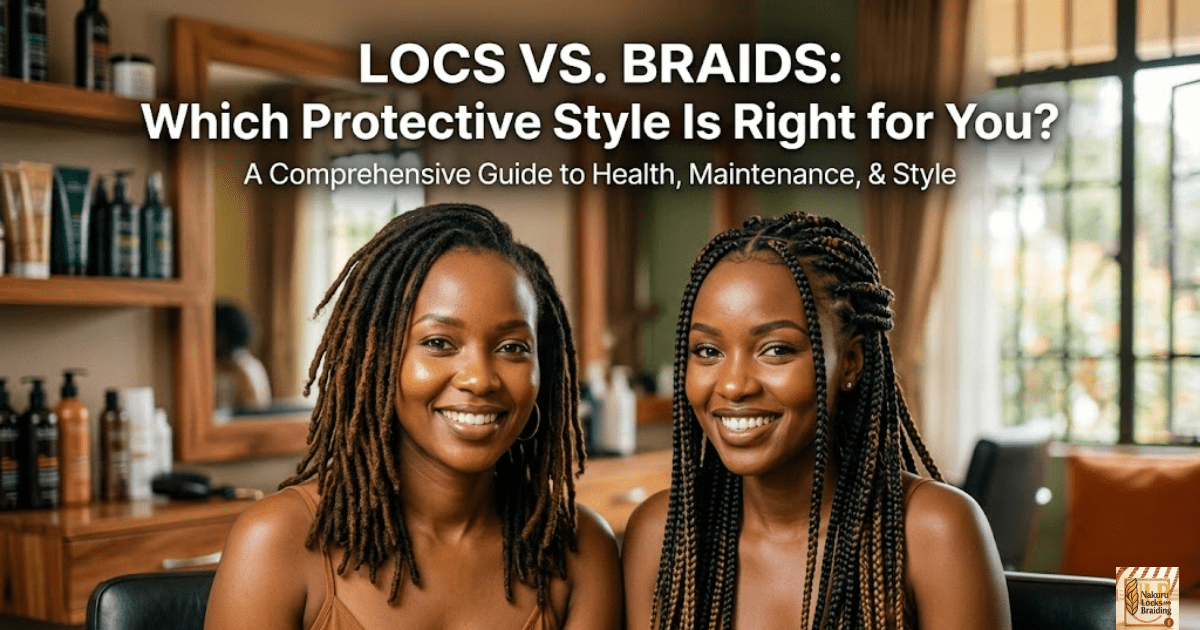
Locs vs. Braids: Which Protective Style Is Right For You?
Your Ultimate Guide for Locs vs Braids, Locs vs Braids vs Twists, and Locs vs Dreads for Men and Women
Whether you’re in Nairobi, Nakuru, or halfway across the world, protective styles are a global love language for kinky, coily, and curly hair.
From box braids flicking at the gym to mature locs flowing down your back, these styles are more than fashion—they’re armor for fragile strands.
But when faced with locs vs braids, locs vs braids vs twists, or even dreads vs braids for men, how do you choose the right one?
At Nakuru Locks and Braiding, we blend East African hair wisdom with modern technique so you can rock long, healthy hair—no matter which path you pick.
This guide unpacks the real differences, debunks myths, and gives you a clear road map to decide what’s best for your hair, lifestyle, and budget.
The Story Behind the Styles: A Global Hair Journey
A child in Nairobi, a teen in London, and a professional in New York all face the same question: “How do I protect my hair without sacrificing style?” The answer lives in three powerful traditions: locs, braids, and twists.
-
Locs come from ancient African, Ethiopian, Hindu, and Caribbean spiritual and warrior lineages, where matted, coiled hair symbolized strength and identity.
-
Braids trace back to African civilizations, Celtic tribes, and modern Western runways, where intricate patterns became both art and practical hair protection.
-
Twists are the softer sibling of braids—two‑strand, rope‑like coils that sit between locs and plaits in the protective‑style family tree.
Today, dreads vs braids for men, locs vs box braids, and even locs vs braids vs twists are not just style choices—they’re self‑expression choices.
Locs vs Braids: What Are We Really Comparing?
What Are Locs (Dreadlocks)?
Locs—also called dreadlocks or dreadlocks— are sections of hair intentionally matted, twisted, or interlocked into permanent rope‑like strands.
-
How they form: Methods include comb coils, two‑strand twist locs, and palm rolling, followed by periodic retwisting or interlocking as they mature.
-
Timeline: Many people see full maturity in 12–18 months, though some need up to 2 years.
-
Commitment: Once fully formed, locs are semi‑permanent; to remove them, you usually must cut them out.
For men and women alike, locs vs braids male becomes a question of permanence versus flexibility. Locs are a long‑term companion; braids are a seasonal fling.
What Are Braids?
Braids are plaited sections of hair, often with added synthetic or human hair, designed to last 4–8 weeks before needing a break or reinstallation.
-
Types: Cornrows, box braids, knotless braids, goddess braids, and more.
-
Installation: Usually takes 4–12 hours, depending on size and density.
-
Removal: You can take them out anytime, making them ideal if you “like to change your look frequently.”
When comparing locs vs braids hairstyles, braids win on styling versatility; locs win on long‑term time and money savings.
Locs vs Braids vs Twists: The Protective Style Trio
Many clients ask: “Locs vs braids vs twists—which is better?” The answer depends on your hair texture, patience level, and how much you want to pay for upkeep.
1. Locs vs Braids
2. Locs vs Braids vs Twists
Twists (like two‑strand twists, Havana twists, or Senegalese twists) land between braids and locs in texture and maintenance.
-
Twists vs braids:
-
-
Twists tend to be lighter on the scalp than many braided styles, making them gentler for edges.
-
-
-
They usually last about 3–4 weeks less than braids, so they suit short‑term wear.
-
-
Twists vs locs:
-
-
Twists are temporary and can be undone; locs are semi‑permanent and evolve over years.
-
-
-
Twists can be a transition style into locs for those who want to “test” the look before committing.
-
If you’re torn between locs vs braids vs twists, try this:
-
Short term, quick change: Twists.
-
Frequent changes and bold patterns: Braids.
-
Long‑term, low‑daily‑work growth journey: Locs.
Locs vs Braids vs Box Braids: The Weight of Style
Box braids sit at the heavier, more dramatic end of the braid spectrum. They’re often thicker, longer, and packed with extensions, which can look stunning but also raise the risk of traction alopecia if installed too tightly or worn too long.
Locs vs Box Braids
For many clients in Nakuru and Nairobi, locs vs braids vs box braids comes down to:
-
Life phase: Are you in school, work, or parenting mode?
-
Hairline history: Has traction been an issue before?
-
Budget: Can you handle frequent re‑installations or prefer one big investment?
Dreads vs Braids for Men: Strength vs Flexibility
Men are increasingly choosing between dreads vs braids male styles, especially in sport‑heavy, fast‑paced lifestyles.
Dreadlocks For Men
-
Benefits:
-
-
Once mature, dreads are low daily maintenance; men can wash, dry, and go without restyling.
-
-
-
They’re great for sports and travel because they stay put.
-
-
Challenges:
-
-
Maturation takes 6–24 months, depending on hair density and technique.
-
-
-
They are semi‑permanent, so removing them requires cutting and time.
-
Braids For Men
-
Benefits:
-
-
Huge variety: box braids, cornrows, knotless braids, and even faux locs.
-
-
-
Easy to change patterns or colors every 4–8 weeks, keeping your look fresh.
-
-
Challenges:
-
-
Traction alopecia risk if braids are too tight or worn too long.
-
-
-
Frequent re‑installations mean higher long‑term costs.
-
For Nakuru Locks and Braiding, we often suggest men try braids first to test comfort and traction, then consider dreadlocks or locs if they want a permanent, low‑daily‑effort style.
Locs vs Dreads: Same Hair, Different Names
Many people Google locs vs dreads, thinking they’re two separate styles. In reality, they’re often the same concept with cultural and emotional nuance.
Cultural Origins
-
Dreadlocks:
-
-
Historically linked to East African warriors, Rastafarians in Jamaica, and some Hindu ascetics.
-
-
-
The term “dread” can carry colonial or slave‑era baggage for some, which is why others prefer “locs.”
-
-
Locs:
-
-
A reclaimed, more positive, community‑centered term within the natural‑hair world.
-
-
-
Often implies more intentional shaping and maintenance (palm rolling, retwisting).
-
In practice, loc professionals in Kenya and Kenya‑style salons often use “locs” to describe clean, shaped, and maintained dreadlocks meant for everyday life and work.
Which Is Better, Locs or Braids? The Nakuru Verdict
There’s no universal “better.” At Nakuru Locks and Braiding, we ask three questions:
-
How long do you want to keep the style?
-
-
Long‑term growth + low daily effort: Choose locs.
-
-
-
Playful, change‑oriented: Choose braids.
-
-
What is your hair health history?
-
-
Thinning edges or traction scars: Start with knotless braids, twists, or very light braids, then consider locs later.
-
-
-
Healthy, strong roots: You can safely try both, with proper breaks.
-
-
How hands‑on do you want to be?
-
-
Hands‑off: Locs mature into a “set and forget” style once formed.
-
-
-
Hands‑on: Braids and twists let you experiment with parts, beads, and accessories.
-
FAQs: Your Top Questions About Locs vs Braids
Q1: Do locs or braids help hair grow more?
Research‑backed evidence and stylist experience show that both are protective, but locs typically require less manipulation, which can support better retention.
-
Locs: Reduce daily brushing/combing, which lowers breakage.
-
Braids: Protect ends but can cause traction alopecia if too tight or worn too long.
Conclusion: Locs slightly edge out braids for long‑term growth, provided they are maintained properly.
Q2: Can I wear braids over locs?
Yes—many people wear braids, twists, or buns over locs for extra protection or style.
-
Tip: Use lightweight braids or twists to avoid adding too much weight or tension.
Q3: Are box braids or locs better for sports?
-
Mature locs: Great for swimming, running, and ball sports because they stay put and don’t fray.
-
Box braids: Also sport‑friendly, but frizz and edge tension can be issues if not maintained well.
Q4: How often should I retwist or wash locs vs braids?
Experts recommend:
-
Locs:
-
-
Retwist every 4–8 weeks.
-
-
-
Wash every 1–2 weeks with residue‑free shampoo.
-
-
Braids:
-
-
Clean scalp every 7–10 days.
-
-
-
Re‑install or take out every 4–8 weeks, with breaks in between.
-
Nakuru Locks and Braiding customizes this schedule based on your texture, climate (Nakuru/Nairobi), and activity level.
Related Articles at Nakuru Locks and Braiding
To deepen your journey, explore these guides on our blog:
These posts are written with local clients in mind but are useful for Nairobi, Kisumu, Mombasa, and even the global natural‑hair community.
Final Thought: Your Hair, Your Choice
Locs vs braids, locs vs braids vs twists, locs vs braids vs box braids, and dreads vs braids for men are not battles—they’re choices. Each style carries history, culture, and personal meaning.
If you’re in Nakuru or Nairobi and still unsure:
-
Come in for a consultation with Nakuru Locks and Braiding.
-
We’ll assess your hair texture, scalp health, lifestyle, and budget, then recommend whether locs, braids, twists, or a hybrid is right for you.
Whichever style you choose, remember: protection is power. Healthy hair means you can dance, work, worship, and travel—without fear of breakage. That’s the real win in the locs vs braids debate.
Ready to start your protective‑style journey? Visit Nakuru Locks and Braiding for a personalized loc or braid consultation tailored to East African hair and climate.
References & Best Practices
To keep your protective style healthy, follow guidelines from reputable hair‑care educators and dermatologists:
-
American Academy of Dermatology (AAD): Recommends avoiding tight styles to prevent traction alopecia.
-
Trichologists and loc academies: Emphasize regular washing, moisturizing, and professional retwists for locs.
-
Protective‑style specialists: Stress using lightweight braids, low‑tension techniques, and scalp‑friendly products.
At Nakuru Locks and Braiding, we follow these standards and add local East African climate care—extra moisture for dry town seasons, lighter styles for intense heat.


Leave a Reply