
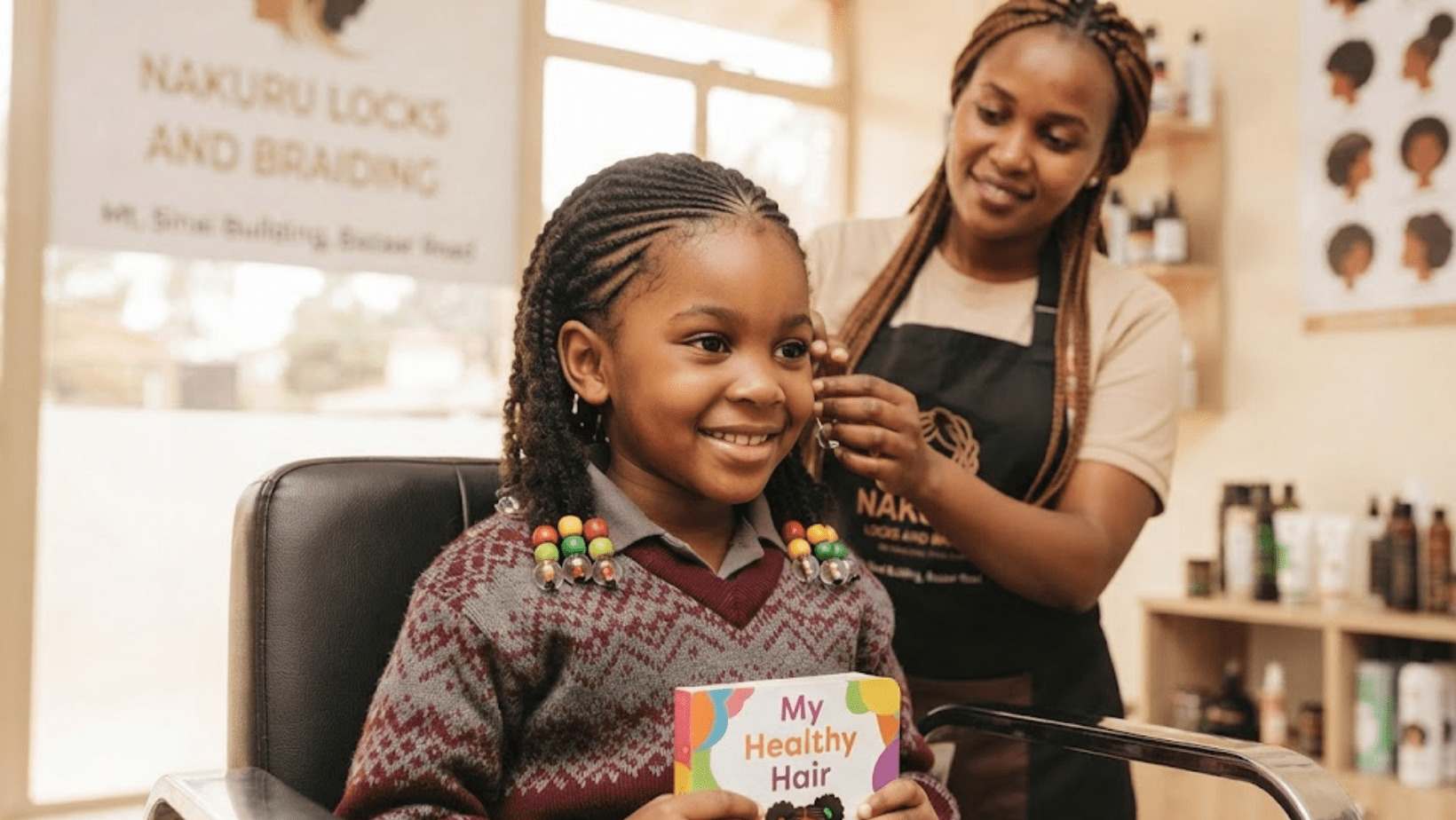
Protective Hairstyles for Kids: Easy, School-Ready Styles That Nurture Natural Hair Growth
The school bell rings, the uniform is ready, and your child is looking forward to a new day—but the morning hairstyle is still undecided.
Should you choose simple cornrows, colourful beads, two-strand twists or a quick natural puff?
For many parents, styling a child’s hair is about more than appearance.
The right hairstyle can reduce daily combing, keep hair manageable during school and play, and help protect delicate ends from friction.
However, a protective hairstyle should never be painful, excessively tight or installed at the expense of scalp health.
At Nakuru Locks and Braiding, we understand that children need styles that balance beauty, comfort, durability and age-appropriate care.
This guide explores protective hairstyles for kids, including easy options, styles for short hair, school hairstyles, natural hair ideas, Black girl hairstyles and children’s braids.
What Are Protective Hairstyles for Kids?
Protective hairstyles tuck the ends of the hair away from daily friction, weather, and handling.
Classic examples include cornrows, two-strand twists, box braids (kept lightweight for children), flat twists, Bantu knots, and simple puffs or buns.
The key is low tension, breathability for the scalp, and a limited wear time so the hair and scalp can rest.
For children’s natural hair—particularly Type 3 and Type 4 textures—these styles minimize breakage from combing and reduce exposure to environmental stressors.
They also retain moisture better than loose styles that tangle easily. Dermatologists note that when done correctly (loose, without pain, and not left in too long), protective styles support length retention and healthier growth.
Why Protective Styles Matter for Kids’ Natural Hair
Children’s hair is often finer or more delicate at the roots, and active lifestyles increase tangling and breakage.
Protective styles cut daily handling dramatically. Parents report easier mornings, fewer tears during detangling, and visible improvement in length over months when styles are rotated properly.
Benefits include:
- Reduced mechanical damage and split ends
- Better moisture retention
- Protection from sun, wind, and backpack straps
- Cultural expression and confidence
- Time savings for busy families
However, “protective” is not automatic safety. Research shows that excessively tight braids, cornrows, or ponytails can cause traction alopecia—hair loss from prolonged tension on the follicles.
Studies of African and African-American girls link frequent tight cornrows and braids (especially on relaxed hair) to higher rates of traction alopecia, which can begin in childhood and become permanent if ignored.
The Society for Pediatric Dermatology and other experts emphasize: never accept pain, headaches, or bumps along the hairline.
Choose looser styles, thicker sections for younger kids, and take breaks between installations. Early education and gentle techniques prevent most problems.
Easy Protective Hairstyles for Kids
Busy parents need styles that install relatively quickly and hold up with minimal daily effort. Top easy options include:
1. Two-strand twists — One of the gentlest and most versatile. Section moisturized hair, twist two strands together, and secure ends.
They last 1–2 weeks, can be worn loose or gathered into a ponytail or bun, and create beautiful definition when taken down. Ideal for toddlers and younger school-age children.
2. Flat twists — Similar to cornrows but often softer on the scalp. They lie close to the head, protect ends, and work well under hats or for sports.
3. Simple puffs or space buns — Gather hair into one or two high or low puffs using soft satin or fabric bands. Quick for school mornings and gentle when not pulled tight.
4. Chunky braids or jumbo twists — Faster to install than micro styles and lighter on the scalp. Add beads or colorful cuffs for fun without excess weight.
5. Bantu knots — Section, twist, and coil into small knots. Protective during the day and produce springy curls when released. Rooted in Zulu traditions, they celebrate cultural heritage while protecting the hair.
At Nakuru Locks and Braiding, stylists prioritize comfort and low tension so even the most tender-headed children leave happy.
Protective Hairstyles for Kids with Short Hair
Short natural hair is no barrier to protection. In fact, many classic styles excel on shorter lengths:
- Cornrows (straight-back or patterned) keep short hair neat and protected.
- Mini or medium box braids and knotless variations add length safely when extensions are lightweight.
- Flat twists and Bantu knots work beautifully on short coils.
- Fulani-inspired braids with beads offer style without requiring long hair.
- Simple pigtails or half-up styles with soft bands.
These options stretch the hair gently, reduce daily frizz battles, and allow the hair to grow without constant manipulation.
Parents of toddlers and children with newly growing natural hair particularly appreciate how these styles make short lengths look polished and intentional.
Kids Protective Hairstyles for School
School demands practicality: neatness, low maintenance, and styles that stay put during PE, recess, and long days. Ideal school styles last 1–3 weeks with proper care (satin bonnet or pillowcase at night, regular moisturizing of the scalp and lengths).
Popular choices:
- Straight-back or side cornrows
- Two-strand twists gathered into a low ponytail or bun
- Medium box braids or knotless braids (shoulder-length or shorter for younger kids)
- Feed-in cornrows that transition into a ponytail
- Braided pigtails or space buns
- French or Dutch braids for a polished look
These keep hair out of the face, reduce morning stress, and often meet school uniform or neatness policies. For active kids, avoid heavy extensions that pull or swing excessively.
Protective Hairstyles for Kids’ Natural Hair and Black Girls
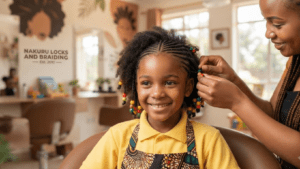
Natural hair thrives with consistent protection and moisture. Styles such as twists, cornrows, and braids shield the fragile ends of coily and kinky textures while allowing the scalp to breathe when not installed too tightly.
For Black girls, these looks also carry cultural significance—braiding traditions stretch back thousands of years across Africa and the diaspora.
Age-appropriate guidelines help:
- Toddlers and young children (under 6–7): Prioritize the loosest, lightest styles—chunky twists, simple puffs, loose cornrows. Limit wear to 1–2 weeks.
- Older children and tweens: Medium box braids, knotless braids, more intricate cornrow patterns, and longer-lasting styles (up to 3–4 weeks maximum) become suitable when tension remains low.
Always moisturize the scalp and hair regularly, cleanse as needed (diluted shampoo or cleansing sprays for braided styles), and give the hair recovery time between protective installs.
Protective Hairstyles for Kids: Braids
Braids remain one of the most popular and effective protective categories. Options range from classic cornrows to box braids, knotless braids, Fulani braids, and lemonade or side-swept styles.
Key tips for kids:
- Prefer medium or larger sections over micro braids to reduce weight and tension.
- Choose knotless techniques when possible—they start flat and create less pull at the root.
- Keep length moderate (shoulder or above for younger children).
- Use quality, lightweight extensions if adding length.
- Add beads, ribbons, or cuffs for personality without excess bulk.
Cornrows and braids can last 1–4 weeks depending on the child’s age, hair texture, and care routine. Never leave them in until matting occurs.
Which Hairstyle Is Best for a School Girl?
There is no single “best,” but the strongest candidates balance neatness, comfort, protection, and longevity.
Many parents and stylists favor:
- Medium knotless or box braids
- Classic or patterned cornrows
- Two-strand twists styled into a low bun or ponytail
- Feed-in cornrows ending in a neat ponytail or pigtails
These look polished for school photos and assemblies, stay secure during play, and give natural hair a break from daily styling.
The true best choice depends on the child’s hair length and texture, scalp sensitivity, school policies, and personal preference.
Involving the child in choosing (within healthy limits) builds positive associations with hair care.
Practical Care Tips for Long-Lasting, Healthy Styles
1. Prep thoroughly: Cleanse, deep condition, detangle gently, and moisturize before styling.
2. Install with low tension—never force or ignore complaints of pain.
3. Nighttime protection: Satin or silk bonnet, scarf, or pillowcase.
4. Moisturize regularly: Light oils or leave-in on scalp and lengths; avoid heavy buildup.
5. Cleanse the scalp: Use a diluted shampoo or cleansing spray as needed.
6. Take down carefully: Patience prevents breakage.
7. Rest periods: Allow days or weeks of loose styles or simple puffs between protective installs.
Professional installation at a salon experienced with children’s hair, such as Nakuru Locks and Braiding, ensures proper tension control and longevity.

Frequently Asked Questions
What are some protective hairstyles for kids?
Two-strand twists, cornrows, flat twists, Bantu knots, lightweight box or knotless braids, puffs, and simple braided pigtails or buns.
Are protective styles safe for young children?
Yes, when installed loosely, kept lightweight, limited in duration (usually 1–3 weeks), and followed by rest periods. Avoid any style that causes pain or tight pulling.
How long should kids keep protective styles in?
Younger children: 1–2 weeks. Older kids: up to 3–4 weeks maximum for looser styles. Monitor for irritation or matting and take down earlier if needed.
Can short hair be put into protective styles?
Absolutely. Cornrows, mini braids, flat twists, Bantu knots, and puffs all work well on short natural hair.
Do braids cause hair loss in kids?
Tight or heavy braids and cornrows can contribute to traction alopecia. Proper technique, moderate tension, and regular breaks greatly reduce the risk.
What is the easiest protective style for busy school mornings?
Pre-installed twists or cornrows that can be quickly gathered into a ponytail or bun, or simple space buns and puffs refreshed in minutes.
Related Articles From Nakuru Locks and Braiding
Continue exploring children’s and protective styling ideas:
At Nakuru Locks and Braiding (Mt. Sinai Building, Bazaar Road, Nakuru), our team—led by experienced stylists including founder Ann Wagema—specializes in gentle children’s styles alongside adult braiding, sisterlocks, faux locs, and more.
We focus on eco-friendly practices, precise tension control, and styles that honor both heritage and hair health.
Book via WhatsApp or phone at +254 723 168 188 to give your child a protective style that looks beautiful and supports strong, thriving natural hair.
Protective hairstyles for kids are more than convenience—they are an investment in confidence, cultural pride, and long-term hair health. With the right technique, timing, and care, every child can enjoy styles that let their natural beauty grow free.
References and Further Reading
- Society for Pediatric Dermatology resources on traction alopecia and curly/coily hair care.
- Pediatric dermatology reviews on hairstyle-related hair loss and prevention strategies.
- Clinical observations linking tight styling practices in childhood to later hairline issues.
Parents should consult a dermatologist for any signs of persistent hair loss, scalp irritation, or concerns about traction alopecia.
Leave a Reply