

Semi-Freeform Locs Hairstyles: Styles, Care, and How to Start
Semi-freeform locs sit in the sweet spot between highly structured traditional locs and fully hands-off freeform locs.
They deliver an organic, lived-in look with just enough intentional maintenance to keep roots healthier and sizes more predictable.
For people worldwide seeking authentic texture, lower salon frequency, and personal expression—whether in Nakuru, Nairobi, London, Atlanta, or Accra—this hybrid approach has become a practical favorite.
At Nakuru Locks and Braiding, clients often arrive wanting the freedom of freeform without the complete unpredictability.
Semi-freeform answers that need: start with some structure, then ease off the retwists so the hair can mature more naturally while still respecting partings and preventing excessive root marriage.
What Are Semi-Freeform Locs?
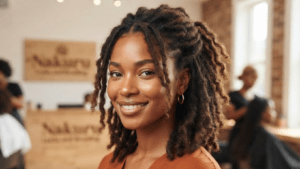
Semi-freeform locs (sometimes called semi freeform dreads) form through a blend of free-forming techniques and limited maintenance.
You typically begin with parting or a starter method such as two-strand twists, palm rolling, or braids.
After that foundation, you reduce the frequency of retwisting or interlocking far below the traditional 4–6 week schedule.
Occasional root separation keeps individual locs from fully merging (congoing), while the new growth is allowed to lock with less interference.
The result is an effortless, organic appearance—less manicured than traditional locs yet more controlled than pure freeform.
Locs often appear fuller over time because less frequent tension at the roots can support thickness when done correctly.
This is not neglect; clean washing, thorough drying, and mindful separation remain essential.
Hair texture influences the look heavily. Coily and kinky Type 4 hair tends to lock faster and create denser, more textured semi-freeforms. Looser textures may need more patience and careful separation.

Semi Freeform Locs vs Freeform Locs
Understanding the distinction helps set realistic expectations.
-
Freeform locs:
Minimal to no manipulation after starting (or sometimes no deliberate starting at all). Hair mats and locks where it naturally wants to. Loc sizes vary widely; congos are common and often left alone. Maintenance is mostly washing, moisturizing, and occasional separation of extreme tangles.
-
Semi-freeform locs:
Some initial structure (parts or starter twists) plus infrequent maintenance—root separation and occasional light retwisting or palm rolling every few months rather than every few weeks. This keeps a rough parting system and limits extreme size variation while still allowing organic development.
What’s the Difference?
A common point of confusion in online forums (frequently debated across semi freeform locs reddit threads) is distinguishing between the two styles.
| Feature | Semi-Freeform Locs | Freeform Locs |
| Initial Sectioning | Intentional (parts, twists, coils, or braids) | None (hair grows and mats completely on its own) |
| Maintenance Level | Low (occasional retwists, separated roots) | Minimal to none (no parting, no retwisting) |
| Aesthetic Result | Controlled volume, distinct locs with organic texture | Free-flowing, highly textured “wicks” or freeform clusters |
| Scalp Care | Easy to wash, inspect, and maintain cleanly | Requires careful cleansing to avoid hidden buildup |
In short, freeform prioritizes zero intervention; semi-freeform prioritizes controlled freedom.
Many people transition from traditional maintenance into semi-freeform after the first year once the foundation is solid.
Interlocking-maintained locs are generally not ideal candidates for semi-freeforming because the technique differs.
Reddit communities frequently discuss this nuance: some wearers call their infrequent-retwist journey “semi-freeform” even with relatively even parts, while others reserve the term for deliberately reduced grooming after a structured start.
Lived experience shows both approaches can produce healthy, distinctive results when scalp health is prioritized.
How Do I Get Semi Freeforms?
Starting semi-freeform locs is accessible for most hair types and can be done at home or with a loctician.
1. Begin with clean hair. Use a residue-free shampoo. Avoid heavy conditioners or product buildup that can slow locking.
2. Decide on approximate loc size and create parts (they do not need to be perfectly grid-like). Larger sections generally yield thicker locs.
3. Install starters using two-strand twists, palm rolls, comb coils, or braids. Some people sponge or finger-twist for a looser foundation.
4. Let the starters settle. Minimize styling and tension.
5. Shift into the semi-freeform phase: wash regularly, separate roots as needed, and retwist or palm-roll only sparingly (many aim for every 3–6 months or a few times per year once mature).
Short hair works, though several inches of length helps initial tangling. People with existing traditional locs can transition by simply extending the time between retwists and focusing on gentle separation.
Test the approach gradually—extend your usual retwist interval by a couple of weeks and monitor for thinning or excessive frizz before committing fully.
How Long Do Semi-Freeforms Take to Lock?
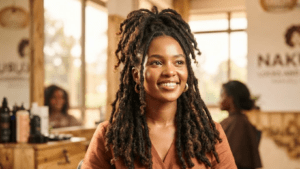
Visible locking often begins in 3 to 5 weeks, depending on hair texture, starter method, and care routine.
Tighter coils lock faster; looser patterns take longer. Full maturity—where locs feel solid, hang with weight, and show stable shape—typically takes many months to 1–2 years or more, similar to other loc journeys.
Patience is non-negotiable. Early stages can look frizzy or undefined (the “teen” or budding phase).
Consistent washing, complete drying, and limited manipulation support progress. Documenting the journey with photos helps track subtle changes that day-to-day observation misses.
Semi Freeform Locs Maintenance and Retwist
Maintenance is the defining difference. Semi-freeform is low-manipulation, not zero-maintenance.
Key principles include:
- Wash with residue-free shampoo as often as lifestyle requires (weekly or bi-weekly is common). Rinse thoroughly and dry completely—damp locs risk mildew or odor.
- Separate roots periodically (after washes or as needed) by gently popping or sliding fingers between locs to prevent unwanted marriage while preserving your preferred size range.
- Retwist or palm-roll infrequently. Many successful semi-freeformers retwist only a few times a year or every 4–6 months once past the first year. When you do retwist, work on clean, damp (not soaking) hair, use light moisture or oil for slip, palm-roll gently without excessive tension, and allow full drying.
- Minimize high-tension styles, especially early on. Frequent tight ponytails or updos can flatten roots or contribute to thinning.
- Moisturize the scalp and locs lightly. Protect at night with a satin bonnet or pillowcase to reduce lint and friction.
- Watch for warning signs: thinning at the roots, excessive breakage, or persistent buildup. These signal a need to adjust frequency or technique—sometimes returning to more regular care temporarily.
Some wearers incorporate light interlocking or crochet only on specific areas (such as the front) as needed, or braid new growth into the loc temporarily. The goal remains health and the desired organic aesthetic rather than rigid neatness.
Semi Freeform Locs Hairstyles: Female, Male, and Beyond
Semi-freeform locs are highly versatile for both women and men. The organic texture pairs well with fades, color, accessories, and simple updos.
For Ladies / Female Styles:
Shoulder-length or longer semi-freeforms look beautiful worn loose, in low or high ponytails, half-up styles, space buns, or elegant top knots.
Color accents, beads, cowrie shells, or wraps add personality. Soft middle or side parts frame the face; curly loc styles achieved with temporary twists or rods create volume and definition without full retwisting.
Many women appreciate the reduced maintenance for active lifestyles while still achieving polished looks for work or events.
For Male / Men Styles:
Popular combinations include semi-freeform locs with a taper fade or line-up for a clean outline, medium-length sets that frame the face, short starter semi-freeforms with texture and movement, high-top variations, or longer sets gathered into a low ponytail or man bun.
Pairing with a faded beard creates a cohesive look. Short freeform-inspired styles on men often emphasize the natural budding texture.
Freeform locs male short hair and related:
Short semi-freeforms or freeform-leaning styles work especially well with fades. The textured, slightly uneven lengths create visual interest without requiring long growth.
Semi freeform afro and styling ideas:
Early or shorter semi-freeforms can retain an afro-like volume and shape at the roots or overall silhouette before full compaction. Styling options include:
- Simple separation and light oil for definition.
- Temporary two-strand twists or braid-outs for curl pattern.
- Headbands, wraps, or scarves for quick polish.
- Beads, cuffs, or thread for accent.
- Loose wear to showcase natural variation.
Avoid constant high-tension styles. Protective approaches (satin protection, gentle handling) keep edges and roots healthy.
What looks good with freeform or semi-freeform hair is ultimately personal: the organic movement and individuality are the style’s greatest strengths.
Many wearers find that confidence and clean presentation make even the freest looks professional and striking.

Insights from Communities (Including Reddit)
Discussions on Reddit and similar forums reveal real-world experiences.
Wearers report thicker-looking locs and healthier-feeling scalps when they reduce retwist frequency after establishing a solid foundation, provided they separate roots and keep the hair clean.
Others caution that jumping into long intervals too early can lead to thinning if the hair is not ready.
Thick-skinned patience is frequently mentioned—social comments about “unkempt” hair are common early on, yet many stick with the journey for the freedom and uniqueness.
These peer stories complement professional guidance but should not replace personalized advice from a knowledgeable loctician, especially for those with thinning history or specific scalp concerns.

FAQ
What are semi-freeform locs exactly?
A hybrid style started with some structure then maintained with infrequent retwisting and regular root separation for an organic yet controlled look.
How do I get semi freeforms?
Wash, part into desired sizes, install starters (twists, palm rolls, etc.), then reduce retwist frequency while continuing to wash and separate as needed.
How long do semi-freeforms take to lock?
Initial locking often 3–5 weeks; full maturity many months to 1–2+ years depending on texture and care.
Do semi-freeform locs need retwists?
Yes, but far less often than traditional locs—typically every few months or a few times yearly once established.
Can women and men both wear them successfully?
Absolutely. Styles adapt easily to fades, updos, length preferences, and accessories for any gender.
Is semi-freeform the same as freeform?
No. Semi includes occasional maintenance and usually an initial parting/structure; freeform is minimal to none.
Will my locs get thicker with semi-freeforming?
Many experience fuller-looking growth when tension is reduced, but results vary and improper technique can cause thinning. Monitor carefully.
Can I start on short hair or an afro?
Yes. Short hair or an afro texture can transition into semi-freeforms with patience and consistent care.
Related articles from Nakuru Locks and Braiding:
- Best Ghanaian Lines Hairstyles and other protective style resources on the site
Semi-freeform locs offer a balanced path for anyone drawn to natural texture, reduced maintenance, and personal expression.
Whether you are starting fresh, transitioning from traditional care, or refining an existing set, the key is consistency in cleanliness, patience with the process, and respect for your hair’s unique pattern.
At Nakuru Locks and Braiding, the focus remains on healthy, beautiful results that feel authentic to you—wherever your loc journey takes you.
References
This overview draws from established natural hair resources, loctician guidance, and community experiences, including detailed explanations from Loving Kinky Curls, Curl Centric, The Digital Loctician, and Nakuru Locks and Braiding’s own freeform guide.
Cultural and practical context is informed by broader literature on locs and textured hair care.
Always consult a professional for personalized assessment, especially regarding scalp health or transitioning methods.
Leave a Reply