
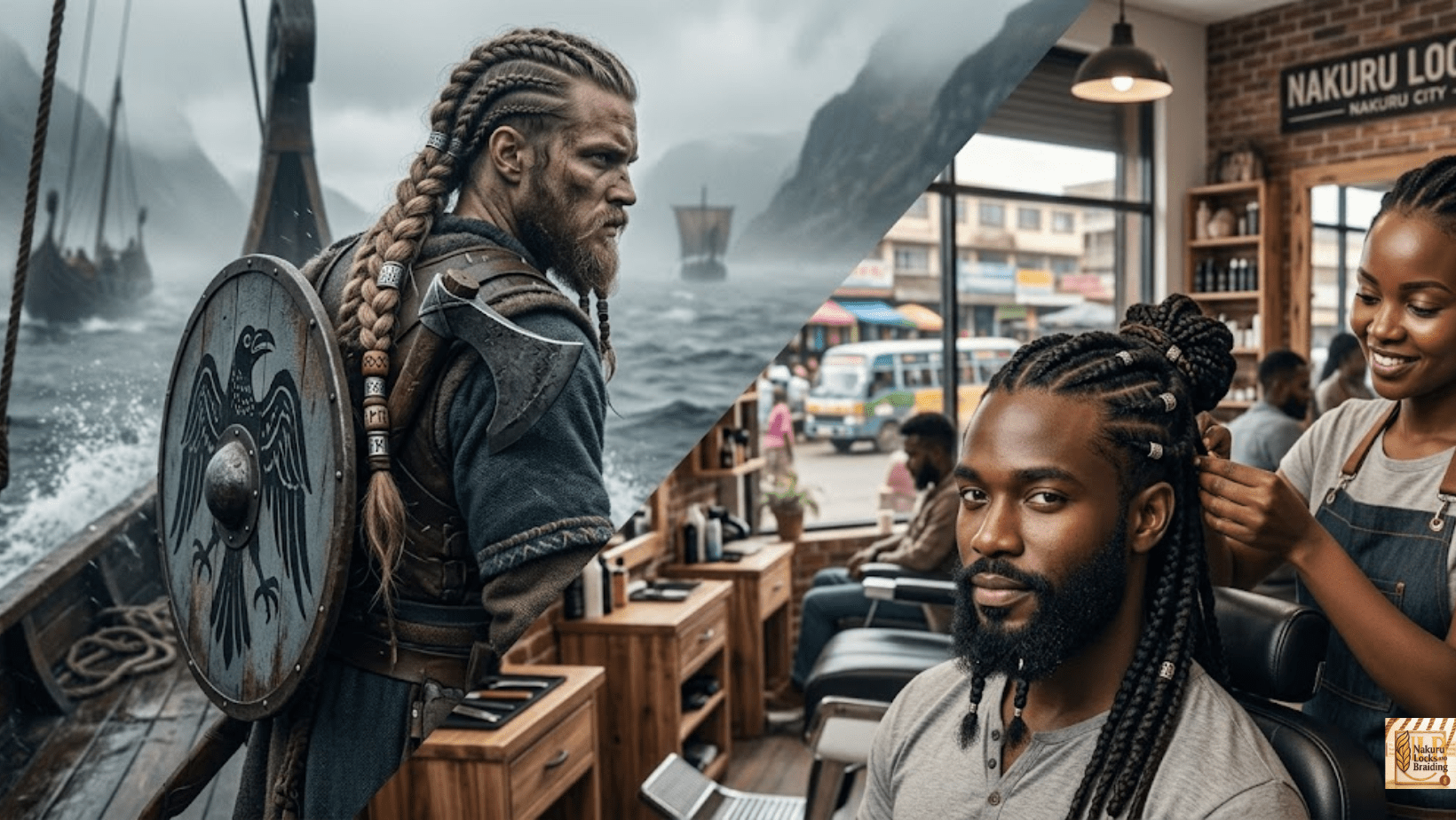
Viking Braids Man Styles: Bold Hairstyles and Beards for Men in 2026
In the heart of modern East Africa, men in cities like Nairobi, Nakuru, and Mombasa are reinventing an ancient warrior look: Viking braids for men. On social media, barber shops, and film‑inspired cosplay, male Viking braids—paired with strong beards and undercut sides—are emerging as a symbol of confidence, masculinity, and heritage‑aware grooming.
At Nakuru Locks and Braiding, Viking‑inspired braids are no longer just costumes for themed events; they are everyday, bold choices for men who want to stand out.
We’ll explore history with authoritative sources, modern adaptations, styling tips, maintenance, and why Nakuru Locks and Braiding is your go-to destination in Kenya for these transformative looks.
The Historical Roots of Viking Braids: Fact vs. Modern Myth
Viking Age hairstyles (roughly 793–1066 CE) varied widely due to regional differences, social status, and cultural exchanges across Europe, the Mediterranean, and beyond.
Archaeological evidence—from the Oseberg Ship Burial carvings, runestones like Släbro and Västra Strö in Sweden, the Bayeux Tapestry, and Isle of Lewis chess pieces—shows men with shoulder-length or longer hair, often parted in the middle, tied in knots, or braided to keep it manageable during raids, farming, or sailing.
Contrary to TV shows like Vikings (which popularized the “Ragnar” look with intricate side braids and undercuts), historical records suggest simpler, practical braiding.
Hair was often braided behind the back or in ponytails rather than elaborate scalp-tight cornrows. Germanic tribes predating the Vikings, including the Suebi, twisted hair into ornamental knots (the “Suebian knot”), a tradition echoed in Norse grooming.
Beards were iconic. Sources like Njal’s Saga and runestones depict well-groomed facial hair—full beards, mustaches, or mutton chops.
Viking braids beard styles appear in artifacts: Svein Forkbeard (Sven Tveskägg) famously split his beard into two braids, a detail preserved in sagas and possibly his grave site in Lund, Sweden. Braided beards prevented hair from snagging in weapons and symbolized vitality or achievements.
Braiding served hygiene and practicality. Combs (found abundantly in Viking graves) helped detangle and style hair, reducing lice in close-quarters living.
High-status men might bleach hair platinum blonde with lye soaps or adorn braids with beads and ribbons, reflecting social standing. Women braided too, but men’s styles emphasized functionality for combat and labor.
Modern “Viking braids” often fuse these elements with contemporary twists like undercuts or fades—popularized by media but not strictly historical.
Scholars note that while braids existed, tight scalp braids or heavy extensions were not typical; Vikings valued natural hair management.
Debates on cultural appropriation arise when comparing to African braiding traditions, but appreciation of Norse aesthetics (when done respectfully) celebrates shared human creativity in hair as identity. Braids appear across cultures globally for similar practical reasons.
Viking Braids Man: Core Style Principles
When we talk about Viking braids man hairstyles, we mean any braided, Viking‑inspired look that emphasizes strong lines, texture, and warrior symbolism. Common design elements include:
-
Deep side parts or shaved sides to frame the braided sections.
-
Tight scalp braids or larger, thicker braids down the back or sides.
-
Beads, rings, or small ornaments woven into the braids for a historical touch.
For Nakuru‑based clients, this can be adapted for curly, kinky, or mixed‑texture hair using sectioning techniques common in African braiding, which helps distribute weight and reduce breakage.
Why Men Choose Viking Braids
Recent grooming guides emphasize that Viking braids give men a clean, intentional, and powerful look, rather than a messy “bandit” aesthetic. They also:
-
Keep hair contained during physical work or sports, echoing the original Viking need to stay battle‑ready.
-
Highlight facial structure, especially when paired with sculpted beards.
-
Express cultural interest in Norse history, mythology, or fantasy media.
Viking Braids Short Hair Male
Not all men can grow long hair, but short hair Viking braids male styles are still possible and stylish. With the right length (typically at least 3–5 cm), barbers and braiders can create small, tight braids that follow the scalp or combine with undercuts.
Key Styles for Short Hair Viking Braids
Several articles dedicated to short male Viking braids outline practical options that work even with modest length:
1. Single Warrior Braid over an undercut
-
- Keep the top section slightly longer and braid it down the center while the sides are faded or shaved.
-
- Ideal for men who want a hint of Viking flair without committing to long hair.
2. Side‑Section Viking Braids
-
- A narrow strip of hair along the temple or above the ear is braided, while the rest is kept short.
-
- Works well for young men, security personnel, or creatives who want a subtle but edgy look.
3. Micro‑Braids or “Dragon Braid” Variants
-
- Some TikTok‑inspired tutorials show Viking braids men short hair using multiple small braids across the crown or side, mimicking dragon scales or armor texture.
Care Tips for Short Viking Braids
-
Use light wax or texturizing paste to keep short sections in place without heaviness.
-
Avoid over‑tightening braids on short hair to prevent traction alopecia, especially around the hairline.
At Nakuru Locks and Braiding, stylists often blend short Viking braids with fade or line‑up techniques to keep the look modern and low‑maintenance.
Viking Braids Beard Combos
A Viking braids beard combination is perhaps the most iconic modern twist on Norse styling. Long hair braids paired with a thick, braided beard scream “warrior chieftain” at events, photoshoots, or themed parties.
How Viking Braids and Beards Work Together
-
Symmetry: A center Viking braid often matches a central beard braid, creating a vertical warrior line down the face and chest.
-
Contrast: Shaved sides or short hair on top paired with a full beard make the braids stand out.
-
Texture: Men with curly or coarse beards can still braid by using small sections and beard oil to reduce frizz.
Popular Viking Beard Styles
-
Full braided beard (long, tied at the bottom like a braid tail).
-
Braided goatee or chinstrap for a more refined, modern Viking look.
-
Beard beads and rings added to shorter braids for a “warrior‑craftsman” vibe.
For Nakuru and Nairobi clients, natural oils such as shea, coconut, or argan are recommended to keep beard braids soft and avoid breakage.
Viking Braids Male Long Hair
Men with long hair male Viking braids have the most stylistic freedom. This category includes everything from long single braids down the back to multiple side braids similar to the “Ragnar braids” seen on TV.
Iconic Long Viking Braid Styles
1. Long Single Warrior Braid
-
-
One thick braid running down the back symbolizes leadership and discipline.
-
-
-
Works best on straight to wavy hair, but can be adapted for curls using larger sections.
-
2. Ragnar Triple Braids
-
-
Three braids (often two on the sides and one on top) inspired by the character Ragnar Lothbrok.
-
-
-
Frequently paired with shaved sides or a low taper for high contrast.
-
3. Side Braids with Loose Top
-
-
Small braids on the sides while the top remains loose and textured.
-
-
-
Great for men who want the Viking look but still like easy‑to‑style top hair.
-
Short Male Viking Braids vs. Long Hair Male Viking Braids
Below is a quick comparison of how short male Viking braids and long hair male Viking braids differ in style and practicality:
Viking Braids Men Short Hair: Practical Ideas
Several grooming blogs and video platforms now focus specifically on Viking braids men short hair, offering easy home‑style ideas.
-
“Dragon Braid” on top: A central micro‑braid that follows the crown, resembling a dragon running down the head.
-
Temple line braids: Small braids along the hairline or temple to frame the face before a fade.
-
Hidden braid under an undercut: A short braid tucked above the fade line for a subtle surprise when the hair is ruffled.
These ideas are especially popular among university students, gym‑goers, and young professionals in Nairobi and Nakuru who want a unique look without sacrificing professionalism.
Viking Braids Beard: Balancing Aesthetics and Comfort
Combining Viking braids beard with hair braids is not just about visuals—it’s also about comfort and hygiene.
Benefits of Braided Beards
-
Tames wild hair: Braids keep long beards from tangling and catching on clothing.
-
Highlights jawline: A well‑braided beard can sharpen the face and balance thick hair braids on top.
-
Customizable length: Shorter beard braids work with short hair, while longer braids suit long‑hair Viking styles.
How to Care for a Viking Braided Beard
-
Wash and condition regularly to prevent odor and buildup inside the braid.
-
Use beard oil or balm daily to keep the skin underneath moisturized.
-
Limit bead weight on thinner beards to avoid tension on the follicles.
Nakuru Locks and Braiding often advises clients to start with one braid (either in the beard or hair) and expand as they get comfortable with the maintenance routine.
How to Style Viking Braids: Step-by-Step at Home or in the Salon
Professional installation at a salon like Nakuru Locks ensures even tension and scalp health, especially for short male viking braids or intricate long styles.
Basic Steps for Viking Braids (Adapted from Expert Guides):
1. Prep: Start with clean, dry hair (skip washing 2–3 days for natural grip). Use texturizing cream or sea salt spray. Detangle thoroughly.
2. Section: Part hair for desired look. For sides: divide into 1–3 sections per side. Clip the top away. For top: create a Mohawk or crown section.
3. Braid Sides: Split a section into two strands, twist or cross over repeatedly (rope braid or French braid variation). Secure with small elastics. Repeat.
4. Braid Top: French braid from front to back, incorporating side hair if desired. For triple braids, divide top into three.
5. Finish: Spray with light hold hairspray. For beards: section facial hair and braid similarly, keeping it loose to avoid pulling.
6. Adorn: Add wooden beads, runes, or leather for Viking flair.
For viking braids short hair male, focus on top braids only. Professionals at Nakuru use high-quality, eco-friendly products and sanitized tools to minimize damage. Book via 0723 168 188 or WhatsApp for customized consultations.
Maintenance and Care for Viking Braids Man Hairstyles
Braids are protective but require attention:
- Scalp Care: Wash every 7–10 days with diluted sulfate-free shampoo, focusing on the scalp. Moisturize with natural oils (e.g., coconut, argan, or shea—available at Nakuru Locks).
- Daily: Avoid tight pulling; gently massage scalp. Sleep with a silk bonnet or pillowcase to reduce frizz.
- Longevity: Styles last 2–6 weeks. Retwist edges as needed. Take breaks between installs to let hair rest.
- Beard Care: Oil daily; wash braids gently to prevent dryness.
- Common Issues: Itchiness (moisturize), buildup (clarify occasionally), or tension (loosen immediately).
Nakuru Locks emphasizes hygienic practices and client education for healthy hair growth alongside stylish braids. Their spa services include rejuvenating treatments perfect post-braiding.
FAQ: Viking Braids \Man Hairstyles
Q: Can men with short hair get Viking braids?
A: Yes! Viking braids short hair male works with undercuts or top braids. Professionals add texture for grip.
Q: Do Viking braids include beard braiding?
A: Absolutely. Viking braids beard adds authenticity—1–3 braids on a full or shaped beard.
Q: How long do Viking braids last on men?
A: 2–6 weeks, depending on hair type and care. Regular moisturizing extends life.
Q: Are modern Viking braids historically accurate?
A: Inspired by history (braids for practicality), but TV versions amplify drama. Real Vikings favored functional ties and simpler plaits.
Q: Is it cultural appropriation for non-Norse men to wear them?
A: Appreciation of historical aesthetics is generally positive when respectful. Braiding is a universal practice; focus on creativity, not claiming invention.
Q: What products work best for maintenance?
A: Natural oils, light hold spray, and scalp-focused cleansers. Nakuru Locks recommends tailored regimens.
Related Articles from Nakuru Locks and Braiding
References
- Nordic Perspective: Viking Age Hairstyles & Beards (archaeological analysis).
- Sons of Vikings: Historical hair styles overview.
- Battle Merchant & History Explained: Symbolic role of braids and beards.
- Academic sources like Internet Archaeology on Viking Age hair dynamics.
Leave a Reply