
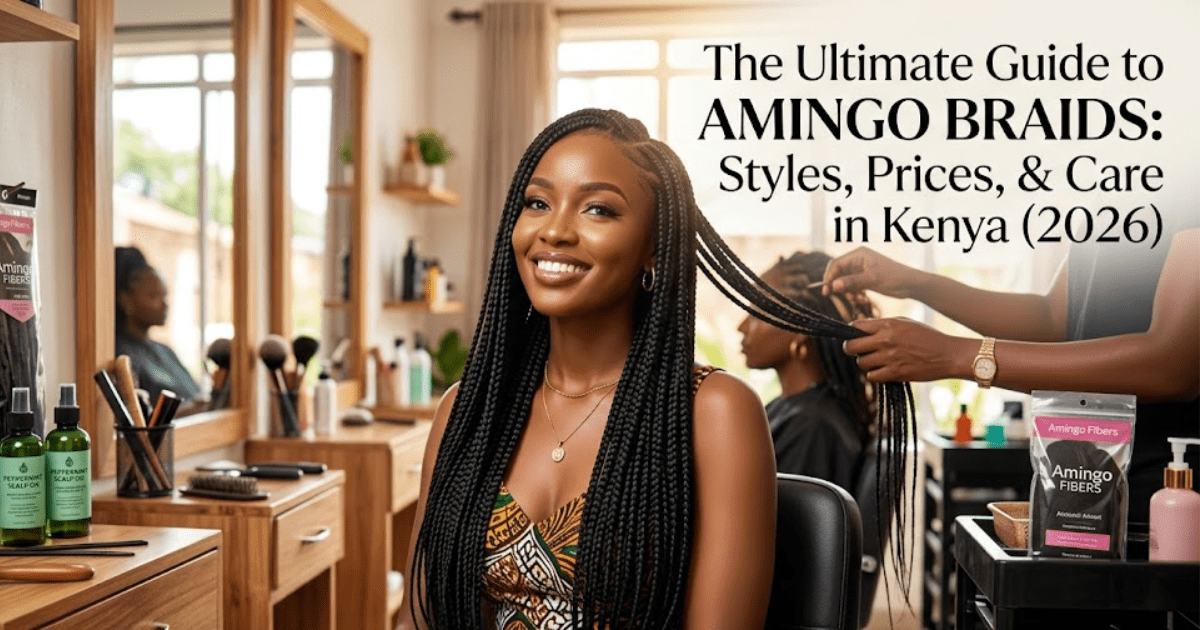
The Ultimate Guide to Amingo Braids: Styles, Prices, and Why They’re Perfect for Natural Hair
Walking through the doors of Nakuru Locks and Braiding on a busy Saturday morning, the air is filled with the scent of peppermint scalp oils and the rhythmic “swish-pull” of nimble fingers at work. Last week, a client named Sarah sat in my chair, her hands scrolling through Pinterest.
“I want something that looks like box braids but feels like silk,” she told me. “Something that doesn’t pull my edges but gives me that ‘expensive girl’ aesthetic.”
I smiled because I knew exactly what she needed: Amingo Braids. Whether you call them Amingo or Amigo braids, this style has become the crown jewel of protective styling in Kenya. In this comprehensive guide, we’ll dive deep into why these braids are taking over the streets of Nakuru and Nairobi, how much they cost, and how you can keep them looking fresh for weeks.
What Are Amingo Braids?
Amingo Braids (often phonetically referred to as Amigo braids) are a premium variation of the classic box braid or knotless braid, characterized by their ultra-smooth texture and tapered ends. Unlike traditional braids that can sometimes look “plastic” or stiff, Amingo braids use high-quality synthetic fibers—often a blend of Kanekalon and silk-finish extensions—to achieve a natural, lightweight look.
The defining feature of Amingo braids is the tension-free installation. They are typically installed using the knotless method, where the extension is fed into the natural hair gradually. This results in a braid that lies flat against the scalp, mimicking the natural fall of hair.

The History and Evolution
Braiding has been a pillar of African culture for over 5,000 years, originating with the Himba people of Namibia as a way to signify age, status, and community (OkayAfrica, 2024). In Kenya, we have seen styles evolve from the traditional matted braids of the 1900s to the intricate “Amingo” trend of 2026.
The name “Amingo” is a modern Kenyan colloquialism, likely derived from the brand names of specific high-grade braiding extensions that hit the East African market. It represents the shift from “utility braiding” to “luxury braiding”—where the health of the scalp is just as important as the length of the hair.
Trending Amigo Braids Hairstyles for 2026
At Nakuru Locks and Braiding, we see a wide variety of requests. Here are the top-tier styles currently trending:
1. The Classic Waist-Length Amigo
This is the “Old Money” of braiding. It features medium-sized sections with braids that reach the waist or hips. It’s versatile, elegant, and perfect for the professional woman who wants a low-maintenance morning routine.
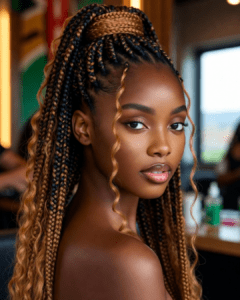
2. Boho Amingo Braids (Goddess Style)
By incorporating curly tendrils of human hair or high-quality synthetic curls into the Amingo braid, we create a soft, ethereal look. This style is a favorite for vacations at the coast or weddings in the Rift Valley.
3. Ombré Amigo Mix
2026 is all about the “Color Melt.” We blend deep blacks (1B) at the root into warm honey blondes or “Copper Bronze” at the tips. This adds dimension without the need for chemical dyes on your natural hair.
4. Amingo Ponytail Updos
For the active woman, we install Amingo braids in a way that allows them to be gathered into a high, sleek ponytail without exposing gaps or causing tension on the nape of the neck.
Amigo Braids Price in Kenya (2026)
Prices vary based on location, the expertise of the stylist, and the length of the braids. At Nakuru Locks and Braiding, we pride ourselves on transparent, fair pricing that reflects our 13 years of expertise.
| Style Type | Length | Estimated Price (KSh) |
| Standard Amingo (Medium) | Shoulder Length | KSh 3,000 – 4,000 |
| Long Amingo (Waist/Hip) | Long | KSh 5,000 – 7,500 |
| Boho/Goddess Amingo | Medium/Long | KSh 6,500 – 9,000 |
| Kids Amingo Styles | Short/Medium | KSh 1,500 – 2,500 |
Note: Prices may fluctuate based on the cost of specific extension brands like Ombré Braids KE or Lush hair.
How to Do Amingo Braids: The Professional Method
Creating the perfect Amingo braid is a craft. At our salon, we follow a strict 5-step protocol to ensure hair health:
-
Scalp Preparation: We begin with a deep cleanse and a steam treatment to open the pores and hydrate the hair shaft.
-
Sectioning with Precision: We use stainless steel parting rings to create clean, mathematical grids. This ensures the weight of each braid is distributed evenly.
-
The “Feed-in” Technique: Instead of a heavy knot at the root, we start with your natural hair and slowly “feed in” the Amingo extensions.
-
Tapering the Ends: We hand-pull the extensions to ensure the tips are thin and natural-looking, rather than blunt and heavy.
-
The Finishing Touch: Every set of braids is finished with a hot water dip to seal the ends and a light application of anti-itch mousse.
Maintenance: Keeping Your Crown Fresh
Even the best braids can turn into a nightmare if neglected. Follow these pro-tips to make your Amingo braids last 6–8 weeks:
-
Hydrate the Scalp: Use a spray-on leave-in conditioner or a mixture of rose water and jojoba oil.
-
The Satin Rule: Never sleep without a silk or satin bonnet. Friction from cotton pillowcases is the #1 cause of frizz (Afrotherapy, 2026).
-
Wash Wisely: You can wash your braids! Focus on the scalp using a diluted sulfate-free shampoo. Rinse thoroughly and ensure the braids are 100% dry to avoid “braid mildew.”
-
Edge Care: Apply a light edge-growth oil every evening to keep your hairline strong and healthy.
Why Amingo Braids Are Important
In the world of hair care, Amingo braids are more than just a trend; they are a protective powerhouse.
-
Growth Retention: By tucking your ends away, you prevent daily breakage from manipulation.
-
Versatility: They transition perfectly from a corporate boardroom in Nairobi to a casual weekend in Nakuru.
-
Time-Saving: They give you back roughly 30 minutes every morning.
FAQ: Everything You Need to Know
Q: How long do Amingo braids take to install?
A: Depending on the length and size, expect to spend 4 to 6 hours in the chair. We recommend bringing a book or catching up on your favorite podcast!
Q: Will Amingo braids damage my edges?
A: Not if installed correctly. The knotless “Amingo” method is designed to reduce tension. Always tell your stylist if a braid feels too tight—it should never hurt.
Q: What is the difference between Amingo and Knotless braids?
A: Amingo is often used to describe the type of high-finish extension used, while “knotless” refers to the technique. At Nakuru Locks and Braiding, we combine both for the best results.
Q: Can I swim with Amigo braids?
A: Yes, but rinse them with fresh water immediately after swimming in chlorine or salt water to prevent the fibers from becoming stiff.
Sources
-
The History of African Hair Braiding, OkayAfrica (2024).
-
Braid Maintenance and Scalp Health, Afrotherapy Knowledge Centre (2026).
-
Consumer Trends in East African Beauty, Kenya Hair Stylists Association.
Leave a Reply