
The Art of the Spider Braid: A Masterclass in Intricate Protective Styling
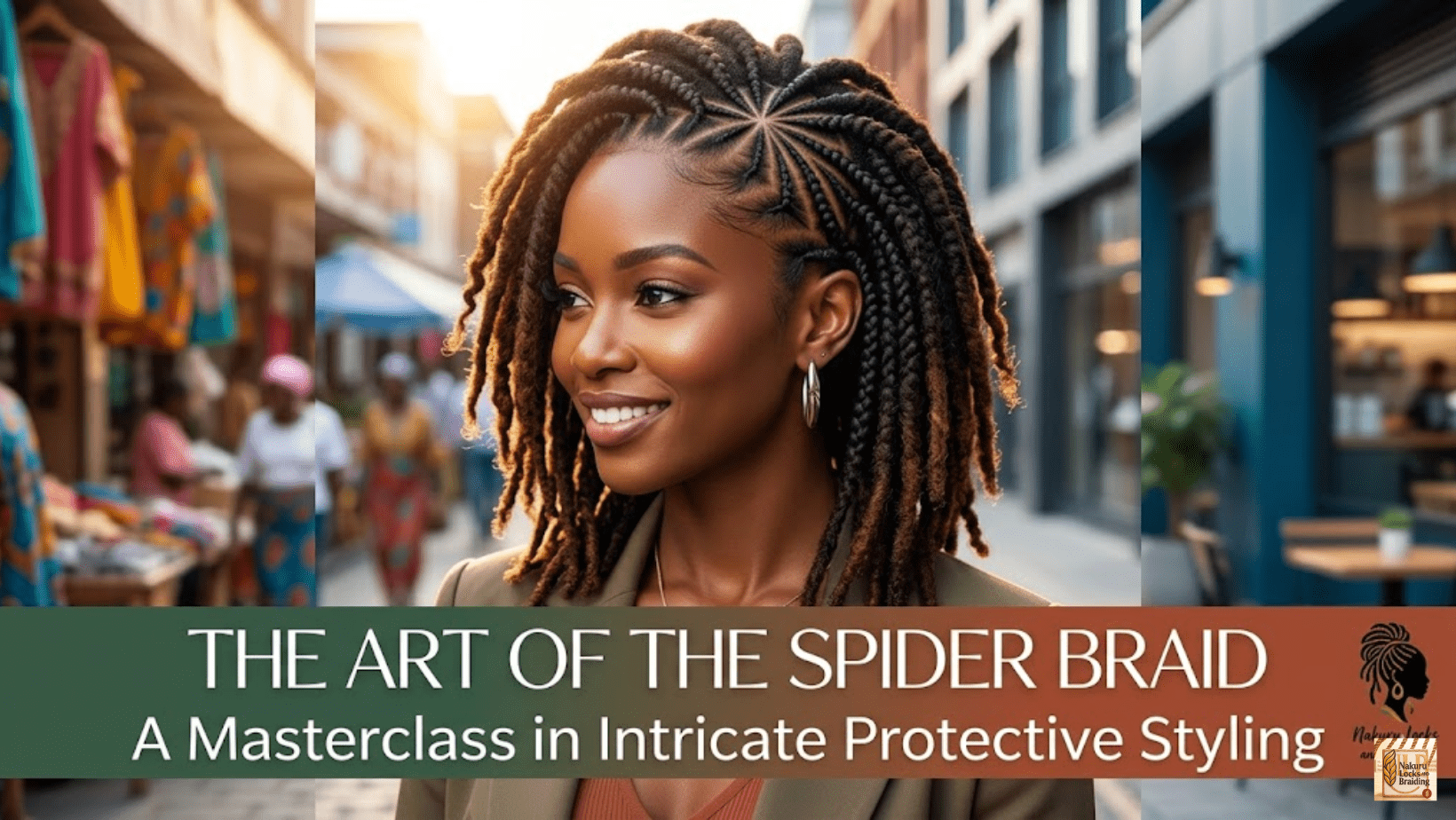
In the vibrant world of textured hair, few styles command as much immediate attention as Spider Braids. Characterized by a central hub—usually at the crown or the side of the head—with legs of braids or locs radiating outward like a masterfully woven web, this style is a breathtaking marriage of geometry and tradition.
Whether you are navigating the bustling streets of Nakuru or looking for a high-fashion statement in London or New York, Spider Braids offer a versatile, tension-aware solution for the modern woman.
At Nakuru Locks and Braiding, we view hair as a canvas. Our philosophy, rooted in Trichology-Informed Braiding, ensures that while your style looks avant-garde, your scalp health remains the priority. In this comprehensive guide, we will explore the nuances of Spider Braid locs, from short natural variations to intricate designs with extensions.
Understanding Spider Braids Locs Styles
Spider braids locs styles are defined by their radial symmetry. Unlike traditional straight-back cornrows, these styles utilize a “central node” technique. This node serves as the anchor point from which multiple sections extend, mimicking the anatomical structure of a spider’s web.
The Technical Anatomy of a Spider Braid
To achieve the perfect spider effect, the precision of the parting is paramount. Practitioners of the Safe-Stitch technique emphasize that the sections must be mathematically even to ensure that weight is distributed across the scalp. This prevents excessive pulling on any single follicle, a common cause of traction alopecia.
-
The Hub: The focal point where the braids begin.
-
The Radiants: The “legs” of the style that extend toward the hairline or the nape.
-
The Texture: Can be executed with natural hair, synthetic extensions, or integrated into existing locs.
Exploring Spider Braids Locs Hairstyles for Every Aesthetic
When choosing Spider braids locs hairstyles, the versatility is nearly endless. The “legs” of the spider can be finished in various ways:
-
Classic Cornrow Radiants: Fine, precise braids that lay flat against the scalp.
-
Twisted Spider Locs: Using a two-strand twist method for a softer, more textured look.
-
Beaded Spider Styles: Adding wooden or metallic beads to the ends of the radiants for a rhythmic, musical element to the hair.
According to the Journal of Cosmetic Dermatology, protective styles that incorporate varied parting patterns can actually help in managing scalp access for hydration, provided the tension is kept at a professional “neutral” level.
Spider Braids Locs Female: Empowerment Through Design
The Spider braids locs female movement is more than just a trend; it is a celebration of architectural beauty. For women, this style often serves as a “power style”—one that works equally well in a corporate boardroom as it does at a high-profile social event.
Customization for Face Shapes
-
Oval Faces: A centered spider hub allows the braids to frame the face symmetrically, highlighting cheekbones.
-
Round Faces: An off-center or side-hub creates diagonal lines that elongate the facial structure.
-
Heart-Shaped Faces: Concentrating the “legs” toward the back and sides can balance a wider forehead.
Precision in Small Packages: Spider Braids Locs Short
Many believe that intricate patterns require long hair, but Spider braids locs short variations are among the most striking. Short hair provides a “crispness” to the partings that long hair can sometimes obscure.
Benefits of Short Spider Locs:
-
Low Weight: Reduced strain on the roots, making it an excellent choice for those with finer hair densities.
-
Ease of Maintenance: Quicker to wash and faster to dry, reducing the risk of “loc mildew” or trapped moisture.
-
Sculptural Impact: Short ends can be tapered or “bobbed” to create a sharp, intentional silhouette.
For those transitioning from chemically treated hair to natural textures, the short spider pattern is a fantastic “mid-way” style that hides uneven lengths while promoting healthy growth.
Enhancing Volume: Spider Braids Locs Styles with Weave
For those desiring extra drama, Spider braids locs styles with weave offer the opportunity for length and color experimentation. Integrating high-quality synthetic or human hair allows for the “legs” of the spider to extend well past the shoulders.
Integration Techniques
Using the feed-in method is essential when adding weave to spider braids. This involves adding small increments of hair as the braid progresses, ensuring the start of the braid remains flat and natural-looking. This is a hallmark of the Nakuru Locks and Braiding “Safe-Stitch” protocol, ensuring the weight of the weave does not compromise the integrity of the natural hair.
Trends in Weave Additions:
-
Ombré Transitions: Start with a dark hub and transition to honey blonde or copper “legs.”
-
Curly Ends: Leaving the ends of the braids unbraided to reveal a wavy or curly texture, often referred to as “Goddess Spider Braids.”
Benefits of Spider Braids Locs Hairstyles
These styles protect natural hair from breakage, reduce daily styling time, and allow scalp breathing. They’re versatile for all ages, promoting confidence with customizable flair. Low manipulation minimizes damage, aligning with healthy hair practices endorsed by locticians.
Styling Variations Table
This table highlights key differences for quick selection.
The Trichology Perspective: Scalp Health and Tension
As specialists in trichology-trained hair care, we cannot discuss spider braids without addressing scalp health. The radial nature of these braids means that many braids meet at a single point.
Expert Note: If the central hub is braided too tightly, it creates a “focal tension point” that can lead to inflammation. We recommend a “Tension-Free Anchor” where the first few rotations of the braid are kept intentionally slack to allow for natural scalp movement.
Recommended Aftercare:
-
Hydration: Use a water-based rosewater spray to mist the “web” daily.
-
Oiling: Apply lightweight oils like jojoba or grapeseed only to the exposed scalp lines, not the braids themselves, to avoid buildup.
-
Night Care: A silk or satin bonnet is non-negotiable to prevent friction against the intricate partings.
FAQ: Everything You Need to Know
How long do Spider Braids Locs last? Typically, these styles last between 4 to 6 weeks. Beyond this period, the “new growth” can cause the pattern to lose its geometric precision.
Can I get this style if I have thin edges? Yes, but with caution. A skilled stylist will “map” the spider legs to avoid pulling on the fragile vellus hairs around the hairline.
Are Spider Braids suitable for children? Absolutely. It is a secure style that keeps hair neat for school, provided the tension is kept very light.
How do I wash Spider Braid Locs? Focus on the scalp. Use a diluted shampoo in a spray bottle, aim at the parts, and rinse thoroughly. Pat dry; never rub.
Book Your Session in Nakuru
Experience the pinnacle of hair artistry at Nakuru Locks and Braiding. Located at the Mt. Sinai Building on Bazaar Road, Nakuru City, our team of specialists is ready to transform your vision into a geometric masterpiece. With over 13 years of expertise and a commitment to trichology-informed care, we don’t just style hair—we nurture it.
Related Articles from Nakuru Locks and Braiding
References
-
The Science of Protective Styling, International Association of Trichologists.
-
Dermatological Impacts of Tension on Afro-Textured Hair, PubMed Central.
-
Cultural History of African Braiding Patterns, Smithsonian Institution.
Leave a Reply