
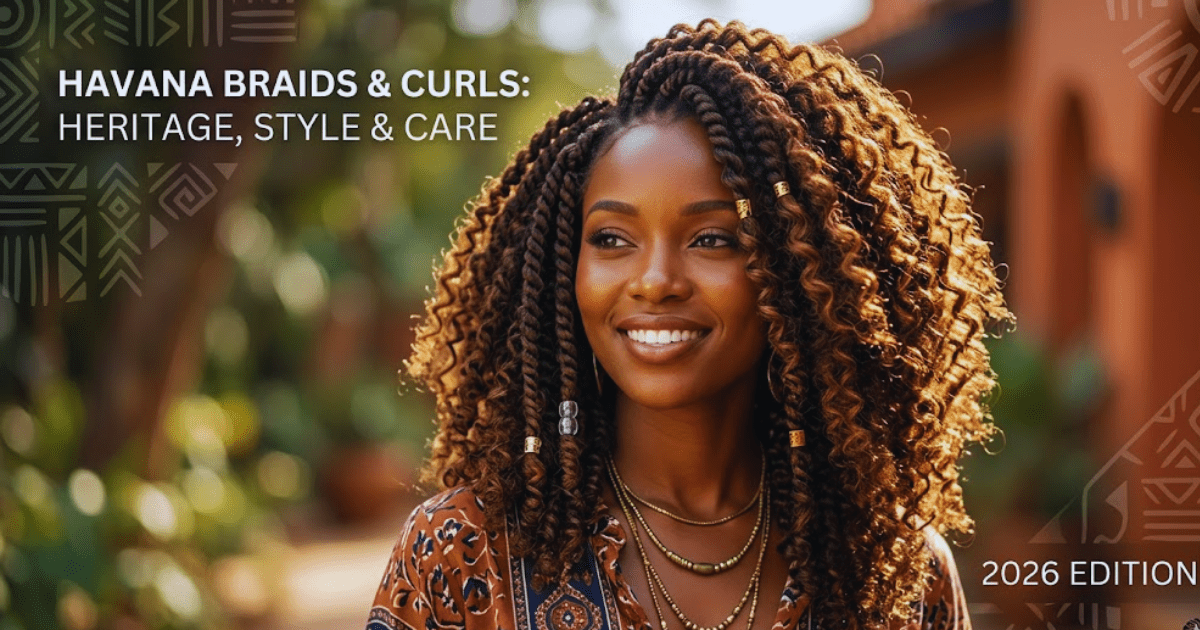
The Ultimate Guide to Havana Braids and Curls: Heritage, Style, and Care for 2026
In the ever-evolving world of protective styling, few looks bridge the gap between “bohemian effortless” and “high-fashion elegance” as seamlessly as Havana braids and curls. For women in Kenya and globally, this style has become more than just a trend—it is a celebration of volume, texture, and cultural heritage.
At Nakuru Locks and Braiding, we specialize in the intersection of traditional artistry and modern hair science. Whether you are walking down the bustling streets of Nairobi or heading to a beach resort in Mombasa, Havana braids offer a lightweight yet voluminous solution that protects your natural crown.
What are Havana Braids? The Fusion of Texture and Volume
While they are often grouped with “Marley twists,” Havana braids (and twists) are a distinct category of protective styling. They are characterized by their chunky, rope-like appearance and a texture that mimics natural 4C hair more closely than almost any other synthetic fiber.
The secret lies in the Havana hair itself—a soft, afro-textured fiber that is significantly lighter than standard Kanekalon hair. This allows for large, voluminous styles that don’t put excessive weight on the scalp, making them a premier choice for those prioritizing follicle health.
The Core Variations
-
Havana Braids: Traditional three-strand braids using Havana or “Cuban Twist” hair.
-
Havana Twists: Two-strand twists that provide a fuller, more textured look compared to Senegalese twists.
-
Havana Curls: A styling evolution where the hair is either pre-curled or set during the installation to create a soft, romantic finish.
Havana Braids Curls Styles: The 2026 Trend Report
This year, the “boho-industrial” look is taking over. Clients at our Mt. Sinai Building salon are increasingly asking for styles that blend the structure of a braid with the softness of a curl.
1. Short Havana Braids Curls Styles
Short styles are making a massive comeback. A Havana curl bob is perfect for the professional woman in Nakuru who needs a “wake-up-and-go” look.
-
The Look: Chin-length or shoulder-grazing twists with tight, springy curls.
-
The Benefit: Less tension on the neck and easier maintenance during the humid seasons.
2. Havana Braids Curls Styles with Beads
Accessories are no longer just for kids. In 2026, we are seeing a “Regal Tribal” aesthetic where Havana curls are adorned with transparent glass beads, gold metallic cuffs, or wooden accents.
-
Style Tip: Placing beads at the very ends of curly Havana twists helps weigh down the curl slightly, preventing tangling while adding a rhythmic sound and movement to the hair.
3. Simple Havana Braids Curls Styles
For the minimalist, the simple “Goddess Havana” is the gold standard. This involves standard Havana twists with roughly 3–5 inches of curly ends left un-braided. It’s a clean look that emphasizes the volume of the hair without being overly ornate.
The Art of the Havana Curl: Crochet vs. Manual
When you visit Nakuru Locks and Braiding, we often discuss the two primary methods of achieving this look: Manual Installation and Havana Curls Crochet.
Havana Curls Crochet
This is the fastest method and is highly recommended for those with sensitive scalps.
1. The Base: Your natural hair is braided into a cornrow pattern.
2. The Install: Pre-looped Havana curl extensions are pulled through the cornrows using a crochet needle.
3. The Result: A full, voluminous head of curls in under two hours.
Manual Havana Twists with Curly Ends
This involves twisting your natural hair with the extensions and “setting” the ends. To achieve the perfect curl manually, stylists often use the “hot water set” method with perm rods, ensuring the curls stay intact for weeks.
Hair Science: Protection Over Perfection
As specialists in hair science and trichology, we cannot discuss Havana styles without mentioning Traction Alopecia. Because Havana braids are typically larger (chunky), there is a temptation to use too much hair.
Expert Note: At Nakuru Locks and Braiding, we use a “tension-aware” technique. We ensure the base of the braid is not too tight against the scalp, allowing the hair follicle to breathe and preventing the “white bumps” that signal excessive stress.
Key Benefits for Hair Health:
-
Low Manipulation: Once installed, your natural hair is protected from daily combing and environmental pollutants.
-
Moisture Retention: The porous nature of Havana hair allows for easy application of scalp oils and leave-in conditioners.
-
Weight Distribution: Havana hair is hollower and lighter than Marley hair, reducing the “pull” on your edges.
Price Guide: Havana Curls in Kenya (2026)
One of the most frequent questions we receive is: “How much is Havana curls in Nairobi or Nakuru?” Prices fluctuate based on the quality of the fiber and the complexity of the style.
| Style Type | Average Price (Nairobi/Nakuru) | Estimated Duration |
| Standard Havana Twists | KSh 3,500 – KSh 5,500 | 4–6 Weeks |
| Havana Curls Crochet | KSh 2,500 – KSh 4,500 | 3–5 Weeks |
| Short Havana Bob w/ Beads | KSh 3,000 – KSh 4,000 | 4 Weeks |
| Premium Fiber (Bulk Hair) | KSh 1,200 – KSh 1,800 per pack | N/A |
Note: At our Nakuru salon, prices include a professional wash, deep conditioning, and scalp treatment to ensure your natural hair thrives under the style.
Cultural Significance: More Than Just a Trend
The “Havana” style is deeply rooted in the African Diaspora. While the name points toward the Caribbean, the technique of “twisting” hair is an ancient African tradition found in many West African cultures.
Re-popularized in the early 2010s and evolved today, Havana braids represent a reclamation of natural textures.
They allow women of color to embrace “big hair” that mimics our natural curl patterns while enjoying the convenience of a protective style.
Frequently Asked Questions (FAQ)
1. How long do Havana braids last?
With proper care (sleeping in a satin bonnet and regular scalp moisturizing), they can last 4 to 8 weeks. We recommend a “refresh” at the 4-week mark to redo the hairline.
2. Can I wash my Havana curls?
Yes! However, focus on the scalp. Use a diluted shampoo and a nozzle bottle to reach the roots without frizzing the extensions.
3. Are Havana braids heavy?
No. Despite their chunky appearance, Havana fiber is specifically designed to be lightweight.
4. What is the difference between Havana and Marley hair?
Marley hair is thinner and coarser. Havana hair is thicker in diameter, allowing you to use fewer strands to achieve a full look, which results in a lighter overall style.
Ready to transform your look?
Related Articles from Nakuru Locks and Braiding
Sources
-
International Journal of Trichology: Studies on the impact of tension and traction alopecia in braided styles.
-
The History of African Hair Braiding (Heritage Series): An exploration of the cultural evolution of twists and locs.
-
Kenyan Bureau of Standards (KEBS): Synthetic Hair Safety Guidelines.
Leave a Reply