
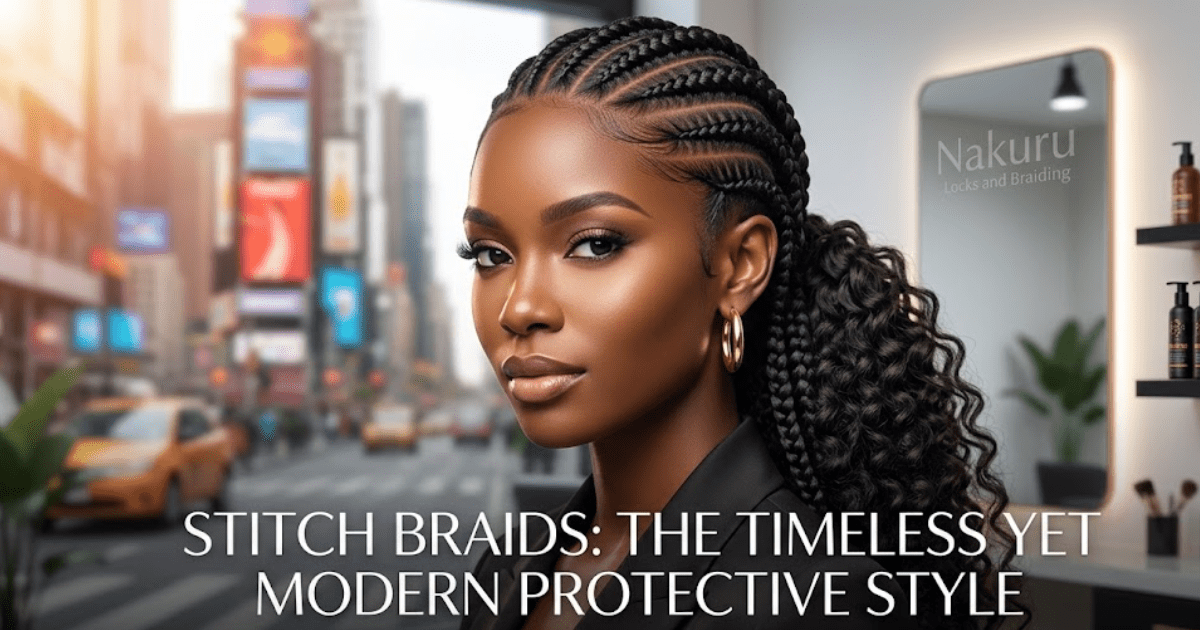
Stitch Braids: The Timeless Yet Modern Protective Style Taking the World by Storm – Your Complete Guide at Nakuru Locks and Braiding
Imagine walking through the vibrant streets of Nairobi or the high-fashion avenues of New York. You’ll notice one hairstyle that consistently stops traffic: Stitch Braids. Defined by their razor-sharp, horizontal lines and flawless symmetry, stitch braids have evolved from a protective styling technique into a global symbol of precision and elegance.
Whether you are looking for a sleek corporate look or a creative freestyle design for a special event, stitch braids offer a level of “neatness” that traditional cornrows simply cannot match. In this comprehensive guide, we explore everything from the technical execution to the most popular variations taking the world by storm in 2026.
What are Stitch Braids?
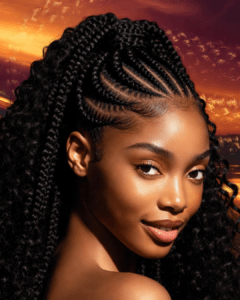
Stitch braids are a sophisticated evolution of traditional cornrows. They involve braiding hair close to the scalp using a precise “stitch-in” technique that creates visible, parallel “stitches” or clean partings between each braid. Unlike standard cornrows—where hair is continuously picked up from behind—stitch braids use deliberate sectioning.
The braider parts the hair into neat horizontal or angled lines, then weaves in extensions (or works with natural hair) in short, controlled passes. This produces the signature stitched look: crisp, uniform lines that resemble hand-sewn embroidery.
The technique originated from African cornrowing practices dating back thousands of years but gained modern popularity through innovative braiders who refined the finger method—often using the pinky nail or a fine-tooth comb to “stitch” small sections for ultra-clean lines.
Stitch braids can be done on natural hair alone or with feed-in extensions for added length and volume. They’re a true protective style: your natural hair stays tucked away, shielded from breakage, heat, and environmental stress.
Key differences from cornrows? Precision. Cornrows flow continuously; stitch braids pause to create those defining “stitches.” Feed-in stitch braids combine both: you add hair gradually while maintaining the stitched parting for a seamless, natural-growing effect.
The Evolution of the Stitch
The technique gained massive popularity due to its longevity and aesthetic appeal. By creating clear sections, the tension is distributed more evenly across the scalp, often making them more comfortable than traditional tight cornrows.
How Long Do Stitch Braids Last?
One of the most frequent questions clients ask is: How long do stitch braids last?
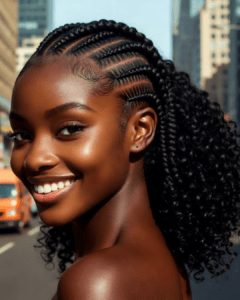
On average, stitch braids last between 4 to 7 weeks. However, their lifespan depends heavily on three factors:
-
Braid Size: Larger braids (like 4 or 6 stitch braids) tend to frizz faster than smaller, more intricate styles.
-
Hair Texture: Natural, coarser textures often hold the “stitch” longer than silkier textures.
-
Maintenance: Wearing a silk or satin scarf at night is non-negotiable for preserving the sharpness of the lines.
Pro Tip: To keep your stitch braids looking fresh for over a month, apply a light foaming mousse once a week to lay down flyaways and tie the hair down with a wrap strips until dry.
Exploring Popular Stitch Braid Styles
4 Stitch Braids
The 4 stitch braid style is the epitome of “bold and beautiful.” These are large, jumbo braids that offer a minimalist yet striking look. Because there are only four main sections, this style is relatively quick to install, making it a favorite for those with a busy schedule.
6 Stitch Braid Styles & Variations
The 6 stitch braid is the “goldilocks” of braiding—not too thick, not too thin. It allows for more versatility in how the braids sit on the head.
-
6 Stitch Braids with Bun: A classic professional look where the six braids converge into a neat, low or high bun.
-
6 Stitch Braids with Design: For those who want more personality, adding “S” shapes or zigzag parts between the six main braids adds a layer of complexity.
8 Stitch Braids with Design
For a more detailed and flatter look against the scalp, 8 stitch braids are ideal. The smaller sections allow for intricate geometric patterns and “filler” braids (tiny cornrows between the main stitches) that create a textured, multi-dimensional appearance.
Creative Flourishes: Curls, Ponytails, and Ends
Stitch Braids Ponytail & Curly Variations
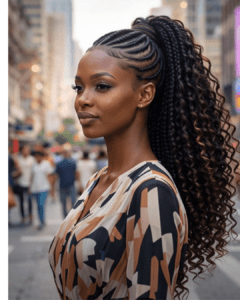
The stitch braids ponytail is perhaps the most requested variation in modern salons. It lifts the face and provides a youthful, sleek aesthetic.
-
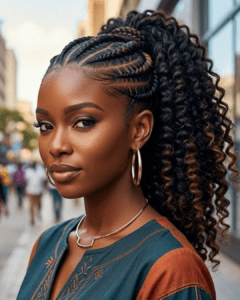
Stitch Braids with Curly Ponytail: Combining the structured precision of the stitch with the soft volume of deep wave or water wave extensions.
-
Stitch Braids with Curly Bun: Perfect for weddings or formal galas, where the bun is exploded into a cloud of curls for added glamour.
Stitch Braids with Curly Ends
Rather than braiding the hair all the way to the tip, leaving the ends loose—known as stitch braids with curly ends—adds a soft, feminine touch. This is often achieved using “boho” or “goddess” braiding hair.
Freestyle Stitch Braids
This is where the braider’s artistry truly shines. Freestyle stitch braids involve no set pattern. The stylist may incorporate hearts, stars, or abstract swirling lines, ensuring that your hairstyle is a one-of-a-kind masterpiece.
How to Do Stitch Braids for Beginners
If you are learning the craft, the “stitch” can be intimidating. Here is a simplified breakdown:
-
Preparation: Start with blown-out, detangled hair. Use a heavy-duty edge control or braiding wax to make the parts crisp.
-
Sectioning: Part the hair into the main rows.
-
The Stitch: Within a row, use your pinky nail or comb to pull a thin horizontal sliver of hair across the part.
-
The Feed-in: Hold that sliver and incorporate it into the braid. Continue this “pick-and-stitch” motion consistently.
-
Tension Control: Ensure you aren’t pulling too hard on the edges to avoid traction alopecia.
Feed-in Stitch Braids: The Science of Seamlessness
The feed-in method is essential for stitch braids. Instead of starting with a bulky knot at the hairline, you gradually “feed in” small pieces of braiding hair. This results in a braid that starts thin and naturally thickens, mimicking the look of hair growing directly from the scalp.
Frequently Asked Questions (FAQ)
Q: What are stitch braids exactly? A: Braids with stitched, precise partings for a clean, embroidered look—evolved from cornrows.
Q: How long do stitch braids last? A: 4–8 weeks with care; up to 12 in ideal conditions.
Q: Are feed-in stitch braids better? A: Yes for reduced tension and natural growth illusion.
Q: Can I do stitch braids with curly ponytail or bun? A: Absolutely—our most requested looks!
Q: Suitable for beginners or short hair? A: Yes, but see a pro for best results.
Q: Men’s stitch braids? A: Popular 6-stitch versions look sharp and low-maintenance.
Q: Do stitch braids hurt? A: They should not. While you will feel some tension during the “stitching” process, any sharp pain indicates the braids are too tight, which can lead to scalp damage.
Q: Can I wash my stitch braids? A: It is best to avoid heavy washing as it causes the “stitches” to frizz. Instead, use a cloth dampened with warm water and a diluted shampoo to gently cleanse the scalp between the braids.
Q: What hair is best for stitch braids? A: High-quality pre-stretched synthetic hair is usually best for the braids, while human hair or premium synthetic blends are preferred for the curly ponytails or ends.
Why Choose Professional Styling?
While DIY tutorials are plentiful, the precision of stitch braids—especially 8 stitch braids with design or freestyle stitch braids—requires an expert eye for symmetry and scalp health. A professional stylist ensures that the parts are clean and that the weight of the extensions is distributed safely to protect your natural hair follicles.
Related Articles from Nakuru Locks and Braiding
Sources
-
Journal of Dermatology & Cosmetology: “The Impact of Protective Styling on Traction Alopecia Prevention.”
-
International Hair Institute: “Comparative Analysis of Tension Distribution in Braiding Techniques.”
-
Professional Beauty Association (PBA): “Global Trends in Textured Hair Artistry 2025/2026.”
Leave a Reply