
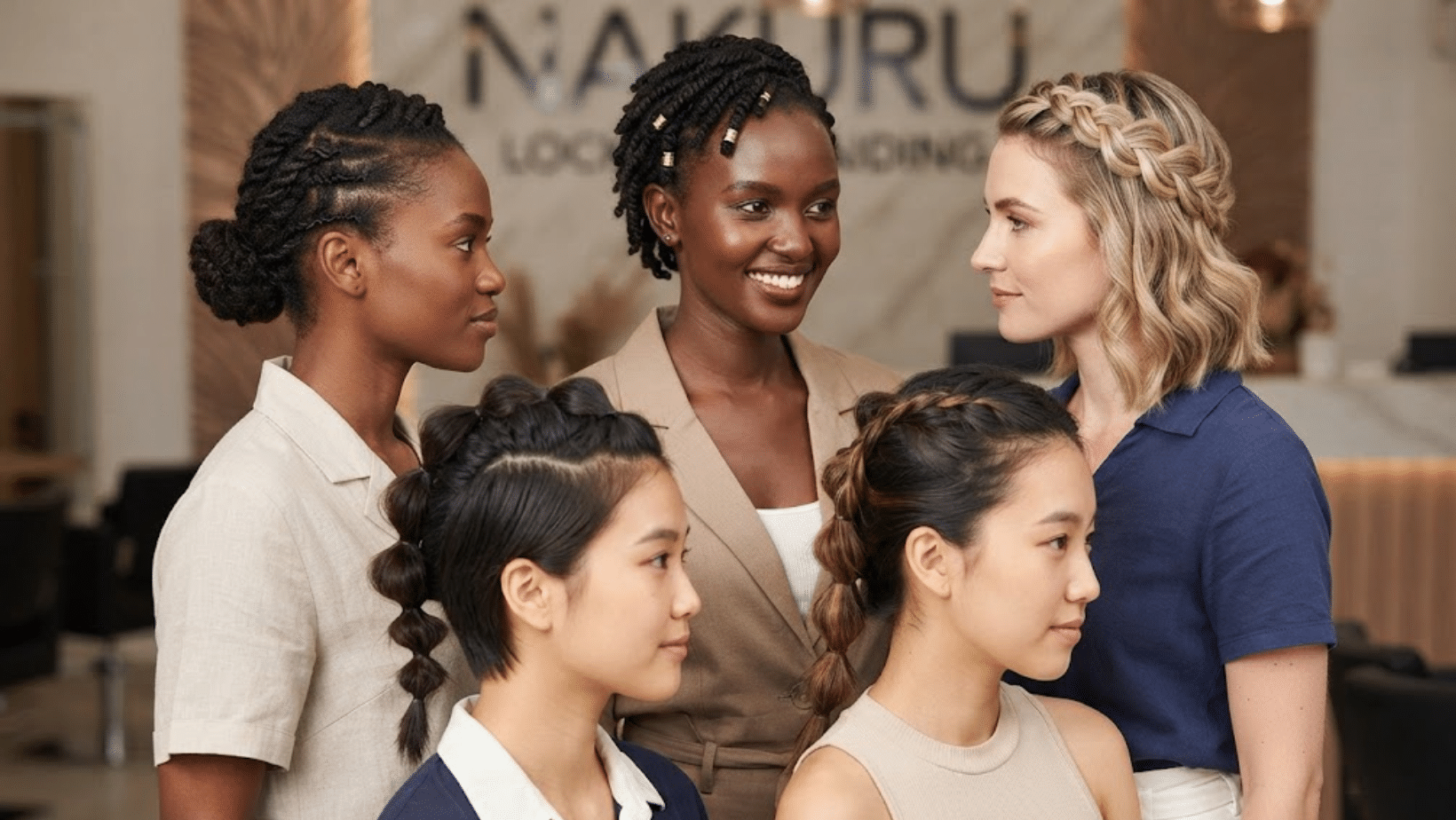
Short Protective Hairstyles That Are Stylish and Easy to Maintain
A short haircut can feel liberating—until you realize that shorter strands still tangle, frizz, dry out, and break. The good news is that short hair does not limit you to one “wash-and-go” look.
With the right short protective hairstyles that are stylish and easy to maintain, you can keep your ends tucked away, reduce daily heat and manipulation, and still enjoy a polished style that suits your texture, lifestyle, and personal aesthetic.
At Nakuru Locks and Braiding, we see protective styling as both a beauty choice and a hair-health strategy.
Whether you have a TWA, a cropped bob, relaxed hair, straight hair, or tightly coiled natural hair, the best protective style is one that looks good, feels comfortable, protects your ends, and never causes pain or prolonged scalp tension.

What Is a Protective Hairstyle?
A protective hairstyle is a style that minimizes daily manipulation, reduces friction, and helps tuck away the ends of the hair—the oldest and most fragile part of each strand.
Protective styles can include braids, twists, buns, cornrows, wigs, weaves, and locs, but a style is only truly protective when it is gentle on the scalp and does not add excessive tension or weight.
Protective styling does not make hair grow faster. Hair growth rate is largely determined by genetics, overall health, and scalp condition.
However, protective styles can help you retain length by reducing breakage from heat styling, rough detangling, weather exposure, and repetitive styling.
For short hair, the goal is slightly different than for long hair. You may not have long ends to tuck into a bun, but you can still reduce breakage by choosing styles that:
-
Keep hair off your face and pillow
-
Reduce daily brushing, flat-ironing, and curling
-
Limit exposure to wind, sun, and friction
-
Preserve moisture
-
Avoid tight pulling around the hairlineaad+2
Why Short Hair Still Needs Protection
Short hair is often easier to manage, but it is not automatically damage-proof. In fact, frequent touch-ups, heat styling, tight headbands, and rough towel-drying can still cause frizz, split ends, and breakage.
The American Academy of Dermatology (AAD) notes that excessive heat, tight hairstyles, and repeated pulling can damage hair and, over time, contribute to hair loss.
This matters for every hair type. People with curly and coily hair may be more prone to dryness and breakage because natural scalp oils do not travel down the hair shaft as easily.
People with straight or fine hair may experience breakage from over-brushing, high heat, and tight elastics.
A good short protective style gives your hair a break without making your routine complicated.
Protective Styles for Short Hair: Best Options
1. Finger Waves
Finger waves are a classic short protective hairstyle for straight, relaxed, or wavy hair. They create smooth S-shaped waves close to the scalp, giving a vintage, elegant finish while reducing the need for daily curling or flat-ironing.
This style works especially well on a pixie cut, tapered cut, or short bob. To maintain it, sleep with a satin or silk scarf or bonnet and avoid brushing the waves out.
The AAD recommends limiting long-lasting-hold products because heavy gels and frequent combing can contribute to breakage.
- Best for: Short straight hair, relaxed hair, pixie cuts, and special occasions.
- Maintenance level: Low after styling.
- Protective benefit: Reduces daily heat styling and keeps hair smooth.
2. Sleek Low Bun or Mini Bun
A low bun is one of the simplest protective styles for short hair. If your hair is long enough to gather at the nape, use a soft scrunchie or covered elastic and keep the bun loose rather than pulled tight.
For very short hair, a “mini bun” may only hold a small section of hair, but it can still keep fragile ends away from your collar, pillow, and hands. Avoid forcing hair into a bun if it will not reach comfortably; tension is not protective.
The AAD specifically advises wearing hair loosely pulled back and avoiding tight ponytails, buns, and cornrows.
- Best for: Short bobs, growing-out pixies, and straight or wavy hair.
- Maintenance level: Very low.
- Protective benefit: Tucks ends away and reduces friction.
3. Two-Strand Twists
Two-strand twists are one of the most versatile protective styles for short natural hair. You divide the hair into sections, twist two strands around each other, and optionally use a light styling cream or leave-in conditioner for definition.
Twists can be worn as a finished style for several days, then unraveled for a heatless twist-out. They are especially useful for coily and curly textures because they help preserve moisture and reduce tangling.
The AAD notes that twists, satin or silk bonnets, and satin pillowcases can help reduce friction and preserve hairstyles overnight.
- Best for: Natural hair, TWA, coily hair, and transitioning hair.
- Maintenance level: Low to moderate.
- Protective benefit: Reduces manipulation and supports moisture retention.

4. Flat Twists
Flat twists lie close to the scalp, similar to cornrows, but are created by twisting two sections of hair instead of braiding three.
They are excellent for short natural hair because they create clean parts, keep hair contained, and can be styled into a low bun, side sweep, or twist-out.
Flat twists are often gentler than very small cornrows because they can be installed with less tension—provided your stylist does not pull tightly at the hairline.
The AAD warns that tight braiding and cornrows can contribute to traction alopecia, so comfort should always come before a perfectly sleek finish.
- Best for: Natural hair, short afros, and tapered cuts.
- Maintenance level: Low.
- Protective benefit: Keeps hair neat while reducing daily styling.
5. Cornrows
Cornrows are braids created close to the scalp in straight or curved rows. They can be a great short protective hairstyle when installed loosely and maintained with proper scalp care.
For short hair, simple straight-back cornrows, side cornrows, or a few larger rows are usually easier to maintain than tiny, intricate patterns. Larger braids are also generally lighter than very small ones. The AAD recommends loosening braids around the hairline, choosing thicker braids, and keeping braids short because longer styles can be heavier and pull more.
- Best for: Natural hair, relaxed hair, and short-to-medium hair.
- Maintenance level: Low.
- Protective benefit: Reduces daily detangling and styling.
6. Bantu Knots
Bantu knots are small, coiled sections of hair wrapped around themselves to form mini buns across the head. They are bold, stylish, and practical: wear the knots as a statement look, then unravel them later for heatless curls.
This is a particularly good option for short natural hair because the style does not require significant length. Section the hair evenly, moisturize lightly, and avoid wrapping the knots so tightly that they cause scalp soreness. Bantu knots can also be paired with twists or flat twists for added dimension.
- Best for: Coily, curly, and natural short hair.
- Maintenance level: Low.
- Protective benefit: Keeps ends tucked and creates a second style when unraveled.
7. Braided Bob
A braided bob is a chic protective style for short hair, especially when created with lightweight braiding hair. It gives the appearance of a bob while keeping natural hair braided and protected underneath.
This style can work well for many textures, but installation technique matters. Choose a stylist who avoids excessive tension at the temples and nape.
The AAD advises removing tight styles immediately if they cause pain, stinging, crusting, or visible scalp tension.
- Best for: Short natural hair, relaxed hair, and clients who want a polished, low-effort look.
- Maintenance level: Low.
- Protective benefit: Shields natural hair while offering a complete styled look.
8. Crochet Braids
Crochet braids involve installing pre-looped extensions through cornrowed natural hair. For short hair, crochet styles can add volume, color, curls, or a bob shape without applying heat to your natural strands.
Crochet can be protective when the cornrows underneath are not tight and the added hair is lightweight.
The AAD recommends using light extensions and avoiding styles that pull on the hair. It is also important to keep the scalp clean and moisturized while wearing any extension-based style.
- Best for: Short natural hair and clients wanting length or volume without a long install.
- Maintenance level: Low to moderate.
- Protective benefit: Reduces daily heat styling and manipulation.
9. Wigs and Half-Wigs
A wig can be protective when your natural hair underneath is braided, moisturized, and allowed to breathe. For short hair, a half-wig or headband wig can be especially convenient because it requires less braiding underneath.
However, wigs are not automatically protective. If the wig cap, combs, or straps are too tight—or if the hair underneath is neglected—the style can cause friction, breakage, and scalp irritation.
Keep the hair beneath the wig clean, moisturized, and loosely secured, and remove the wig at night when possible.
- Best for: All hair types and short hair lengths.
- Maintenance level: Moderate.
- Protective benefit: Limits daily styling when installed and worn correctly.
10. Starter Locs and Short Loc Styles
Starter locs can function as a long-term protective style because they reduce frequent detangling and daily restyling. Short locs can be styled with flat twists, bantu knots, barrel rolls, or simple updos as they grow.
Locs should never be installed or retightened so tightly that they cause pain. The AAD lists locs among hairstyles that can lead to traction alopecia when they pull on the hair, and recommends keeping locs short and avoiding frequent tight styling. At Nakuru Locks and Braiding, we prioritize healthy parting, comfortable tension, and scalp-friendly maintenance.
- Best for: Natural hair and clients seeking a long-term low-manipulation style.
- Maintenance level: Low day to day, with regular professional maintenance.
- Protective benefit: Reduces detangling and daily manipulation.

Protective Styles for Short Hair While Sleeping
Nighttime care is one of the most overlooked parts of protective styling. Even a beautiful daytime style can suffer from pillow friction, dryness, and tangling while you sleep.
The AAD recommends protecting curls overnight with a loose pineapple-style ponytail, a loose braid, twists, or a satin or silk bonnet or pillowcase. These options reduce friction, which can otherwise make hair frizzy and easier to break.
Best Nighttime Protective Styles for Short Hair
-
Satin or silk bonnet: Ideal for twists, cornrows, Bantu knots, and short natural hair.
-
Satin or silk pillowcase: A good alternative if bonnets feel uncomfortable or slip off.
-
Loose pineapple: Works for short curly hair that is long enough to gather loosely at the crown.
-
Loose two-strand twists: Helps prevent tangling and preserves curl definition.
-
Silk or satin scarf: Useful for finger waves, sleek styles, and laid edges; tie it gently rather than tightly.
-
Mini loose bun: Suitable for bobs and growing-out cuts, as long as it does not pull.
Avoid sleeping in tight elastics, tight scarves, or styles that leave dents, soreness, or headaches. If a hairstyle hurts, it is too tight.
Protective Styles for Short Straight Hair
Short straight hair can be protected without braiding. The key is reducing heat, friction, and over-brushing.
Good options include:
-
Finger waves for a smooth, vintage finish
-
Soft headband styles that keep hair off the face without pulling
-
Loose low bun or half-up style if there is enough length
-
Heatless overnight waves using soft rollers or a loose braid
-
Sleek tucked style behind the ears with a light, non-flaking product
The AAD advises letting straight hair dry somewhat before combing, using a wide-tooth comb, minimizing brushing, and limiting hot tools. For short straight hair, protective styling is less about hiding every strand and more about reducing repeated heat exposure and mechanical damage.aad+1
Protective Styles for Short Hair Black Girl
For Black girls and women with natural, coily, or textured hair, protective styles can help reduce dryness, breakage, and daily manipulation. Curly and coily hair is more prone to dryness and breakage, so moisture and gentle handling are especially important.
Great short protective styles include:
-
Braided bobs
-
Twist-outs created from protective twists
Protective does not mean “tight.” A style should never cause headaches, bumps, stinging, or a pulled hairline.
The AAD warns that tight braids, locs, cornrows, ponytails, and extensions can contribute to traction alopecia, particularly when worn frequently or for long periods.
Protective Styles for Very Short Hair
Very short hair—such as a TWA, buzz cut, or freshly big-chopped hair—can still be styled protectively. You may not be able to create a bun or long braid, but you can reduce friction and moisture loss.
Try:
-
Satin bonnet or satin pillowcase every night
-
Light moisturizer and sealant on the hair and scalp
-
Finger coils for definition without heat
-
Mini two-strand twists on slightly longer TWA hair
-
Flat twists where there is enough length to grip
-
Short crochet styles if your natural hair can support light extensions
-
Headwraps worn loosely for sun and wind protection
The most protective choice for very short hair is often simply keeping it moisturized, avoiding tight accessories, and sleeping on a smooth fabric. The AAD notes that silk or satin coverings are gentler on hair than many other materials.
Protective Styles for Short Hair White Girl
Protective styling is not limited to one hair type, texture, or background. A protective style for short straight, wavy, or fine hair focuses on reducing heat damage, friction, and unnecessary brushing.
Good options include:
-
Finger waves
-
Soft low buns
-
Heatless waves
-
Claw-clip styles that do not pull
-
Silk or satin pillowcases
-
Loose braids, if the hair is long enough
-
Headband styles that avoid tight tension
If your hair is fine, avoid heavy extensions, tight braids, and aggressive brushing. The AAD recommends using covered hair ties, wearing hair loosely pulled back, and avoiding styles that repeatedly pull on the hair.
Cute Short Protective Hairstyles That Are Stylish and Easy to Maintain
Short protective styles can be just as fashionable as long braids or flowing curls. Some of the cutest, easiest options include:
-
Curly crochet bob: Full, playful, and quick to refresh with a leave-in spray.
-
Braided bob with beads: Bold, lightweight, and easy to style behind the ears.
-
Flat-twist crown: Elegant for work, school, weddings, or everyday wear.
-
Bantu knots with laid edges: Trendy and versatile, with a twist-out option later.
-
Two-strand twists with cuffs: Simple, textured, and easy to re-moisturize.
-
Finger waves: Timeless and polished for straight or relaxed hair.
-
Short faux locs: A boho-inspired look with low daily styling.
-
Cornrows with a curly ponytail: Protective at the roots while adding volume and movement.
For a style to remain easy to maintain, choose lightweight hair, avoid excessive product buildup, and keep your scalp clean. The AAD recommends maintaining scalp hygiene when wearing weaves or extensions and avoiding styles that are too heavy.
How to Maintain Short Protective Styles
1. Keep the Scalp Clean
A protective style should never prevent scalp care. Cleanse your scalp gently based on your hair type and how much product you use. The AAD advises applying shampoo to the scalp rather than rubbing it through the length of the hair, then letting the rinse flow through the strands.
2. Moisturize Without Overloading
Use a lightweight leave-in conditioner or moisturizing spray, focusing on your ends. For curly and coily hair, conditioning the full length of the hair and following with a leave-in or oil can help maintain moisture.
3. Sleep Smart
Use a satin or silk bonnet, scarf, or pillowcase. These reduce friction and help preserve your style overnight.
4. Avoid Tight Installation
Protective styles should not hurt. Pain, stinging, scalp tenderness, bumps, or visible pulling at the hairline are warning signs. The AAD advises changing the hairstyle immediately if these symptoms occur.
5. Take Breaks
Even a gentle protective style should not be worn continuously forever. The AAD recommends switching hairstyles regularly and giving the hair and scalp time to recover from tension. For braids, it also recommends wearing them for no longer than 6–8 weeks.
6. Be Gentle During Takedown
Take your time when removing twists, braids, crochet, or loc extensions. Detangle gently, moisturize as needed, and avoid rushing through knots. Rough handling during installation or removal can undo the benefits of protective styling.
How Long Should You Keep a Short Protective Style?
It depends on the style and your scalp.
-
Finger waves: 2–5 days
-
Two-strand twists: 3–10 days, or longer with proper nighttime care
-
Bantu knots: 2–5 days, then unravel for a twist-out
-
Flat twists or cornrows: 1–3 weeks
-
Crochet braids: Typically 2–6 weeks, depending on installation and scalp condition
-
Braided bob: Often 4–8 weeks, depending on hair growth and comfort
-
Wigs: Rotate and remove regularly; care for the hair underneath
-
Starter locs: Long term, with professional maintenance
The AAD recommends avoiding frequently wearing tight styles and taking breaks between protective styles so the hair and scalp can recover.
When a Protective Style Is Not Protective
A style stops being protective when it causes more harm than good. Warning signs include:
-
Headaches or scalp soreness
-
Stinging or burning after installation
-
Bumps, flakes, or irritation along the parts
-
A tender or pulled hairline
-
Broken hairs around the forehead
-
Thinning at the temples or nape
-
A style that feels too heavy
Traction alopecia can develop from repeated tension, and early signs may include broken hairs around the forehead, a receding hairline, or patches of loss where the hair is pulled tightly.
The AAD advises seeing a board-certified dermatologist early if you notice these signs, because prolonged tension can sometimes lead to permanent hair loss.
FAQ: Short Protective Hairstyles
How long do short protective styles last?
Typically 1–6 weeks depending on the style, hair type, and care. Mini twists may last 1–3 weeks; short braids or locs can go longer with proper maintenance.
Can protective styles be done on very short or straight hair?
Yes. Techniques adapt with smaller sections, grip products, or lightweight extensions. Straight hair often pairs best with braids, buns, and silk night protection.
Do short protective styles help hair grow?
They support length retention by reducing breakage. Growth rate itself is largely genetic and health-related, but less daily damage means more retained length.
Are these styles suitable for all ages and genders?
Absolutely. We install short protective looks for women, men, and children, always prioritizing comfort and scalp health.
What if I have a sensitive hairline or previous traction issues?
Choose knotless, feed-in, or very loose mini styles and keep wear time shorter. Consult a professional.
Book Short Protective Styling at Nakuru Locks and Braiding
Short hair deserves styles that are fashionable, comfortable, and healthy. At Nakuru Locks and Braiding, we help clients choose protective styles based on hair texture, scalp condition, lifestyle, and desired look—whether that is a neat set of flat twists, a bold braided bob, crochet curls, Bantu knots, or starter locs.
If you are in Nakuru or surrounding areas and want a protective style that looks polished without damaging your hairline, our stylists can recommend a low-tension option tailored to you.
Related Articles from Nakuru Locks and Braiding
Authoritative References
-
American Academy of Dermatology. “Hairstyles that pull can lead to hair loss.”
-
American Academy of Dermatology. “Hair styling without damage.”
-
American Academy of Dermatology. “10 hair care habits that can damage your hair.”
-
American Academy of Dermatology. “6 curly hair tips from dermatologists.”
-
American Academy of Dermatology. “Tressed to impress: Tips for keeping your mane magnificent.”
-
Healthline. “Protective Hairstyles: Types, Benefits, and Finding a Stylist.”
-
InStyle. “15 Stunning Protective Styles for Short Hair.”
Leave a Reply