
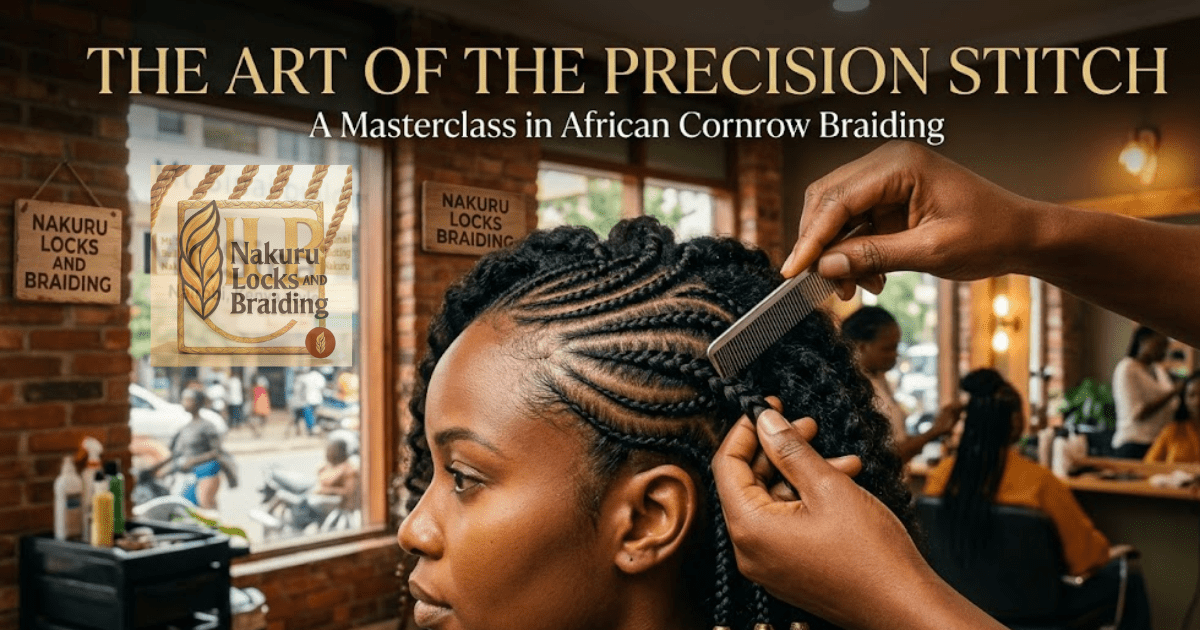
The Art of the Precision Stitch: A Masterclass in African Cornrow Braiding
In the heart of Nakuru City, where the vibrant energy of the Rift Valley meets the steady hum of urban life, there is a rhythmic sound familiar to every woman who understands the value of her crown: the soft snip of shears, the gentle parting of hair, and the rhythmic, silent “under-over” dance of fingers creating a masterpiece.
At Nakuru Locks and Braiding, we don’t just “do hair.” We preserve a legacy. Whether you are walking through the streets of Nairobi, Cape Town, or New York, the African cornrow remains the ultimate symbol of intersectional identity—blending ancient heritage with modern, high-fashion utility. From the geometric precision of South African styles to the playful click of beads in a traditional finish, cornrows are more than a protective style; they are an architectural feat of the scalp.
What are African Braids Cornrows?
African braids cornrows—often simply called cornrows—are a traditional African braiding technique where hair is plaited tightly to the scalp in continuous, raised rows. Unlike loose braids that hang freely, cornrows (also known as cane rows in the Caribbean) hug the head like neat rows of corn in a field, hence the name. They originated in Africa as far back as 3000 B.C., with depictions in Stone Age paintings from the Tassili Plateau in the Sahara and ancient Egyptian, Nubian, and West African art.
In many African societies, these styles weren’t just aesthetic—they communicated identity. Patterns signified tribe, age, marital status, wealth, religion, or even social role. Warriors and kings in Ethiopia, like Emperor Yohannes IV, wore them proudly. During the transatlantic slave trade, enslaved Africans used cornrows for survival: braiding seeds or maps into their hair for escape routes on the Underground Railroad.
Today, African braids cornrows remain a powerful protective style for natural hair, minimizing breakage, reducing daily manipulation, and promoting growth. They’re versatile for all hair types and textures, especially Type 4 curls common in African and diaspora communities. At Nakuru Locks and Braiding, we see clients from Nairobi to rural Rift Valley embracing them for their low-maintenance elegance—lasting 4-8 weeks with proper care.
How to Style African Braids Cornrows with Braids (Extensions)
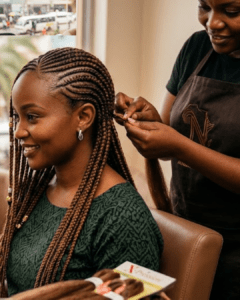
One of the most frequent questions we receive at our Mt. Sinai building studio is how to integrate synthetic or natural extensions seamlessly. Styling cornrows with braids (commonly known as the Feed-in Method) creates a more natural look that protects the hairline from excessive tension.
The Professional Step-by-Step
-
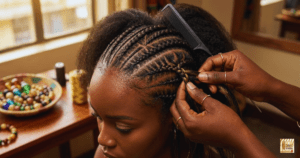
Preparation and Mapping: Start with clean, stretched, and moisturized hair. Use a rat-tail comb to create precise parts. In professional styling, “The Part is the Art.”
-
The Anchor: Begin the cornrow with your natural hair for two to three stitches. This ensures the weight of the extension doesn’t pull on the delicate “baby hairs” at the forehead.
-
The Integration (Feeding In): Gradually add small strips of braiding hair (like Kanekalon or X-pression) under the thumb as you braid. According to the Journal of Dermatology & Trichology, improper tension in protective styling is a leading cause of traction alopecia; therefore, the feed-in method is the gold-standard for health-conscious styling.
-
The Tail: Once the cornrow reaches the nape of the neck, continue braiding the extensions into a free-hanging plait.
Styling Variations
-
The High Bun: Gather your finished cornrow braids into a towering top-knot. Secure with a silk scrunchie to prevent friction.
-
The Side-Swept Goddess: Direct all cornrows toward one side of the head, allowing the lengths to drape over the shoulder for a regal, asymmetrical look.
-
The Halo: Two large “Goddess” cornrows circling the head, meeting at the back.
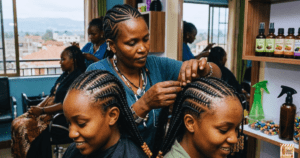
African Braids Cornrows Hairstyles for Ladies: 2026 Trends
While we look back at the African braids cornrows hairstyles 2022 era—which favored heavy, chunky “pop smoke” style braids—the current trend focuses on Micro-Precision and Mixed Media.
1. The South African “Stitch” Cornrow
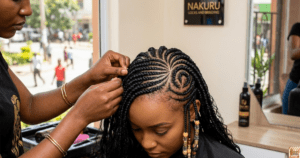
South African styles often emphasize ultra-clean lines created using a “stitch” technique. This involves using the pinky nail or a comb to create horizontal lines across the row before each stitch, giving the braid a ribbed, ladder-like appearance. It is currently one of the most requested looks in Nakuru for its “neatness” and longevity.
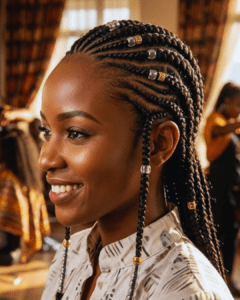
2. Fulani-Inspired Braids (Cornrows with Beads)
The African braids cornrows with beads look is a timeless tribute to the Fula people of West Africa. Typically, this involves a few cornrows braided toward the face or hanging at the sides, adorned with glass, wood, or gold-tone beads.
-
Pro Tip: Use a bead loader and secure the ends with small rubber bands hidden behind a final “crimp” bead to prevent them from sliding off.
3. Geometric Crown Rows
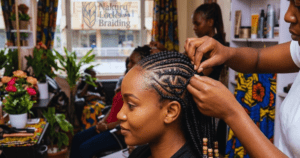
Moving away from straight back-and-forth patterns, 2026 is the year of the curve. Heart-shaped parts, zig-zags, and “S” patterns are used to frame the face, turning the scalp into a canvas of negative space and texture.
Deep Dive: African Braids Cornrows Maintenance
To keep your cornrows looking “fresh out of the chair” for 4–6 weeks, follow this regimen:
-
Night Care: This is non-negotiable. Wear a silk or satin bonnet. Cotton pillowcases act like sponges, sucking the moisture out of your braids and causing frizz.
-
Scalp Hydration: Use a nozzle-tipped bottle to apply a lightweight oil (like jojoba or almond oil) directly to the parts. Avoid heavy greases that cause buildup.
-
The “Wash” Without the Frizz: Dilute a sulfate-free shampoo in water. Use a cotton ball to dab the scalp between the rows. Rinse gently and always ensure your braids are 100% dry (using a hooded dryer if necessary) to prevent “mildew” odor within the extensions.
Frequently Asked Questions (FAQ)
How long do African cornrows last?
Typically, cornrows last between 2 to 6 weeks. Smaller, tighter braids last longer than larger “jumbo” braids. However, we recommend removing them by week 6 to prevent hair matting at the roots.
Do cornrows hurt?
They should feel snug, but never painful. If you have a headache or see small white bumps (tension bumps) at the hairline, the braids are too tight and can cause permanent hair loss.
Can I get cornrows with short hair?
Yes. At Nakuru Locks and Braiding, we can grip hair as short as 2 inches using the “starting” technique with extensions.
What is the difference between French braids and cornrows?
The main difference is the technique. French braids use an overhand motion (hair is crossed over the center), resulting in a smooth, flat braid. Cornrows use an underhand motion, resulting in a raised, textured braid that sits on top of the scalp.
Related Articles from Nakuru Locks and Braiding
If you enjoyed this guide, explore our other expert resources to keep your hair thriving:
Sources
-
The Science of Protective Styling – International Journal of Women’s Dermatology.
- Historical Evolution of African Hair Artistry – Dr. Kari Williams.
-
Trichology and Traction Alopecia Prevention – British Association of Dermatologists.
Leave a Reply