
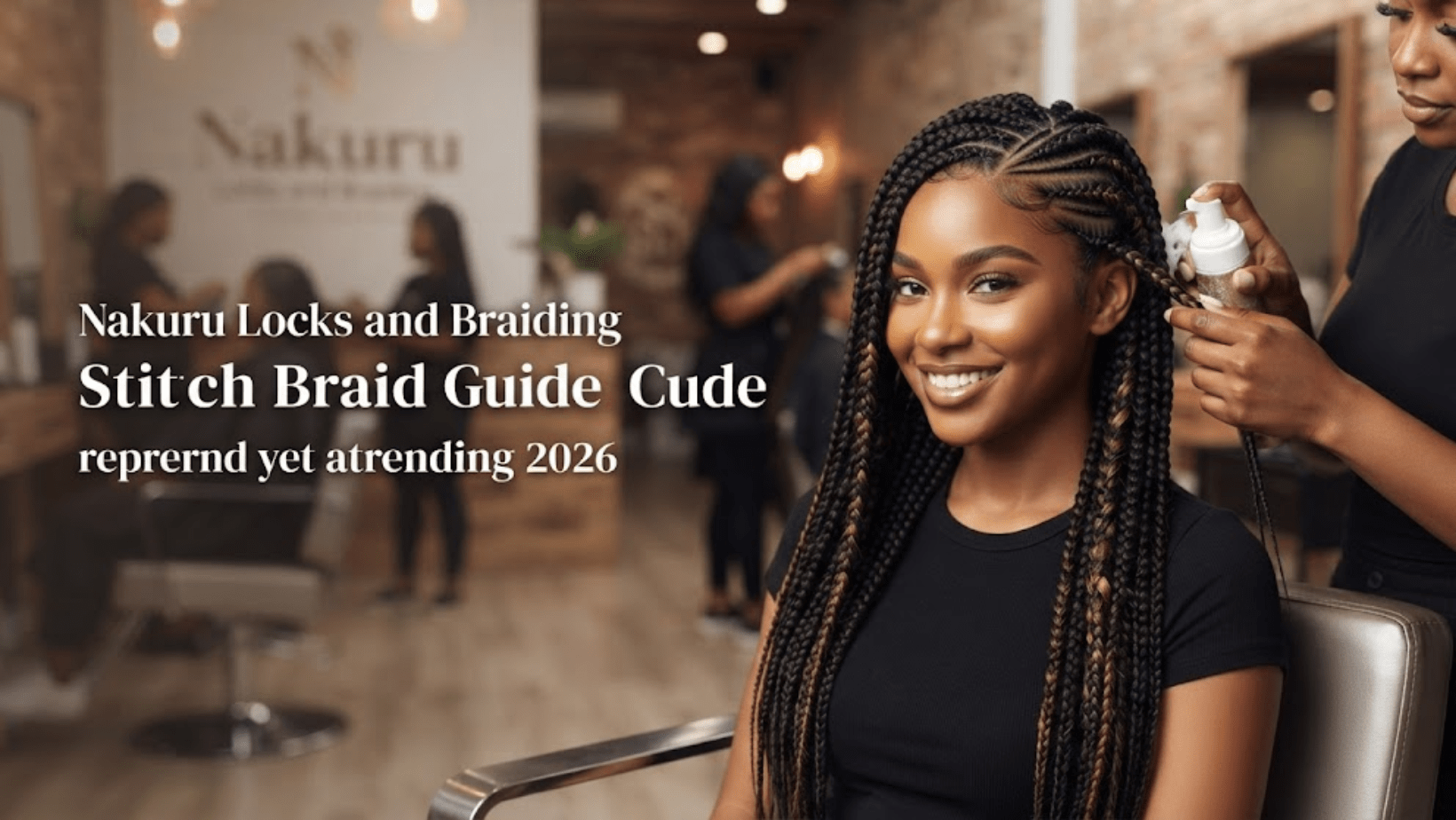
Braiding Techniques for Black Hair: A Complete Beginner-to-Expert Guide for Natural Hair, Styles with Attachment, Trends in 2026, and Everyday Protective Looks
Braiding is more than a hairstyle—it’s a centuries-old tradition that protects natural hair, celebrates cultural identity, and offers endless creative expression.
Whether you’re a beginner learning your first three-strand braid, a parent styling your child’s hair, or a professional seeking the latest 2026 trends, this comprehensive guide covers every braiding technique for black hair with attachments, step-by-step tutorials, trending styles, and expert-backed safety tips from Nakuru Locks and Braiding.
Why Braiding Matters: Protection, Culture, and Confidence
Protective hairstyles like braids reduce daily manipulation, keep fragile ends tucked away, and help retain length by minimizing breakage from combing, heat, and environmental stress.
For tightly coiled 3C–4C hair textures common among Black women, men, and children, braids offer a low-maintenance solution that lasts weeks while looking polished.
Beyond functionality, braiding carries deep cultural significance across African and African diaspora communities—from Fulani tribal braids signaling heritage to cornrows historically used as maps for escape.
In 2026, braids remain a powerful statement of pride, versatility, and self-expression for all ages and genders.
Basic Braiding Techniques: The Foundation Every Beginner Must Master
Before attempting complex styles, master these fundamental techniques. Each forms the building block for advanced braiding.
1. Three-Strand Braid (Underhand vs. Overhand)
The simplest braid divides hair into three equal strands.
-
Underhand braid: Cross outer strands under the center strand. This creates a braid that sits beneath the scalp—essential for cornrows.
-
Overhand braid: Cross outer strands over the center. This produces a raised braid used for box braids and free-hanging styles.
Step-by-step for beginners:
1. Section hair and divide into three equal strands.
2. Hold left strand between left thumb/index, right strand between right thumb/index, middle strand between left middle/ring fingers.
3. Cross right strand under middle (underhand) or over middle (overhand).
4. Repeat on left side, alternating until ends.
5. Secure with elastic or dip synthetic ends in hot water.
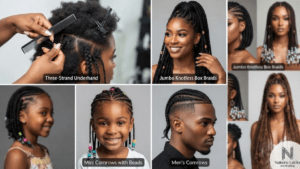
2. Cornrows (Invisible Braids)
Cornrows are underhand three-strand braids worked against the scalp, picking up fresh hair with each pass to lie flat.
Technique:
1. Part a clean row from front to nape using a rat-tail comb.
2. At the front, take a dime-sized triangle and divide into three strands.
3. Cross right strand under middle, then left under middle.
4. Before each cross, scoop a thin strip of hair from the scalp (use your index finger or pinky) and add it to the strand nearest the part.
5. Maintain even tension—too tight causes traction alopecia; too loose looks sloppy.
7. When scalp hair runs out, continue as a free-hanging three-strand braid to the ends.
3. Feed-In Technique (Seamless Extensions)
The feed-in method gradually incorporates extension hair into the braid, eliminating bulky knots and reducing scalp tension. This is the foundation of knotless braids, Ghana braids, and stitch braids.
How it works:
1. Start braiding with only natural hair for 2–3 stitches.
2. Fold a small piece of synthetic hair in half and place it under the braid.
3. As you cross strands, wrap the extension around the natural hair, adding it strand-by-strand.
4. Continue feeding in small pieces as you braid down, controlling tension for a flat, seamless look.
Braiding with Attachments: Extensions, Synthetic Hair, and Tools
Adding extensions (kanekalon, human hair, or bulk braiding hair) increases length, thickness, and style longevity.
-
Rat-tail comb for precise parting
-
Sectioning clips
-
Sulfate-free shampoo and thick conditioner
-
Leave-in conditioner or moisturizer
-
Lightweight oil (jojoba, argan, or almond)
-
Synthetic braiding hair (kanekalon for box braids, bulk hair for cornrows)
-
Small elastics or hot water for sealing ends
Step-by-Step: Box Braids with Extensions
1. Prep: Wash hair with sulfate-free shampoo, condition, and detangle from ends to roots.
2. Section: Use a rat-tail comb to part hair into square or triangle sections matching desired braid size. Clip away unused sections.
3. Moisturize: Apply leave-in conditioner to each section.
4. Attach extensions:
-
-
Traditional box braids: Fold synthetic hair in half, place natural hair through the loop, pull ends over natural hair to create a knot at the root.
-
-
-
Knotless braids: Start with natural hair only, then feed in extensions gradually using the feed-in technique.
-
5. Braid: Divide the section (natural + extension) into three strands. Braid tightly but comfortably—never painful.
6. Seal ends: Dip synthetic ends in hot water or secure with small elastics.
Step-by-Step: Cornrows with Extensions
1. Wash and detangle hair. Apply light oil for slip.
2. Section the bottom layer above the neck into three small pieces.
3. Take one extension strand, fold in half, and place over the natural strand. You now have one natural strand and two extension strands.
4. Begin cornrowing: cross right extension under middle, add scalp hair, cross left under middle, add scalp hair.
5. Continue down the row, adding extension pieces as needed for length/thickness.
6. Keep tension consistent—gentle, not tight.
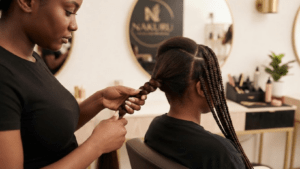
Easy Braiding Techniques for Black Hair: Beginner-Friendly Styles
If you’re new to braiding, start with these low-tension, quick styles.
1. Two-Strand Twists
Simpler than three-strand braids, twists require only two sections.
Steps:
1. Section hair and divide into two equal strands.
2. Twist strands around each other from root to tip, maintaining firm but gentle tension.
3. Seal ends with styling cream or small elastic.
Pro tip: Use kinky twist extensions for a fuller, longer look.
2. Simple Cornrows (Straight-Back)
Straight-back cornrows are the easiest protective style for beginners.
Steps:
1. Part hair into 4–6 large sections (fewer sections = faster install).
2. Cornrow each section from front to nape using the underhand technique.
3. Secure ends with elastics.
Time: 30–60 minutes for a full head.
3. Braided Ponytail
A quick, elegant style for work or school.
Steps:
1. Gather hair into a high or low ponytail.
2. Divide ponytail into three strands and braid to the ends.
3. Wrap a small section around the base to hide the elastic.
4. Add beads or cuffs for flair.
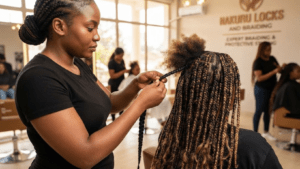
Braiding Techniques for Black Hair: Black Girl, Natural Hair, and Kids
Styling children’s or tender-headed natural hair requires extra care to avoid pain and breakage.
Prep for Natural Hair (4C Textures)
-
Stretch hair: Blow-dry on low heat or use the banding method (wrap sections with bands to elongate curls without heat).
-
Moisturize heavily: Natural hair is prone to dryness. Use water-based leave-ins and seal with oil.
-
Detangle gently: Work from ends to roots with a wide-tooth comb or fingers.
Kid-Friendly Styles
-
Mini cornrows: Small, neat rows with beads for a playful look.
-
Bantu knots: Twist sections into small buns—protective and cute.
-
Lemonade braids: Side-swept cornrows inspired by Beyoncé—trendy and low-tension.
Safety first:
-
Avoid tight braids around the hairline to prevent traction alopecia.
-
Keep braids in for no longer than 6–8 weeks.
-
Remove immediately if the child complains of pain or you see redness/bumps.
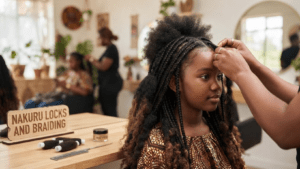
How to Braid Black Hair for Beginners: Step-by-Step for Black Females
Follow this complete beginner’s workflow for your first full braiding session.
-
Wash hair with sulfate-free shampoo and deep condition.
-
Detangle thoroughly and air-dry or blow-dry on low.
-
Apply a leave-in conditioner and lightweight oil.
Step 2: Sectioning
-
Divide hair into four quadrants (forehead to nape, ear to ear). Clip each section.
-
Within each quadrant, part smaller sections matching your braid size (use a rat-tail comb for precision).
-
Start at the nape (easiest to reach) and work upward.
-
For each section:
1. Divide into three strands.
2. Cross right over/under middle, then left over/under middle.
3. For cornrows, add scalp hair before each cross.
4. For box braids with extensions, attach hair at the root (traditional) or feed in gradually (knotless).
5. Braid to the ends and seal.
-
Smooth edges with gel or edge control.
-
Add beads, cuffs, or rings for decoration.
-
Wrap hair in a satin scarf or bonnet at night to reduce frizz.
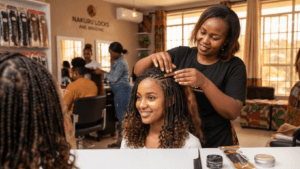
How to Braid Black Hair: Male-Specific Techniques and Styles
Men’s braiding has surged in popularity, from cornrows to Viking braids and box braids.
Popular Men’s Braided Styles 2026
-
Cornrows: Straight-back, curved, or geometric designs.
-
Box braids: Medium to jumbo sizes for a bold look.
-
Viking braids: Long, thick braids often paired with undercuts.
-
Twists: Two-strand twists for a textured, low-maintenance style.
Step-by-Step: Men’s Cornrows
1. Prep: Wash and detangle hair. Men’s hair is often shorter, so focus on scalp health.
2. Part: Use a rat-tail comb to create clean rows (straight, curved, or zigzag).
3. Braid: Start with a dime-sized triangle at the front. Divide into three strands and cornrow using the underhand technique, adding scalp hair with each pass.
4. Tension: Keep braids snug but not tight—men’s hairlines are prone to recession from traction.
5. Finish: Braid to the ends (or until hair runs out) and secure with small elastics.
Pro tip for men: If hair is too short to braid, consider crochet braids—cornrow the base, then attach pre-braided extensions with a latch hook.
What Are Some Popular Braiding Styles for Black Hair? 2026 Trends
In 2026, braids are louder, flashier, and more customized than ever. Here are the top trending styles:
The #1 protective style for comfort and scalp health.
-
Why trending: No bulky knot at the root, less tension, lighter weight, immediate styling.
-
Best for: Sensitive scalps, long-term wear, natural-looking roots.
Cornrows with clean, horizontal “stitches” along each row for a precise, artistic look.
-
Why trending: Sleek, Instagram-worthy, works on all hair lengths.
Fulani braids feature cornrows on top with loose, flowing braids or twists in the back, often accessorized with beads.
-
2026 variations: Lemonade Fulani (side-swept), Boho Fulani with curls, Flip-over Fulani for volume.
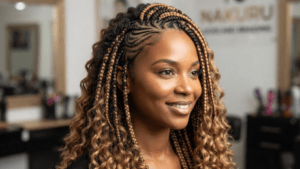
Traditional braids with loose, curly pieces woven throughout for a romantic, textured vibe.
-
Best for: Weddings, photoshoots, goddess energy.
Thick, chunky twists that install quickly and look bold.
-
Why trending: Low-maintenance, protective, perfect for summer.
Knotless braids in honey blonde, burgundy, or ombre, accented with gold or wooden beads.
High or low ponytails with braided bases—sleek and professional.
Pre-braided extensions crocheted onto cornrowed bases—fast install, versatile styles.
What Braid Is Trending Now on Black Girl? 2026’s Hottest Looks
According to 2026 trend reports, these styles dominate social media and salons:
-
Butterfly braids: Emerging as the most significant new style of 2025–2026, featuring wispy, wing-like sections.
-
Lemonade braids: Side-swept cornrows remain a summer staple.
-
Mermaid braids: Wavy, textured braids with a coastal vibe.
-
Short Tyla braids: Inspired by the singer, these chin-length knotless braids are chic and low-commitment.
-
Braided crown hairstyles: Cornrows wrapped into a crown or bun for elegance.
What Are Some Basic Braiding Techniques? Quick Reference
What Is the Quickest Braiding Style?
For speed without sacrificing protection:
1. Two-strand twists: 20–40 minutes for a full head.
2. Jumbo box braids: Fewer, thicker braids = faster install (1–2 hours).
3. Straight-back cornrows: 4–6 large rows take 30–60 minutes.
4. Crochet braids: Cornrow base + pre-braided extensions = 1–2 hours.
Fastest overall: Two-strand twists on stretched natural hair—no extensions needed.
Scalp Health and Safety: Preventing Traction Alopecia
Traction alopecia—hair loss from constant pulling—is a real risk with tight braids.
-
Loosen braids: Especially around the hairline.
-
Limit wear time: Remove braids after 6–8 weeks maximum.
-
Rotate styles: Alternate between tight and loose styles; give hair rest periods.
-
Avoid adhesive on scalp: Use sewn-in weaves, not glue.
-
Moisturize: Keep scalp and hair hydrated with water-based leave-ins and lightweight oils.
-
Watch for warning signs: Redness, bumps, thinning edges, or pain = remove immediately.
How Long Do Braids Last? Maintenance and Washing Routine
With proper care, braids last 4–8 weeks.
1. Dilute sulfate-free shampoo with water in a spray bottle.
2. Spray onto scalp and massage gently (don’t scrub braids).
3. Rinse thoroughly, focusing on the scalp.
4. Apply lightweight conditioner to braids (avoid roots to prevent slippage).
5. Air-dry or use a hooded dryer on low.
-
Moisturize: Spray water-based leave-in on scalp and braids 2–3 times weekly.
-
Seal: Apply lightweight oil (jojoba, argan) to seal in moisture.
-
Night care: Wrap in satin scarf or bonnet to reduce frizz.
-
Edge care: Apply edge control sparingly; avoid daily manipulation.
-
After 6–8 weeks maximum.
-
If you notice new growth causing tension.
-
If scalp becomes itchy, flaky, or painful.
Care, Maintenance, and Longevity
- Moisturize the scalp regularly with a light oil or spray (avoid heavy buildup).
- Sleep with a satin or silk bonnet or pillowcase.
- Wash gently every 1–2 weeks with diluted shampoo, focusing on the scalp, then re-moisturize.
- Avoid heavy products that cause residue.
- Remove styles before 8–10 weeks or at the first sign of excessive matting, discomfort, or thinning.
- After takedown, deep condition and give the hair a rest period of loose styles or gentle wash-and-go before the next install.
Frequently Asked Questions
How do I braid Black hair step by step for beginners?
Begin with clean, moisturized, detangled hair. Master the three-strand cross-over motion, then practice two-strand twists and simple cornrows. Use a rat-tail comb for parts and keep tension even. Full tutorials appear earlier in this guide.
What are some basic braiding techniques?
Three-strand braid, two-strand twist, cornrows (underhand feed-in), and the feed-in method for knotless styles form the core set.
What braid is trending now for Black girls?
Knotless and boho/goddess styles, soft cornrow patterns, and protective looks with natural texture elements remain highly popular. Cultural styles with beads continue to inspire.
What is the quickest braiding style?
Mini or medium two-strand twists and basic straight-back cornrows are among the fastest to complete for a full head.
What are popular Black braided hairstyles in 2026?
Knotless box braids, low-tension boho and butterfly variations, stitch and geometric cornrows, Fulani-inspired looks, braided bobs, and men’s designs paired with fades lead current interest, with a strong emphasis on scalp health and versatility.
Are styles with attachment safe for natural hair?
Yes, when installed with moderate tension, proper weight distribution, and timely removal. Knotless methods further reduce risk.
Related Articles from Nakuru Locks and Braiding
Whether you are a complete beginner learning how to braid Black hair for the first time, a parent styling a Black girl’s natural hair, someone exploring styles with attachment, or looking for the latest trends in 2026, the techniques above give you a solid, practical foundation.
At Nakuru Locks and Braiding we believe every braid should feel as good as it looks—secure, comfortable, and full of personal pride.
Book a session, try a beginner class, or simply practice at home with patience. Your hair, your story, your style.
References and Further Reading
- Journal of the American Academy of Dermatology reviews on traction alopecia and Black hairstyling practices highlight the importance of avoiding excessive tension.
- British Association of Dermatologists guidance on caring for Afro-textured hair and braided styles.
- American Academy of Dermatology recommendations on hairstyles that pull and prevention of hair loss.
Leave a Reply