
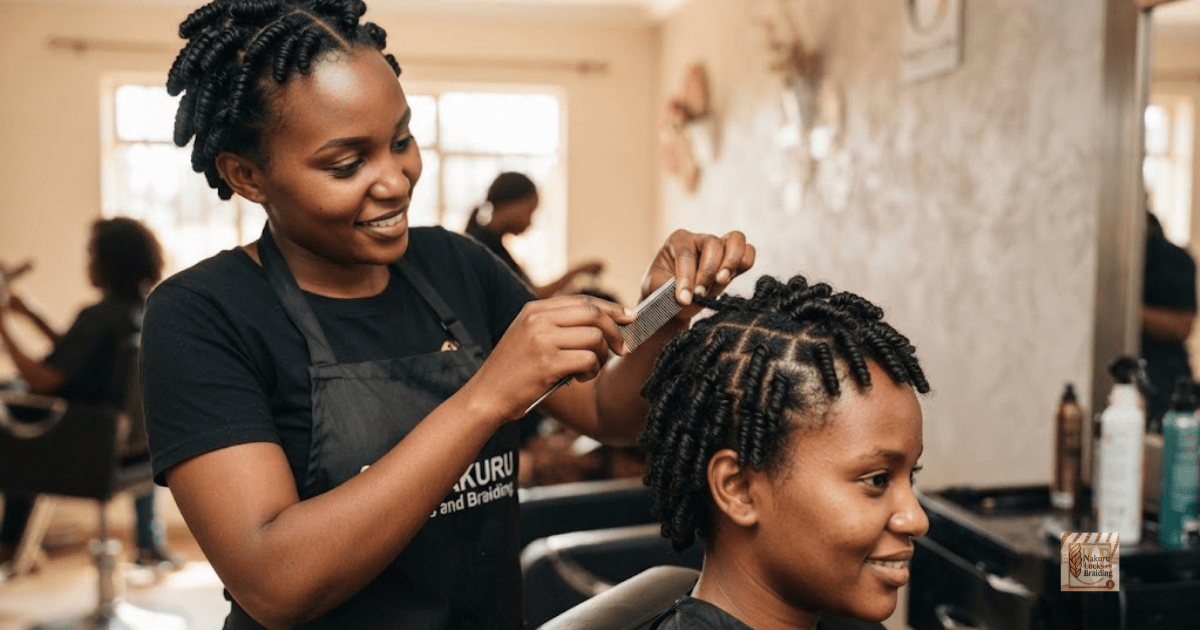
Comb Coils Hairstyle: The Ultimate Guide for Black Hair, Short Hair, Starter Locs, and More
Comb coils are one of those timeless styles that instantly bring out the beauty of natural texture.
Created by twisting small sections of hair with a comb, they give short, coily, and tightly curled hair a defined, neat, and beautifully textured finish.
Picture walking through the lively streets of Nakuru, Kenya, with the sun on your skin and your coils perfectly shaped with every step.
Or imagine stepping out in New York, London, or Lagos with a style that is low-maintenance, elegant, and made to celebrate your natural hair.
For many people with Black hair, especially Type 4 textures, comb coils offer the perfect balance of protection, versatility, and style.
At Nakuru Locks and Braiding, we help clients across East Africa and beyond enjoy this look with confidence, whether they are starting locs or simply want a fresh, natural style.
This guide was created to help readers understand comb coils for Black hair, comb coils on short hair, starter locs, pricing, maintenance, and the difference between comb coils and finger coils.
From “What is a comb coil?” to practical how-to tips, how long they last, how much they cost, and how they compare to other styles, this article covers everything you need to know.
Whether you are searching for comb coils hairstyle for Black hair, comb coils on short hair, or comb coils starter locs, you will find expert insights here grounded in real salon experience and community knowledge.

What Is a Comb Coil? Understanding the Coils Hairstyle Basics
A comb coil (also called comb twist) is a defined, spring-like curl created by wrapping small sections of hair around a fine-tooth or rat-tail comb from root to tip.
This technique produces uniform, tight spirals that mimic natural coil patterns, especially in 4a–4c hair.
Unlike looser styles, comb coils deliver polished definition with minimal frizz when done correctly. They serve as a standalone protective style or a foundation for comb coils locs.
The process involves sectioning, moisturizing, applying product, and twisting with the comb’s tail for even tension and detangling in one motion.
Coils hairstyle broadly refers to any spiraled texture, but comb coils stand out for their neatness and longevity on textured hair.
Professionals at salons like Nakuru Locks and Braiding use this method to enhance natural curl patterns while promoting healthy growth.
Comb Coils vs. Finger Coils: Key Differences
Many ask: Are comb coils and finger coils the same? Or What’s the difference between finger coils and comb coils?
They are similar but distinct:
- Finger coils: Created by twirling hair around your fingers. Ideal for looser textures (3c–4a) or at-home maintenance. They offer organic, varied definition but can have uneven tension and more shrinkage.
- Comb coils: Use a comb for tighter, more uniform spirals. The comb detangles as it twists, yielding neater results with less shrinkage—perfect for tighter 4b–4c hair or precise starter locs.
Comb coils often appear more “ribbon-like” and polished, while finger coils can ball up or frizz faster. Many prefer comb coils for professionalism and evenness, especially on short hair.
At Nakuru Locks and Braiding, we recommend comb coils for clients seeking longevity and a clean look.
Comb Coils Hairstyle for Black Hair and Short Hair
Comb coils hairstyle for black hair shines on coily, kinky textures. It enhances definition, reduces tangling, and protects ends—ideal for Type 4 hair common in African and diaspora communities.
Comb coils hairstyle for short hair or comb coils on short hair works beautifully on TWA (teeny weeny afro) lengths, even tapered cuts for men and boys. Tutorials show success on very short 4c hair by hydrating, detangling, and using small sections.
Benefits include:
- Stretched appearance for perceived length.
- Protective styling that minimizes manipulation.
- Versatility: Style into mohawks, updos, or leave loose.
- Great for back-to-school or professional settings.
Clients with short natural hair report easier maintenance and growth retention.
Comb Coils as Starter Locs: The Journey Begins
Comb coils starter locs provide an excellent entry to the loc journey. Small, uniform coils create a neat foundation that mats naturally over time into mature locs.
Process overview:
1. Wash and condition hair.
2. Section into uniform parts (size determines loc thickness).
2. Coil each section with a comb.
3. Secure roots and let them bud.
Comb coils locs transition smoothly—buds appear around 60–90 days, with locking in 4–6 months and maturation around a year. Retwist monthly initially.
This method suits those unsure about permanent commitment, as coils can be worn styled or allowed to loc.
How to Coil Hair with a Comb: Step-by-Step Tutorial
How to coil hair with comb requires practice but yields professional results.
Tools needed:
- Rat-tail or fine-tooth comb.
- Spray bottle with water.
- Moisturizer/conditioner.
- Styling gel or cream (e.g., with hold but not crunchy).
- Clips for sectioning.
- Oil for sealing.
Steps:
1. Wash, condition, and detangle hair thoroughly.
2. Section hair into small, uniform parts (smaller for tighter coils).
3. Spray section with water, apply moisturizer and gel.
4. Insert comb tail at roots, twist consistently in one direction while pulling gently to ends.
5. Pinch root to secure and clip if needed.
6. Repeat across head. Air dry or diffuse.
For short hair, work in smaller sections and focus on roots. Practice on dry or damp hair for best control. Professionals at Nakuru Locks and Braiding ensure even tension to prevent breakage.
How Long Do Comb Coils Last?
How long do comb coils last? Typically 1–3 weeks with proper care, depending on hair texture, products, and maintenance.
- 4c hair: May need edge refreshes weekly due to frizz.
- With care: Up to 3–4 weeks before retwisting.
- For starter locs: Wash weekly; retwist monthly.
Maintenance tips:
- Sleep with satin bonnet or pillowcase.
- Refresh with water + light oil spray.
- Avoid excessive touching or water exposure.
- Use lightweight products to prevent buildup.
Consistent care extends life and supports loc formation.
How Much Are Comb Coils?
Prices vary by location, length, and stylist expertise. At Nakuru Locks and Braiding in Kenya, starter sessions often range affordably for locals and visitors. Internationally, expect $50–150+ USD depending on density and styling.
Starter locs may start around $100+. Factors include hair length, products, and add-ons like conditioning. Contact us for personalized quotes—we prioritize quality and client education.
Benefits and Care for Long-Term Health
Comb coils promote scalp health, retain moisture, and minimize breakage. For Black hair, they affirm cultural identity and versatility.
Always use sulfate-free products, moisturize regularly, and consult professionals for loc transitions to avoid damage.

FAQ: Your Top Comb Coils Questions Answered
Q: What is coils hair style?
A: Spiraled, twisted sections that define natural texture. Comb coils use a tool for precision.
Q: Can I do comb coils on short hair?
A: Yes—ideal for TWA and men’s styles.
Q: How long until comb coils turn into locs?
A: Budding in 2–3 months; full locking 6–12+ months with maintenance.
Q: Are they suitable for all hair types?
A: Best for coily textures; looser types may prefer finger coils.
Q: Tips for durability?
A: Satin protection, minimal washing, consistent moisturizing.
Why Choose Nakuru Locks and Braiding?
With years of expertise in natural hair, locs, and braiding, our team delivers personalized care rooted in cultural understanding. We serve clients seeking authentic styles that promote growth and confidence.
Related Articles from Nakuru Locks and Braiding
Visit our salon in Nakuru or book a consultation today. Embrace your coils—your hair journey starts here.
Leave a Reply