
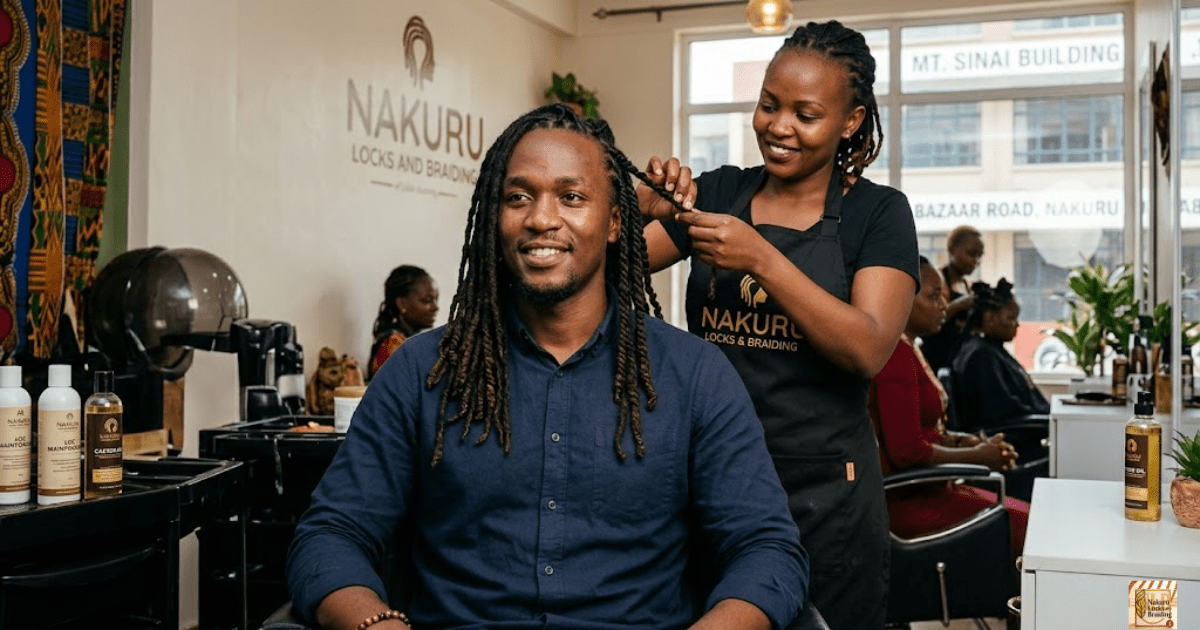
Dreadlocks Twisting Men: Ultimate Guide to Dread Twist Styles, Two Strand Twist Locs, and Modern Male Hairstyles
The art of the “loc” is more than just a hairstyle; it is a global narrative of patience, identity, and meticulous craftsmanship.
From the bustling streets of Nakuru City to the fashion runways of New York, dreadlocks twisting for men has evolved from a spiritual covenant into a versatile symbol of modern masculinity.
At Nakuru Locks and Braiding, we’ve spent over 13 years perfecting these looks for men who want more than just a haircut—they want a transformation that honors their roots while fitting today’s fast-paced life.
This comprehensive guide dives deep into dreadlocks twisting men, dreadlocks twisting male, Dread Twist Styles For guys, Two strand twist locs styles male, long and short variations, and everything in between. Backed by expertise, client results, and cultural context, it’s your go-to resource.
A Brief History and Cultural Roots
Dreadlocks have ancient origins across Africa, India, Greece, and Rastafarian traditions in Jamaica.
In many African cultures, including Kenyan communities, locked or twisted hair symbolized spirituality, wisdom, and warrior status.
The twisting method evolved as a gentle way to manage and beautify tightly coiled hair without harsh chemicals.
In modern times, reggae icons popularized locs globally in the 1970s. Today, men worldwide reclaim these styles as statements of pride, especially in professional spaces where natural hair was once stigmatized.
Two-strand twists offer a bridge—stylish immediately while locking over time. At Nakuru Locks and Braiding in Mt. Sinai Building, Bazaar Rd, Nakuru, we honor this heritage with techniques refined for Kenyan hair and lifestyles.

The Science and Soul of Dreadlocks Twisting for Men
Dreadlocks, or “locs,” are formed by the natural matting of hair strands. While the process can occur organically, professional dreadlocks twisting male techniques ensure the locs are uniform, healthy, and aesthetically pleasing.
Scientific research into Afro-textured hair highlights its unique structural properties. Due to the elliptical shape of the hair shaft, this hair type is inherently fragile with lower tensile strength (Wong, n.d.).
Professional twisting methods like palm rolling and finger twisting are essential because they manage this fragility while encouraging the hair to “lock” without causing breakage (Asbeck et al., 2022).
The Global Hook: A Symbol of Resistance and Spirit
Historically, locs have served as a “personal symbol” of spiritual covenants and cultural resistance (Glace & Waldstein, 2022).
In the mid-20th century, the adoption of locs represented a break from mainstream societal norms, forging a unique sense of group identity (Kuumba, n.d.).
Today, this legacy continues at Nakuru Locks and Braiding, where we combine these rich traditions with modern styling to help men express their authentic selves.
Understanding the Dreadlocks Twisting, Two Strand Twists, and Locs for Men
Dreadlocks twisting men refers to the process and resulting styles where dreadlocks (or locs) are maintained, started, or styled using twisting techniques tailored for male hair textures and lifestyles.
Dreadlocks, or locs, are matted coils of hair that form naturally or through intentional methods. Twisting involves wrapping sections of hair around each other to encourage locking, add definition, or create protective styles.
Dreadlocks twisting male and dreadlocks twisting men hairstyles highlight gender-specific adaptations. Men’s hair often grows coarser or in different patterns, and styles frequently incorporate fades, clean lines, undercuts, or shorter lengths for practicality in professional or active settings.
Dread Twist Styles For guys encompass rope twists, barrel twists, or two-strand twists on or transitioning into dreads. These are versatile—neat for the office or bold for weekends.
Two strand twist locs styles male is a specific technique: Divide a section of hair into two strands and twist them around each other (like a rope). When done on new growth or starter hair, it promotes thicker, uniform locs. This method is popular for men because it creates immediate style while the hair matures into permanent locs.
Short dreadlocks twisting men suits those wanting low-maintenance with clean fades. Long versions allow flowing or tied styles for dramatic impact. All variations protect hair, reduce manipulation, and celebrate natural texture.
Why Men Choose Dread Twist and Two Strand Twist Locs
Benefits include:
- Protection and Growth: Twists shield ends from breakage, retain moisture, and minimize tangles. Ideal for growth journeys.
- Versatility: Style as twists today, locs tomorrow. Add color, elastics, or fades.
- Low Maintenance: Last weeks with proper care. Washable without unraveling much.
- Thicker Locs: Two-strand method often yields uniform, robust locs compared to other starters.
- Scalp Health: Reduced tension vs. tight braids; promotes healthy scalp when done by experts.
- Cultural and Personal Expression: From subtle professional looks to bold artistic statements.
Pros of Two-Strand Twists:
Easy to install (even DIY with practice), immediate polished look, fuller appearance, easy fixes.
Cons:
Can unravel if not secured properly; twist pattern may show longer during locking phase. Expert installation at Nakuru Locks mitigates these. dreadlocks twisting men
Short Dreadlocks Twisting Men Styles
Short styles are hugely popular for men balancing style and convenience:
- High-top or Tapered Twists: Twists on top with faded or buzzed sides. Clean, professional, and sporty.
- Short Two-Strand Twist Locs: Perfect during awkward growth phases. Maintains neatness.
- Chunky Box Twists with Fade: Bold texture contrasting sharp lines.
These suit active lifestyles—gym, office, or field work in Nakuru’s climate.
Long Dreadlocks Twisting Men and Flowing Styles
Longer hair unlocks creativity:
- Interlocked Loc Twists with Free-Flowing Dreads: Combines structure at roots with length.
- Stretched Twists with Elastics: Adds height and security; great for ponytails or buns.
- Colored or Highlighted Long Twists: Subtle blond ends or vibrant accents for personality.
Maintenance involves regular retwisting of new growth while palm-rolling mature locs.
How to Achieve and Maintain Two Strand Twist Locs for Men (Step-by-Step)
Starting Locs with Two-Strand Twists (Expert Tip from Nakuru Locks):
1. Cleanse: Use residue-free shampoo. Condition lightly.
2. Section: Create uniform parts (square, triangle, or freeform) based on desired loc size.
3. Twist: Divide each section into two strands. Twist tightly from roots to ends. Use locking gel or foam for hold.
4. Secure: For starters, interlock or use small elastics at ends if needed.
5. Dry: Sit under dryer or air dry. Avoid manipulation for first few weeks.
Retwisting/Maintenance (every 4-8 weeks):
- Wash with loc-specific shampoo.
- Apply light moisturizer or oil (e.g., tea tree, rosemary).
- Retwist new growth using palm rolling or two-strand technique.
- For existing locs: Rope twist or barrel twist for variety.
Products: Natural gels, leave-ins, and oils. Avoid heavy buildup. Our salon uses premium, eco-friendly options.
Pro Tips: Moisturize regularly, sleep with satin cap, don’t over-twist. Visit professionals for best results, especially in Kenya’s variable weather.
Popular Dread Twist Styles for Guys in 2026
- Twists with Blue Highlights + Line Up
- Triangle Parts with Dyed Tips
- Chunky Two-Strand Box Twists
- Long Loc Twists with Elastics
- Invisible Locs (two-strand illusion for natural look)
- Fade + Puzzle-Part Twists
- Barrel or Rope Twists on Locs
At Nakuru Locks, we customize—jumbo twists, invisible braids mimicking locs, or traditional dread retwists.
Why Choose Nakuru Locks and Braiding?
Located at Mt. Sinai Building, Bazaar Rd, Nakuru, we combine 13+ years of experience with cultural authenticity and modern techniques.
Our stylists prioritize hygiene, low tension, and client comfort. We offer dreadlocks installation, retwists, two-strand twists, maintenance, and spa treatments. Clients rave about lasting styles and professional service.
Book via 0723 168 188 or WhatsApp. We serve Nakuru, nearby towns, and visitors seeking authentic Kenyan expertise.
FAQ: Dreadlocks Twisting Men and Two Strand Twist Locs
Q: How often should I get my dreadlocks twisted?
A: For most men, a professional retwist every 4–8 weeks is ideal. This allows enough new growth to be managed without putting excessive stress on the hair follicles.
Q: Can I wash my locs immediately after a twist?
A: It is best to wait at least 1–2 weeks after a fresh retwist to allow the hair to “set.” If you must wash earlier, use a stocking cap to prevent the twists from unraveling.
Q: Are two-strand twists better for short or long locs?
A: Two-strand twist locs styles male work for both! On short locs, they add much-needed volume. On long locs, they provide a sophisticated way to manage length.
Q: Does twisting make my hair grow faster?
A: Twisting doesn’t speed up biological growth, but it is a “protective style” that reduces breakage. By preserving your ends, you see more “length retention” (Daniels, n.d.).
Related Articles from Nakuru Locks and Braiding
Ready to embrace your best look?
Visit Nakuru Locks and Braiding today. Whether short dreadlocks twisting men, long flowing two strand twist locs, or a fresh Dread Twist Style, our experts will craft a style that’s uniquely yours. Contact us at Mt. Sinai, Bazaar Rd, Nakuru, or call 0723 168 188. Your crown awaits.
References
- The Right Hairstyles: Two-Strand Twist Ideas (2026).
- Wikipedia & Cultural Histories on Dreadlocks.
-
Claiborne, A. J. (n.d.). “4, 24”, and 4c”: The Shared Knowledge of Hair Terminology and Cultural Pride Among Black Women. Eagle Scholar.
-
Gavazzoni Dias, M. F. R. (2015). Hair cosmetics: An overview. International Journal of Trichology, 7(1), 2-15.
-
Jones, T. (n.d.). Unpacking my dreadlocks: My hair MATTers depending on where I go. JMU Scholarly Commons.
-
Roseborough, I. E., & McMichael, A. J. (2009). Hair Care Practices in African-American Patients. Seminars in Cutaneous Medicine and Surgery, 28(2), 103-108.
Leave a Reply