
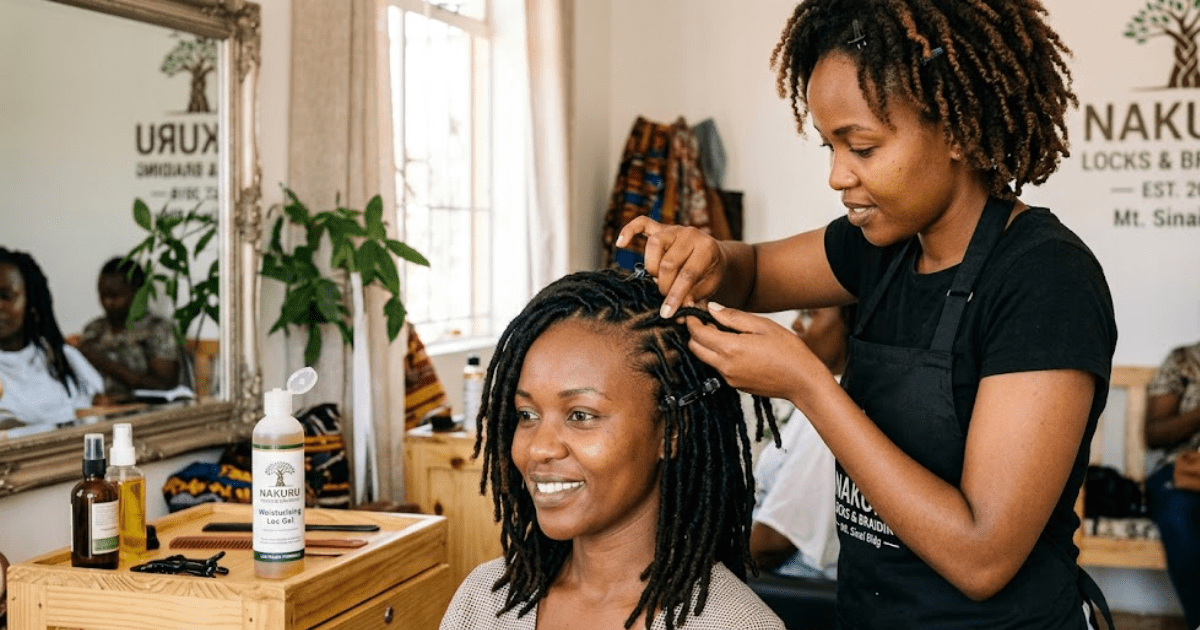
Complete Guide to Dreadlock Retwist: Steps, Styles, Products, and Professional Care for Healthy, Neat Locs
By Ann Wagema | Nakuru Locks and Braiding
Your locs are more than a hairstyle; they are a living journey of your hair’s evolution. Whether you are in the early stages of the “starter loc” phase or have cultivated a crown of mature tresses, the dreadlock retwist is the essential heartbeat of your maintenance routine.
Additionally, a dreadlock retwist isn’t just about appearance—it’s an essential maintenance practice that keeps your locs healthy, prevents matting, and allows new growth to lock properly.
Whether you’re struggling with your first retwist or looking for advanced maintenance tips, this complete guide covers everything you need to know about dreadlock retwisting, from step-by-step techniques and trending styles to the best products and professional salon care.
What Is a Dreadlock Retwist?
A dreadlock retwist (also known as retwisting locs or retightening) is the process of twisting new hair growth at the roots back into the existing loc.
As your hair grows, new, loose strands emerge at the scalp. If left unchecked, these strands can tangle, causing locs to mat together at the roots or thin out over time.
A proper retwist isn’t just about aesthetics; it’s about structural integrity. By gently guiding new growth into the existing loc, you maintain a uniform, clean appearance and prevent the mechanical stress that causes thinning
This helps maintain neat partings, prevents loose hair from merging with neighboring locs, and keeps your hairstyle looking fresh and well-maintained.
Retwisting Methods
| Method | How It Works | Best For |
|---|---|---|
| Palm Rolling | Rolling the loc between your palms in opposite directions to tighten it | Beginners and routine maintenance |
| Interlocking | Using a crochet needle to pull new growth through the existing loc | Mature locs, instant locs, and long-lasting results |

How to Retwist Dreadlocks: A Complete 6-Step Guide
Step 1: Gather Your Retwisting Supplies
Before you begin, make sure you have:
- Rat tail comb
- Alcohol-free twisting gel
- Hair clips (silver clips or duckbill clips)
- Blow dryer or hooded dryer
- Silk or satin bonnet
- Spray bottle
- Natural oils such as jojoba, olive, or tea tree oil
Step 2: Wash Your Locs Thoroughly
Clean locs are the foundation of a successful retwist.
- Shampoo your locs two to three times to remove buildup.
- Focus on the scalp, behind the ears, and the crown area.
- Gently remove excess water without oversaturating the hair.
- Towel-dry until the locs are damp.
Important: Retwist damp hair, not completely dry hair.
Step 3: Apply Twisting Gel to New Growth
- Use a rat tail comb to separate new growth.
- Apply a small amount of twisting gel to the roots.
- Create clean partings.
- Hold the loc and new growth between your fingers.
- Twist clockwise until the new growth wraps securely around the loc.
S tep 4: Secure Each Loc with Clips
- Place a clip at the root.
- Add a second clip if needed.
- Continue clipping completed locs to prevent unraveling.
Step 5: Dry the Retwist Completely
Proper drying locks in the style.
- Use a hooded dryer or blow dryer on low heat.
- Dry from root to tip.
- Ensure locs are fully dry before removing clips.
- Avoid air-drying damp retwists, which may cause mildew or odor.
Step 6: Remove Clips and Moisturize
- Carefully remove all clips.
- Apply a light natural oil.
- Protect your retwist with a silk or satin bonnet at night.

How to Retwist Locs for Beginners
If you’re new to loc maintenance, start with simple and beginner-friendly techniques.
Common Retwisting Mistakes to Avoid
| Mistake | Why It’s a Problem | Better Alternative |
| Retwisting too often | Causes thinning and breakage | Wait 4–8 weeks between retwists |
| Using wax-based products | Creates buildup | Use water-based gels |
| Retwisting dry hair | Leads to breakage | Retwist damp hair |
| Skipping the drying stage | Encourages mildew | Dry completely |
| Using too much gel | Causes residue and flaking | Apply sparingly |
Palm Rolling: The Best Beginner Method
Palm rolling is one of the easiest and most effective ways to maintain dreadlocks.
- Apply gel to your hands.
- Place the loc between your palms.
- Roll in opposite directions.
- Continue until the loc tightens.
How to Retwist Locs Using Your Fingers
Finger-twisting is a simple technique that requires no special tools.
Finger-Twisting Method
1. Apply gel to the roots.
2. Hold the loc and new growth.
3. Twist clockwise until secure.
4. Clip the root.
5. Dry completely.
This method works well for quick maintenance and touch-ups.
How to Retwist Dreads with a Crochet Needle
Interlocking creates a tighter and longer-lasting retwist than palm rolling.
Step-by-Step Interlocking Technique
- Separate loose hairs with a tail comb.
- Twist loose strands neatly.
- Insert the crochet needle through the new growth.
- Pull the loc through.
- Repeat in alternating directions until all new growth is secured.
- Finish by smoothing and tightening the loc.
Crochet Needle Size Guide
| Loc Size | Recommended Needle Size |
| Small/Micro Locs | 0.5–0.75 mm |
| Medium Locs | 1.0–1.5 mm |
| Large Locs | 2.0–2.75 mm |
Warning: Larger needles can create holes in locs.
Trending Dreadlock Retwist Styles for 2025
Retwisting is also an opportunity to refresh your overall look.
- Barrel Twist Dreadlocks: A bold, rope-like style that creates texture and visual impact.
- Bob Hairstyle with Retwisted Locs: A modern, stylish look that combines sharp roots with a chic bob cut.
- Two-Strand Twist Locs: A rope-like variation often used for starter locs and protective styling.
- Freeform and Wild Dread Styles: Perfect for those who prefer a natural and less structured appearance.
- Micro Locs with Crisp Retwists: Small, detailed locs that look best with precise retwisting.
- Retwisted Locs with Bangs: A trendy combination of structured roots and soft bangs.
- Color-Treated Retwisted Locs: Fresh retwists paired with vibrant hair color create striking contrast.
Best Retwist Gels for Dreadlocks in 2025
Choosing the right product can make a significant difference in your retwist results.
Top Recommended Retwist Gels
| Product | Key Benefits | Best For |
| Lion Locs Loc Gel Moisturizer | No buildup, moisturizing | All loc types |
| Knotty Boy Tightening Gel | Strong hold, no flaking | Palm rolling |
| Jamaican Mango & Lime Locking Gel | Strong hold and scalp care | All hair types |
| Darcy’s Organic Styling Pomade | Conditioning and hold | Fine hair |
| Knatty Dread Loc Cream | Lightweight formula | Sensitive scalps |
| Carol’s Daughter Loc Butter | Deep moisture | Dry locs |
| Murray’s Gel Loc-Lock | Strengthens and protects | Thick locs |
Ingredients to Avoid
- Wax-based formulas
- Alcohol-based products
- Heavy residue-producing ingredients
Essential Tools and Products for Retwisting Dreadlocks
Must-Have Retwisting Tools
| Tool | Purpose |
| Rat Tail Comb | Clean parting |
| Silver Clips | Hold retwists in place |
| Hooded Dryer | Even drying |
| Spray Bottle | Moisture control |
| Crochet Needle | Interlocking |
Best Product Recommendations
| Category | Recommended Product |
| Gel | Lion Locs Loc Gel Moisturizer |
| Oil | Jojoba Oil, Tea Tree Oil, Yaya Oil |
| Shampoo | Paul Mitchell Tea Tree Shampoo |
| Spray | Imani Locking Spray, Rose Water |
How Long Does a Dreadlock Retwist Last?
Most retwists remain neat for approximately four to six weeks.
Factors That Affect Retwist Longevity
- Loc maturity
- Hair growth rate
- Product choice
- Maintenance routine
- Hair texture
Recommended Retwist Schedule
| Loc Stage | Frequency |
| Starter Locs | Every 3 months |
| Intermediate Locs | Every 6–8 weeks |
| Mature Locs | Every 2–4 weeks |
Do Dreads Get Longer After a Retwist?
The simple answer is no.
What a Retwist Actually Does
Retwisting:
- Improves appearance
- Controls frizz
- Organizes new growth
- Makes locs appear longer and neater
Retwisting does not increase hair growth or speed up the locking process.
Professional Dreadlock Retwist Services in Nairobi
While DIY maintenance is possible, professional retwisting often delivers cleaner results and better long-term loc health.
Nakuru Locks and Braiding
Nakuru Locks and Braiding specializes in:
- Dreadlock maintenance
- Sisterlocks
- Thread twists
- Artificial dreadlocks
- Braiding services
- Natural hair care
Why Choose Professional Retwisting?
- Cleaner partings
- Even tension
- Reduced risk of damage
- Professional styling options
- Better long-term loc maintenance
Frequently Asked Questions About Dreadlock Retwists
How Long Does a Retwist Take?
Most retwists take between two and five hours depending on hair length, density, and the number of locs.
Should You Retwist Wet or Dry Hair?
Always retwist damp hair for the best results and to reduce breakage.
Can You Retwist Interlocked Dreadlocks?
Yes. Interlocked locs can be maintained through regular interlocking sessions.
Can You Retwist Instant Locs?
Yes. Crochet needles are commonly used to maintain instant locs.
How Often Should You Retwist Your Locs?
Every four to eight weeks is ideal for most people, depending on the stage of your loc journey.
Does Avoiding Retwists Make Dreads Thicker?
Yes. Less frequent retwisting allows loose hairs to merge naturally into the loc, increasing thickness over time.
Related Hair Care Articles
Final Thoughts: Mastering the Art of Dreadlock Retwisting
Dreadlock retwisting is both a maintenance routine and a form of self-expression. Whether you choose to maintain your locs at home or seek professional care, consistency and proper technique are essential for healthy, attractive locs.
Remember to:
- Retwist every 4–6 weeks.
- Use alcohol-free products.
- Work on damp hair.
- Dry thoroughly before removing clips.
- Protect your locs with a satin or silk bonnet.
With the right approach, your locs will remain healthy, neat, and beautiful throughout every stage of your loc journey.
References and Further Reading
- StyleSeat: How to Retwist Dreadlocks
- UNice: Complete Retwist Instructional Guide
- Lion Locs: Best Products for Loc Retwisting
- Dr. Locs: Home Retwist Techniques
- Google Search Quality Guidelines
Leave a Reply