
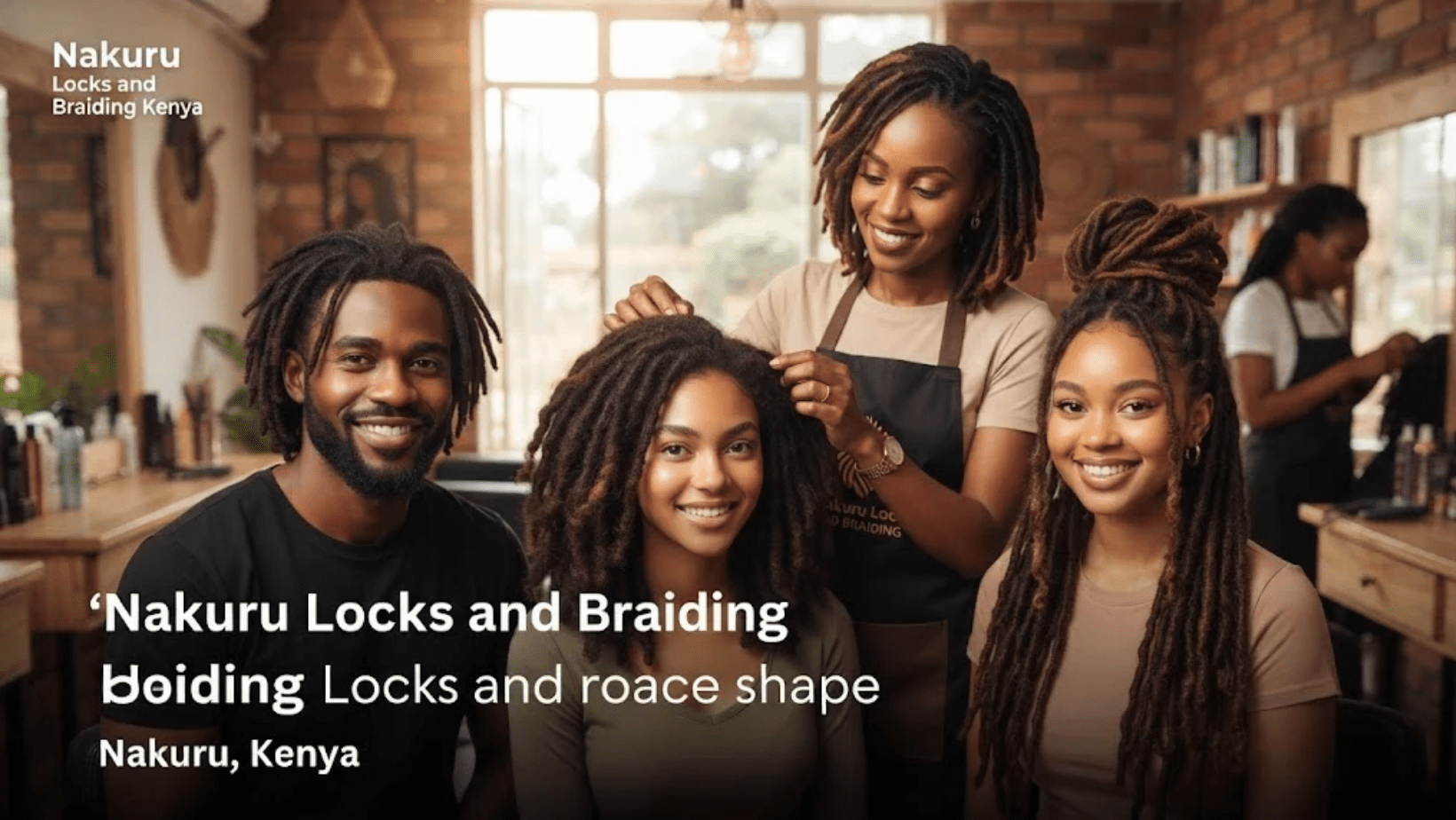
Dreadlocks for Different Face Shapes: Find Your Most Flattering Loc Style
Imagine walking into a Nairobi salon with a saved photo of long barrel twists, freeform locs, or neat starter locs.
You love the style—but will it suit your face? The answer is almost always yes.
There is no single “perfect” face shape for dreadlocks; the best loc style depends on your face proportions, hairline, loc thickness, length, parting, volume, and how the hair is styled around your features.
At Nakuru Locks and Braiding, face shape is treated as a helpful styling guide—not a rulebook.
Whether you are choosing dreadlocks for men, women, ladies, or children, the right loc design can balance your features and express your personality.

What Face Shape Suits Dreadlocks?
Dreadlocks suit every major face shape, including oval, round, square, oblong, heart, diamond, triangle, and pear-shaped faces.
Locs are especially versatile because they can be worn short or long, loose or tied up, thick or thin, symmetrical or asymmetrical.
The most flattering approach is to choose a style that creates the visual balance you want:
-
Add height to make a round face appear longer.
-
Add width near the jaw to balance a heart-shaped face.
-
Use soft texture to complement a square face.
-
Avoid excessive height if your face is already long.
-
Use side parts and asymmetry to create movement.
Face-shape advice should not suggest that one facial structure is better than another.
Professional grooming guidance generally describes these recommendations as visual-balance principles rather than strict rules.
Confidence, hair health, lifestyle, and personal taste matter just as much as geometry.
What Is the Best Face Shape for Dreadlocks?
The oval face shape is often described as the most adaptable because its length and width are relatively balanced, with a gently rounded jaw. People with oval faces can usually experiment with many loc styles, from short starter locs to long flowing dreadlocks.
However, oval is not the only good face shape for dreadlocks. Round, square, heart, diamond, and oblong faces can all look excellent with the right loc proportions.
The “best” face shape for dreadlocks is therefore the one whose proportions can be complemented by your preferred loc design.
How to Identify Your Face Shape
Before choosing dreadlocks, pull your hair away from your face and take a straight-on photo in natural light. Keep your expression neutral and avoid a wide-angle selfie, since phone lenses can distort proportions.
You can identify your face shape by examining four features:
1. Face length: Measure from the centre of your hairline to the tip of your chin.
2. Forehead width: Measure across the widest part of your forehead.
3. Cheekbone width: Measure across the widest point of your cheekbones.
4. Jawline width: Measure from the centre of your chin to the jaw angle below one ear, then multiply that number by two.
You can also use a simpler visual method. Compare the widest part of your face, determine whether your face is longer than it is wide, and assess whether your jawline is rounded, pointed, or angular.
These are commonly recommended ways to identify facial proportions.
Oval face
Your face is likely oval if it is longer than it is wide, your cheekbones are moderately prominent, and your jaw is slightly narrower than the upper face.
Round face
A round face is usually close to equal in length and width, with fuller cheeks and a soft, curved jawline.
Square face
A square face often has a broad forehead, cheekbones, and jawline of similar width, along with a defined or angular jaw.
Oblong or rectangular face
An oblong face is noticeably longer than it is wide. The forehead, cheeks, and jaw may have similar widths, but the vertical length is more pronounced.
Heart-shaped face
A heart-shaped face is wider through the forehead and cheekbones but narrows toward the chin.
Diamond face
A diamond face is widest at the cheekbones, with a narrower forehead and jawline.
You may not fit one category perfectly. Many people have combinations, such as oval-heart, round-square, or diamond-oblong proportions.

Dreadlocks for Different Face Shapes
Dreadlocks for an oval face
Oval faces offer considerable styling flexibility. You can wear:
-
Short starter locs.
-
Medium-length traditional locs.
-
Long loose dreadlocks.
-
High ponytails or buns.
-
Half-up, half-down loc styles.
-
Side parts, middle parts, or freeform sections.
-
Layered locs that create movement.
If your face is oval, focus less on correcting proportions and more on your desired aesthetic. A clean retwist can create a polished appearance, while freeform or semi-freeform locs offer a more organic look.
Avoid placing too much bulk directly over the face if you want to show your features. Alternatively, a full, dramatic loc style can work beautifully when you want a bold statement.
Dreadlocks for a round face
People with round faces often want dreadlocks that create the appearance of extra length. The most suitable options usually add vertical movement rather than heavy width at the cheeks.
Try:
-
Long dreadlocks that fall below the shoulders.
-
High ponytails or high loc buns.
-
Side parts.
-
Loc styles with height at the crown.
-
Long layered locs.
-
One-sided styles that create a diagonal line.
-
Medium or thin locs instead of excessive bulk at cheek level.
For dreads on a round face for men, high-top locs with tapered sides can create height and definition. Short locs styled upward can also elongate the face visually.
A subtle beard shape with more length at the chin may reinforce that effect, although beard styling should be discussed separately with a barber.
For women, long goddess locs, side-swept locs, half-up styles, and high ponytails can create a longer silhouette.
Avoiding a very heavy, blunt line that ends exactly at the widest part of the cheeks may help prevent extra emphasis on facial width.
This does not mean round faces should avoid short locs. Short dreadlocks can look excellent when they have height, texture, a side part, or tapered sides.

Dreadlocks for a square face
A square face has naturally defined angles, especially around the jaw. Locs can either highlight that structure or soften it.
Good choices include:
-
Soft, layered locs.
-
Wavy or curly locs.
-
Side parts.
-
Medium-to-long locs that frame the face.
-
Rounded updos rather than rigid geometric shapes.
-
Loc petals, loose barrel styles, or textured ponytails.
If you want to emphasize your jawline, choose neat, structured locs pulled away from the face. If you prefer a softer look, let some locs fall around the sides of the face.
Very blunt, chin-level loc arrangements may draw attention to the jaw. That is not necessarily unflattering, but it creates a stronger, more angular appearance.
Dreadlocks for an oblong or rectangular face
Long locs can complement an oblong face, but excessive height at the crown may make the face appear longer. The goal is to create some horizontal balance.
Consider:
-
Medium-length locs with side fullness.
-
Layered locs.
-
Side parts.
-
Side-swept locs.
-
Loose styles with volume around the cheek or jaw area.
-
Low ponytails and low buns.
-
Locs styled away from the centre line.
Avoid making every style extremely tall or tightly piled on top of the head if you want to reduce the appearance of length. Locs that fall along the sides can provide a balanced frame.
For men with long faces, medium locs with tapered sides and controlled side volume can be more proportionate than a very high top.
For women, layered long locs, side-swept styles, and soft accessories can add visual width without hiding the face.
Dreadlocks for a heart-shaped face
A heart-shaped face is usually wider around the forehead and narrower toward the chin. Loc styles that add fullness to the lower half of the face can create balance.
Try:
-
Shoulder-length or longer locs.
-
Locs with volume around the jaw.
-
Side-swept styles.
-
Loose locs worn around the shoulders.
-
Layered locs that gradually widen toward the bottom.
-
Low ponytails or low buns.
-
Face-framing locs.
Very high styles can draw attention to the forehead. If you enjoy high buns or ponytails, ask your loctician to leave a few locs loose at the sides or use a softer, less severe finish.
Dreadlocks for a diamond face
Diamond faces typically have prominent cheekbones with a narrower forehead and jaw. Locs can balance this shape by adding controlled volume above or below the cheekbones.
Suitable options include:
-
Side parts.
-
Soft loc layers.
-
Locs with fullness near the jaw.
-
Textured styles.
-
Medium-length locs.
-
Side-swept locs.
-
Loose updos with a few framing locs.
Avoid placing all the visual volume at cheekbone level if you want a more balanced outline. A skilled loctician can vary loc length and direction so the style does not create a wide band across the cheeks.
Dreadlocks for a triangle or pear-shaped face
A triangle or pear-shaped face is generally narrower at the forehead and wider through the jaw. Loc styles with height and volume toward the top can help balance the lower face.
Consider:
-
High ponytails.
-
Crown volume.
-
High loc buns.
-
Short locs with textured height.
-
Tapered sides with fuller top sections.
-
Side parts and lifted roots.
If your goal is to highlight your strong jaw, a sleek, pulled-back style can look striking. If you want a softer outline, choose locs that create movement around the upper face.
Short Dreadlocks for Different Face Shapes
Short dreadlocks are practical, lightweight, and easy to style. They also make facial features more visible, so the parting and silhouette become especially important.
Short locs are especially useful if you work in a setting that requires a compact hairstyle or if you are starting your loc journey. They are also lighter than long locs, which can reduce pulling on the scalp.
The American Academy of Dermatology advises choosing thicker locs when appropriate, avoiding styles that pull, and keeping locs shorter because longer hair can be heavier.
Pain, stinging, crusting, scalp tenting, broken hairs, or a receding hairline are warning signs that a style may be too tight.
Long Dreadlocks for Different Face Shapes
Long dreadlocks create length, movement, and styling versatility. They can be worn loose, braided, wrapped, tied into ponytails, or arranged into buns.
Long locs can be particularly useful for:
-
Round faces, because they create vertical length.
-
Square faces, because they soften strong angles.
-
Heart faces, because they add fullness near the jaw.
-
Diamond faces, because they can balance prominent cheekbones.
-
Oval faces, because almost any long-loc arrangement can work.
For oblong faces, long locs remain an excellent option, but avoid combining extreme length with excessive height at the crown if you want a more balanced appearance.
Long locs should be installed and maintained with hair health in mind. Their weight can increase tension, especially when they are pulled into tight buns, ponytails, or elaborate updos.
Alternate styles, avoid persistent pain, and give your scalp periods of reduced tension.
The AAD notes that repeated pulling from locs and other tight styles can contribute to traction alopecia, which may become permanent if untreated.
Dreadlocks for Men and Women
What is the best face shape for dreadlocks male?
Men with oval faces can wear almost any loc silhouette. Men with round faces may prefer height, tapered sides, side parts, and longer locs.
Square faces can be complemented by textured or medium-length locs, while oblong faces often benefit from side fullness and moderate crown height.
Popular men’s options include:
-
High-top dreadlocks.
-
Tapered locs.
-
Medium locs with a side part.
-
Long locs tied into a low ponytail.
-
Barrel styles and loc braids.
What is the best face shape for dreadlocks female?
Women with oval faces can explore short, medium, or long locs with minimal restrictions. Round faces may benefit from long locs, side-swept styles, and crown height.
Heart-shaped faces can be balanced with locs that create fullness around the jaw, while square faces often suit soft, wavy, or layered locs.
Options for women and ladies include:
-
Goddess locs.
-
Faux locs.
-
Sisterlocks or microlocs.
-
Traditional locs.
-
Bohemian locs.
-
Loc crowns.
-
Half-up, half-down styles.
-
Loc buns and ponytails.
-
Loc accessories with beads, cuffs, or wraps.
The words “female,” “woman,” and “ladies” describe the same search intent here, but the styling decision should be based on the wearer’s features, loc type, daily routine, and personal taste—not gender alone.
How Do I Know If I Will Look Good With Dreadlocks?
You are likely to look good with dreadlocks if the style fits your personality, complements your features, and suits your maintenance routine. Face shape is only one consideration.
Ask yourself:
-
Do I like the look of locs on my natural texture?
-
Do I want a neat, freeform, traditional, or fashion-forward appearance?
-
Can I maintain regular washing and scalp care?
-
Does the loc size suit my hair density?
-
Will the length be comfortable for work, sleep, and exercise?
-
Does the style create uncomfortable tension?
-
Can I commit to the time needed for a loc journey?
A professional consultation at Nakuru Locks and Braiding can help you choose loc size, parting, starter method, length, and styling options.
Bring two or three reference photos, but remember that the same hairstyle may look different depending on hair density, face proportions, shrinkage, and loc maturity.
How Can I See What I Look Like With Dreadlocks?
You can preview dreadlocks before committing in several ways:
1. Use a virtual hairstyle or AI hairstyle app with a clear, front-facing photo.
2. Try a temporary faux-loc or crochet-loc style.
3. Use wigs or clip-in loc extensions.
4. Ask your loctician to show examples of similar face shapes and hair densities.
5. Create a digital collage using photos of loc styles you like.
6. Test different partings, lengths, colours, and accessories before installation.
Virtual try-on tools can help you compare long, short, wavy, straight, and coloured hairstyles on a photo. They are useful for inspiration, but they cannot perfectly predict loc shrinkage, density, installation weight, or how your own hair will mature.
When taking a preview photo, choose a neutral expression, good lighting, and an image where your full face is visible. Test at least three variations: short locs, medium locs, and long locs.
Choosing Healthy Locs at Nakuru Locks and Braiding
The most attractive dreadlocks are also comfortable and healthy. During a consultation, discuss:
-
Your face shape and preferred silhouette.
-
Hair density and current condition.
-
Starter-loc size and parting.
-
Desired length and colour.
-
Whether you prefer traditional locs, microlocs, sisterlocks, freeform locs, or faux locs.
-
Your work, school, exercise, and sleeping routine.
-
Scalp sensitivity and previous hair-loss concerns.
A style should never cause persistent pain. The AAD recommends loosening styles that pull, changing hairstyles regularly, and seeking dermatological advice if signs of traction-related hair loss appear.
For children and teenagers, choose lightweight styles, avoid tight edges and heavy extensions, and monitor the hairline regularly. Children can also develop traction alopecia from repeated tension.
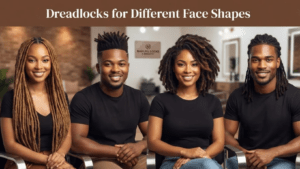
Frequently Asked Questions
What is the best face shape for dreadlocks?
Oval is the most versatile, but every face shape can look excellent with the right length, thickness, and styling.
What is the best face shape for dreadlocks for women / female / ladies?
Oval again offers the most options, but long layered locs flatter round faces, while medium soft styles suit square and heart shapes.
What is the best face shape for dreadlocks for men / male?
Oval and square faces carry both short and medium styles particularly well. Round faces benefit from length or height; oblong faces from medium lengths with width.
How can I see what I look like with dreadlocks?
Professional consultation, virtual try-on apps, and studying similar face-shape references are the best approaches.
Do short dreadlocks work on a round face (men)?
Yes, when they add vertical height or are paired with strategic parting rather than pure bulk at the sides.
Related Nakuru Locks and Braiding Articles
Explore these related topics on the Nakuru Locks and Braiding blog:
Final Styling Advice
There is no face shape that is “allowed” to wear dreadlocks and no face shape that must avoid them. The best dreadlocks are the ones designed around your proportions, hair health, lifestyle, and identity.
Whether you choose short dreadlocks for a round face, long locs for an oblong face, or a bold style for an oval face, a skilled stylist can adapt the shape to you.
Book a consultation with Nakuru Locks and Braiding to discuss your ideal loc size, length, parting, colour, and maintenance plan before installation.
References
-
American Academy of Dermatology Association, “Hairstyles that pull can lead to hair loss.”
-
GQ Grooming Guide, “What’s the Best Haircut for Your Face Shape?.”
-
Perfect Corp, “How To Find the Perfect Hairstyle for Your Face Shape.”
Leave a Reply