
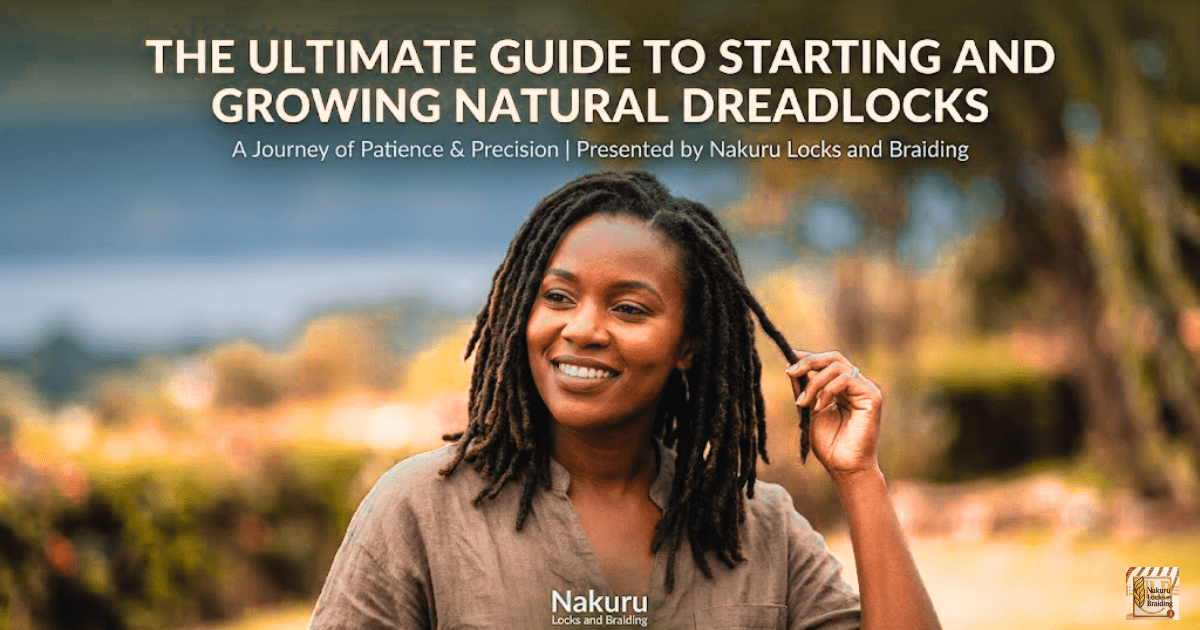
How to Make Dreadlocks Naturally: A Complete Guide from Nakuru Locks and Braiding
The journey to natural dreadlocks is more than just a change in hairstyle; it is a commitment to a process of transformation. Whether you are inspired by cultural heritage, the ease of low-maintenance styling, or the sheer aesthetic of matured locs, starting your journey at home is entirely possible.
At Nakuru Locks and Braiding, we believe that the most beautiful locs are those grown with health and integrity in mind. With over 13 years of experience in trichology-informed styling, we have seen that the “natural” path—free from harsh chemicals and heavy tools—often yields the strongest, most resilient results.
Whether you want to start dreadlocks naturally at home, with short hair, without tools or gel, or explore extensions, this comprehensive guide covers everything. We prioritize healthy hair practices that avoid harsh chemicals and waxes for long-term vitality.
This article is your step-by-step resource for making dreadlocks naturally, optimized for those searching “how to make dreadlocks naturally at home,” “without tools,” “with short hair,” and more.
Understanding Natural Dreadlocks: The Basics
Natural dreadlocks (or locs) form when hair strands coil and tangle together over time, creating rope-like sections. The process relies on your hair’s natural texture, especially coily or curly types common in African hair, which mat more easily.
Key benefits
include low maintenance once mature, protection from environmental damage, and cultural significance. However, they require commitment—dreads mature through stages: starter (0-3 months), budding (3-6 months), teen (6-12 months), and mature (1+ years).
Materials Needed for Dreadlocks (Natural Method):
- Residue-free shampoo (e.g., clarifying or organic, no silicones).
- Wide-tooth comb or fingers for sectioning.
- Spray bottle with water.
- Natural oils like jojoba, coconut, or castor for moisture (avoid heavy waxes).
- Clips or rubber bands (optional, use sparingly).
- Microfiber towel.
- Patience and a healthy diet (protein, vitamins, hydration).
No commercial dread wax is needed—or recommended—as it causes buildup.
How to Start Dreadlocks Naturally at Home (Without Tools or Gel)
Many ask, “How to make dreadlocks naturally without tools?” or “without gel.” The purest method is the neglect or freeform approach, but for more control, use twisting or palm rolling.
A common misconception is that you need crochet hooks, interlocking tools, or heavy waxes to create dreads. In reality, these can often do more harm than good if used incorrectly.
Why Avoid Wax?
Starting dreadlocks at home without wax is highly recommended by professionals. Wax (especially petroleum-based) acts as a magnet for lint, dust, and environmental debris.
Once wax is inside a matured loc, it is nearly impossible to remove without significant heat or chemical stripping, leading to “build-up” that can cause the loc to rot from the inside out (often called “loc mold”).
How to Make Dreadlocks Without Gel
While some prefer a “locking gel” for a neat look, you can achieve great results using only natural ingredients that provide a light hold without the “crunch” or flake.
-
Aloe Vera Gel: Pure aloe vera is a fantastic natural alternative. It provides a light hold and is water-soluble, meaning it washes out easily without leaving residue.
-
Flaxseed Gel: Homemade flaxseed gel offers excellent slip for palm rolling and dries clear.
-
Rosewater and Sea Salt: A light mist of sea salt spray can help roughen the hair cuticle slightly, encouraging the “budding” phase to happen faster.
Step-by-Step: How to Do Dreadlocks at Home
Follow these steps for a successful “DIY” installation:
1. Clarify Your Hair: Wash your hair with a residue-free clarifying shampoo. Do not use conditioner, as it softens the hair and prevents it from tangling.
2. Dry Completely: Never start locs on damp hair, as this can trap moisture and lead to mildew.
3. Sectioning: Use a rat-tail comb to create your grid. Use small rubber bands at the base if necessary, but remove them after a week to prevent them from getting stuck in the hair.
4. Twist or Roll: Use the palm-rolling or finger-twisting method.
5. The Wait: This is the “starter” phase. Your hair will likely look like simple twists for the first few weeks.

Materials Needed for Dreadlocks
To start your journey naturally, you don’t need a kit—just a few essentials:
-
Residue-free Shampoo: Look for clear formulas.
-
Microfiber Towel: To dry hair without adding lint.
-
Clips: For sectioning.
-
Natural Oils: Such as Jojoba or Grapeseed oil for scalp health.
-
Silk or Satin Scarf: To protect your locs while sleeping.
Alternative Starting Methods: With Gel, Backcombing, or Twist and Rip
- How to Start Dreads with Gel: Apply a light natural gel after sectioning, twist, and let dry. Use sparingly to avoid buildup. Not ideal for fully natural approaches.
- Twist and Rip: Twist a section then “rip” downward to roughen and encourage locking. Great for straight or wavy hair.
- Backcombing: For straighter textures, tease hair upward then twist. Requires at least 3 inches.
How to Do Dreadlocks Step by Step (Summary Video-Style):
- Clean and dry hair.
- Section evenly.
- Twist/palm roll each section.
- Secure ends if needed.
- Maintain by rolling and separating roots.
How to Make Dreadlocks Extensions at Home
For instant length or volume, add dreadlock extensions. These can be synthetic (faux locs) or human hair.
Basic Process:
- Braid or crochet natural hair extensions that are pre-dreaded or twisted.
- Attach to your natural sections using crochet hooks or braiding.
- Double-ended extensions (fairy locs) provide seamless length.
At Nakuru Locks and Braiding, we expertly install natural and synthetic extensions for a flawless blend. Professional installation minimizes damage.
Without Wax:
Rely on crocheting, tight braiding at roots, and natural palm rolling for maintenance.
Growing Dreads Faster Naturally
How to Grow Dreads Faster Naturally?
Hair grows about ½ inch per month on average, but you can optimize:
- Nutrition: Protein-rich diet (eggs, fish, nuts), biotin, vitamins A/E, iron. Stay hydrated.
- Scalp Care: Daily gentle massage with rosemary or castor oil to boost circulation.
- Moisturize: Use water-based sprays + lightweight oils. Avoid heavy products.
- Wash Regularly: 1-2 times weekly with natural shampoo; let air dry.
- Reduce Stress: Sleep well, manage tension.
- Protect: Wear satin bonnets; avoid tight styles initially.
Consistent care speeds maturation and length retention.
Maintenance and Care for Healthy Locs
- Wash weekly or bi-weekly.
- Palm roll to shape.
- Retwist roots every 4-8 weeks professionally.
- Deep cleanse monthly with apple cider vinegar rinse.
- Trim fuzzies as needed.
Avoid petroleum-based products, excessive heat, and over-manipulation to prevent thinning or breakage.
Potential Challenges and Solutions
Common issues include buildup (solve with clarifying washes), frizz (moisturize and roll), and uneven locking (consistent maintenance). Dreads do not inherently damage hair if cared for properly.
FAQ: Your Dreadlocks Questions Answered
Q: Can I start dreadlocks with short hair naturally?
Yes, with 2-6 inches and patience, using twisting or sponging.
Q: How long does it take for dreads to form naturally?
3-12 months depending on hair type and method.
Q: Do I need wax or gel?
No. Natural methods are healthier and prevent buildup.
Q: How often should I maintain?
Roots every 4-8 weeks; full maintenance 2-4 times yearly.
Q: Can dreads be removed?
Yes, with combing or professional help, though it takes time.
Q: Are dreadlocks suitable for all hair types?
Best for curly/coily; other textures require more effort.
Q: What products are safe?
Residue-free shampoos, natural oils, aloe vera.
Why Choose Nakuru Locks and Braiding?
Our salon combines traditional Kenyan techniques with modern, healthy practices. We offer sisterlocks, artificial dreads, extensions, reties, and more in a welcoming space. Book via WhatsApp at 0723 168 188.
Related Articles from Nakuru Locks and Braiding
- Ultimate Guide to Protective Styles: Braids, Twists, and Locs
- Natural Hair Care Routine for Kenyan Climates
- Sisterlocks vs. Traditional Dreadlocks: Which is Right for You?
- How to Maintain Healthy Scalp with Extensions
References
- Lion Locs Natural Dreadlocks Guide.
- WikiHow: Dreadlocking Without Products.
- Professional loctician insights and dermatological notes on traction alopecia prevention.
Embrace your natural journey with confidence. Visit Nakuru Locks and Braiding for personalized consultations and expert styling. Your crown deserves the best care—naturally.

Leave a Reply