
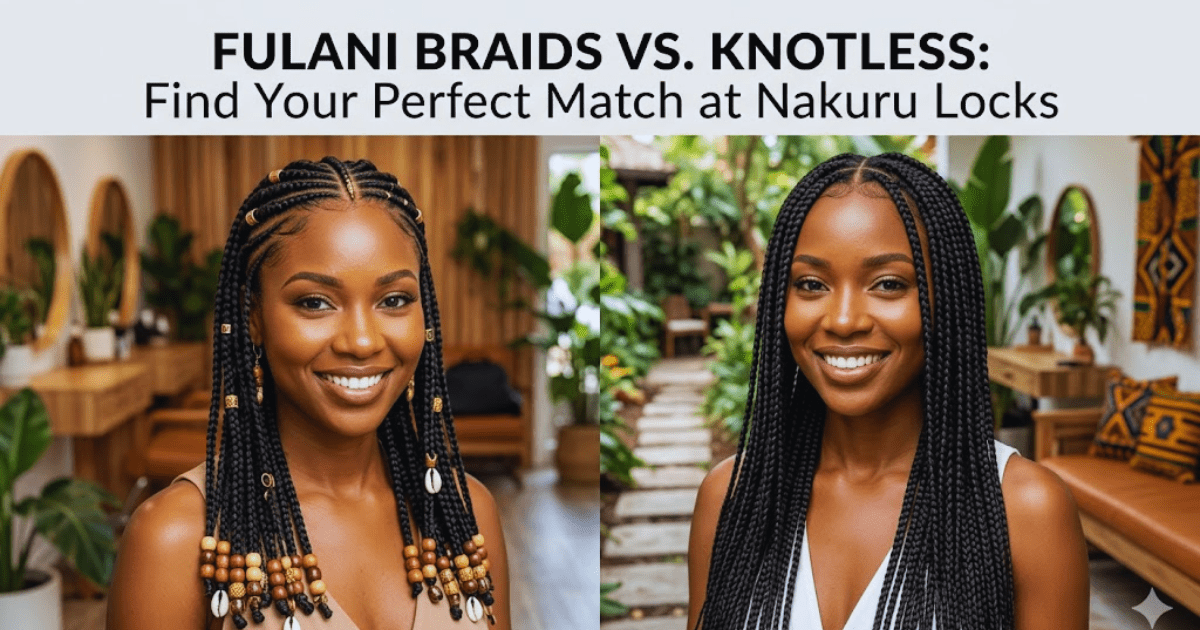
Can Fulani Braids Be Knotless? Unlock the Truth Behind the Trend
Fulani braids vs knotless hairstyles. Fulani braids vs knotless vs box braids. Can Fulani braids be knotless? Fulani braids with knotless.
These questions echo in salons from Nairobi to New York, Lagos to London, as women worldwide seek protective styles that honor heritage, protect natural hair, and deliver both beauty and comfort.
Imagine stepping off a matatu in Nakuru after a long day, the sun dipping behind the hills, and catching your reflection with intricate braids framing your face like a crown of cultural pride—yet feeling zero pulling or headache.
Or picture a global professional in a high-stakes meeting, her hair swinging freely without the tightness that once signaled “style at a cost.”
That’s the power of understanding Fulani braids versus knotless techniques. At Nakuru Locks and Braiding, we specialize in blending tradition with modern gentleness, helping clients across Kenya and beyond achieve looks that last while safeguarding scalp health.
This comprehensive guide dives deep into Fulani braids vs knotless, Fulani braids vs box braids, hybrid options like Fulani braids with knotless, and everything in between.
Whether you’re in Nakuru, visiting from Nairobi, or researching from abroad, you’ll leave informed, inspired, and ready to book the style that fits your lifestyle, hair type, and story.
The Timeless Allure of Fulani Braids: A Cultural Narrative
Fulani braids originate from the Fulani (or Fula) people, a nomadic ethnic group spread across West Africa, including parts of Nigeria, Senegal, Mali, Cameroon, and beyond.
These styles are more than hair—they’re storytelling tools. Traditionally, Fulani women used braids to signify age, marital status, social standing, and beauty ideals within their communities.
Patterns often feature cornrows along the hairline or scalp, with loops, curves, or hanging braids that create a distinctive, sculpted silhouette.
In its classic form, Fulani braids involve a central cornrow or parting down the middle, braids framing the face near the ears, and often thicker extensions or looped sections at the back or sides.
The look is bold, geometric, and eye-catching—think intricate designs that draw attention to the forehead and temples, evoking tribal elegance and resilience.
Today, Fulani braids have gone global. Celebrities, influencers, and everyday women adapt them with beads, cowrie shells, colored extensions, or boho elements.
They work beautifully on various hair textures, from coily 4C to looser curls, and serve as excellent protective styles that minimize manipulation of natural hair.
Pros of traditional Fulani braids:
- Strong cultural resonance and unique aesthetic that stands out.
- Versatile styling options: updos, ponytails, or left loose.
- Can last 3–6 weeks with proper care.
- Excellent for adding length and volume through feed-in techniques in patterned sections.
Cons:
- Traditional versions often involve tighter cornrows at the front and hairline, which can create initial tension if not executed by skilled hands.
- The sculpted design may feel heavier or more structured compared to free-flowing styles.
- Maintenance requires attention to edges to prevent slippage in the patterned areas.
At Nakuru Locks and Braiding, our stylists honor this heritage by consulting with clients on pattern placement that flatters face shapes while prioritizing even tension distribution.
Understanding Knotless Hairstyles: The Gentle Revolution
Knotless braids, also called feed-in braids or no-knot braids, emerged as a modern evolution of traditional box braids. The key difference? No visible or bulky knot at the root where extensions meet natural hair.
Instead, the braider starts with your own hair, braiding a small section, then gradually feeds in extension hair as the braid progresses down the length. This creates a seamless, natural-looking transition that lies flatter against the scalp.
Knotless hairstyles encompass knotless box braids, knotless twists, and hybrids. They exploded in popularity because they address common complaints about traditional braids: pain, bumps at the roots, and higher risk of traction alopecia (hair loss from prolonged tension).
Pros of knotless braids:
- Significantly lower tension on the scalp and hairline—ideal for sensitive scalps or those with thinning edges.
- Lighter feel and more natural movement from day one; braids swing and drape fluidly.
- Easier scalp access for cleansing and moisturizing during wear.
- Reduced risk of traction alopecia when done correctly, as weight is distributed gradually.
- Versatile for all hair lengths and types; they can look softer and more “grown out” of your natural texture.
Cons:
- Installation often takes longer (sometimes 1–2 hours more) due to the precise feeding technique.
- May not last quite as long as tightly knotted traditional styles (typically 4–8 weeks, depending on maintenance and growth).
- Can require more extension hair for fullness in some cases, potentially increasing cost.
- If too much hair is added too quickly or tension isn’t monitored, they can still cause issues—skill matters immensely.
Knotless styles prioritize hair health without sacrificing beauty, making them a favorite for protective styling in humid climates like Kenya’s or for busy professionals who need low-maintenance yet polished looks.
Fulani Braids vs Knotless Hairstyles: Head-to-Head Comparison
When clients ask “Fulani braids vs knotless hairstyles,” they’re often weighing aesthetic impact against daily comfort. Here’s a detailed breakdown:
-
Installation and Technique
Fulani braids rely on patterned cornrows (tight to the scalp in specific designs) combined with hanging or looped braids, often using feed-in methods in parts of the style. Knotless hairstyles use the feed-in method throughout for individual or grouped braids without root knots. Fulani can feel more “constructed” at the hairline, while knotless emphasizes seamlessness everywhere.
-
Tension and Comfort
Traditional Fulani may involve more tension in the cornrow patterns, especially around the edges. Pure knotless braids win here with minimal pull. Many report knotless feeling comfortable immediately, whereas Fulani might require a day or two of adjustment if the front is intricate.
-
Look and Versatility
Fulani delivers a signature tribal, face-framing drama—perfect for cultural events, photoshoots, or making a statement. Knotless offers a cleaner, more everyday wearable flow that blends naturally. Fulani often pairs with beads or wraps; knotless shines with boho curls or color melts.
-
Durability
Traditional or feed-in Fulani patterns can hold well for 3–6 weeks. Knotless may need touch-ups sooner in high-activity or humid environments but allow easier maintenance.
-
Suitability
Fulani suits those wanting bold heritage vibes. Knotless appeals to anyone prioritizing scalp health, including teens, postpartum moms, or those recovering from tight styles.
-
Cost and Time in Nakuru
Both require skilled braiders. Expect 4–8+ hours. Hybrids often balance pricing. At Nakuru Locks and Braiding, we customize based on hair density and desired wear time.
Overall, Fulani emphasizes cultural artistry with potential structure, while knotless prioritizes gentleness and fluidity. Neither is universally “better”—it depends on your priorities.
Fulani Braids vs Box Braids vs Knotless: The Full Trio Breakdown
To fully address “Fulani braids vs knotless vs box braids,” let’s clarify box braids first.
Traditional box braids (popularized globally via icons like Janet Jackson) involve parting hair into square “boxes,” then knotting extension hair at the root before braiding down.
They are uniform, sturdy, and long-lasting but can feel heavy and tight initially.
Quick Comparison Table (visualize this in salon consultations):
- Aesthetic: Fulani = patterned, artistic, face-framing cornrows + extensions. Box = neat, geometric squares all over. Knotless = natural, knot-free roots with flexible movement.
- Tension: Fulani (medium-high in patterns) > Box (high at knots) > Knotless (lowest).
- Installation Time: Box often quickest; knotless longest; Fulani varies with pattern complexity.
- Longevity: Box and traditional Fulani can edge out knotless slightly due to anchoring, but proper care equalizes them.
- Scalp Health: Knotless leads; experienced Fulani or box by gentle hands can compete.
- Cultural Vibe: Fulani strongest; box and knotless more universal.
Fulani stands apart as a style category featuring cornrow artistry, while box and knotless describe techniques that can be applied across styles. You can have “Fulani-patterned box braids” or “knotless Fulani-inspired looks.”
Many clients love mixing: Fulani cornrows in the front for drama, transitioning to box or knotless in the back for comfort and volume.
Can Fulani Braids Be Knotless? Absolutely—Enter the Hybrid Era
Yes, Fulani braids can be knotless. In fact, “Fulani braids with knotless” or “Fulani knotless braids” are rising trends, especially “Fulani boho knotless” or “flip-over Fulani with knotless ends.” Braiders use the knotless feed-in technique for the individual or hanging braids while maintaining the signature Fulani cornrow patterns at the scalp or hairline.
This hybrid combines the best of both worlds:
- Intricate Fulani design near the face and top for that cultural wow factor.
- Knotless feeding in the lengths or back sections for reduced tension, lighter weight, and natural bounce.
- Often incorporates boho curls, soft locs, or colored ends for modern flair.
Benefits of Fulani with knotless:
- Sculpted front with comfortable wear overall.
- Better for longer wear without excessive edge stress.
- Customizable for hair types—great for finer hair that struggles with heavy knots.
Tutorials and salon experiments show “large knotless Fulani styles” or “Fulani bob with knotless” as practical options.
At Nakuru Locks and Braiding, we excel at these fusions, using high-quality, lightweight extensions and pre-stretching natural hair for optimal results.
Potential Drawbacks:
The front cornrows still require precision to avoid tension. Always communicate your pain threshold—experienced stylists adjust on the spot.
Which Is Right for You? Factors to Consider at Nakuru Locks and Braiding
Choosing between Fulani braids vs knotless (or hybrids) involves honest self-assessment:
- Lifestyle: Active? Opt for lighter knotless or hybrids. Cultural events or photos? Lean into classic Fulani patterns.
- Hair Health & History: Sensitive scalp, thinning edges, or past traction? Prioritize knotless techniques. Strong, dense hair? Traditional elements may suit.
- Time & Budget: Knotless takes more install time. Factor in maintenance visits.
- Desired Aesthetic: Bold and structured (Fulani-forward) or soft and flowing (knotless-dominant)?
- Climate: In Nakuru or Nairobi’s variable weather, breathable, low-tension styles prevent buildup and itch.
- Maintenance Routine: All braids need moisturizing, scalp oils, and gentle cleansing. We provide aftercare kits and tips.
Pro Tip: Book a consultation at Nakuru Locks and Braiding. Our team assesses your hair density, discusses patterns via reference photos, and even does test sections. We use premium synthetic or human hair extensions that mimic natural texture without overload.
Many global clients travel or send references—we’ve perfected remote-inspired styles for the diaspora.
Care Tips for Any Style: Longevity and Health First
- Scalp Care: Use lightweight oils (tea tree, peppermint) and sulfate-free washes. Avoid heavy products that cause buildup.
- Moisturizing: Daily or every other day mist with water + leave-in conditioner. Focus on lengths.
- Nighttime: Satin bonnet or scarf; pineapple or loose braid for preservation.
- Duration: Remove after 6–8 weeks max to prevent matting or breakage.
- Takedown: Be gentle—use oil to loosen, cut extensions carefully, detangle wet with conditioner.
- Warning Signs: Persistent pain, bumps, or thinning? Remove immediately and consult a dermatologist or trichologist.
Proper installation by trained professionals like those at Nakuru Locks and Braiding minimizes risks across all styles.
FAQ: Fulani Braids vs Knotless and More
Can Fulani braids be knotless?
Yes. Hybrids use knotless feed-in for parts of the style while keeping Fulani cornrow patterns.
Which lasts longer: Fulani, box, or knotless?
Traditional box or anchored Fulani often last slightly longer, but knotless with good maintenance competes well. Individual results vary with hair growth and care.
Are knotless braids better for the scalp?
Generally yes, due to lower tension and even weight distribution. However, any style done too tightly can cause issues.
How long does installation take?
4–8+ hours depending on size, length, and complexity. Fulani patterns add artistry time; knotless adds precision time.
Do Fulani braids hurt more than knotless?
Potentially in the patterned areas if tight. Skilled stylists minimize this. Hybrids reduce overall discomfort.
What’s the cost difference?
Varies by location, braider expertise, and hair used. Knotless or intricate Fulani may cost more due to time. Contact Nakuru Locks and Braiding for current Nakuru pricing.
Can I swim or exercise with these?
Yes, with precautions. Secure edges, use protective sprays, and dry thoroughly afterward.
Are these styles suitable for all hair types?
Most textures work, but consultation ensures the best parting and tension for your density and curl pattern.
Conclusion: Your Crown, Your Choice
Fulani braids celebrate identity and artistry with their patterned elegance, while knotless hairstyles offer a gentler, more liberated approach to protection.
Hybrids like Fulani braids with knotless deliver the perfect middle ground for many—cultural roots with modern comfort. Fulani vs box braids highlights structure versus uniformity, and all three shine when executed with skill and care.
At Nakuru Locks and Braiding, located conveniently for locals and visitors alike, we don’t just braid hair—we craft experiences that make you feel seen, beautiful, and confident.
Whether you crave the bold statement of classic Fulani, the effortless flow of knotless, or a custom fusion, our team listens, advises, and delivers.
Ready to transform?
Visit us in Nakuru, message for bookings, or drop by for a free consultation. Tell us your vision—Fulani braids vs knotless—and we’ll help you choose (or combine) the style that tells your story.
Your hair journey is personal. Protect it wisely, wear it proudly.
References
This article draws from cultural histories, hairstyling experts, and community feedback:
- Wikipedia and cultural sources on Fulani origins.
- Byrdie and StyleSeat on knotless benefits and comparisons.
- Salon and tutorial insights on hybrids (YouTube, Instagram trends).
- Dermatological notes on traction alopecia prevention.
Always seek licensed or highly reviewed braiders. At Nakuru Locks and Braiding, we invest in ongoing training to blend heritage with health-focused techniques.
Leave a Reply