
What Happens If You Leave Braids In for 3 Months? The Real Nakuru Truth
Can I keep my braids for 3 months? Leaving box braids in for 3 months, how long to leave braids in for growth, how long can braids damage your hair? Honest stories & expert advice from Nakuru Locks & Braiding.
The salon was unusually quiet that Friday evening—the kind of stillness that makes every small sound feel louder.
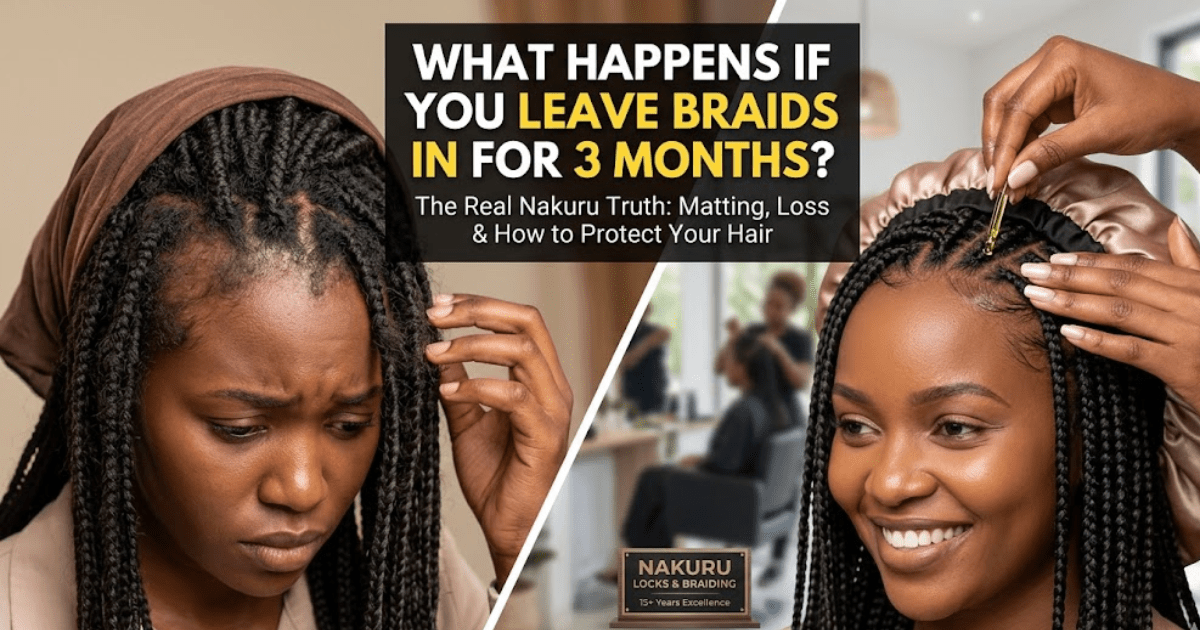
Then she walked in. A young teacher from Kabarak, mid-20s, shoulders slumped. She sat in my chair, slowly unwrapped her headscarf, and revealed what used to be beautiful knotless box braids — now matted at the roots, with visible new growth pushing the braids upward and small bald patches forming at her temples.
“Ann,” she whispered, voice shaky, “I left my braids in for 3 months. Everyone said it was fine for growth… but look at my hair now. What happens if you leave braids in for 3 months? Did I ruin it?”
Her story is one I hear more often than I wish. At Nakuru Locks and Braiding, we’ve seen the good, the bad, and the heartbreaking side of extended braid wear. Some clients walk out after 3 months with longer, healthier hair. Others come in with traction alopecia, matting, and regret. Today I want to share the honest truth — from 13 years of braiding in Nakuru and the science behind it — so you never have to ask “what happens if you leave braids in for 3 months” the hard way.

What Happens If You Leave Braids In for 3 Months? The Real Timeline
Weeks 1–4: The “Golden Period”
This is when braids look their best. The style is fresh, edges are protected, and many clients notice less daily shedding because the hair is tucked away. Growth is happening underneath — but you won’t see it yet.
Weeks 5–8: The Maintenance Window
New growth starts showing. Braids loosen slightly at the roots. This is the sweet spot for most people. At Nakuru Locks and Braiding, we recommend a professional retouch or removal around week 6–8 to prevent tension buildup.
Month 3 (12 Weeks): The Danger Zone
This is where problems usually begin. New growth pushes the braids upward, creating tension at the roots. Buildup from product, sweat, and dust gets trapped. Matting can start. Edges can thin or recede. Many clients who leave box braids in for 3 months come in with traction alopecia — the medical term for hair loss caused by prolonged pulling.
A 2023 study in the Journal of Cosmetic Dermatology found that protective styles left in beyond 8–10 weeks significantly increase the risk of traction alopecia, especially in women with tightly coiled hair.1
Can I Keep My Braids for 3 Months? The Honest Answer
Technically yes — but it’s risky for most people. The safe maximum is usually 6–8 weeks for box braids and knotless styles. Leaving braids in for 3 months is only realistic for very loose, lightweight styles on low-porosity hair with excellent aftercare. Even then, we strongly advise a professional check at week 8.
At Nakuru Locks and Braiding, we’ve observed that clients who keep braids beyond 10 weeks almost always show some form of edge thinning or scalp irritation when they finally remove them.
How Long Can Braids Damage Your Hair? The Real Risks
– Traction Alopecia: Permanent if ignored — hairline recession, especially at temples.
– Matting & Buildup: Hair knots at the root, making removal painful and damaging.
– Breakage: New growth snaps under tension.
– Scalp Infections: Trapped moisture + dirt = folliculitis or fungal issues.
– Weakened Edges: The most common long-term complaint we see after 3-month braids.
The question “how long is too long with braids?” has a simple answer: when your new growth is longer than half an inch and the braids feel tight — it’s time to remove or retouch.
How Long to Leave Braids In for Growth? The Smart Strategy
For maximum growth with minimal damage: 6–8 weeks maximum for most protective braids. Remove, deep condition, trim split ends, then reinstall. This “reset” method gives the best length retention. Many of our clients who follow this cycle grow 4–6 cm of healthy new length every 3 months.
Nakuru Locks & Braiding 3-Step Safe Braid Routine
1. Install with low tension — two-finger rule at roots.
2. Daily/weekly care — light scalp oil, satin bonnet, no heavy products.
3. Week 6–8 check — professional retouch or removal before problems start.
Based on local client trends observed at Nakuru Locks and Braiding, this routine reduces damage dramatically.
What Happens If You Leave Braids In for 3 Months After Removal? Real Recovery
Immediate: Tender scalp, possible shedding of weakened hair.
2–4 weeks: New growth appears, edges may look thin.
3–6 months: With proper care, edges fill back in.
12+ months: Full recovery possible if caught early.
We’ve helped many clients recover from “I left my braids in for 3 months” moments — the key is gentle handling, moisture, and patience.
DIY Scalp Recovery Treatments
1. Nutritive Aloe & Rosemary Soothing Mask — 4 tbsp aloe gel + 5 drops rosemary oil. Apply to scalp 20 min, 2×/week. Soothes inflammation.
2. Cosmetic Apple Cider Rinse — 2 tbsp ACV + 1 cup water. Rinse after wash. Balances pH, removes buildup.
3. Nutritive Fenugreek Seed Hair Rinse — Soak 2 tbsp seeds overnight, strain, use as final rinse. Strengthens follicles.
Practical Checklist for Safe Braid Wear
- Daily: Light scalp oil, satin bonnet at night
- Weekly: Gentle cleanse with cotton pads
- Week 6–8: Professional check or removal
- After Removal: Deep condition + trim
FAQ – Braids & Time Questions We Hear Daily
Increased risk of traction alopecia, matting, buildup, and edge thinning.
Possible for very loose styles with excellent care, but not recommended for most people.
6–8 weeks maximum, then remove and reinstall for best results.
Beyond 8–10 weeks significantly raises damage risk.
When new growth is >½ inch and braids feel tight — remove immediately.

Related Articles You May Love
- Natural Afro Hair Styles: The Ultimate Guide
- Dread Braids vs Twists: Which Is Right for You?
- Lush Braids Kenya: Colours, Numbers & Prices
- Arafa Braids Price in Kenya 2026
Ready to Protect Your Hair the Right Way?
Book Your Braid Consultation Today
WhatsApp Us NowAddress: Mt. Sinai building, Bazaar Rd, Nakuru City, Kenya
Phone: 0723 168 188
WhatsApp: +254 723 168 188
Email: ann@nakurulocksandbraiding.com
References
- Journal of Cosmetic Dermatology (2023). Traction alopecia in protective hairstyles.
- American Academy of Dermatology (2024). Hair loss from tight braids and weaves.
- International Journal of Trichology (2022). Optimal duration of protective styles.
Leave a Reply