
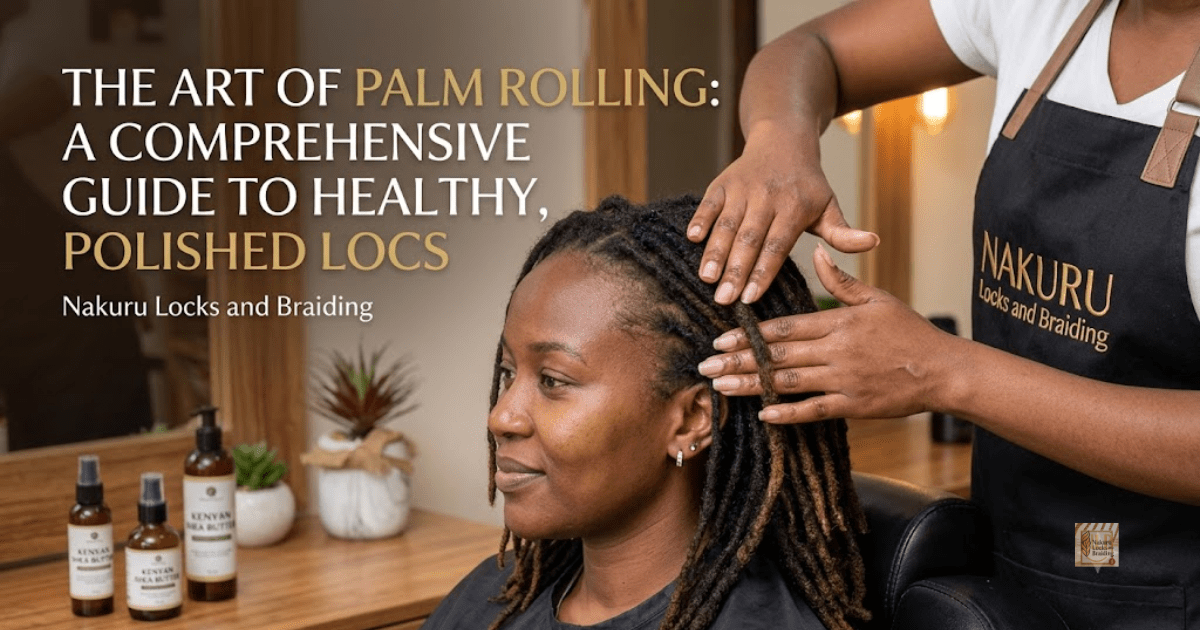
Palm Roll Locs: The Ultimate Guide to Smoother, Healthier Dreadlocks
For many, the journey of growing locs is deeply personal—a physical manifestation of patience, identity, and natural beauty.
Whether you are in the budding phase of starter locs or maintaining a mature set of freeforms, the maintenance technique you choose dictates the health and aesthetic of your crown.
At Nakuru Locks and Braiding, located at the Mt. Sinai Building on Bazaar Road, we believe that technique is everything.
Among our most requested services is palm rolling, a timeless, tension-aware method that honors the integrity of the hair fiber.
If you have ever wondered how to achieve that smooth, uniform look without compromising your follicle health, you have arrived at the right place.
In this guide, we dive deep into the science and art of palm rolling, ensuring your locs remain as vibrant and strong as the day they started.
What Are Palm Rolling Locs?
Palm rolling locs (also called palm rolling dreads or the palm roll method) is a maintenance and formation technique where you roll individual locs between the palms of your hands to tighten, smooth, and shape them.
It encourages hair to mat and compress naturally while creating a rounded, cylindrical appearance.
Unlike more aggressive methods, palm rolling uses gentle friction and consistent rolling motion to tuck in loose hairs, reduce frizz, and promote uniform growth.
It’s suitable for various stages—from palm rolling starter locs to mature dreads—and works well with different textures, including coily, curly, and even transitioning to palm rolling freeforms.
Palm rolling dreads with gel enhances the process by providing hold without excessive stiffness, helping new growth stay in place while the loc matures.
Many clients ask, “What does palm rolling do for dreadlocks?” In short: it accelerates neatness, minimizes unraveling in early stages, and maintains shape between professional visits.

Benefits of Palm Rolling Dreadlocks
Palm rolling offers several advantages that make it a favorite for many loc wearers:
- Smoother, Cylindrical Shape: It creates a uniform, rounded look rather than flat or irregular sections. Locs appear fuller and more natural over time.
- Reduced Frizz and Loose Hairs: Rolling tucks flyaways into the loc, leading to cleaner maintenance.
- Gentler on Scalp: Less tension compared to some other methods, reducing breakage risk when done correctly.
- Versatility for Starters and Maintenance: Ideal for palm rolling starter locs to encourage budding and for ongoing care.
- Thicker-Looking Locs: Many report locs maturing fuller with palm rolling versus compaction from tighter methods.
- Ease and Accessibility: Can be done at home with minimal tools, though professional sessions at Nakuru Locks ensure best results.
- Healthier Hair Journey: Promotes moisture retention and minimizes damage when paired with proper products.
Regular palm rolling (every 3-8 weeks or as needed) helps locs mature beautifully while keeping them manageable.
Palm Roll Locs Styles
Palm roll locs styles are incredibly versatile. From neat, uniform traditional locs to more organic looks, palm rolling enhances:
- High-top or undercut styles with defined roots.
- Medium to large locs for volume.
- Intricate updos, buns, or ponytails that hold shape better.
- Semi-freeform or freeform with controlled sections.
Clients love combining palm rolling with accessories or color for bold expressions. At our salon, we customize styles to complement face shapes, lifestyles, and cultural aesthetics popular in Kenya and beyond.

Palm Rolling Starter Locs: Getting Started Right
Palm rolling starter locs is a popular choice for beginners. After sectioning clean hair (often with two-strand twists or coils initially), palm rolling helps guide strands into locs during the budding phase.
How to palm roll starter locs:
1. Start with damp or dry hair.
2. Take a section between palms.
3. Roll back and forth with moderate pressure in the direction that tightens the twist.
4. Repeat until smooth and compact.
This method is less stressful on new locs than heavy twisting. Many combine it with light gel for hold during the initial 3-6 months.
How to Palm Roll Locs Step by Step
Here’s a detailed how to palm roll locs step by step (and how to palm roll your locs or how to palm roll hair):
1. Prepare Your Hair: Wash and condition with loc-friendly products. Towel-dry or air-dry to slightly damp. Clean hands are essential.
2. Section and Apply Product (optional): Part hair neatly. Apply a small amount of lightweight gel or oil to the root/new growth.
3. The Rolling Motion: Place the loc between your palms (prayer position). Roll forward or in the tightening direction, starting from roots to tips. Use consistent, moderate pressure—like rolling dough. Repeat 10-20 times per loc or until smooth.
4. Root Focus: Pay extra attention to the base to secure new growth without pulling the scalp.
5. Clips or Bands (optional): Secure with non-damaging clips while drying.
6. Finish: Avoid wetting immediately; let set for best hold.
Pro Tip from Nakuru Locks: Roll in the natural twist direction to avoid weakening. For palm rolling locs with comb, first use a fine-tooth comb to smooth new growth downward, then palm roll for definition.
Practice on a small section first. Over-rolling can cause thinning, so balance is key.
What Product to Use to Palm Roll Locs? / What Should I Palm Roll My Locs With?
What product to use to palm roll locs depends on hair type and goals. Avoid heavy waxes that cause buildup.
Recommended options:
- Lightweight Loc Gels: Knotty Boy LockStead, Lion Locs, or aloe-based gels for hold without crunch. Great for palm rolling dreads with gel.
- Moisturizing Sprays/Oils: Rose water, aloe vera juice, argan oil, or loc-specific butters for hydration.
- Natural Alternatives: Shea moisture mixes or homemade with aloe and essential oils.
At Nakuru Locks and Braiding, we recommend and use products suited to East African hair textures—water-based for low porosity, nourishing for dry scalps. Always patch-test.
Palm Rolling Locs with Comb
Palm rolling locs with comb combines techniques: Comb new growth for straight alignment, then palm roll for seamless blending. This is excellent for neat roots and clients wanting a polished look without excessive tension.
Palm Roll Locs vs Interlocking: Which Is Better?
A common question: Is it better to interlocking or palm rolling? Palm roll locs vs interlocking depends on lifestyle and preferences.
Palm Rolling:
- Looser, cylindrical, natural look.
- Gentler, less tension.
- Easier at home.
- May require more frequent maintenance (3-8 weeks).
- Better for thicker, fuller locs.
Interlocking:
- Tighter, more secure (like crocheting roots).
- Lasts longer, great for active/wet lifestyles.
- Firmer hold, potentially more compact locs.
- Higher tension risk if overdone.
Many combine both: palm roll for shape, interlock occasionally for security. Neither is universally “better”—consult experts at Nakuru Locks for personalized advice based on your hair texture and goals.
Palm Rolling Freeforms
How to palm roll freeforms? Freeforms embrace natural matting, but gentle palm rolling can neaten without full control.
Use minimal product and light pressure to encourage uniformity while preserving organic flow. It’s not contradictory—many use it sparingly for maintenance.
Expert Tips from Nakuru Locks and Braiding
- Maintain scalp health with regular washes.
- Moisturize daily.
- Visit professionals every 4-8 weeks.
- Be patient during budding (months 3-12).
- Avoid over-manipulation.
Our team in Nakuru brings years of experience with diverse African hair textures, blending traditional techniques with modern care for optimal results.

FAQ About Palm Roll Locs
Q: How often should I palm roll my locs?
A: Every 1-4 weeks at home, with professional maintenance as needed. Don’t overdo it.
Q: Can palm rolling damage locs?
A: When done gently with proper products, no. Excessive force or frequency can thin hair.
Q: Is palm rolling good for starter locs?
A: Yes—highly effective for guiding formation.
Q: What’s the difference between palm rolling and twisting?
A: Palm rolling uses palms for friction and shaping; twisting often involves fingers or combs.
Q: How long until results show?
A: Smoother locs immediately; fuller maturation over months.
Q: Can I palm roll wet hair?
A: Prefer damp or dry to avoid fragility.
Related Articles from Nakuru Locks and Braiding:
Ready to Master Your Palm Roll Locs?
Palm rolling is more than a technique—it’s a ritual of self-care and cultural expression. Whether you seek palm roll locs styles, expert palm rolling starter locs, or ongoing maintenance, the team at Nakuru Locks and Braiding is here to help you achieve healthy, stunning locs.
Book your appointment today in Nakuru or reach out for consultations. Let’s roll towards loc confidence together!
Nakuru Locks and Braiding – Where Tradition Meets Expertise. Your loc journey, perfected.
Leave a Reply