
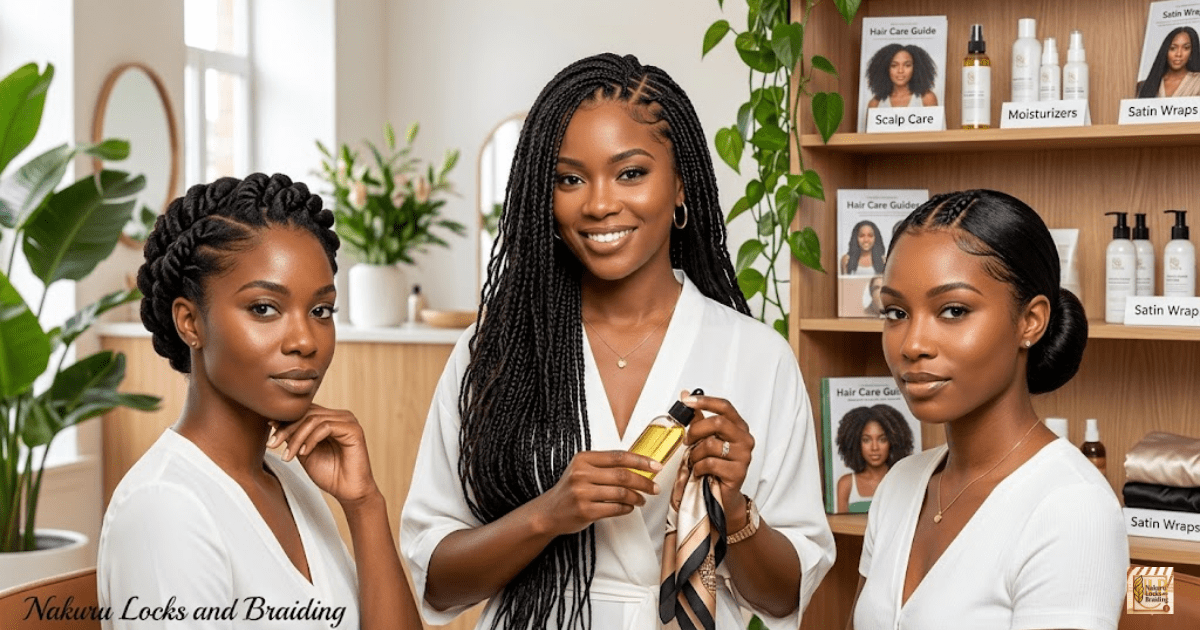
Maintenance Tips for Protective Styles: Your Best Guide to Healthy, Thriving Hair
Your hair tells a story. For millions around the globe, that story is woven through braids that stretch across generations, dreadlocks that honor spiritual journeys, and protective styles that shield fragile ends from daily damage.
But here’s the truth many discover too late: a protective style can either be your hair’s greatest ally or its silent enemy depending on how you maintain it.
I’ve spent 13 years behind the braiding chair at Nakuru Locks and Braiding in Nakuru City, Kenya, witnessing countless hair transformation journeys.
From Sarah’s ecstatic “I love my new dreadlocks!” to Esther’s testimonial that her “box braids lasted for weeks,” I’ve learned that the magic isn’t just in installation—it’s in intelligent maintenance.
Whether you’re in Nairobi, New York, or London, this comprehensive guide will transform how you care for protective styles.
What Are Protective Styles and Why Do They Matter?
Protective styles shield your hair from daily wear by reducing exposure to heat, UV rays, harsh weather, and mechanical stress.
They promote retention by allowing your hair to rest in a low-manipulation state. For natural hair (especially coily or curly textures common in Kenya and across Africa), they help combat dryness and breakage.
Even for straight or finer “white”/Caucasian hair types, adapted versions like loose buns or twists can minimize split ends and support growth.
Key benefits include:
- Reduced breakage and shedding.
- Moisture retention when properly maintained.
- Time savings for busy lifestyles.
- Promotion of length retention and healthier scalp environments.
However, they are only “protective” with proper care. Neglect leads to buildup, tension alopecia, or matting.
3 Do’s and Don’ts of Hair Care in Protective Styles
Do’s:
- Cleanse your scalp regularly — Every 1-2 weeks, depending on the style. Use diluted shampoo, micellar water, or apple cider vinegar rinses to prevent itchiness and buildup.
- Moisturize consistently — Apply lightweight leave-ins, oils (like jojoba or coconut), or serums to scalp and accessible hair. Hydration prevents brittleness.
- Protect at night — Use satin/silk bonnets or scarves to reduce friction.
Don’ts:
- Don’t leave styles in too long — 4-8 weeks max for most braids/twists; longer risks matting and breakage.
- Don’t install with excessive tension — Tight styles cause traction alopecia, especially on edges and short hair.
- Don’t skip takedown care — Gently detangle post-removal with conditioner to minimize shedding.
How to Maintain Protective Styles: General Tips
How to maintain protective styles starts before installation. Prep with a thorough wash, deep condition, and protein treatment. Choose low-tension installs from experienced stylists like those at Nakuru Locks and Braiding.
Daily/weekly routine:
- Scalp care: Gently part and apply oil or balm. Massage to stimulate growth.
- Refresh: Spritz with water + leave-in conditioner. Avoid heavy products that cause buildup.
- Monitor: Watch for looseness, itch, or odor—signs it’s time for maintenance or removal.
- Diet and lifestyle: Support from within with protein, biotin, vitamins, and hydration.
Maintenance Tips for Protective Styles Braids
Maintenance tips for protective styles braids (box braids, knotless, Fulani, cornrows) focus on scalp health since braids last 4-8 weeks.
- Wash bi-weekly with a clarifying or hydrating shampoo, focusing on the scalp. Use a bottle for precision.
- Moisturize braids lightly with spray (aloe + oil mix) and seal ends.
- Avoid constant pulling into tight ponytails; vary styling.
- For braids specifically, cleanse buildup with diluted ACV or micellar rinses.
At Nakuru Locks and Braiding, our knotless braids are favored for lower tension and easier maintenance.
Maintenance Tips for Protective Styles Straight Hair
Maintenance tips for protective styles straight hair and protective hairstyles for hair growth straight hair adapt well to finer or straighter textures. Opt for loose buns, milkmaid braids, twisted updos, or low-tension ponytails that tuck ends.
- Use gentle, sulfate-free products to avoid stripping natural oils.
- Silk pillowcases or bonnets are essential to prevent tangles and breakage.
- Hydrate with lightweight serums; straight hair can look oily faster but still needs moisture.
- For growth: Focus on scalp massages and protective updos that minimize heat and manipulation.
Protective styles work across textures—adapt tension and products accordingly.
Protective Hairstyles for Sleeping
Protective hairstyles for sleeping minimize overnight damage.
Top options:
- Pineapple (high loose ponytail or puff).
- Loose braids or twists.
- Satin bonnet + scarf combo.
- Low bun or milkmaid braids for straight hair.
Silk/satin reduces friction by up to 43% compared to cotton. This simple habit preserves styles and promotes growth.
Low Maintenance Protective Hairstyles for Hair Growth
Low maintenance protective hairstyles for hair growth are game-changers. Styles like mini twists, flat twists, Bantu knots, or wigs/glue-less units require minimal daily effort.
- Natural hair protective styles without extensions: Flat twists, two-strand twists, cornrows, Bantu knots, or simple buns. These use your own hair, ideal for shorter lengths or budget-conscious clients.
- Protective styles for short hair: Mini twists, flat twists, Bantu knots, small cornrows, or afros with headscarves. Even very short hair benefits.
- Protective hairstyles for white hair growth (adapted for straight/fine textures): Loose updos, buns, or soft braids with minimal tension.
Consistency in moisture and cleansing yields visible growth in 3-6 months.
How Do You Take Care of a Protective Style Scalp?
How do you take care of a protective style scalp? This is critical. Buildup causes itch, flakes, and stalled growth.
- Part gently and cleanse with fingertips or soft brush.
- Use lightweight oils (tea tree for antimicrobial, castor for growth).
- Avoid scratching; use a spray bottle for targeted relief.
- Weekly scalp massages improve circulation.
How to Maintain a Good Hairstyle Overall
How to maintain a good hairstyle? Combine protection with healthy habits: trim every 8-12 weeks, eat nutrient-rich foods, stay hydrated, and choose styles suiting your lifestyle and hair health. Rotate styles to give your scalp breaks.
Expert Tips from Nakuru Locks and Braiding
Our team in Nakuru specializes in eco-friendly, tension-free installs using quality extensions and natural products. We recommend client-specific routines and offer aftercare consultations. Visit us at Mt. Sinai Building, Bazaar Rd, for personalized service.
FAQ
Q: How long can I keep protective styles in?
A: 4-8 weeks max; monitor for signs of stress.
Q: Are protective styles suitable for all hair types?
A: Yes, with adaptations—lower tension for straight/fine hair.
Q: Can protective styles damage hair?
A: Only if neglected or installed too tightly. Proper maintenance prevents this.
Q: Best low-maintenance style for growth?
A: Knotless braids, twists without extensions, or buns.
Q: How often should I wash?
A: Every 1-2 weeks, focusing on scalp.
Related Articles from Nakuru Locks and Braiding
Ready to elevate your hair game? Contact Nakuru Locks and Braiding today for expert installation and ongoing support. Your healthiest hair awaits—protect it wisely.
References
- American Academy of Dermatology insights on traction alopecia prevention.
- Studies and expert blogs from L’Oréal, Carol’s Daughter, and natural hair specialists.
Leave a Reply