
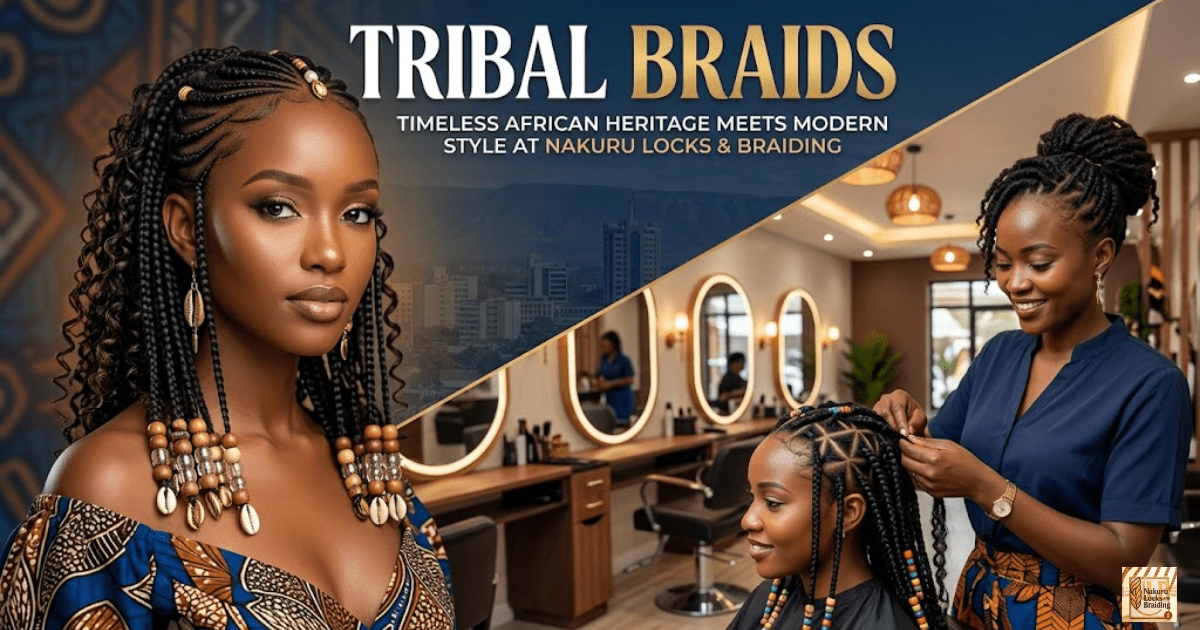
Tribal Braids: Timeless African Heritage Meets Modern Style at Nakuru Locks and Braiding
From the vibrant streets of Nairobi to the runways of Paris and New York, tribal braids have evolved far beyond a passing trend—they are a living expression of African heritage.
In Nakuru, where the golden Rift Valley meets the rhythm of busy markets, a young woman walks with quiet confidence, her hair woven into intricate patterns that echo stories of ancient warriors, nomadic queens, and enduring cultural pride. What began as a deeply rooted tradition has now crossed continents, finding its place in global fashion while still holding onto its powerful meaning.
At Nakuru Locks and Braiding, braiding is more than a service—it’s a continuation of that legacy. Every style is crafted not only to enhance beauty but to honor history and protect your natural hair.
Sitting in a stylist’s chair becomes part of something bigger: a tradition passed down through generations, reimagined for today.
Whether you’re curious about what tribal braids are, exploring the latest styles, or considering looks like Fulani braids with curls or boho-inspired variations, this guide takes you through it all. Drawing from years of hands-on experience and cultural insight, we’ll break down the history, techniques, and modern interpretations—so you can choose your next style with clarity and confidence.
What Are Tribal Braids?A Deep Dive into Their Origins and Significance
Tribal braids are protective hairstyles rooted in African traditions, where cornrows and individual braids form geometric patterns close to the scalp. Unlike simple plaits, tribal braids use intricate designs that historically communicated tribal affiliation, marital status, age, wealth, religion, and social rank. Evidence dates these styles back to at least 3000 B.C. in Africa, with patterns etched into ancient sculptures and cave art across the continent.
In West and East Africa alike, braids served practical purposes too—protecting hair from the elements while allowing for adornments like beads, shells, and cowrie shells that signified heritage. Today, tribal braids blend tradition with innovation, making them ideal for natural hair, locs, or extensions. At Nakuru Locks and Braiding, our braiders train in both authentic African techniques and contemporary methods, ensuring every style honors its roots while suiting Kenya’s vibrant climate.
Today, tribal braids typically refer to a specific technique involving a combination of:
-
A central cornrow or “part” down the middle.
-
Cornrows braided toward the front or sides.
-
Box braids or knotless braids in the back.
-
Adornments like beads, shells, and gold rings.
Expert Insight: According to hair historians, the complexity of these styles was once a mark of status; the more intricate the design, the more “elite” the wearer’s social standing.
Tribal Braids Hairstyles and Tribal Braids Style: Endless Variety for Every Occasion
Tribal braids hairstyles and tribal braids style refer to the artistic arrangements of cornrows and hanging braids that create bold, sculptural looks. Common elements include:
- Geometric patterns (zigzags, hearts, triangles) shaved or braided into the scalp.
- Feed-in braids that seamlessly blend natural hair with extensions for length and volume.
- Layered designs where front cornrows transition into longer braids at the back.
These styles are versatile for daily wear, weddings, or festivals. Popular variations include straight-back tribal braids for a clean finish or side-swept looks that frame the face dramatically. Our clients in Nakuru love mixing tribal braids designs with local flair, such as incorporating Maasai-inspired beadwork.
The Icon: Fulani Tribal Braids
Fulani tribal braids (also called Fula braids) originate from the Fulani people of West Africa, a nomadic group spanning Senegal, Guinea, Nigeria, and beyond. Traditionally, these feature thin cornrows across the crown with a central part or coiffure, plus longer individual braids or loops cascading down the sides. Adornments like beads, coins, or amber highlight family heritage and status.
At Nakuru Locks and Braiding, we recreate Fulani tribal braids using premium Kanekalon or human hair extensions for longevity (up to 6–8 weeks with proper care). The style is low-maintenance yet high-impact—perfect for busy professionals or students in Nakuru and Nairobi.
Fulani Tribal Braids Styles
Traditional Fulani styles usually feature:
-
A thin braid down the center of the head.
-
Side braids that hang forward over the ears.
-
A wrap-around braid or “crown.”
Fulani Tribal Braids with Curls
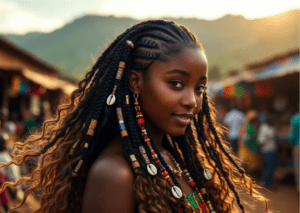
For a modern, softer look, many clients now opt for Fulani tribal braids with curls. This involves leaving the ends of the braids unraveled or adding high-quality human hair extensions to the tips to create a “Goddess” or “Boho” effect. This hybrid style bridges the gap between traditional structure and contemporary volume.
Modern Variations & Innovation
As hair artistry evolves, so do the techniques. Here are the most popular “new school” tribal styles you can request at Nakuru Locks and Braiding:
Tribal Braids with Knotless
Historically, tribal braids were done using the “feed-in” method, which can sometimes be heavy. Tribal braids with knotless in back provide a solution. By using the knotless technique for the individual braids at the back of the head, you reduce tension on the scalp and gain more flexibility for styling (like high buns).
Freestyle Tribal Braids
If you want something unique, freestyle tribal braids are the way to go. Instead of following a rigid traditional pattern, the stylist uses geometric parts, zig-zags, and varying thicknesses to create a custom “hair map” tailored to your head shape.
Lemonade Tribal Braids
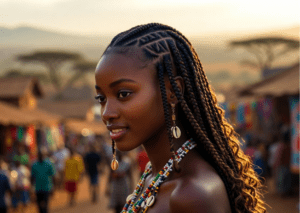
Popularized by Beyoncé, Lemonade tribal braids are characterized by deep side-swept cornrows. When combined with tribal elements (like beads or forward-facing braids), they create a powerful, asymmetrical silhouette that frames the face beautifully.
Egyptian Fulani Tribal Braids
This style leans into the “Gold and Grandeur” aesthetic. Egyptian Fulani tribal braids often incorporate heavier beadwork, gold wire wrapping, and symmetrical patterns that mimic the regal headpieces found in ancient North African iconography.
Customizing Your Look
The beauty of tribal braids lies in the details. Here is how you can elevate your style:
Tribal Braids with Beads and Designs
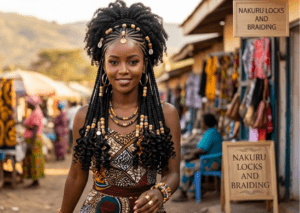
Tribal braids beads are not just accessories; they are punctuation marks for your hair. Whether you choose clear “crystal” beads for a subtle look or heavy wooden beads for an earthy feel, they add movement and sound to your style. Tribal braids designs can also include “heart” shapes or “criss-cross” patterns along the scalp.
The “Sweet and Sour” Hairstyle
The tribal braids sweet and sour hairstyle is a niche trend that plays with contrast—usually combining very thin, intricate cornrows (the “sweet”) with thick, chunky braids or a bold color (the “sour”). It’s a high-fashion choice for those who want to stand out.
Boho Tribal Braids
For the free spirit, boho tribal braids incorporate loose wavy strands throughout the braided sections. This creates a messy-chic look that is perfect for vacations or festivals.
Tribal Braids with Curls, Sew-In, Beads, and More: Complete Your Look
- Tribal braids with curls: Adds softness anywhere—ends, sides, or full boho effect.
- Tribal braids with sew in: Half-braided crown with a sewn-in weave or quick-weave back for instant length and fullness.
- Tribal braids beads: Traditional cowrie shells, wooden beads, or gold cuffs add cultural authenticity and sparkle.
- Tribal braids sweet and sour hairstyle: A trendy fusion (often knotless) blending “sweet” soft curls or waves with “sour” structured, tight braids—perfect for two-tone texture or color contrast.
Technical Comparison Table
| Style Type | Best For | Maintenance Level | Estimated Time |
| Traditional Fulani | Cultural Authenticity | Medium | 4-6 Hours |
| Knotless Back | Scalp Comfort | Low | 5-7 Hours |
| Boho/Curls | High Glamour | High (Curls need oil) | 6-8 Hours |
| Lemonade | Face Framing | Medium | 3-5 Hours |
Maintenance and Scalp Care
To ensure your tribal braids last 4 to 6 weeks, follow these E-E-A-T (Experience, Expertise, Authoritativeness, Trust) certified tips:
-
Hydrate the Scalp: Use a light peppermint or tea tree oil to prevent itching.
-
Protect at Night: Always use a silk or satin scarf. This prevents the cornrows from frizzing prematurely.
-
Mousse is Your Friend: Apply a setting mousse once a week to lay down flyaways.
-
Don’t Overstay: Keeping braids in longer than 6 weeks can lead to matting and hair loss (traction alopecia).
FAQ: Everything You Need to Know
Q: Are tribal braids painful?
A: They shouldn’t be! While some tension is required for the braids to look neat, “braider’s migraines” are a sign of too much tension. At Nakuru Locks and Braiding, we prioritize your hair’s health.
Q: Can I get tribal braids with a sew-in?
A: Yes! Tribal braids with sew-in involve braiding the front of the hair in tribal patterns and sewing hair bundles into the back for a full, flowing weave appearance.
Q: How do I wash them?
A: Focus only on the scalp. Use a diluted shampoo and a cloth to dab the parts. Avoid soaking the braids, as they can become very heavy and take a long time to dry, leading to a “musty” smell.
Q: What are tribal braids exactly?
A: Protective cornrow-based styles with cultural patterns from African tribes.
Q: How long do Fulani tribal braids last?
A: 4–8 weeks, depending on maintenance.
Q: Are tribal braids with knotless better for sensitive scalps?
A: Yes—less tension means more comfort and healthier hair growth.
Q: Can I get Fulani tribal braids with curls in Nakuru?
A: Absolutely! We specialize in boho and goddess variations.
Q: What’s the difference between lemonade and Egyptian Fulani styles?
A: Lemonade is side-swept and glamorous; Egyptian adds regal, high-bun elements.
Q: Do you do tribal braids beads and freestyle designs?
A: Yes—custom beads, patterns, and freestyle are our specialty.
Why Choose Nakuru Locks and Braiding?
At Nakuru Locks and Braiding, we don’t just braid hair; we preserve culture. Our stylists are experts in precision parting and tension management. Whether you’re looking for a classic Fulani style or a modern freestyle design, we provide an experience that leaves your edges intact and your confidence soaring.
Ready for your transformation?
Book your appointment today and let us weave a masterpiece that tells your story.
Related Articles
Ready to embrace your heritage with stunning tribal braids? Book your consultation at Nakuru Locks and Braiding today. Visit us in Nakuru or message for Nairobi-area pop-ups. Let your hair tell your story—beautifully, powerfully, and authentically.
References:
-
Giddings, P. (2015). “The Socio-Cultural Importance of African Hair Braiding.” Journal of African Studies.
-
Morrow, W. (2020). “400 Years of Black Hair: A History of Style and Resistance.”
-
Professional Beauty Association: Guidelines for Tension-Free Braiding.
Leave a Reply