
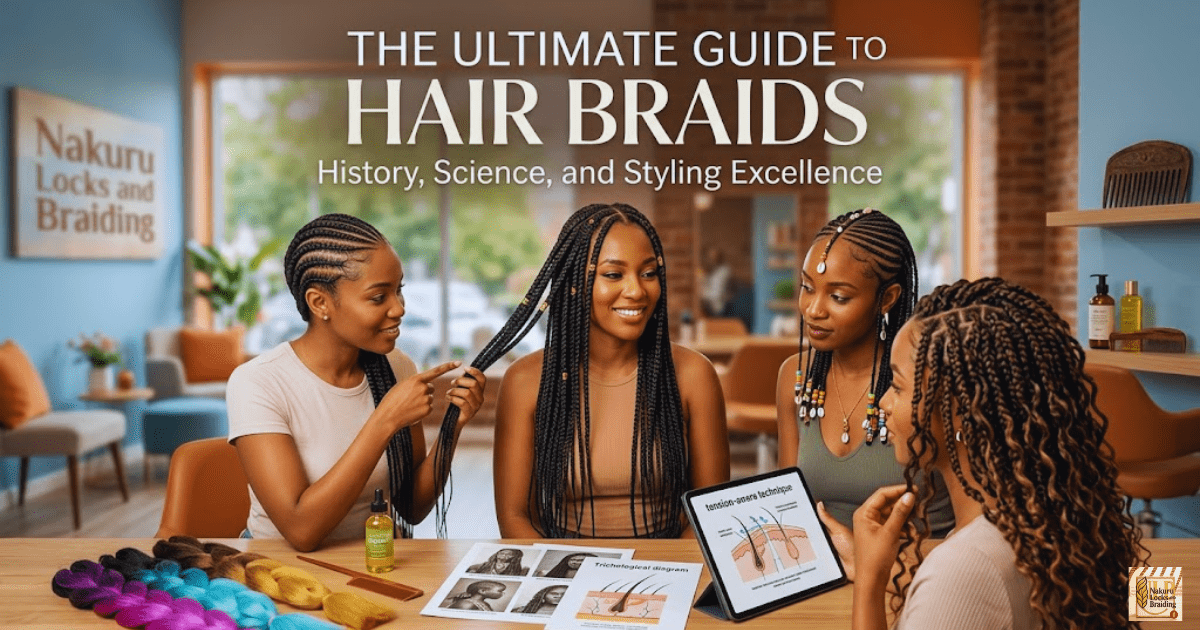
The Ultimate Guide to Hair Braids: History, Science, and Styling Excellence
In the bustling heart of a salon, the rhythmic sound of hair being sectioned and the gentle tug of a precision braid are more than just part of a beauty routine—they are the heartbeat of a multi-generational legacy. From the ancient rock paintings of the Sahara to the high-fashion runways of Paris and New York, hair braiding has served as a universal language of identity, resilience, and artistry.
Whether you are looking to embrace your heritage, protect your natural strands, or experiment with bold new lengths using extensions, understanding the architecture of a great braid is essential. At Nakuru Locks and Braiding, we believe that a hairstyle is only as beautiful as the health of the hair beneath it. This guide explores the deep roots of African braided hairstyles, the technical evolution of braids for women, and the scientific principles of tension-aware styling that ensure your hair thrives.
The Heritage of African Braided Hairstyles
African hair braiding is one of the oldest art forms in human history, with evidence of cornrows dating back as far as 3500 BC. Far from being merely “trends,” these styles were historically used to communicate a person’s marital status, age, wealth, and even their specific lineage.
Iconic Traditional Styles
-
Cornrows: Traditionally braided flat against the scalp using an underhand upward motion. In many West African cultures, the intricate patterns of cornrows were used as “maps” or signals of community belonging.
-
Box Braids: Named for their square-shaped hair divisions, these originated in South Africa over 5,000 years ago. Historically, the addition of beads or shells indicated economic status and readiness for marriage.
-
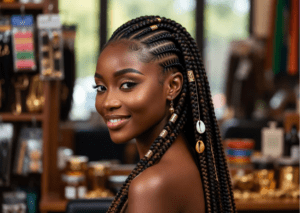
Fulani Braids: Inspired by the Fula people of West Africa, this style is characterized by thin-to-medium cornrows in the front, often with a signature central braid and side braids directed toward the face, typically adorned with gold clips or beads.
Cultural Resilience
During the transatlantic slave trade, braiding became an act of resistance. Enslaved people used braiding sessions—which could take hours—to share information and maintain a connection to their heritage. Today, the CROWN Act (Creating a Respectful and Open World for Natural Hair) in various parts of the world recognizes these styles as protected expressions of identity, moving them from marginalized “street styles” to respected professional choices.
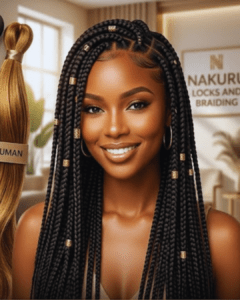
Evolution of Braided Hairstyles for Women
Modern braiding has evolved into a versatile medium that caters to every lifestyle, from the high-powered executive to the fitness enthusiast. The contemporary woman views braids as a marriage of convenience and creativity.
Modern Classics
-
Knotless Braids: The gold standard for modern comfort. Unlike traditional box braids, knotless braids start with the natural hair and gradually “feed in” extensions. This eliminates the heavy knot at the scalp, significantly reducing the risk of traction alopecia.
-
Goddess Braids: A thicker, more prominent version of cornrows. These are often styled into elegant updos or sleek ponytails, offering a regal aesthetic that lives up to its name.
-
Boho (Bohemian) Braids: These incorporate loose, wavy strands throughout the braided length, creating a messy-chic, voluminous look that is popular for vacations and summer festivals.
Mastering Braided Hairstyles with Extensions
Extensions are the “secret sauce” of modern braiding, providing the length, volume, and color variety that natural hair alone may not achieve. However, not all extensions are created equal.
Types of Extension Hair
-
Kanekalon/Synthetic: The most common choice for box braids and twists. It is heat-resistant, holds its shape well when dipped in hot water, and is lightweight.
-
Human Hair Bulk: Often used for “Boho” styles or the ends of Goddess braids. It offers a more natural movement and can be dyed or heat-styled.
-
Crochet Hair: Pre-braided or pre-twisted strands that are looped through cornrows. This is the fastest installation method and places minimal tension on the natural hair.
The Science of Extension Application
The key to a successful install is the tension-to-weight ratio. According to trichological principles, the weight of the extension hair should never exceed the holding capacity of the natural hair section. Overloading a small section of hair leads to “follicular stress,” which can cause permanent thinning.
Professional Note: At Nakuru Locks and Braiding, we utilize a “Tension-Aware Technique.” By meticulously calculating the section size against the extension weight, we ensure your edges remain protected and your scalp stays healthy.
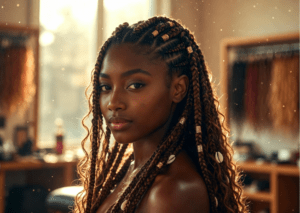
The Biology of Hair and Scalp Health
Why do we call braids “protective styles”? Because, when done correctly, they shield the hair shaft from environmental stressors like UV rays, wind, and friction from pillows or clothing.
Benefits of Protective Styling
-
Length Retention: Hair typically grows about 1 cm per month. Braids don’t make hair grow faster, but they prevent the ends from breaking, allowing you to keep the length you grow.
-
Moisture Management: Tightly coiled hair often loses moisture quickly. Braids help “lock in” natural oils or leave-in conditioners applied to the strands.
-
Scalp Access: Unlike weaves, braids allow you to reach the scalp for cleansing and moisturizing, which is vital for maintaining the hair growth cycle.
Warning Signs of Improper Styling
-
Small Bumps: If you see tiny white bumps at the hairline after braiding, the tension is too high. This is a sign of inflammation that could lead to hair loss.
-
Persistent Itching: This may be a reaction to the alkaline coating found on many synthetic braiding hairs. Soaking your extensions in an apple cider vinegar (ACV) rinse before installation can neutralize this coating.
Maintenance: How to Make Your Braids Last
A beautiful set of braids is an investment. Proper maintenance can extend the life of your style from 4 weeks to 8 weeks while keeping your natural hair underneath pristine.
Weekly Routine
-
Scalp Cleansing: Use a diluted sulfate-free shampoo or a specialized “braid spray” to cleanse the scalp without frizzing the braids.
-
Hydration: Apply a lightweight oil (like jojoba or almond oil) to the scalp. Avoid heavy greases that can clog pores and cause buildup.
-
Night Care: Always wear a silk or satin bonnet or use a silk pillowcase. This reduces friction, which is the primary cause of “frizzy” braids.
FAQ: Everything You Need to Know
How long can I keep my braids in?
For most styles, 6 to 8 weeks is the maximum. Keeping them in longer can lead to matting at the roots and makes the detangling process much more difficult once the braids are removed.
Will braids damage my edges?
Only if they are installed with too much tension. Request “knotless” or “tension-free” starts to protect the delicate hair along your hairline.
Can I wash my braids?
Yes! However, focus on the scalp. Use a spray bottle with water and shampoo, then rinse thoroughly. Ensure your braids are completely dry (using a hooded dryer or blow dryer on low) to prevent “braid mildew” or odors.
What is the best way to prep my hair for braiding?
Start with a deep conditioning treatment. Hair should be clean, detangled, and lightly moisturized before the stylist begins.
Related Articles from Nakuru Locks and Braiding
-
Ghanian Lines vs. African Cornrows: Which Style Suits Your Face Shape?
-
The Scalp Health Audit: Why Your Stylist Needs to Check Your Follicles
Sources:
-
The Art & Business of African Hair Braiding, Tricoci University of Cosmetology (2025).
-
Braid (Hairstyle) History and Culture, Wikipedia (2026 Update).
-
Protective Hairstyles: Types, Benefits, and Finding a Stylist, Healthline Medical Review (March 2026).
-
Human Hair Follicle: An Update on Biology, Longdom Publishing (Brajac et al.).
-
The CROWN Act Legislation, Official Government Archive (California/New York, 2019-2024).
Leave a Reply