
Kids Braids Hairstyles: Low-Tension Protection, School Styles, and Bead Styling
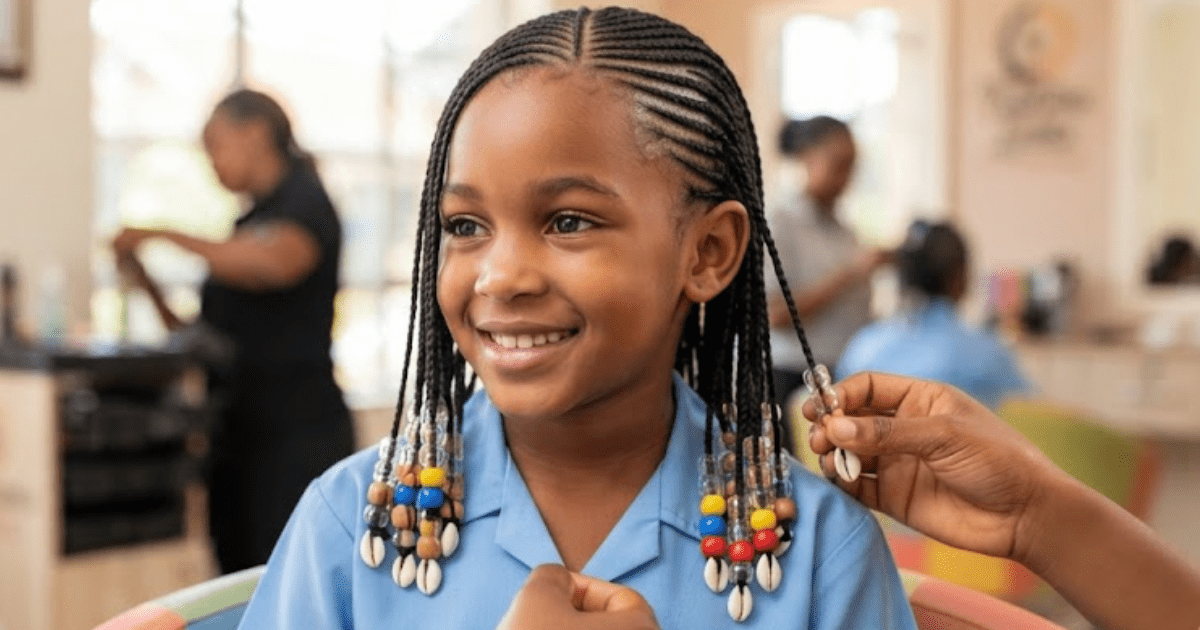
Kids braids hairstyles turn everyday mornings into moments of joy, confidence, and cultural pride for children around the world—from Nairobi playgrounds to London classrooms and New York parks.
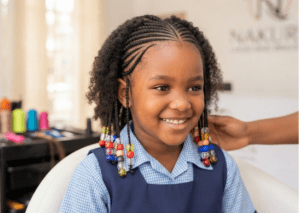
Imagine a little girl racing out the door, her neat cornrows or knotless braids bouncing with colorful beads that catch the sunlight, free from tangles and ready for whatever the day brings.
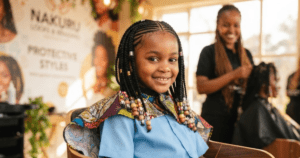
At Nakuru Locks and Braiding in Kenya’s vibrant Nakuru City, families trust these protective styles not only for beauty but for the health of young, growing hair.
This guide explores kids braids hairstyles in depth, answering which braids are best for kids, highlighting kids braids with beads, practical kids braids hairstyles for school, simple kids braids hairstyles for school, kids braids hairstyles pictures (described for inspiration), and kid braid hairstyles natural.
Drawing on salon expertise, dermatological guidance, and real parent experiences, it prioritizes safety, scalp health, and age-appropriate choices so every style supports—not stresses—delicate hair and skin.
Why Kids Braids Hairstyles Matter for Natural Hair Health
Children’s hair, especially Type 3 and Type 4 textures common in African, Afro-Caribbean, and mixed heritage families, is often finer at the roots and more prone to dryness and breakage from daily combing or environmental exposure.
Protective styles like braids reduce manipulation, lock in moisture, and let hair retain length.
Experts emphasize that the key is low tension. Dermatologists warn that repeated tight braiding can contribute to traction alopecia, a form of hair loss from constant pulling on follicles, particularly along the edges and parting lines.
In children this can appear as small, temporary bald patches that usually regrow once the style is loosened or removed, but chronic high tension risks scarring.
Best practice from pediatric dermatology sources includes choosing larger or medium-sized braids, avoiding pain during installation, limiting wear time (often 2–4 weeks for younger kids, up to 4–6 weeks for older ones), and giving hair regular breaks.
Nakuru Locks and Braiding prioritizes gentle techniques and scalp comfort for children, aligning with these principles.
Which Braids Are Best for Kids?
The safest and most recommended options balance protection, comfort, and practicality:
- Knotless braids: These start with the child’s natural hair and gradually feed in extensions, eliminating the heavy knot at the root that creates tension in traditional box braids. They feel lighter, look more natural, and reduce immediate scalp stress—ideal for sensitive young heads. Medium sizes work well for most school-age children.
- Cornrows (including feed-in or stitch styles): Classic, neat, and highly secure for active play. Straight-back, side, curved, or patterned designs keep hair completely out of the face. Feed-in methods add hair gradually for less pull on edges.
- Two-strand twists or flat twists: Often gentler than braids, these create less continuous tension and are excellent for natural hair or as a lower-manipulation alternative.
- Simple three-strand braids or Dutch/French braids: Perfect for shorter appointments and younger children who may not sit long. Double Dutch braids or braided pigtails offer security without complexity.
Avoid ultra-small micro-braids or extremely long, heavy extensions on very young children, as weight and density increase traction risk.
Lightweight synthetic or plant-based braiding hair is often preferred for kids because it is less heavy than human hair for short wear periods.
Recent testing has raised awareness of contaminants in some synthetic products, so choosing higher-quality or hypoallergenic options and taking style breaks is wise.
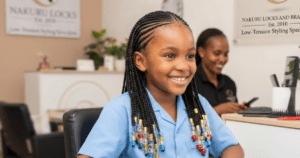
At Nakuru Locks and Braiding, stylists tailor size, length, and tension to the child’s age, hair density, and activity level, ensuring comfort from the first section.
Kids Braids with Beads: Playful Personality Meets Protection
Beads transform a practical style into something magical. Colorful plastic, wooden, metallic, or butterfly-shaped beads add movement, sound, and individuality while helping weigh braids gently so they hang neatly.
Popular combinations include:
- Jumbo or medium knotless box braids finished with wooden or pastel beads.
- Fulani or lemonade-inspired cornrows with gold or bright beads at the ends or along the rows.
- Cornrows ending in beaded tails or half-up styles with beads cascading from a high ponytail or buns.
Safety notes matter: Choose lightweight beads (ideally under 1 gram each for school-age kids), large enough to avoid choking hazards (minimum around 6 mm for younger children), and secure them firmly with stoppers or rubber bands so they do not slide off during play.
Wooden beads are breathable and gentle; avoid heavy metal or oversized pieces that could pull.
Many schools accept neat beaded styles provided they meet dress-code guidelines on color or size—neutral or school-color beads often work best for weekdays, with brighter options saved for weekends.
Kids Braids Hairstyles for School and Simple Kids Braids Hairstyles for School
School days demand styles that survive recess, PE, backpacks, and long hours without constant adjustment.
The best school options stay secure, keep hair off the face and neck, require minimal morning upkeep, and look polished for photos or presentations.
Simple, reliable choices include:
- Straight-back or side cornrows (sometimes finished with a small bun or beads).
- Double Dutch or French braids ending in pigtails or a low ponytail.
- Medium knotless braids pulled into a high or low ponytail, space buns, or half-up style.
- Braided pigtails (classic three-strand, French, or bubble variations) secured with soft elastics.
- Feed-in cornrows transitioning into twists or a single braid.
These can be completed relatively quickly, last through the school week with proper care (light oiling of the scalp, silk or satin bonnet or pillowcase at night, and gentle cleansing as needed), and minimize daily detangling battles.
Parents often report that once installed, morning routines shrink dramatically—just a quick edge smooth or spritz if required.
For very young children or those with limited patience, larger sections and fewer braids reduce chair time while still delivering neatness and protection.
Kids Braids Hairstyles Pictures and Inspiration
While this article cannot display images, visual inspiration typically features:
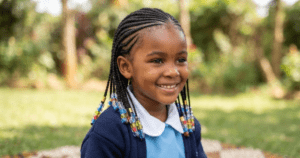
- Neat cornrows with rainbow or metallic beads catching light against dark natural hair.
- Soft knotless braids in shoulder length with wooden beads and a half-up top knot.
- Double Dutch braids with colorful elastics and a few beads at the ends, ideal for sports.
- Patterned cornrows forming hearts, zigzags, or geometric designs that look artistic yet practical.
- Natural-hair-only styles such as flat twists into a pineapple or braided crown with loose curls at the ends.
Searching reputable hairstyle galleries or salon Instagram accounts (including those of skilled African braiders) yields endless variations suited to different hair lengths and textures.
At Nakuru Locks and Braiding, the gallery and real-client transformations showcase the range of kids-friendly work possible with gentle hands.
Kid Braid Hairstyles Natural: Embracing Texture Without Extensions
Not every protective style needs added hair. Kid braid hairstyles natural use only the child’s own strands, reducing weight, cost, and potential product exposure while still offering protection and style.
Favorites include:
- Cornrows or feed-in cornrows on stretched or blown-out natural hair.
- Flat twists, two-strand twists, or braid-outs that can be worn as is or unraveled later.
- Simple three-strand braids, Dutch braids, or braided updos that showcase curl pattern at the ends.
- Braided crowns, half-up styles, or pineapple with braided bases.
These styles excel for shorter hair, sensitive scalps, or parents preferring zero extensions.
They still require moisturizing leave-ins, gentle detangling beforehand, and regular scalp care.
Many children appreciate seeing their own texture celebrated rather than covered.
Installation, Maintenance, and Safety Best Practices
1. Preparation: Wash and deep-condition hair thoroughly. Detangle carefully from ends to roots. Apply a light leave-in suited to children’s hair.
2. During installation: Communicate with the child. Stop or loosen immediately if there is pain, tightness, or bumps. Prefer medium rather than micro sizes for younger kids.
3. Wear time: Younger children often do best with 1–3 weeks; older kids may manage 4–6 weeks maximum. Never exceed recommended periods to avoid matting and excess tension as hair grows.
4. Daily care: Moisturize the scalp lightly with child-safe oils or sprays. Sleep on satin/silk. Avoid heavy products that build up.
5. Takedown: Be gentle. Use conditioner or oil to slip braids out. Follow with a clarifying wash and deep treatment. Give hair a rest period of free styles or low-manipulation looks before the next install.
6. Warning signs: Persistent pain, redness, itching beyond normal adjustment, pustules, or thinning edges signal the need to remove the style and consult a professional if needed.
Nakuru Locks and Braiding’s approach emphasizes hygienic tools, eco-conscious products where possible, and personalized consultation so parents leave confident that their child’s hair and comfort came first.
Frequently Asked Questions
How long should kids keep braids in?
Typically 2–4 weeks for younger children and up to 4–6 weeks for older ones, depending on growth rate, maintenance, and comfort. Longer wear increases risk of matting and tension.
Are beads safe for school and play?
Yes when lightweight, securely fastened, and appropriately sized. Check school policies and supervise younger children.
Can braids cause permanent hair loss?
Only with repeated high tension over long periods. Early intervention (loosening or removing styles) usually allows full regrowth. Knotless and low-tension techniques significantly lower risk.
What is the best first braid style for a toddler or preschooler?
Large cornrows, simple twists, or a few chunky braids with minimal or no extensions. Prioritize speed and comfort.
Do you need extensions for kids braids?
No. Natural-hair-only braids and twists provide excellent protection and are often preferred for the youngest or most sensitive scalps.
How do I maintain moisture?
Light daily or every-other-day scalp spritzes or oiling, leave-in conditioner before braiding, and protective nighttime coverage.
References
-
American Academy of Dermatology (AAD). Hair Care and Scalp Health Guidelines for Children. Focuses on preventing traction alopecia and managing tension in young scalps.
-
Trichological Society Research. The Impact of Protective Styling on Childhood Hair Integrity. Journal of Dermatological Care and Hair Science.
-
Natural Hair Care Association. Moisture Retention and Scalp Maintenance Standards for Developing Hair Textures.
Leave a Reply