
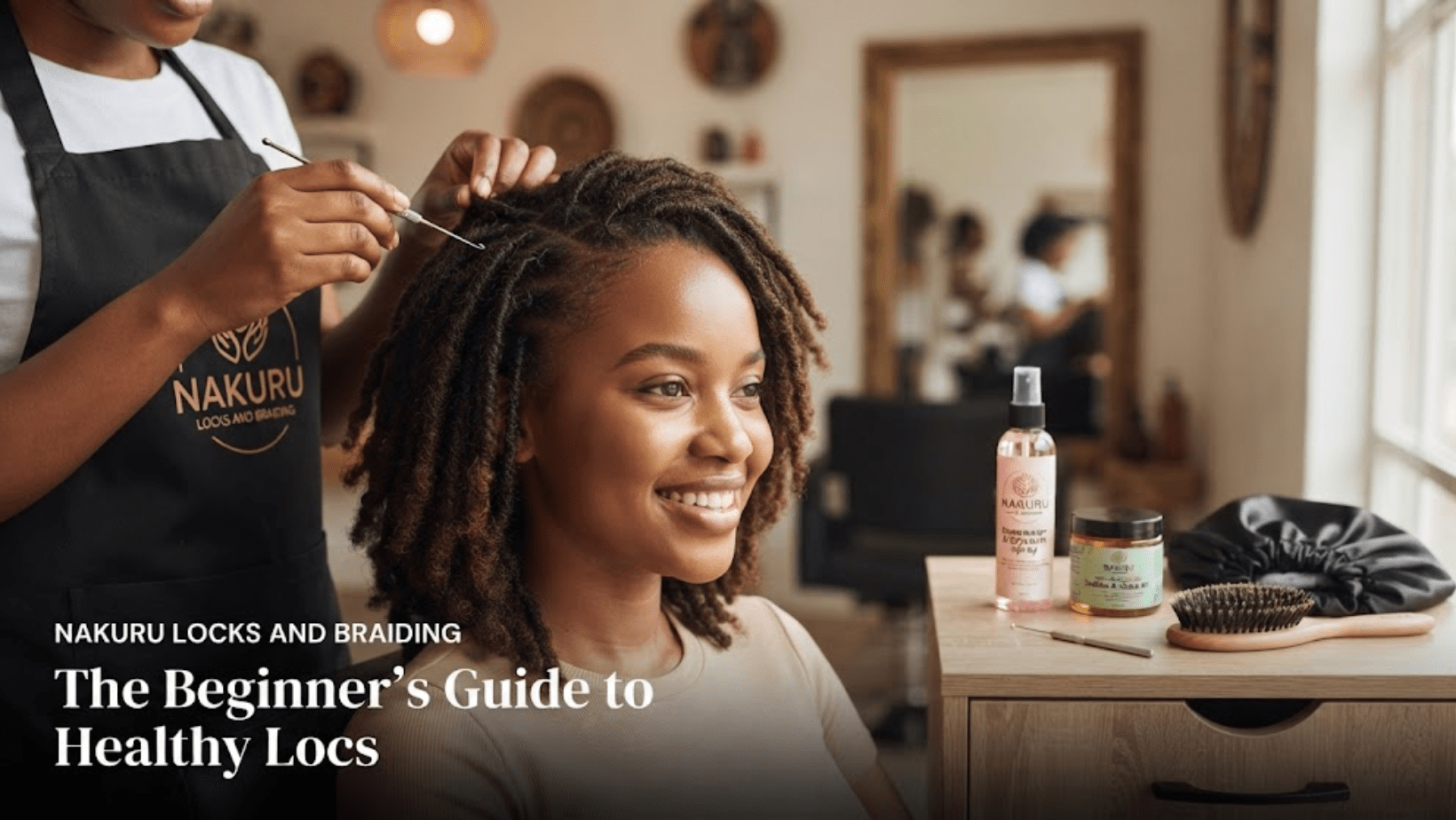
Dreadlock Care for Beginners: The Complete Starter Locs Maintenance Guide
Starting your loc journey is exciting—but without the right care routine, beginner mistakes like product buildup, thinning roots, or mildew can derail months of progress.
This guide breaks down everything you need to know about dreadlock care for beginners, from daily maintenance to retwist schedules, the best loc maintenance products, and how to moisturize locs naturally.
Whether you’re in Nairobi, New York, or anywhere in between, these tips will help you build healthy, long-lasting locs.
What Are Starter Locs and Why Do They Need Special Care?
Starter locs (also called baby locs or beginning locs) are the first phase of the dreadlocking process, typically lasting 3–12 months depending on your hair type and method used.
During this stage, your hair is still learning to lock, making it more prone to unraveling, frizz, and breakage if over-manipulated or weighed down by heavy products.
Common starter loc methods include:
-
Finger coils
-
Interlocking (for tighter curl patterns)
-
Braids (less common for traditional locs)
Each method requires slightly different care, but the core principles—gentle washing, lightweight moisturizing, and minimal manipulation—apply across the board.
How to Maintain Locs Every Day: A Beginner’s Daily Routine
Daily loc maintenance is less about styling and more about protection and hydration. Here’s a simple routine that works for most beginners:
Morning (1–2 minutes)
1. Mist with water or a water-based spray – Use distilled water, rose water, or an aloe vera juice mix to lightly dampen your locs from root to tip.
2. Seal with a drop of lightweight oil – Jojoba, argan, or grapeseed oil work well. Focus on the ends, which dry out first.
3. Cover with a satin or silk bonnet/scarf – This reduces friction and moisture loss throughout the day.
Night (1 minute)
-
Re-cover with a satin bonnet or use a satin pillowcase – Cotton pillowcases cause friction and breakage.
-
Optional: Light scalp massage – Use 2–3 drops of oil to massage your scalp 2–3 times per week to stimulate blood flow.
Hands-off rule: Avoid touching, twisting, or playing with your starter locs daily. Over-manipulation causes frizz and delays the locking process.
How Often Should I Maintain Locs? Retwist Schedule by Loc Stage
One of the most searched questions is: “How often should I retwist my locs?” The answer depends on your loc stage, hair growth rate, and lifestyle.
Key signs it’s time for a retwist:
-
New growth is visible and locs look puffy at the roots
-
Locs start to merge or lose their parting pattern
-
You feel discomfort or tightness from tangled new growth
Pro tip: Wait at least 4 weeks between retwists for starter locs to avoid thinning roots and breakage.
Loc Maintenance Products: What to Use (and What to Avoid)
Choosing the right products is critical for healthy locs. The golden rule: lightweight, water-based, and residue-free.
✅ Best Products for Starter Locs
❌ Products to Avoid for Starter Locs
-
Heavy creams and butters (shea butter, thick leave-ins) – Cause buildup and prevent locking
-
Waxes and petroleum-based products – Trap dirt and lead to mildew
-
Silicone-based conditioners – Coat the hair and block moisture absorption
-
Most regular shampoos – Contain sulfates and conditioners that leave residue
Washing frequency for beginners: Once every 1–2 weeks is ideal. Use warm water to open cuticles and squeeze (don’t rub) locs dry with a microfiber towel or cotton T-shirt.
How to Moisturize Locs Naturally (Without Buildup)
Dry locs are brittle, dull, and prone to breakage—but over-moisturizing with heavy products causes buildup. The solution? Water first, then seal.
Step-by-Step Natural Moisturizing Routine
-
Mist with water or a water-based spray
Fill a spray bottle with distilled water (or 1 part aloe vera juice + 2 parts distilled water). Lightly mist your locs 2–3 times per week. -
Apply a lightweight oil
Warm 2–4 drops of jojoba, argan, or grapeseed oil between your palms. Smooth over your locs, focusing on the ends. -
Optional: Deep condition monthly
For extremely dry locs, apply coconut oil or olive oil, cover with a plastic cap, and sit under a hooded dryer for 30 minutes. Rinse with a clarifying shampoo.
DIY Moisturizing Spray Recipe:
-
2 parts distilled water
-
1 part aloe vera juice
-
3–5 drops of essential oil (lavender, tea tree, or peppermint)
-
Store in the fridge and use within 2 week
Should I Oil My Locs Every Day?
Short answer: No. Oiling your locs daily can lead to buildup, especially for beginners.hairgoalsdaily+1
Recommended oiling schedule:
-
Dry scalp: 2–3 times per week
-
Normal scalp: 1–2 times per week
-
Oily scalp: Once per week or only after washing
How to oil correctly:
1. Mist your locs with water first (oil seals moisture, it doesn’t create it)
2. Use a dime-to-quarter-sized amount of oil for your entire head
3. Massage into your scalp, then smooth down the length of your locs
4. Focus on the ends, which are the oldest and driest part of your locs
Signs you’re over-oiling:
-
Locs feel greasy or coated
-
Scalp feels itchy or clogged
-
Buildup appears as white or gray residue on locs
Loc Maintenance Crochet: What It Is and How It Works
Crochet loc maintenance (also called interlocking or latch hooking) is a technique where a small crochet hook is used to pull the end of a loc through its root, creating a knot that tightens the loc from the inside.
When to Use Crochet Maintenance
-
Best for: Thick, coarse, or fast-growing hair types
-
Ideal for: People who swim, sweat heavily, or want longer-lasting retwists
-
Not recommended for: Very fine or thinning locs (can cause breakage)
Crochet Loc Maintenance Tools
-
Crochet hook: 0.5mm–0.75mm for most loc types
-
Sectioning clips – To isolate parts of your hair
-
Interlocking tool – For full retwists (optional)
How often to crochet: Every 6–8 weeks for mature locs; every 4–6 weeks for starter locs if using this method.
Warning: Over-interlocking can cause thinning at the roots. If you’re a beginner, start with palm-rolling or finger-coiling and consult a professional loctician before trying crochet at home.
Loc Maintenance at Home vs. Professional Services
At-Home Maintenance
Pros:
-
Cost-effective
-
Privacy and convenience
-
Builds self-sufficiency
Cons:
-
Risk of thinning roots if done incorrectly
-
Time-consuming (2–4 hours for a full retwist)
-
Hard to see the back of your head without mirrors
Tools you’ll need for at-home maintenance:
-
Residue-free shampoo
-
Moisturizing spray (water + aloe vera)
-
Lightweight oil (jojoba, argan)
-
Loc gel or aloe vera gel for hold
-
Sectioning clips
-
Satin bonnet or scarf
-
Optional: Crochet hook (0.5mm–0.75mm)
Professional Loc Maintenance
Pros:
-
Expertise in avoiding thinning and breakage
-
Faster service (1–2 hours)
-
Access to professional-grade products
Cons:
-
Higher cost
-
Requires scheduling and travel
Loc Maintenance Price List: What to Expect
Prices vary by location, loctician experience, and loc type. Here’s a general breakdown:
Note: Prices in Nairobi may be lower due to cost of living. Always ask for a consultation before booking.
How to Take Care of Dreads: Black Hair-Specific Tips
Black hair (Type 4A–4C) is naturally drier and more fragile, making moisture and gentle handling critical.
Key Tips for Black Hair Loc Care
1. Wash with warm water – Opens cuticles for deeper cleansing
2. Use sulfate-free, residue-free shampoos – Prevents dryness and buildup
3. Moisturize 2–3 times per week – Use water-based sprays and seal with oil
4. Sleep with a satin bonnet – Reduces friction and breakage
5. Avoid heavy products – Shea butter, waxes, and thick creams cause buildup
6. Trim ends every 6–12 months – Prevents split ends from traveling up the loc
Loc Maintenance Tools: The Essential Kit
Whether you’re maintaining locs at home or just want to know what your loctician uses, here’s the must-have toolkit:
FAQ: Dreadlock Care for Beginners
How often should I wash starter locs?
Every 7–14 days is typical. Adjust for scalp oiliness and activity.
Can I use regular shampoo?
No. Residue-free, loc-friendly formulas are essential to avoid buildup that inhibits locking.
How do I know if my locs are drying out?
They feel brittle, look dull, or break easily. Increase water-based misting and light sealing.
Is crochet maintenance safe for beginners to do at home?
Only after proper training. Improper technique risks damage. Professional service is safer initially.
What is a realistic loc maintenance price list?
Costs vary widely by region, hair length, and method. Expect installation to be higher than ongoing maintenance. Always request a consultation for an accurate quote. At Nakuru Locks and Braiding, pricing is personalized.
How long until locs look “done”?
Most people see significant tightening between 6–18 months, depending on hair type and care consistency.
Related Articles from Nakuru Locks and Braiding
- Dreadlocks Styling for Men: Best Short, Medium & Long Professional Loc Styles
References
-
DreadUSA – “Dreadlocks Maintenance Tips for Beginners”
-
Loctician.co.uk – “Loc Retwist & Maintenance: Cost & How Often”
-
Hairobics All Natural – “Starter Locs Guide: Everything You Need to Begin Your Loc Journey”
-
Hair Goals Daily – “How to Moisturize Locs + Schedule Chart”
-
Black Hair Care 101 – “How To Maintain Dreadlocks”
-
Mercer Street Salon – “6 Best Loc Styling Tools for Retwisting”
-
Lion Locs – “How Often Should You Retwist Locs for Optimal Health and Growth”
-
Nappy N Happy – “Best Ways to Moisturize Dry Locs”
Final Note:
Your loc journey is unique. What works for someone else may not work for you.
Start with these beginner guidelines, listen to your hair, and adjust as needed.
When in doubt, consult a professional loctician—especially for your first retwist or if you notice thinning, breakage, or persistent buildup.
Ready to start your loc journey? Book a consultation with Nakuru Locks and Braiding today and get personalized advice for your hair type and goals.
Leave a Reply