
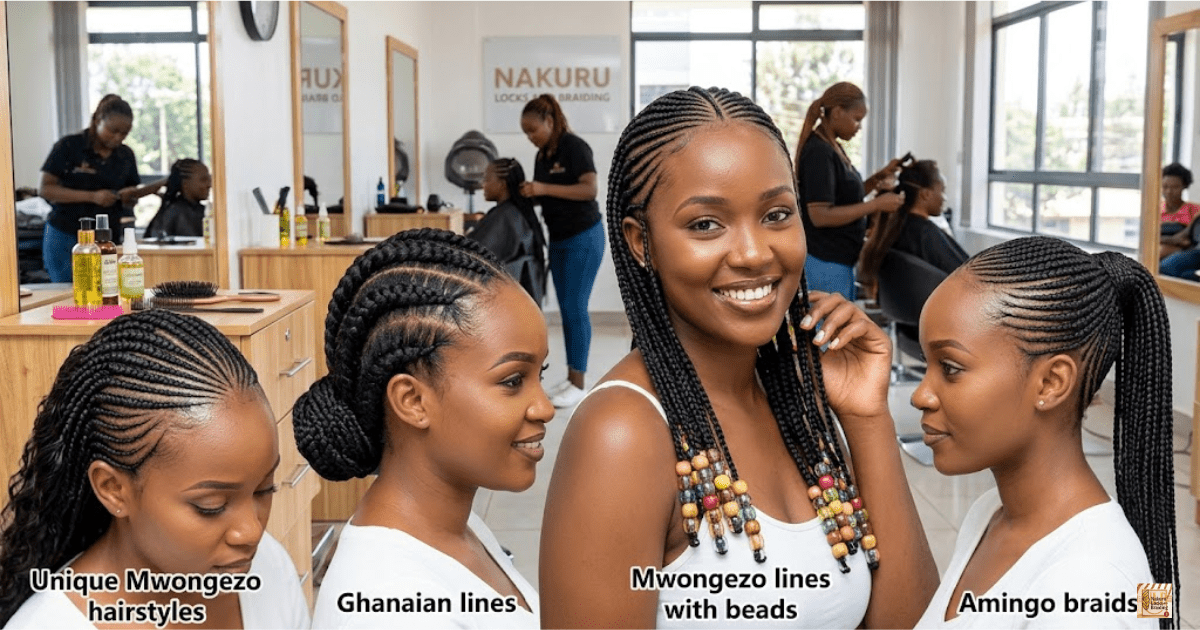
Mwongezo Lines Styles vs. Mwongezo Hairstyles: The Ultimate Guide to Trending Kenyan Braids
Across East Africa and globally, the art of African hair braiding has evolved from a cultural tradition into a modern form of self-expression.
Among these protective styles, the term Mwongezo stands out. Rooted in the Swahili word for “addition” or “extension”, it represents the sophisticated technique of seamlessly adding hair extensions to natural hair while braiding. This creates cornrows that are long-lasting, beautifully defined, and extremely neat.
At our salon, we believe that understanding the subtle differences between styles is the key to achieving the perfect look.
Whether you call them Mwongezo lines, Ghanaian lines, or Amingo braids, you are participating in a lineage of African hair artistry that prioritizes both scalp health and visual impact, this comprehensive guide provides the technical knowledge, styling inspiration, and maintenance tips you need.
At Nakuru Locks and Braiding, located in Mt. Sinai Building on Bazaar Road in Nakuru City, we’ve spent over 13 years perfecting these styles.
Our expert stylists blend tradition with modern trends, using high-quality extensions and eco-friendly practices to create looks that boost confidence and protect your hair. This comprehensive guide dives deep into everything you need to know.
What Are Mwongezo Hairstyles? Defining the Trend
Mwongezo hairstyles refer to a popular category of Kenyan braided styles characterized by precise, artistic parting and cornrowing techniques.
The term “Mwongezo” (often linked to “lines” or detailed patterning) typically describes cornrows or feed-in braids with intricate geometric or linear designs, frequently combined with extensions for length and volume.
These styles are versatile:
- Front-focused designs with clean lines at the hairline transitioning to freer styles or rastas at the back.
- All-over patterns creating a uniform, sculpted look.
- Half-and-half variations blending cornrows with singles, twists, or loose curls.
Mwongezo stands out for its adaptability to Kenyan lifestyles—durable for daily wear, school, work, or special occasions like weddings.
They are protective styles that minimize manipulation of natural hair while allowing creativity through beads, attachments, and color.
Mwongezo Lines Styles vs. Mwongezo Hairstyles: Key Differences
While the terms overlap, nuances matter for choosing the right look:
- Mwongezo Hairstyles is the broader umbrella. It encompasses any braided or cornrowed style featuring “mwongezo” elements—detailed parting, stitching, or linear designs. This includes fancy, unique, trending, and simple variations for ladies, often with attachments, beads, or half styles.
- Mwongezo Lines Styles (or Mwongezo Lines) emphasize the parting and braiding technique itself. Think ultra-fine, pencil-like straight or curved lines (similar to “pencil lines” or “Abuja lines”). These create a clean, geometric scalp pattern before feeding in hair for the braid. The focus is on precision and artistry in the base design.
Mwongezo Back Lines Styles, for example, feature intricate linear patterns at the nape or back, while the front might have bolder designs. Half Mwongezo hairstyles might show lines in the front cornrows with flowing singles or curls in the back.
In practice, clients at Nakuru Locks and Braiding often request “Mwongezo lines” when they want visible, artistic scalp art, versus full “Mwongezo hairstyles” for overall aesthetic impact with extensions.
Amingo vs. Ghanaian Lines: Choosing Your Extension and Technique
Two key comparisons frequently arise in Kenyan salons:
Amingo primarily refers to a premium braid extension hair brand (often Amigo or similar Toyokalon fiber). It’s ultra-light, soft, tangle-free, available in long lengths (e.g., 27 inches), and ideal for hot-water setting or vibrant colors.
Amingo extensions are favored for Mwongezo hairstyles with attachment because they add volume without weighing down the head, making them perfect for fancy Mwongezo hairstyles or trending Mwongezo hairstyles.
Ghanaian Lines (or Ghana weaving/lines) is a technique originating from West Africa but hugely popular in Kenya. It involves tight, feed-in cornrows with hair added progressively (“nyongeza” meaning addition).
“Pencil lines” or “yebo” are related terms for the fine parting and stitching. Ghanaian lines create a seamless, natural scalp blend and are often used in Mwongezo lines styles.
Amingo vs. Ghanaian Lines Comparison:
- Material/Technique: Amingo = extension hair type (soft, lightweight synthetic). Ghanaian Lines = braiding method (feed-in cornrows with precise lines).
- Durability: Both last 4–8 weeks with proper care. Ghanaian lines offer tighter hold; Amingo adds luxurious feel.
- Look: Ghanaian lines give a classic, sculpted base ideal for Mwongezo back lines. Amingo shines in unique Mwongezo hairstyles with curls or beads.
- Best For: Use Amingo hair in Ghanaian lines technique for the ultimate hybrid—lightweight yet structured Mwongezo hairstyles.
| Feature | Ghanaian Lines | Amingo Braids |
| Braid Volume | High / Tapered | Low / Uniform |
| Scalp Tension | Moderate | Low |
| Longevity | 2-4 Weeks | 3-5 Weeks |
| Aesthetic | Bold & Textured | Sleek & Refined |
At our Nakuru salon, we recommend Ghanaian lines bases with Amingo or similar quality attachments for clients wanting longevity and comfort.
Trending Mwongezo Hairstyles for Ladies in Kenya (2026–2027)
Kenya’s beauty scene evolves rapidly, with TikTok and local salons driving innovation. Current favorites include:
- Simple Mwongezo Styles for Ladies: Clean 4–6 cornrows with subtle lines—perfect for everyday or school.
- Best Mwongezo Hair Style: The “Half Mwongezo” — lines/cornrows in front, knotless or singles in back for versatility.
- Mwongezo Hairstyles with Beads: Add wooden, glass, or metallic beads for cultural flair and movement. Great for fancy or ceremonial looks.
- Mwongezo Hairstyles with Attachment: Feed-in or crochet for length—ponytails, updos, or butterfly effects.
- Unique and Latest Hairstyles Mwongezo Styles in Kenya: Geometric patterns, stitch lines, color pops, or hybrid with rastas/twists.
- Mwongezo Back Lines Styles: Detailed nape designs that peek beautifully under headscarves or updos.
Trending Combinations:
- Front Mwongezo lines + back free-flowing curls.
- All-back Mwongezo with beads.
- Pencil-thin Ghanaian lines across the entire head.
Hair Health & Scalp Maintenance for Mwongezo Styles
No matter which style you choose, keeping your hair and scalp healthy is essential for getting the most out of your look.
Hydrate and Nourish the Scalp
Because cornrows leave sections of your scalp exposed, regular hydration is important.
-
Mist Daily: Use a water-based spray mixed with a lightweight oil like jojoba or sweet almond oil to keep the scalp moisturized.
-
Targeted Oils: Apply a small amount of peppermint or tea tree oil to soothe itchiness and support healthy scalp circulation.
Manage Tension Carefully
To prevent traction alopecia along the hairline, make sure your stylist uses a gentle touch when starting each braid.
-
Avoid Over-Feeding: Do not add large pieces of extensions too close to the roots, especially around the delicate edges.
-
Listen to Your Scalp: If a braid feels painful or pulls your skin, ask the stylist to loosen it immediately.
Nighttime Protection
Keep your lines looking smooth and reduce frizz by protecting your hair while you sleep.
-
Wear a Silk or Satin Bonnet: This reduces friction against your pillowcase, which keeps the hair from drying out and prevents flyaways.
-
Use a Silk Scarf: For flat cornrow styles, tying a silk scarf snugly around the head helps keep the partings crisp and neat.
Why Choose Nakuru Locks and Braiding for Your Mwongezo Style?
With 13+ years of experience, our team excels in hygiene, precision, and customization. We use premium products, offer personalized consultations, and prioritize scalp health. Services include cornrows, box braids, sisterlocks, and more—all in a welcoming Nakuru environment.
Pro Tips for Longevity:
- Moisturize daily with lightweight oils.
- Avoid tight ponytails initially.
- Schedule maintenance every 4–6 weeks.
- Protect edges during installation.
FAQ: Your Mwongezo Questions Answered
Q: How long do Mwongezo hairstyles last?
A: 4–8 weeks depending on care and growth. Ghanaian lines bases tend to hold longer.
Q: What’s the difference between Mwongezo lines and Ghanaian lines?
A: Mwongezo is the Kenyan adaptation emphasizing artistic lines; Ghanaian lines focus on the feed-in weaving technique. They are often used interchangeably in practice.
Q: Is Amingo hair better than others for attachments?
A: Yes for lightness and softness, but quality matters most. We stock and recommend top-grade options.
Q: Are these styles suitable for all hair types?
A: Absolutely—our stylists adapt to natural, relaxed, or textured hair.
Q: How much do Mwongezo styles cost in Nakuru?
A: Varies by complexity and length; contact us at 0723 168 188 for current pricing.
Q: Can I add beads or color?
A: Yes! We specialize in Mwongezo hairstyles with beads and creative coloring.
Related Articles from Nakuru Locks and Braiding:
Ready to transform your look?
Visit Nakuru Locks and Braiding at Mt. Sinai Building, Bazaar Rd, Nakuru City. Call/WhatsApp 0723 168 188 to book your Mwongezo consultation today. Let’s create a style that tells your story—elegant, cultural, and confidently you.
References
-
The Biology of African Hair – Journal of Investigative Dermatology.
-
Traditional African Hairstyles and Their Modern Evolutions – African Fashion Research Institute.
-
Trichology and Protective Styling: A Comprehensive Manual (2025 Edition).
-
Chick About Town on Mwongezo Lines
-
Standard Media on African Braids
-
TikTok Trends (Various)
Leave a Reply