
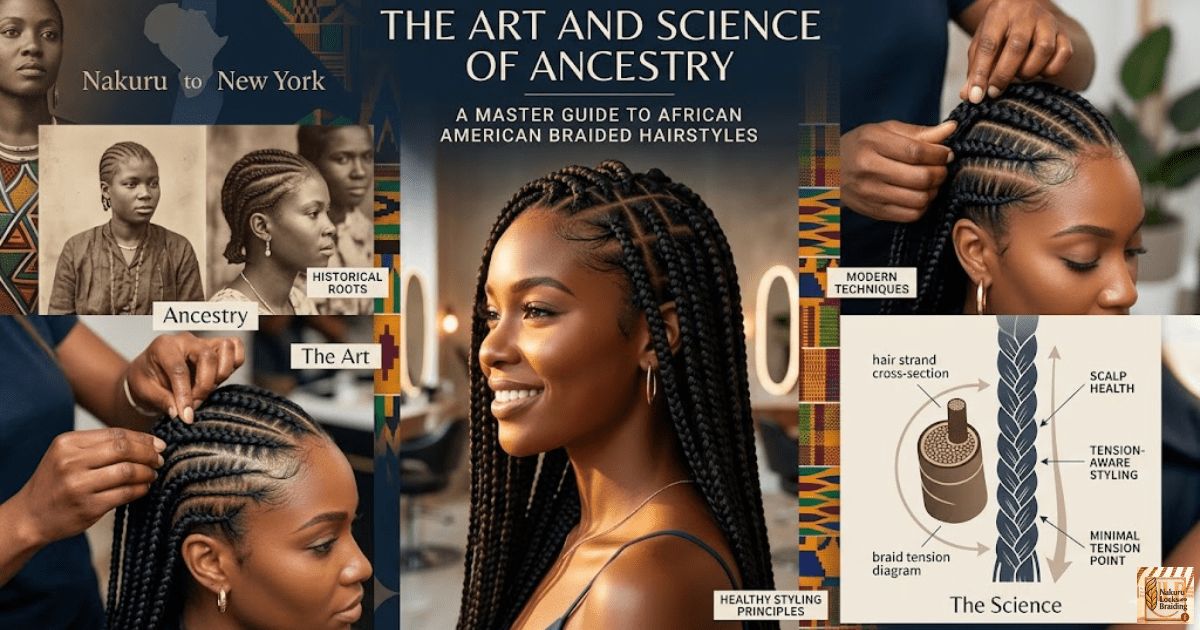
The Art and Science of Ancestry: A Master Guide to African American Braided Hairstyles
The hum of a busy salon is a universal language. From the vibrant streets of Nakuru to the bustling avenues of New York City, the rhythmic “under-over” tuck of a stylist’s fingers creates more than just a look; it weaves a story of identity, resilience, and unparalleled artistry.
For African American women, braided hairstyles are not merely a fashion trend—they are a cultural heartbeat. They represent a sophisticated intersection of ancient heritage and modern innovation, requiring both a surgeon’s precision for scalp health and an artist’s eye for geometry.
Whether you are walking into Nakuru Locks and Braiding for your first set of knotless braids or researching styles from across the Atlantic, understanding the depth of these techniques is essential for achieving a look that is as healthy as it is beautiful.
The Historical and Cultural Significance of Braiding
Braiding in the African Diaspora is an intricate craft that dates back thousands of years. Historically, braids were used to signify a person’s tribe, age, marital status, wealth, and even religion. During the Middle Passage and the subsequent centuries in the Americas, these styles became a tool for survival and secret communication.
In contemporary culture, “braided hairstyles for African American women” have evolved into a global phenomenon. However, the core remains the same: a celebration of textured hair. According to research on the socio-cultural history of Black hair, braiding serves as a protective measure against environmental stressors while allowing for immense creative expression.
Why “Protective Styling” Matters
The term protective styling refers to any hair configuration that keeps the ends of the hair tucked away and minimizes manipulation. Because type 4 hair (coily/kinky) is naturally more fragile due to the shape of the hair follicle, braiding prevents breakage and aids in length retention.
Defining Modern Braided Hairstyles for African American Women
The versatility of braided styles is nearly infinite. Below, we break down the most authoritative styles currently leading the industry.
A. Knotless Braids: The Gold Standard of Comfort
Unlike traditional box braids, knotless braids begin with your natural hair and gradually incorporate extensions.
-
The Benefit: This eliminates the “knot” at the scalp, significantly reducing tension on the hair follicle.
-
The Look: They lie flat, look remarkably natural, and allow for immediate styling without the “tightness” headache.
B. Box Braids (Traditional & Bohemian)
Box braids are characterized by square-shaped (or triangle) hair divisions.
-
Traditional: Sleek, uniform, and timeless.
-
Bohemian: Incorporates loose curls throughout the braid for a whimsical, voluminous aesthetic.
C. Cornrows and Ghanaian Lines
Cornrows are the foundation of many African braiding techniques. In the context of African American styles, they are often used for:
-
Feed-in Braids: Where hair is added gradually to create a seamless, natural-looking taper from thin to thick.
-
Goddess Braids: Larger, thicker cornrows that sit high on the scalp, often adorned with gold cuffs or thread.
D. Fulani Braids
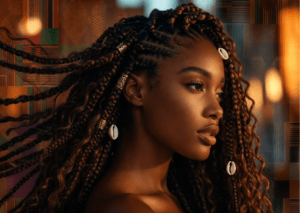
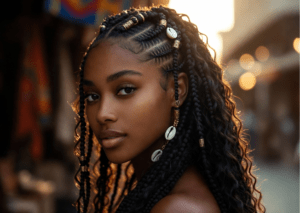
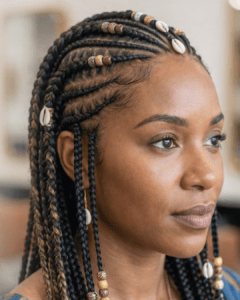
Inspired by the Fula people of West Africa, these styles usually feature a central cornrow braided toward the back, with side braids directed toward the front, often decorated with beads and cowrie shells.
The Science of Scalp Health and Tension-Aware Styling
As industry leaders, we prioritize the biology of the hair over the aesthetic alone. A common misconception is that braids must be “tight” to last. In reality, excessive tension can lead to Traction Alopecia, a form of hair loss caused by repeated pulling on the roots.
The Anatomy of a Healthy Braid
-
Follicle Protection: The weight of the extension must be proportional to the density of the natural hair section.
-
Moisture Balance: Braids should never be installed on dry, brittle hair. A deep-conditioning treatment is a mandatory prerequisite.
-
Edge Control: The “baby hairs” at the hairline are the most fragile. A professional stylist will always leave these out or braid them with zero tension.
Maintenance and Longevity: A Professional Guide
To keep your braided hairstyles looking fresh for 6 to 8 weeks, follow this expert regimen:
Weekly Scalp Care
-
Cleansing: Use a diluted sulfate-free shampoo or a witch hazel-based scalp cleanser. Focus on the tracks between the braids.
-
Hydration: Apply a lightweight leave-in conditioner spray. Avoid heavy greases that cause “build-up” at the root.
Nighttime Routine
-
The Silk/Satin Rule: Always sleep with a silk or satin scarf/bonnet. This reduces friction, which prevents frizz and keeps the braids neat.
Global Trends: The “Nakuru to New York” Connection
The beauty industry is more connected than ever. Techniques perfected in Nairobi are mirrored in salons in Atlanta and London. The current trend is moving toward low-tension, high-impact styles. We see an increase in “Amingo Braids” and “Crotchet Braids” as women seek ways to change their look in half the time without compromising their natural hair health.
Frequently Asked Questions (FAQ)
Q: How long do braided hairstyles for African American women typically last? A: Depending on the style and maintenance, braids should be kept in for 4 to 8 weeks. Keeping them in longer can lead to matting at the root and potential breakage.
Q: Can I wash my hair while it is in braids? A: Yes. In fact, it is recommended. A clean scalp promotes hair growth. Use a spray bottle for targeted washing to avoid making the braids too heavy with water.
Q: Are braids bad for your edges? A: Not if they are done correctly. Tension-aware styling ensures that the delicate hair along the perimeter of your face is protected, not pulled.
Q: What is the difference between “Cornrows” and “Ghanaian Lines”? A: While both are braided flat to the scalp, Ghanaian lines (or Ghana braids) typically use a “feed-in” method to create a distinct, raised look that starts very thin at the hairline and gets thicker toward the back.
Related Articles from Nakuru Locks and Braiding
If you found this guide helpful, explore our other professional resources:
-
The Ultimate Guide to Amingo Braids: History and Maintenance
-
Protecting Your Crown: How to Prevent Tension Alopecia
-
Ghanaian Lines vs. African Cornrows: Which Style is Right for You?
Conclusion: Investing in Your Beauty
Braided hairstyles for African American women are more than trends—they’re living history, practical protection, and bold self-expression. Whether you seek classic cornrows or trendy knotless looks, the right style can transform not just your hair but your confidence.
Ready to experience authentic, expert braiding? Visit Nakuru Locks and Braiding at Mt. Sinai Building, Bazaar Road, Nakuru City, Kenya. Book via WhatsApp (+254 723 168 188) or our website. Our team celebrates every client’s unique story with precision, care, and cultural res
Your hair is your crowning glory—let us help you wear it with pride and health.
Sources
-
Dermatology Research: Studies on Traction Alopecia in Women of Color emphasize the importance of professional installation and avoiding excessive weight in extensions.
-
Cultural History: Hair Story: Untangling the Roots of Black Hair in America by Ayana Byrd and Lori Tharps provides deep context on the evolution of these styles.
-
Trichology Standards: Professional braiding associations recommend a “tension-free” approach to preserve the integrity of the dermal papilla.
- Byrd, Ayana, and Lori L. Tharps. Hair Story: Untangling the Roots of Black Hair in America.
- American Academy of Dermatology: Black Hair Care Guidelines.
- WebMD: Hair Braiding Styles, Maintenance, and Safety.
- Smithsonian NMAAHC: Strands of Inspiration.
Leave a Reply