
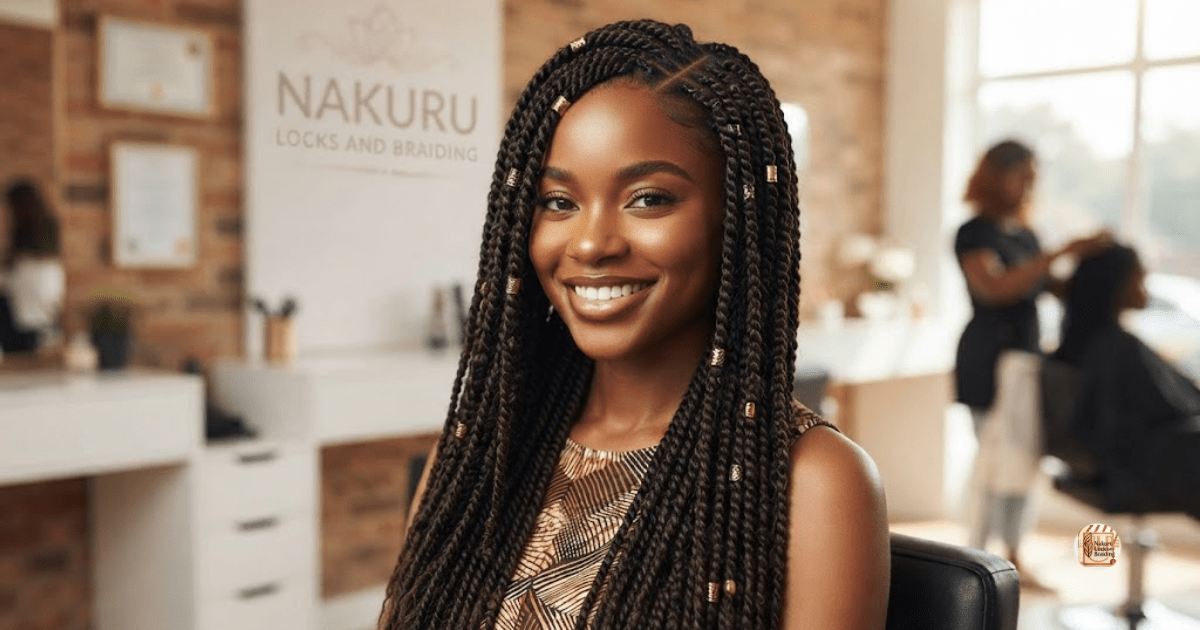
Mini Twists Hairstyles: The Complete Guide to Protective Styling, Hair Growth, and Care
Mini twists hairstyles have become a global favorite for natural hair lovers seeking low-manipulation protection, versatility, and style that travels from Nairobi streets to New York sidewalks and beyond.
Whether you are growing out a big chop, protecting 4C coils through Kenya’s dusty dry season, or simply wanting a chic look that lets your scalp breathe, mini twists deliver.
At Nakuru Locks and Braiding in the heart of Nakuru City, Kenya, our stylists see clients of every texture and length fall in love with this protective style—on natural hair alone or enhanced with extensions.
This complete guide covers everything: what mini twists are, how they affect your hair, step-by-step installation, the best hair to use, packing quantities, styling for short hair, options for men and women, and the many types of twists available.
We draw on professional salon experience, dermatologist insights, and trusted beauty resources so you can make informed, healthy choices.

What Are Mini Twists and Why Do They Matter for Natural Hair?
Mini twists are small two-strand twists created by dividing hair into fine sections (typically pencil-width or smaller) and wrapping the two halves around each other from root to tip.
They differ from larger two-strand twists or Senegalese twists by their delicate scale, which creates denser coverage, more volume on shorter lengths, and a refined texture.
On natural hair they shine because they:
- Keep ends tucked and protected from friction and environmental stress.
- Reduce daily manipulation that leads to breakage.
- Lock in moisture when installed on properly prepped, hydrated hair.
- Offer a lightweight alternative to heavier braids or weaves.
Celebrities and everyday wearers alike have popularized the look. The style works beautifully on type 3 and type 4 textures and can be worn as a finished style or later opened into a defined twist-out.

What Do Mini Twists Do to Your Hair? Benefits and Realistic Expectations
Properly installed mini twists support length retention by shielding the ends and minimizing combing and heat.
Moisture stays trapped inside the twists longer than in loose hair, which helps combat dryness. Many people notice less breakage and healthier-looking ends after consistent protective styling cycles.
Important clarifications from experts:
- Mini twists do not accelerate the biological rate of hair growth (governed by hormones, nutrition, and genetics). They help you keep more of the length you grow by reducing mechanical damage.
- Low tension is key. Excessively tight twists or prolonged wear without cleansing can contribute to traction stress or matting.
- Ideal wear time is generally 2–4 weeks for natural-hair mini twists (some stretch to 6 weeks with excellent care). Longer wear risks root matting and single-strand knots at the ends.
When done with care—clean scalp, moisturized strands, and gentle tension—mini twists are among the gentlest long-term protective options available.

How Many Types of Twists Are There?
Understanding the family of twists helps you choose the right style:
- Two-strand twists: The foundation—any size sections of natural hair twisted together.
- Mini / micro twists: Pencil-thin or smaller sections for maximum definition and coverage.
- Flat twists: Twisted close to the scalp in rows, similar to cornrows but using the two-strand method.
- Senegalese (rope) twists: Often use silky synthetic or human hair and create a smoother, rope-like finish.
- Marley, Havana, passion, and spring twists: Extension-based styles with varying textures and bounce.
- Nubian or kinky twists: Textured extensions that blend with coily natural hair.
Mini twists sit at the refined, natural-hair-friendly end of this spectrum and can be done with or without added hair.

Mini Twists on Natural Hair (No Extensions)
This is the purest version and ideal for those prioritizing scalp health and minimal weight.
Hair should ideally be at least 2–3 inches long for secure twists, though skilled stylists can work with slightly shorter lengths by using smaller sections and good hold products.
Benefits of no-extension mini twists:
- Lightest option with least tension on edges.
- Easiest takedown.
- Perfect for assessing true length and density.
- Excellent for short natural hair or big-chop stages.

Mini Twists with Extensions and Natural Hair Extensions
Adding hair creates length, fullness, and sometimes a different texture. Popular choices include Afro-kinky bulk human hair, springy twist hair, or textured human hair that matches 3C–4C patterns.
Human hair blends most seamlessly and can be reused; high-quality synthetic kinky bulk is more affordable and holds shape well.
How many packs of hair for mini twists? It depends on desired length, density, and section size. Common ranges reported by stylists and DIY users:
- Small/detailed mini twists: often 4–6 packs (or more for very long or full looks).
- Medium mini twists: 3–5 packs.
- Shorter or finer results: fewer packs may suffice.
Always buy a little extra and match texture closely for the most natural finish. At Nakuru Locks and Braiding we assess your density and goals during consultation so you never over- or under-buy.

Best Hair for Mini Twists and Which Hair Is Best for Twists Overall
For natural-looking mini twists:
- Best overall: 100% human Afro-kinky or 4A/4B/4C textured bulk hair—blends, moves, and moisturizes like your own.
- Strong alternatives: Pre-stretched or springy synthetic kinky hair designed for twists.
- Avoid overly silky or straight synthetic if you want a coily aesthetic.
Match the curl pattern and color as closely as possible. Pre-separated or lightly pre-stretched packs save installation time.
How to Do Mini Twists Step by Step
Preparation is everything. Work on freshly washed, deep-conditioned, detangled hair that is damp (not dripping).
1. Cleanse and condition: Use a sulfate-free shampoo and a moisturizing deep conditioner. Rinse thoroughly.
2. Apply leave-in and seal: Work in a leave-in conditioner, then a light oil or butter to lock moisture.
3. Section: Divide hair into 4–6 large sections and clip them. Work from the back forward or nape upward.
4. Create small parts: Using a rat-tail comb, part out a small square or rectangular section (¼–½ inch or pencil width for true mini twists).
5. Product the section: Apply a pea-sized amount of twisting cream, gel, or butter for definition and hold.
6. Twist: Split the section into two equal strands. Twist each strand slightly on itself, then wrap them around each other in a consistent direction (usually following your natural curl pattern) from root to tip.
7. Seal the ends: Twirl the ends around your finger to create a small coil or add a tiny bit of extra product so the twist stays closed.
8. Repeat: Continue section by section until the entire head is complete. Dry fully under a hooded dryer or air-dry to set the style.
9. With extensions: Fold a small piece of bulk hair and incorporate it at the root (or after a short braid of natural hair for grip), then continue the two-strand twist. Keep tension moderate—never painful.
Installation time ranges from 2–8+ hours depending on hair length, density, section size, and whether extensions are added.
Many clients prefer a professional install at a salon like Nakuru Locks and Braiding for even tension, clean parts, and scalp comfort.

Mini Twists on Short Natural Hair and How to Style Short Mini Twists
Short hair (2–4 inches) benefits enormously from mini twists because the small sections create the appearance of more volume and density.
Use smaller parts and a strong-hold but flexible product. Starting with a short braid at the root before twisting can improve longevity on fine or short hair.
Easy styling ideas for short mini twists:
- High or low puff.
- Half-up half-down with the front twists framing the face.
- Side or middle part for a sleek look.p
- Space buns or mini buns.
- Accessorized with beads, cuffs, or a headband.
- Front fringe/bangs created by leaving a few twists shorter or styled forward.
Nighttime care is simple: satin/silk bonnet or scarf, and occasional light oil on the scalp. Refresh with a water-based mist and light cream as needed.
Mini Twists Hairstyles for Women and Men
For women:
Classic down styles, high ponytails, elegant updos, side-swept looks, and color accents (subtle highlights or ombré ends) are popular. Mini twists photograph beautifully and transition easily from casual to formal.
Mini twists for men:
Extremely popular on natural textured hair. Short mini twists paired with a low or mid fade create a clean, modern silhouette suitable for professional and casual settings.
They add texture and volume without daily styling. Men often wear them for 3–6 weeks with regular scalp cleansing. Classic two-strand or mini versions work well; some combine with hard parts or tapered sides.
Both genders benefit from the same core principles: clean installation, moisture maintenance, and timely takedown.
Mini Twists Hairstyles Pictures and Inspiration
Imagine dense, springy coils framing the face; a soft bob of mini twists with a deep side part; short textured mini twists on a man with a sharp fade; long extension-enhanced mini twists cascading past the shoulders; or an elegant updo gathered loosely with a few face-framing pieces.
These looks appear across social platforms and celebrity red carpets, proving the style’s universal appeal. At Nakuru Locks and Braiding our gallery regularly features real client transformations in these exact styles.
Caring for Your Mini Twists and Avoiding Common Pitfalls
- Moisturize scalp 2–3 times weekly with a light oil.
- Cleanse gently with diluted shampoo applied via applicator bottle.
- Sleep on satin.
- Avoid excessive pulling or fiddling.
- Take down carefully: oil the twists, unravel gently from the ends upward, and detangle with fingers or a wide-tooth comb under running water or with conditioner.
Potential issues include frizz (normal with time and humidity), root matting if worn too long, or dryness if moisture is neglected. Regular protein-moisture balance treatments between installs keep hair strong.
Why Choose Professional Installation at Nakuru Locks and Braiding?
Located in the Mt. Sinai building on Bazaar Road, Nakuru City, our team brings years of specialized experience in natural hair, protective styles, locks, and extensions.
We prioritize scalp health, even tension, and styles that celebrate African-textured hair.
Whether you want pure natural mini twists, extension length, or a custom hybrid, we tailor every install.
Book via WhatsApp +254 723 168 188 or visit nakurulocksandbraiding.com.

FAQ
How long do mini twists last?
Typically 2–4 weeks on natural hair; up to 6 weeks with excellent care and smaller sections. Extensions may extend wear slightly but require the same vigilant moisture routine.
Can I wash my mini twists?
Yes. Dilute shampoo, focus on the scalp, rinse thoroughly, and re-moisturize.
Do mini twists cause breakage?
Not when installed and maintained properly. Excessive tension, dryness, or aggressive takedown are the real culprits.
Are mini twists suitable for all hair types?
Best on textured hair (3A–4C). Looser textures may need more product hold or smaller sections to stay defined.
How much do mini twists cost?
Prices vary by length, density, and whether extensions are used. Contact Nakuru Locks and Braiding for a personalized quote.
Related Articles from Nakuru Locks and Braiding
Mini twists are more than a trend—they are a practical, beautiful way to honor and protect natural hair while expressing personal style.
Whether you install them at home or trust the expert hands at Nakuru Locks and Braiding, start with healthy hair, gentle technique, and consistent care.
Your coils will thank you with retained length, improved manageability, and endless styling possibilities. Ready to try them? Reach out today and let’s create your next favorite look.
References
- Allure magazine coverage of mini twists as a protective style and installation guidance.
- Essence feature on mini twists for moisture retention and length protection.
- Insights from board-certified dermatologists and trichology-focused stylists on growth myths versus retention reality.
- Professional technique summaries from experienced natural-hair educators and WikiHow-style tutorials refined by salon practice.
Leave a Reply