
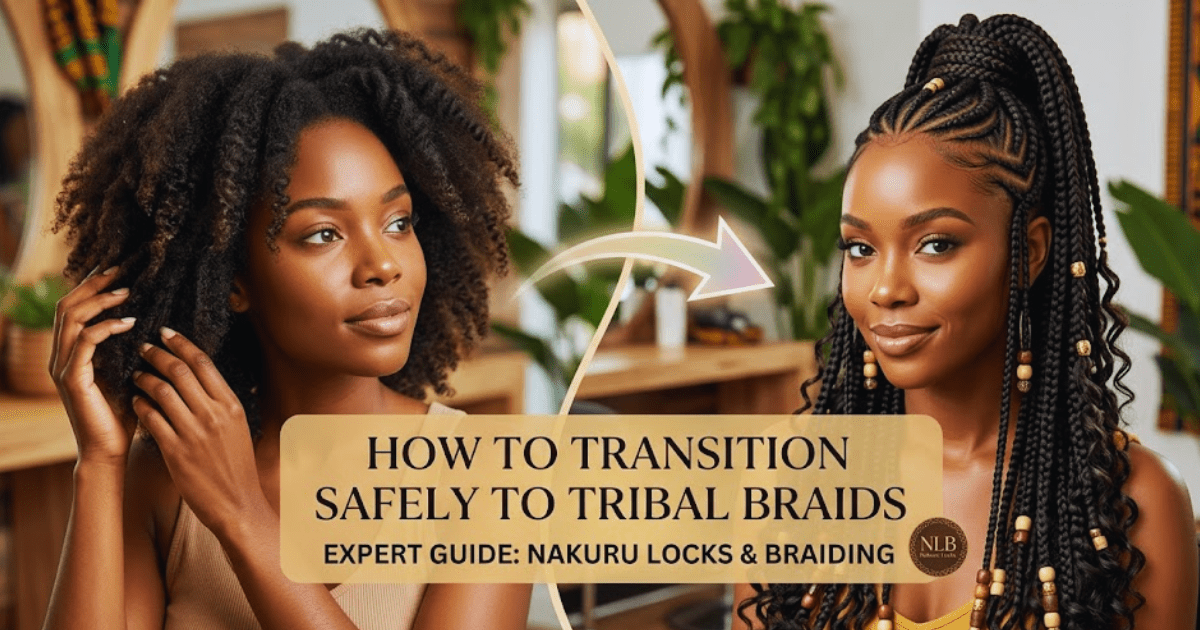
How to Transition from Natural Hair to Tribal Braids Safely: Expert Guide from Nakuru Locks and Braiding
Imagine waking up in your Nairobi apartment, running your fingers through chemically straightened hair that feels nothing like the thick, coiled crown your grandmother once praised in stories of Maasai and Kikuyu heritage. Or picture yourself in London, New York, or Lagos—thousands of miles from Kenya—yearning to reconnect with African roots while protecting fragile strands damaged by relaxers, heat, and daily wear.
This is the moment countless women experience: the quiet decision to transition from natural hair (or previously processed hair) to tribal braids. It’s more than a hairstyle change—it’s a cultural homecoming, a protective shield for your strands, and a celebration of identity that spans continents.
At Nakuru Locks and Braiding in Nakuru City, Kenya—right on Bazaar Road in the Mt. Sinai building—we’ve guided hundreds of clients through this exact journey. Our eco-friendly, Afrocentric salon specializes in braids, locs, and extensions that honor traditional African techniques while prioritizing hair health.
Whether you’re in Kenya or tuning in from abroad, this guide delivers everything you need: history, safe steps, detailed breakdowns of popular variations, aftercare, and expert tips grounded in real hair science and cultural wisdom.
Preparing Your Natural Hair for a Safe Transition
Before any braids, assess your hair:
1.Consult a professional: Book at Nakuru Locks and Braiding for a free scalp analysis.
2. Deep cleanse and condition: Use sulfate-free shampoo and a protein-rich deep conditioner. Avoid if your hair is overly dry or broken.
3. Detangle gently: Finger-detangle or use a wide-tooth comb on wet, conditioned hair.
4. Trim split ends: Essential for relaxed hair transitioning out.
5. Moisturize: Apply shea butter or natural oils. Healthy hair holds braids better.
Pro tip: Never braid on dirty, tangled, or chemically compromised hair. Tension from tight braids causes traction alopecia—our experts use knotless techniques to minimize this.
The Foundation: Preparing Natural Hair for Tribal Braids
Before diving into specific styles, the transition must begin with a detox and hydration protocol. Natural hair is most vulnerable at the point of extension attachment.
-
Clarification: Remove product buildup with a sulfate-free clarifying shampoo to ensure the scalp is a clean canvas.
-
Protein-Moisture Balance: A deep conditioning treatment 48 hours before braiding increases the hair’s tensile strength, reducing the risk of breakage under the weight of extensions.
-
The “Tension-Aware” Blowout: We recommend a heat-protected, low-tension stretch rather than a bone-straight silk press. This maintains the hair’s “grip,” ensuring the braids stay secure without needing excessive tightness at the root.
Why Transition to Tribal Braids? Key Benefits for Natural Hair
Transitioning safely means preserving your natural texture while embracing braids. Benefits include:
- Hair growth and retention: Braids minimize daily combing and heat.
- Cultural reconnection: A global trend celebrating African heritage.
- Low maintenance: Ideal for busy professionals in Nairobi or diaspora life.
- Versatility: From curls to beads, straight-up patterns to ponytails.
Our stylists at Nakuru Locks and Braiding emphasize client education—because safe braiding starts with healthy hair.
Step-by-Step: How to Transition from Natural Hair to Tribal Braids Safely
1. Choose your stylist wisely: Experienced braiders like ours at Nakuru Locks and Braiding know how to part precisely and braid without pulling roots.
2. Section and braid: Start with clean, moisturized natural hair. Feed in extensions gradually for length without weight.
3. Monitor tension: Braids should feel snug but not painful. Ask for adjustments.
4. Duration: 4–8 weeks max to avoid buildup.
5 Post-braid care: Oil scalp weekly; use a satin bonnet.
Now, let’s dive into the five trending variations you searched for—each explained with safe transition tips.
Transitioning from Natural Hair to Tribal Braids with Curls
The fusion of structured braids and ethereal curls—often referred to as Goddess Tribal Braids—is a top-tier choice for those who want volume and soft edges.
Technical Approach
When transitioning to Tribal Braids with curls, we integrate premium synthetic or human hair curls into the mid-lengths and ends of the braids. This style is particularly beneficial for those with finer natural hair, as the curls add a visual fullness that masks thinner sections.
Maintenance Tip
To prevent matting where the natural hair meets the curl extension, apply a lightweight mousse daily. This keeps the transition point seamless and the curls defined.
Transitioning from Natural Hair to Tribal Braids Straight Up
The “Straight Up” (all-back) tribal pattern is a timeless silhouette that emphasizes facial structure and provides the ultimate low-maintenance transition.
The Science of Directional Tension
In this style, the natural hair is guided in a singular upward or backward direction. It is critical to ensure that the “baby hairs” or terminal hairs along the hairline are not incorporated with high tension.
Expert Insight: According to dermatological studies on traction alopecia, the frontal hairline is the most susceptible to follicle damage. We utilize a “soft-start” feed-in method to shield these delicate areas.
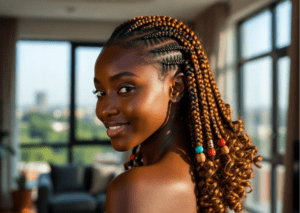
Transitioning from Natural Hair to Tribal Braids with Beads
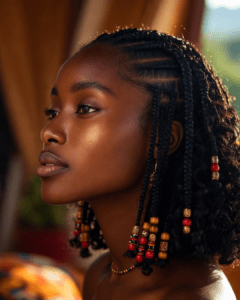
Incorporating beads is a nod to the traditional aesthetics of the Fulani and Maasai cultures. This transition is about weight management.
Strategic Loading
When adding beads to natural hair transitions, the length of the braid must be sufficient to support the weight of the glass, wood, or plastic adornments.
-
Weight Distribution: We ensure the braids are thick enough at the base to prevent the beads from pulling the natural hair from the follicle.
-
The Sound of Heritage: Beads aren’t just decorative; they provide a “seal” at the end of the braid, protecting your natural ends from environmental friction.
Transitioning from Natural Hair to Tribal Braids with Weave
For those seeking maximum length and “Instagram-ready” density, transitioning with a weave integration—specifically through the sewn-in or crochet method at the back—offers versatility.
The Hybrid Method
This style usually features traditional tribal cornrows in the front and a full-bodied weave in the back.
-
Access to Scalp: This transition is ideal because it allows for easier access to the scalp at the crown for oiling and hydration, even while wearing high-density extensions.
-
Safety Check: Ensure the “anchor braids” (the braids the weave is sewn onto) are not too tight, as they bear the most weight.
Transitioning from Natural Hair to Tribal Braids Ponytail
The braided ponytail is the peak of professional and athletic convenience. However, it is the most demanding on the natural hairline.
The 360-Degree Check
When transitioning to a Tribal Braids ponytail, the braids are directed toward the crown.
-
Nape Protection: The hair at the nape of the neck is often finer. We apply extra soothing oils during the transition to prevent irritation.
-
Versatility: We design these patterns so they can be worn down or up, preventing “fixed-position tension” which can lead to thinning over time.
Aftercare and Maintenance for All Tribal Braid Styles
- Daily: Light oil (castor + coconut) on scalp; satin pillowcase.
- Weekly: Moisturizing spray; avoid water if beads are present.
- Removal: Professional take-down at Nakuru Locks and Braiding to prevent breakage.
- Signs of trouble: Itching, redness, or excessive shedding—see us immediately.

Why Trust Nakuru Locks and Braiding?
Our styling philosophy is rooted in Trichology-Informed Braiding. With over a decade of experience in the heart of Nakuru City, our lead stylists specialize in the “Safe-Stitch” technique. This ensures that while you achieve the look of traditional African artistry, your natural hair health is never compromised.
Frequently Asked Questions (FAQ)
Q: How long can I keep my Tribal Braids in? A: To ensure a healthy transition back to your natural hair, we recommend a maximum of 4–6 weeks. Beyond this, the “new growth” can begin to mat or tangle.
Q: Can I wash my hair while in Tribal Braids? A: Yes. Focus on the scalp using a diluted shampoo and a pointed-tip bottle. Avoid soaking the mid-lengths of the braids to prevent heaviness and frizz.
Q: Will the beads cause my hair to break? A: Not if installed correctly. At Nakuru Locks and Braiding, we use a specialized looping technique to ensure beads sit securely without snapping the ends of your natural hair.
Experience the Transition
Ready to elevate your look? Visit us at the Mt. Sinai Building, Bazaar Road, Nakuru City. Our team is dedicated to providing a luxury experience that honors your heritage and protects your crown.
Related Articles from Nakuru Locks and Braiding
Authoritative References
-
Journal of Investigative Dermatology: Research on the prevention of Traction Alopecia through low-tension styling.
-
The Science of Textured Hair: Understanding the protein structures of Type 4 hair under extension stress.


Leave a Reply