
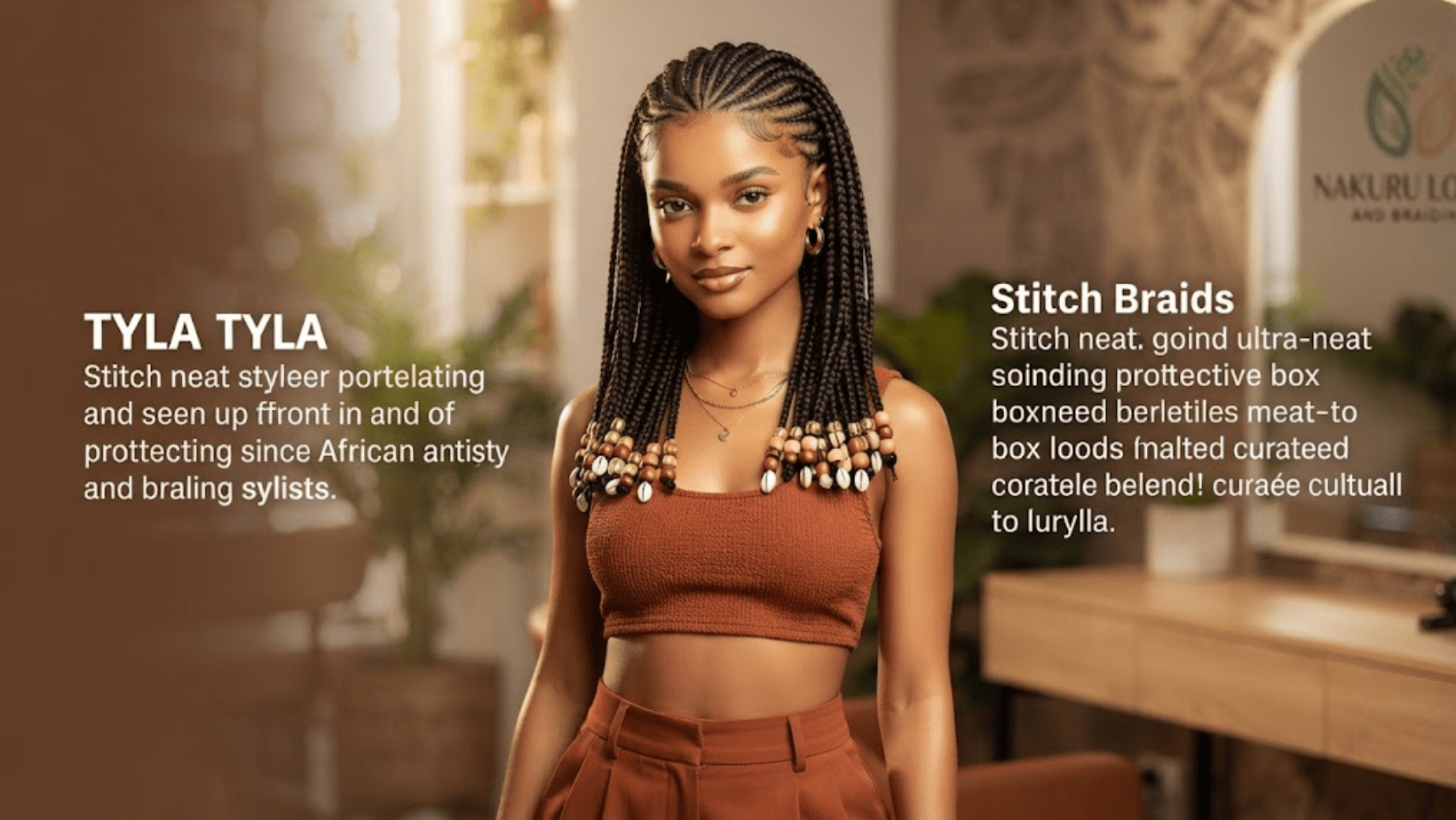
The Tyla Braid Revolution: Inside 2026’s Most Requested Protective Style
From the vibrant stages of global music awards to viral TikTok choreography, Grammy-winning South African singer-songwriter Tyla Laura Seethal has captured the world’s attention not only with her mesmerizing rhythms and chart-topping hits like “Water”, but also with her signature aesthetic.
Tyla’s hair choices—effortlessly blending cultural heritage, modern minimalist edge, and Y2K nostalgia—have sparked an international beauty movement.
She stepped onto the global stage with her signature braided bob; she didn’t just launch a hit song—she ignited a worldwide protective styling movement.
Today, “Tyla braids” is one of the most searched hairstyle terms across Nairobi, Lagos, London, and New York, with salons reporting a surge in requests for the hybrid cornrow-and-bob look that blends structure, softness, and effortless cool.
For natural hair enthusiasts, content creators, and anyone seeking a low-maintenance yet high-impact style, Tyla braids offer a perfect marriage of functionality and fashion.
This guide breaks down everything you need to know—from the exact braid type and hair texture Tyla uses, to maintenance routines, longevity, and how to adapt the style for short hair, men, kids, and blonde or beaded variations.
The Global Ripple of Tyla’s Signature Aesthetic
When Tyla burst onto the international music scene, she brought with her a distinct representation of South African youth culture infused with global pop glamour.
Her hairstyles quickly became iconic because they bridge the gap between traditional protective styling and modern high-fashion sleekness.
Whether she is rocking ultra-precise cornrows, face-framing bobs, or accessorized braids, Tyla’s hair always complements her natural features.
What Are Tyla Braids? The Name, Type, and Origin
The Official Name: Tyla Braided Bob (or Tyla Fulani Bob)
Though often shortened to “Tyla braids,” the full technical name stylists use is Tyla Braided Bob or Tyla Fulani Bob.
The style emerged in late 2024 when Tyla debuted a chin-length braided look with flipped curls at the ends during promotional appearances and music videos.
By mid-2025, it had become a viral TikTok and Instagram trend, with Korean beauty magazines like BNB Mag formally naming it “Tyla Braided Bob” in August 2026 trend reports.
Braid Type: Hybrid Cornrow + Quick Weave/Sew-In
Tyla braids are not a single braid technique but a hybrid protective style that combines:
-
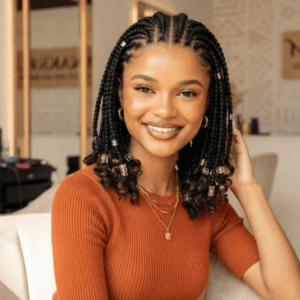
Front and sides: Feed-in cornrows (often knotless) that create a clean, scalp-hugging pattern.
-
Back and crown: A quick weave or sew-in bob using 14–16-inch wefts cut to chin or shoulder length.
-
Ends: Flipped or French curls created by curling the weave ends outward for a bouncy, “clean girl” finish.
This hybrid approach gives the illusion of a full head of braids while actually using less braiding hair and reducing tension on the edges—a key reason it’s become a favorite for natural hair retention.bnbmag+1
Cultural Roots: Fulani Inspiration
The cornrow patterns in Tyla braids often draw from Fulani tribal braiding traditions, which feature geometric parts, face-framing braids, and sometimes beads or cuffs.
Tyla’s own versions frequently incorporate subtle Fulani elements—like a single decorative braid along the hairline or beads on the front sections—making the style both modern and culturally rooted.
What Type of Hair Does Tyla Have?
Tyla is of mixed heritage (Zulu, Irish, Mauritian, and Indian descent), which is reflected in her distinctive hair texture.
She naturally possesses a tight, coiled, and curly afro-textured hair pattern (typically falling within the Type 4a to 4c spectrum when natural, blended with looser 3c curl patterns in certain areas).
Her hair has significant density, natural volume, and rich bounce.
In interviews, she’s mentioned that her natural texture is dense and springy, which makes braids and weaves ideal for length retention and styling versatility.
For the Tyla braided bob, stylists typically use:
-
Yaki-textured synthetic or human hair for the cornrows to match her natural coil pattern.
-
Silky or body-wave wefts for the bob portion to create smooth, flipped ends.
-
Human hair blends for the curly ends to allow heat styling and color customization.
This combination ensures the style looks seamless on textured hair while remaining lightweight and manageable
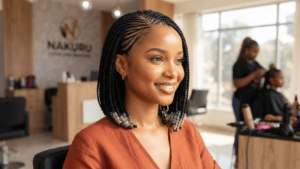
Tyla Braids Variations: Long, Short, Blonde, Beaded, and More
One of the reasons Tyla braids have gone viral is their adaptability. Below are the most requested variations and complete with styling notes.
1. Tyla Braids Long
Long Tyla braids extend the bob concept to shoulder or mid-back length, often using 18–24-inch wefts. The front remains cornrowed, but the back is left flowing with soft curls or straight ends.
This version is popular for women who want the Tyla aesthetic with more drama and movement.
Best for: Special occasions, content creation, women who love length retention.
2. Tyla Braids Short Hair / Tyla Short Hair Braids
For natural short hair (chin-length or above), the Tyla braided bob is ideal because it adds instant length and volume without heavy extensions.
Stylists use 12–14-inch wefts and cut them to match the client’s jawline, creating a “flipped French bob” effect.
Best for: Busy professionals, students, women transitioning from relaxers.
3. Tyla Braids Blonde
Blonde Tyla braids use honey, caramel, or platinum blonde wefts for the bob portion, often with darker cornrows at the roots for contrast.
This color-blocking technique mimics Tyla’s own mocha-and-blonde highlights seen in her 2026 music videos
Best for: Summer styles, content creators wanting high-contrast visuals, women with warm skin tones.
4. Tyla Braids with Beads
Adding beads to Tyla braids brings a Fulani-inspired touch. Small wooden, glass, or metal beads are threaded onto the front cornrows or the flipped ends for a playful, Y2K-meets-tribal vibe.
Beads are typically placed on 2–4 face-framing braids to avoid weighing down the style.
Best for: Festivals, cultural events, women who love accessorized protective styles.
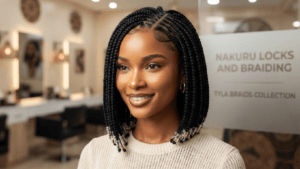
5. Tyla Braids Bob
The classic Tyla braided bob remains the most requested version. It features a chin-length bob with flipped curls, clean cornrows at the front, and a lightweight feel.
Korean and U.S. salons now offer this as a standalone menu item, often called the “Tyla Flip Bob.”
Best for: Everyday wear, low-maintenance routines, women seeking a polished look.
6. Tyla Hairstyles Cornrows / Tyla Braids Cornrows
Pure cornrow versions of Tyla’s style skip the weave entirely, using only feed-in braids with curled or beaded ends.
These are lighter, faster to install, and ideal for women who prefer all-braid protective styles.
Best for: Gym-goers, travelers, women with sensitive scalps.
7. Tyla Braids with Curls
Curly Tyla braids incorporate loose, boho-style curls throughout the bob or at the ends for a softer, undone finish.
This variation uses pre-curled synthetic hair or human hair curls that are finger-coiled for definition.
Best for: Boho aesthetics, women who want volume without stiffness.
8. Tyla Hairstyles for Men / Short Hair Braids Men
Men’s Tyla-inspired braids use shorter cornrows (3–6 inches) with flipped or beaded ends, often styled into mini buns or ponytails.
The key is keeping the braids tight to the scalp and the ends textured for a masculine yet trendy look.
Best for: Male content creators, athletes, men transitioning to natural hair.
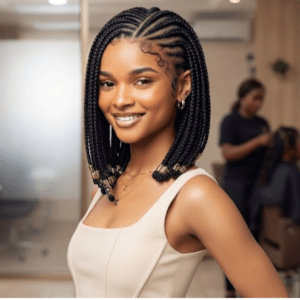
Which Braid Is Trending Now in 2026?
As of August 2026, knotless Fulani braids with flipped bob ends—aka Tyla braids—are the #1 trending protective style globally.
Beauty publications like Who What Wear and The Afro Glam note that low-tension, natural-looking styles with mixed textures (braids + curls) dominate 2026 trends.
Other top contenders include:
-
Boho bob braids (loose curls woven throughout)
-
Long beaded cornrows (tribal-inspired with statement beads)
-
Micro knotless braids (for ultra-lightweight, long-lasting wear)
But Tyla braids remain the most requested due to their versatility, celebrity endorsement, and ease of maintenance.
How to Maintain Tyla Braids: Expert Care Routine
Proper maintenance is critical to preserving your natural hair underneath and extending the life of your Tyla braids.
Below is a step-by-step routine based on recommendations from professional braiders and natural hair experts.
Daily Care
-
Night protection: Wrap hair in a satin scarf or bonnet to reduce friction and frizz.
-
Edge care: Avoid daily re-slicking with heavy gel. Use a lightweight edge mousse or water-based serum instead.
-
Scalp hydration: Apply a few drops of lightweight scalp oil (like jojoba or tea tree blend) 1–3 times per week, focusing on dry or itchy areas.
Weekly Care
-
Cleansing: Dilute sulfate-free shampoo with water in an applicator bottle. Apply directly to the scalp along the parts, massaging gently with fingertips (not nails).
-
Rinsing: Rinse thoroughly until water runs clear. Avoid scrubbing the braid bodies to prevent frizz.
-
Drying: Blot with a microfiber towel, then air-dry or use a hooded dryer on low-medium heat. Ensure the scalp is completely dry to prevent odor or mildew.
Bi-Weekly Care
-
Flyaway management: Smooth stray hairs with a small amount of styling foam, then trim frizzed ends with small scissors (do not pull).
-
Tension check: At 2–4 weeks, assess if edges feel sore. If so, schedule a touch-up or removal to prevent breakage.
Products to Use
-
Braiding gel: Maximum hold for clean parts (e.g., Eco Style Gel or similar).
-
Curl foam: For hydration and curl definition on the ends.
-
Lightweight scalp oil: Jojoba, peppermint, or tea tree blends.
-
Satin bonnet/scarf: Essential for nighttime protection.
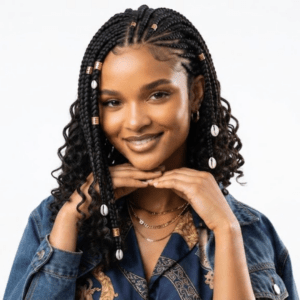
How Long Do Tyla Braids Typically Last?
Tyla braids, like most protective styles, last 4–8 weeks with proper care. The exact longevity depends on:
-
Hair growth rate: Faster growth may cause loosening at the roots by week 5.
-
Maintenance routine: Regular cleansing and nighttime wrapping extend wear.
-
Installation tension: Low-tension, knotless braids last longer without causing edge damage.
Recommended timeline:
-
Weeks 1–4: Style looks fresh; minimal frizz.
-
Weeks 5–6: Roots may begin to loosen; schedule a touch-up if needed.
-
Weeks 7–8: Remove or reinstall to prevent matting or breakage.
For natural hair health, experts advise not exceeding 8 weeks in any protective style.
Tyla Braids for Kids, Men, and Diverse Audiences
Kids’ Tyla Braids
Tyla-inspired styles are popular for school-aged children due to their neatness and durability.
Parents opt for shorter cornrows with beaded or curled ends, often in fun colors like pink or purple.
Maintenance is the same as adults, but with gentler products to avoid scalp irritation.
Men’s Tyla Braids
Men’s versions use shorter braids (3–6 inches) with flipped or beaded ends, styled into mini buns or ponytails.
The cornrow pattern is kept tight to the scalp for a clean, masculine look. This style is ideal for male content creators, athletes, and men embracing natural hair.
Women’s Tyla Braids
Women’s styles range from classic bobs to long, curly variations. The key is customizing length, color, and texture to match face shape and lifestyle.

FAQ: Tyla Braids Explained
Q: What is the difference between Tyla braids and regular box braids?
A: Tyla braids are a hybrid style combining cornrows at the front and a sew-in/quick weave bob at the back, whereas box braids are individual braids installed all over the head. Tyla braids are lighter and faster to install.
Q: Can I do Tyla braids on natural short hair?
A: Yes! The Tyla braided bob is specifically designed for short natural hair, using 12–14-inch wefts to create instant length and volume.
Q: How much does Tyla braids cost in Nairobi?
A: Prices range from KES 3,500–8,000 depending on length, hair quality, and salon location. Nakuru Locks and Braiding offers competitive pricing with premium human hair blends.
Q: Can men wear Tyla braids?
A: Absolutely. Men’s Tyla braids use shorter cornrows with flipped or beaded ends, styled into buns or ponytails.
Q: Are Tyla braids good for hair growth?
A: Yes, when installed with low tension and maintained properly, Tyla braids protect natural hair from manipulation and environmental damage, promoting length retention.
Q: What hair type is best for Tyla braids?
A: Yaki-textured synthetic or human hair for cornrows, and silky or body-wave wefts for the bob. Human hair blends allow for heat styling and color customization.
Q: Can I swim with Tyla braids?
A: Yes, but rinse with fresh water afterward and dry thoroughly to prevent chlorine or salt buildup.enchantressbeautebar.
Q: How do I remove Tyla braids without damaging my hair?
A: Carefully cut the weave wefts first, then unravel cornrows from the ends upward. Follow with a deep conditioning treatment.
Related Articles from Nakuru Locks and Braiding
Tyla braids are more than a trend—they’re a testament to the power of protective styling in celebrating natural hair while embracing global fashion.
Whether you’re a content creator in Nairobi, a student in London, or a stylist in New York, mastering this style opens doors to endless creativity and hair health.
References
-
BNB Magazine. “Tyla Braided Bob: Summer’s Hottest Protective Style.” August 2026.
-
The Afro Glam. “Must-Know Protective Hairstyles for Healthier Hair.” August 2026.
-
Haircut Vibes. “15 Simple Fulani Braids With Beads Ideas (2026).” August 2026.
-
Exclusive Hair Care Fort Lauderdale. “How Long Do Braids Last? Timelines + Care.” August 2026.
-
Autum Love. “10 Braided Bob Hairstyles to Try in 2026.” August 2026.
-
Joyce African. “How to Keep Braids Fresh for Six Weeks.” August 2026.
Leave a Reply