
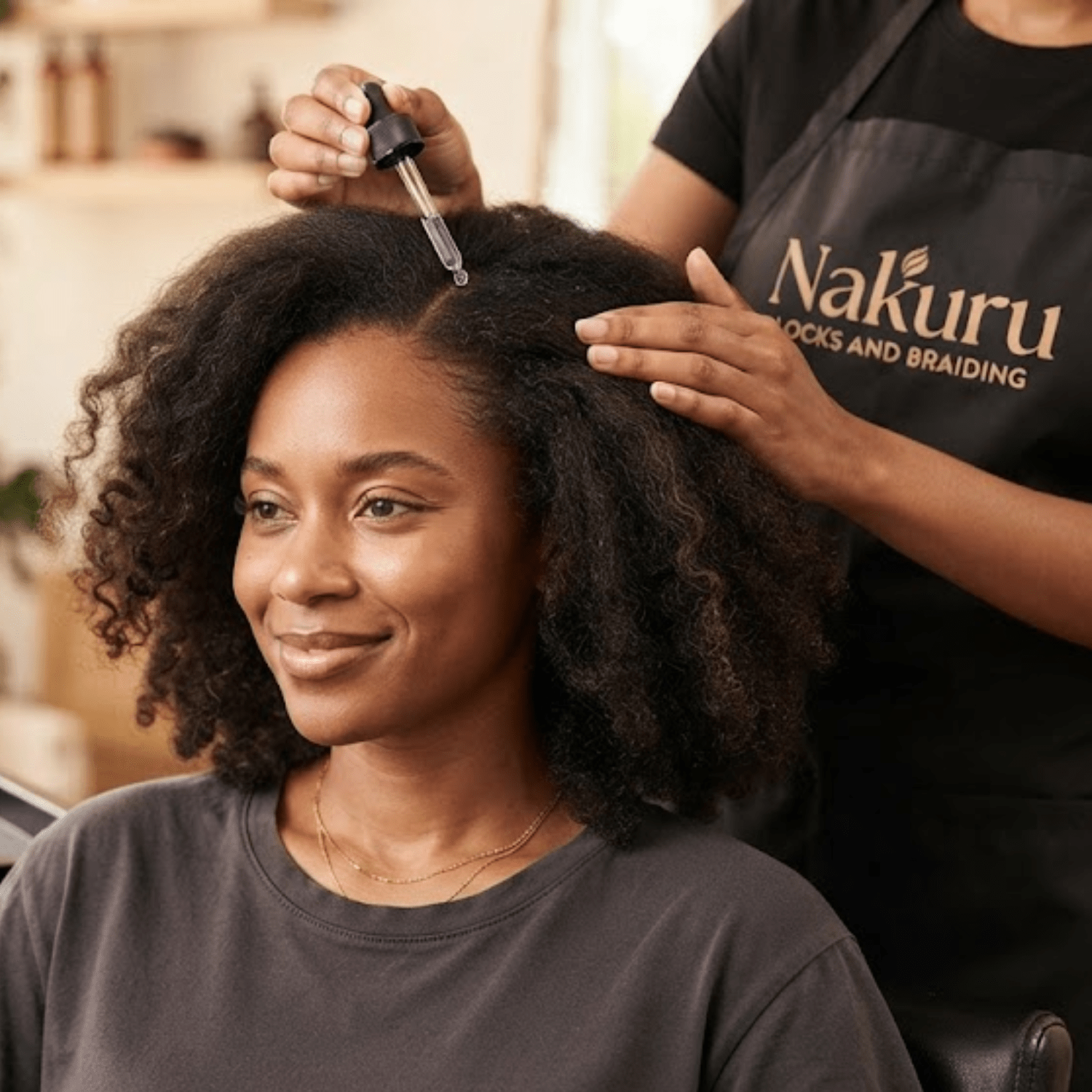
Post-Braid Scalp Care: Signs You Need a Break Between Styles
A client sits down in our chair, runs her fingers along her hairline, and says something we hear almost every week: “I love my braids, but the moment I take them out, my scalp feels tender and my edges look thinner than before.” She isn’t alone.
Whether you’re in Nakuru, Nairobi, London, Houston, or Toronto, the story is the same — braids, twists, and cornrows are treasured protective styles, but the scalp underneath them is quietly doing a lot of work.
It holds tension for weeks, gets less airflow than usual, and often gets less attention than the style itself.
This is where post braid scalp care becomes just as important as choosing the right braid size or color.
Your scalp is skin, and like any skin, it can only take so much pulling, product buildup, and neglect before it asks for a break.
This guide walks you through a complete post braid scalp care routine — what to do the moment your braids come out, how to clean your scalp while your braids are still in, which post braid scalp care products actually help, and — most importantly — the warning signs that tell you it’s time to give your hair a real rest between styles.
Why Post-Braid Scalp Care Matters More Than You Think
Protective styles are called “protective” because, done correctly, they shield your strands from daily manipulation, heat, and weather.
But the American Academy of Dermatology notes that hairstyles which pull on the scalp — including tight braids, cornrows, weaves, and buns — can gradually damage hair follicles if worn too long or installed too tight, and recommends wearing braids for no longer than six to eight weeks and switching up styles regularly so the scalp can recover. That recovery window is exactly what this article is about.
Dermatologists also point out that a scalp left under braids for weeks accumulates sweat, natural oils, dead skin, and styling product, and this buildup can trigger itchiness, dandruff, and even contribute to hair loss if it isn’t managed.
So the question isn’t just “how do I take care of my hair after braids” — it’s “how do I take care of my scalp during braids, immediately after braids, and in the break before my next style.”
Post Braid Scalp Care Routine: Step by Step
1. Detangle Before You Wet Anything
As soon as your braids are out, resist the urge to jump straight into the shower. Debris, shed hair, and lint trapped in your strands can mat together the moment water touches them, so start dry.
Use a wide-tooth comb or your fingers to gently work through your hair from ends to roots before washing, taking your time on any knots.
2. Wash With a Hydrating (or Clarifying) Shampoo
Once detangled, wash your hair using a hydrating shampoo, then follow with a conditioner suited to your texture.
A generous clarifying wash removes weeks of product buildup, oil, and sweat that built up under the style.
Many hairstylists recommend conditioning your hair a day before you take the braids down, since softer, well-moisturized hair is less likely to break during the takedown process itself.
3. Deep Condition and Nourish the Scalp
This is the heart of any post braid scalp care routine. After shampooing, apply a rich, moisturizing deep conditioner and let it sit for the recommended time before rinsing.
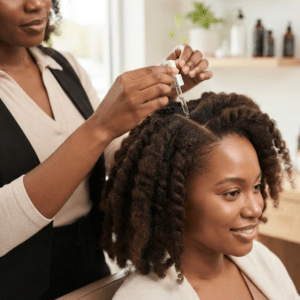
Follow with a lightweight scalp oil or a dedicated hydrating scalp treatment to nourish the skin itself, not just the strands.
4. Trim Where Needed
Braids can leave ends dry and slightly frayed, especially if you wore the style for the full eight weeks.
A small trim keeps hair looking healthy and prevents split ends from traveling further up the shaft.
5. Give Your Scalp a Real Break
This is the step most people skip — and the one dermatologists emphasize most.
Give your hair a break from all styling to allow it to recover from the stress of tension, and consider wearing it naturally, in a loose style, or under a wig or scarf for a few weeks.
What Should I Do to My Hair After Removing Braids?
If you only remember one sequence, remember this: detangle → wash and condition → deep condition the scalp → trim if needed → rest. Beyond that:
- Avoid heat styling for at least the first week. Your hair has just come through weeks of tension and product buildup; heat adds another layer of stress.
- Massage your scalp daily with a light oil (coconut, jojoba, or a scalp-specific blend) to stimulate circulation.
- Sleep on a satin or silk pillowcase, or under a bonnet, to reduce friction while your hair is loose and adjusting to being unbraided.
- Watch how your scalp feels, not just how your hair looks. Soreness, flaking, or tightness that lingers for more than a few days after takedown is a signal, not something to push through.
Post Braid Scalp Care at Home: A Realistic Routine
You don’t need a salon visit for every step of this process. A workable post braid scalp care at home routine looks like this:
1. Night before removal: Apply a light oil to your scalp and gently massage it in.
2. Removal day: Detangle dry, wash with diluted shampoo, deep condition, rinse thoroughly, and pat (don’t rub) dry with a microfiber towel or soft t-shirt.
3. First week after: Moisturize your scalp daily, avoid tight styles or ponytails, and keep manipulation to a minimum.
4. Following weeks: Continue a gentle wash-day routine every one to two weeks and monitor your hairline for regrowth or continued thinning.
Post Braid Scalp Care for Black Hair
Post braid scalp care for black hair deserves its own attention because textured hair is both more prone to dryness and, historically, more frequently styled in tension-based protective styles.
Research referenced by hair-health researchers has found that traction alopecia is particularly common among Black women and girls who wear tight braiding or cornrow styles repeatedly over long periods, and one widely cited study of African American women linked frequent tight styling to scarring hair loss along the hairline.
That doesn’t mean braids are the enemy — it means the care around them matters. For textured hair specifically:
- Moisturize more frequently than you think you need to; braided styles combined with naturally drier hair textures mean the scalp loses moisture faster.
- Choose braid sizes and tension that don’t cause pain during installation. If a style hurts while it’s being done, it’s too tight — full stop, according to dermatologists.
- Alternate between low-tension and higher-tension styles rather than repeating the same tight style back to back.
- Pay close attention to the hairline and temples, which are the first areas affected by tension-related thinning.
How to Clean Your Scalp With Braids Without Washing
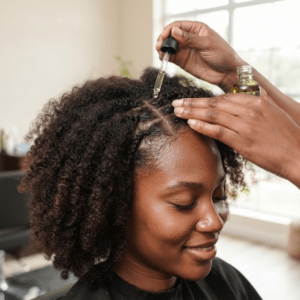
Not every itch or oily patch requires a full wash — and over-washing braids can actually cause frizz. If you’re wondering how to clean scalp with braids without washing, here are dermatology-backed, low-manipulation options:
- Dry shampoo: A powder or spray that absorbs excess oil so your scalp feels fresher between washes. Section your braids, spritz lightly directly onto the scalp, and gently massage it in with your fingertips.
- Diluted shampoo with an applicator bottle: Mix shampoo with water in a spray or applicator bottle and apply it directly to the scalp between sections, massaging gently with fingertips rather than nails, then rinse thoroughly and squeeze (don’t rub) the braids to remove residue.
- Baby wipes for a quick refresh: Useful in a pinch for wiping down the scalp along partings, though they shouldn’t replace an actual wash since they don’t remove all buildup.
- How to clean scalp with braids apple cider vinegar: An apple cider vinegar (ACV) rinse — typically one part vinegar to several parts water — is a popular natural option for cutting through product buildup and soothing an itchy scalp between full washes. Apply it with a spray bottle directly to the scalp, let it sit briefly, and rinse well. Because ACV is acidic, always dilute it and avoid it on any broken or irritated skin.
Post Braid Scalp Care Products Worth Having on Hand
A simple, effective post braid scalp care products kit doesn’t need to be complicated:
- A sulfate-free, hydrating or clarifying shampoo
- A moisturizing, slip-heavy conditioner for detangling
- A lightweight leave-in conditioner or detangling spray
- A nourishing scalp oil (jojoba, castor, or tea tree-infused blends are common choices)
- A dedicated scalp treatment or serum for irritation or flaking
- Two applicator or spray bottles — one for diluted shampoo, one for diluted conditioner — which stylists commonly recommend for cleansing scalp and braids without disturbing the pattern
Hair After Braids: Overnight Care
Hair after braids overnight care is about protecting newly freed strands while they’re at their most fragile. After a wash and deep condition:
- Apply a leave-in conditioner or light moisturizer while hair is still damp.
- Loosely braid or twist your hair, or wrap it, before bed to reduce tangling overnight.
- Use a satin or silk bonnet or pillowcase — cotton pulls moisture from the hair and scalp and creates friction.
- Avoid tight buns or ponytails overnight, even temporarily; the goal right now is zero tension.
How Long Should I Wait to Wash My Hair After Taking Out Braids?
Ideally, you wash your hair the same day or within a day or two of removing your braids, once you’ve fully detangled.
Waiting too long risks matting, buildup, and prolonged irritation if your scalp was already sore.
Where timing matters more is the next style: hair care professionals commonly recommend waiting around two weeks before your next braided style if your scalp had no irritation during takedown, and stretching that to about four weeks if you experienced noticeable breakage or discomfort while undoing the braids.
Some styles, like locs and twists, can safely be worn up to eight weeks, but the guiding rule is the same across all of them — only rebraid once your scalp has genuinely recovered, not just once it “looks” fine.
Hair After Braids: Signs You Need a Break Between Styles
This is the section worth bookmarking. Traction alopecia — hair loss caused by repeated pulling on the follicle — is usually reversible if you catch it early, but can become permanent scarring if ignored. Watch for these warning signs after taking down a style:
- Persistent tenderness or pain, not just at removal but for days afterward. Dermatologists are blunt about this one: if a hairstyle feels painful, it’s too tight, and pain is a sign to change styles immediately.
- Small bumps that look like pimples along the hairline — often an early sign of traction alopecia, appearing before visible hair loss does.
- Thinning or a receding hairline, especially at the temples, which is the classic and most common location for traction-related hair loss.
- Broken hairs, jagged ends, or fine “fuzzy” regrowth (vellus hairs) in place of normal strands along the edges.
- Redness, soreness, itching, scaling, or pus-filled bumps on the scalp, which can indicate inflammation or folliculitis that needs attention before your next style.
- Noticeably more shedding than usual when you comb or wash, beyond the normal amount you’d expect after weeks of minimal manipulation.
If you notice any of these, the response isn’t a stronger product — it’s rest. Dermatologists recommend switching to loose, low-tension styles or going without any braided style at all until the scalp has visibly and consistently recovered, and seeing a dermatologist promptly if bald patches appear, since early treatment gives the best chance of full regrowth.
FAQ
How often should I wash my hair while it’s braided?
Most stylists recommend washing every one to two weeks using a diluted shampoo applied directly to the scalp, followed by a diluted conditioner, to control buildup without disturbing the braid pattern.
Can I use regular, undiluted shampoo on braids?
It’s best to dilute it. Undiluted shampoo can be harder to rinse out fully and may cause braids to loosen, frizz, or mat.
Is shedding after taking out braids normal?
Yes, to a point. Weeks without regular combing means shed hair that would normally fall out daily gets trapped in the braid instead, so a noticeable amount comes out at once during detangling. What’s not normal is breakage at the root, bald patches, or shedding that continues heavily for weeks after takedown.
Do I need to see a dermatologist for scalp irritation after braids?
If soreness, bumps, or thinning don’t improve within a couple of weeks of gentle care and rest, it’s worth having a dermatologist look at your scalp. Early treatment of traction-related irritation gives the best chance of full recovery.
How long should I go without braids between styles?
As a general guide, plan for at least two weeks of rest if your last style caused no irritation, and closer to four weeks — or longer — if it did. Let how your scalp feels, not the calendar, be the final word.
Related Articles from Nakuru Locks and Braiding
References
- American Academy of Dermatology Association — Hairstyles That Pull Can Lead to Hair Loss
- Healthline — Traction Alopecia: Symptoms, Causes, and Treatment
- Aglow Dermatology — Traction Alopecia: When Is It Too Late?
- East Carolina Dermatology — Frequently Asked Questions About Traction Alopecia
- Boston Derm Advocate — Dermatologist-Approved Hairstyles and Treatments to Prevent Traction Alopecia
- Michigan State University Women’s Health — Central Centrifugal Cicatricial Alopecia and Traction Alopecia
- eMediHealth — How to Clean Braided Hair Without Washing
This article is for general educational purposes and is not a substitute for professional medical advice. If you notice persistent pain, bald patches, or scalp sores, please consult a board-certified dermatologist.
Leave a Reply