
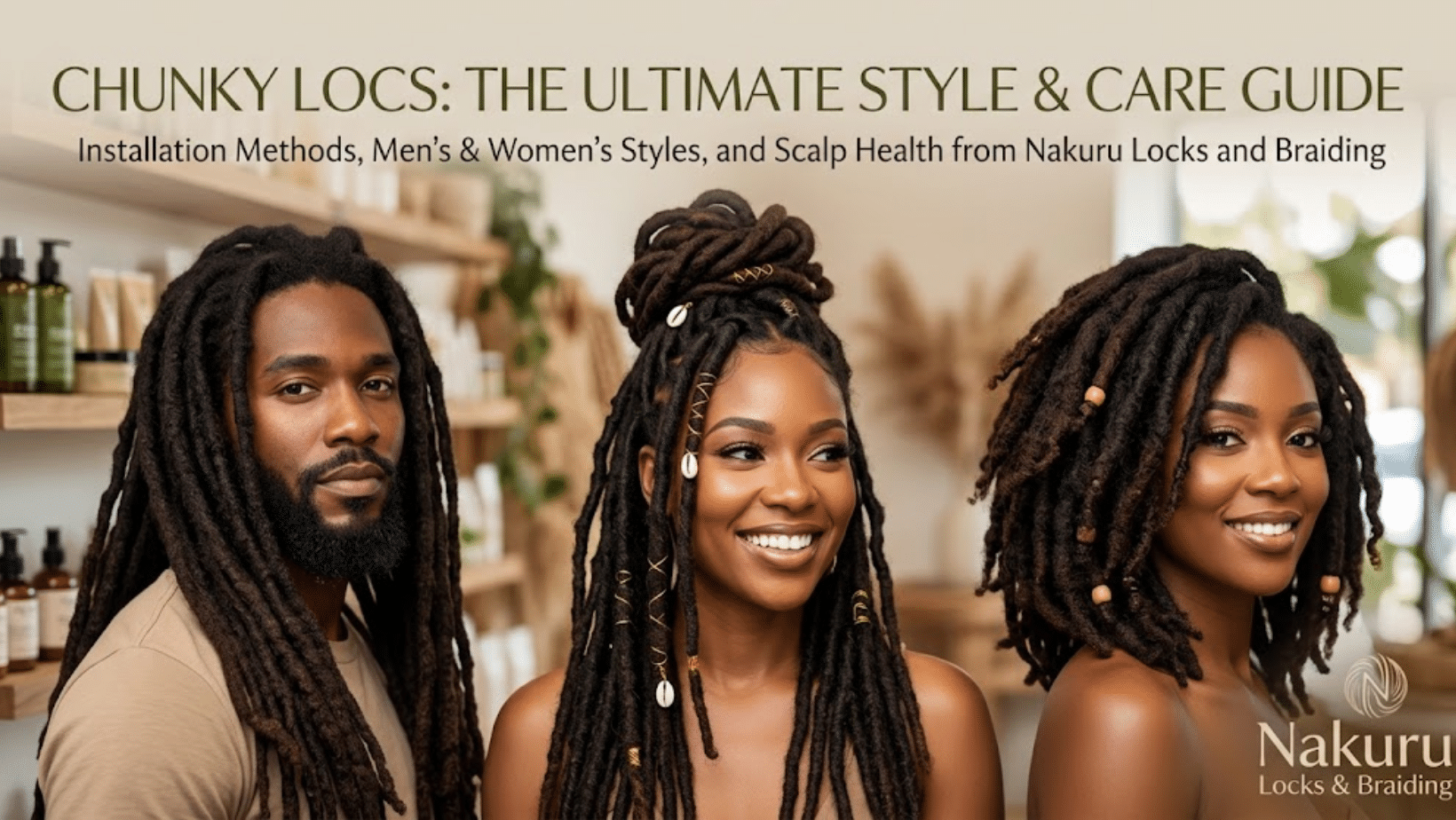
Chunky Locs Hairstyles: The Ultimate Guide to Thick, Bold Dreadlocks for Men and Women
There is a moment in every loc journey when the hair stops looking like individual twists and starts looking like a crown—full, sculptural, and unmistakably yours.
For many people, that moment arrives with chunky locs: thick, rope-like dreadlocks that create volume, presence, and a bold silhouette.
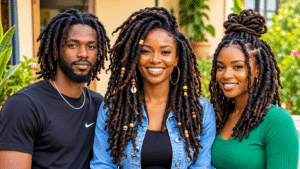
Whether you call them thick dreads, jumbo locs, or traditional locs, chunky locs are one of the most striking protective hairstyles for men and women worldwide.
At Nakuru Locks and Braiding, chunky locs are more than a trend. They are a versatile, low-manipulation style that can be started from natural hair, extended with crochet, styled into buns and updos, or maintained for years.
This guide explains what chunky locs are, how to get them, the best styles for men and women, crochet options, maintenance, and the terminology people use for thick dreadlocks.
Locs—also called dreadlocks or dreads—are rope-like strands formed through matting, twisting, backcombing, braiding, interlocking, or crochet techniques.
The term “locs” is often preferred as a broader, less stigmatized term than “dreadlocks,” which has strong historical ties to Rastafari culture.
What Are Chunky Locs? Understanding the Style and Its Names
Chunky locs (also written as chunky locks or thick locs) are dreadlocks with a larger diameter than traditional or micro locs—typically the width of a marker, finger, or thicker. Classic medium locs often measure roughly the size of a pencil; chunky versions start around 12–15 mm and go larger.
These thicker formations create visual weight, volume, and presence. They can form naturally through freeform methods, larger initial sections, or by combining existing locs. Related terms and names for thick dreads include:
- Wicks — Very large, often square or cylindrical sections popular in some urban communities (especially South Florida origins, now global).
- Cane shaft locs, monster locs, or pipe locs — Descriptive names for extremely thick, rope-like results.
- Congo locs or simply thick traditional locs.
The exact “thick dreads name” varies by region and community, but the shared idea is substantial, low-maintenance strands that feel powerful rather than delicate.
At Nakuru Locks and Braiding, stylists frequently guide clients toward chunky options because fewer, thicker locs mean shorter maintenance sessions, less daily manipulation, and a bold aesthetic that suits both professional and casual settings.
How to Get Chunky Locs: Methods That Deliver Thickness
Achieving chunky locs starts with intentional choices at the beginning of the journey and continues with smart maintenance. Thickness is primarily determined by section size at the scalp, natural hair density, and how much (or little) you manipulate the hair over time.
1. Start with larger sections
When beginning locs, part the hair into bigger squares or rectangles (closer to a dime, nickel, or larger rather than pencil-eraser size). Larger sections naturally produce thicker mature locs. Comb coils or two-strand twists on these bigger parts work especially well for coily textures common in African hair.
2. Combine existing thinner locs
If your current locs are thinner than desired, a loctician can carefully fuse two or more neighbouring locs into one thicker unit. This is often done with a crochet hook (gently interlocking the strands) or by twisting them together so they lock as a single unit over time. The result is fewer, stronger locs with greater volume.
3. Reduce retwist frequency
Frequent tight retwisting can keep locs looking neat but sometimes limits natural expansion. Spacing retwists to every 6–8 weeks (or longer for mature locs) allows loose hairs to integrate and the loc to bulk up slightly. Palm-rolling only the roots rather than the entire length also encourages a fuller appearance.
4. Freeform or semi-freeform approach
Letting hair lock with minimal parting and twisting produces organic, often thicker sections. Many clients at Nakuru Locks appreciate this low-manipulation path for its authenticity and reduced tension on the scalp.
5. Support healthy growth from within
A nutrient-rich diet, consistent moisture (without heavy product buildup), gentle cleansing with residue-free shampoo, and scalp massages with light oils all contribute to stronger, denser hair that fills out the loc. Protein treatments and proper drying prevent the thinning that can occur from breakage or moisture imbalance.
Professional consultation is essential. At Nakuru Locks and Braiding, stylists assess hair density, texture, lifestyle, and goals before recommending a path—ensuring the final thickness is sustainable and flattering.
Thick Locs Crochet: Technique, Benefits, and Considerations
The thick locs crochet method uses a small crochet hook to pull loose hair or neighbouring strands into the loc, creating density and definition. It is popular for:
- Instant or accelerated locking (sometimes called instant locs).
- Combining thinner locs into thicker ones.
- Neatening mature locs without the uniform look of traditional palm-rolling.
- Maintaining faux or crochet-installed chunky styles.
For genuine thick dreadlocks, crochet can be used sparingly at the roots or to fuse sections. Over-crocheting the full length, however, can sometimes create a tighter, denser (and occasionally thinner-looking) result if not balanced with growth time.
Many locticians therefore recommend combining light crochet maintenance with periods of lower manipulation.
At Nakuru Locks and Braiding, crochet techniques are offered alongside palm-rolling and interlocking, always prioritising scalp health and long-term loc integrity.
Clients seeking thick locs crochet results receive guidance on frequency and aftercare to avoid unnecessary tension.
Thick Dreadlocks Male: Bold Styles for Men
Thick dreadlocks male styles emphasise strength, structure, and modern edge. Popular options include:
- Classic freefall or mid-length chunky locs left loose for a powerful, natural silhouette.
- Chunky locs with a fade, undercut, or taper—clean sides contrast dramatically with the volume on top.
- High or low ponytails and top knots that showcase the thickness.
- Barrel twists or rope twists created from thicker sections for a sculpted, organised look.
- Wick-style or congo groupings for maximum impact with fewer individual strands.
- Mohawk or high-top variations that elevate the chunky texture.
These styles work well in professional environments when kept neat and can transition easily into more casual or cultural expressions. Men often appreciate that thicker locs require fewer total strands, shortening appointment times while delivering a strong visual statement.

Thick Dreadlocks Styles for Ladies: Versatility and Elegance
Thick dreadlocks styles for ladies offer endless creativity. Women frequently choose:
- Shoulder- or collarbone-length chunky palm-rolled locs with softly curled or tapered ends.
- High buns, pineapple updos, or half-up styles that highlight volume and face-framing.
- Braided or interwoven chunky sections for texture and definition.
- Beaded or wrapped accents that celebrate cultural elements.
- Layered or bob-length chunky locs for a modern, lighter feel.
- Goddess-inspired or free-flowing looks that combine thickness with movement.
The added weight and presence of thicker locs create beautiful updos and everyday styles that feel luxurious yet practical.
Many women at Nakuru Locks report that chunky versions reduce daily styling time while maximising impact for events, work, or casual wear.
Maintenance Essentials for Healthy Chunky Locs
Healthy thick locs depend on consistent but gentle care:
- Wash with clarifying or residue-free shampoo every 1–2 weeks (or as needed), ensuring thorough drying to prevent mildew.
- Moisturise the scalp and lengths lightly—excess product leads to buildup that can weaken the loc.
- Separate roots periodically if freeforming to avoid unwanted merging, or allow selective combining for intentional thickness.
- Protect at night with a satin or silk bonnet/scarf.
- Schedule professional maintenance at Nakuru Locks and Braiding for retwists, combining, or health checks.
- Monitor for tension, thinning at roots, or dryness and address promptly.
Patience remains key. Locs mature over months to years; the fullest, healthiest chunky results develop with time and consistent care rather than aggressive forcing.

Why Choose Nakuru Locks and Braiding for Your Chunky Locs Journey
Located in Mt. Sinai Building on Bazaar Road in Nakuru City, Nakuru Locks and Braiding specialises in natural and artificial locks, Sisterlocks, crochet techniques, braiding, and supportive spa services.
The team brings years of experience with African hair textures, eco-conscious product choices, and a personalised approach that respects both cultural roots and modern preferences. Clients leave with styles that feel authentic, healthy, and uniquely theirs.
Whether you are starting fresh, combining existing locs, exploring thick locs crochet options, or refining mature chunky styles for men or women, the salon offers consultations, installations, and ongoing maintenance tailored to your goals.
Frequently Asked Questions
What is the difference between chunky locs and regular locs?
Chunky locs have a larger diameter created by bigger sections or combining. Regular or traditional locs are typically medium-sized (pencil-like); micro or Sisterlocks are much finer.
How long does it take to get thick dreadlocks?
Starter phase can show early thickness based on section size. Full maturation and optimal bulk often take 12–24 months or longer, depending on hair growth rate and maintenance.
Can I turn thin locs into chunky ones?
Yes, through careful combining (crochet or twisting methods) performed by an experienced loctician.
Are thick dreadlocks harder to maintain?
Often the opposite—fewer locs mean quicker appointments. However, thorough drying and moisture balance remain important because of the greater volume.
What is the best thick dreads name or style for beginners?
Larger-section traditional or semi-freeform locs are approachable. Discuss density and lifestyle with a professional for the ideal starting size.
Do chunky locs suit all face shapes and hair types?
They suit most people, especially those with higher density or coily textures. Stylists adjust section size and overall shape for balance.

Related Articles from Nakuru Locks and Braiding
Explore more expert guidance on the salon’s site:
These resources deepen understanding of every stage of the loc journey.

Final Thoughts: Embrace the Power of Chunky Locs
Chunky locs hairstyles are more than a trend—they are a celebration of natural texture, cultural continuity, and personal strength.
From the practical advantages of fewer, thicker strands to the striking visual impact of thick dreadlocks male and thick dreadlocks styles for ladies, the style offers something meaningful for a global audience.
Whether achieved through thoughtful sectioning, the thick locs crochet technique, freeform growth, or professional combining, the result is hair that feels substantial and true.
At Nakuru Locks and Braiding, every client’s journey is supported with expertise, care, and respect for the stories their hair carries.
Your hair, your legacy, your style—made thicker, stronger, and uniquely yours.
Leave a Reply