
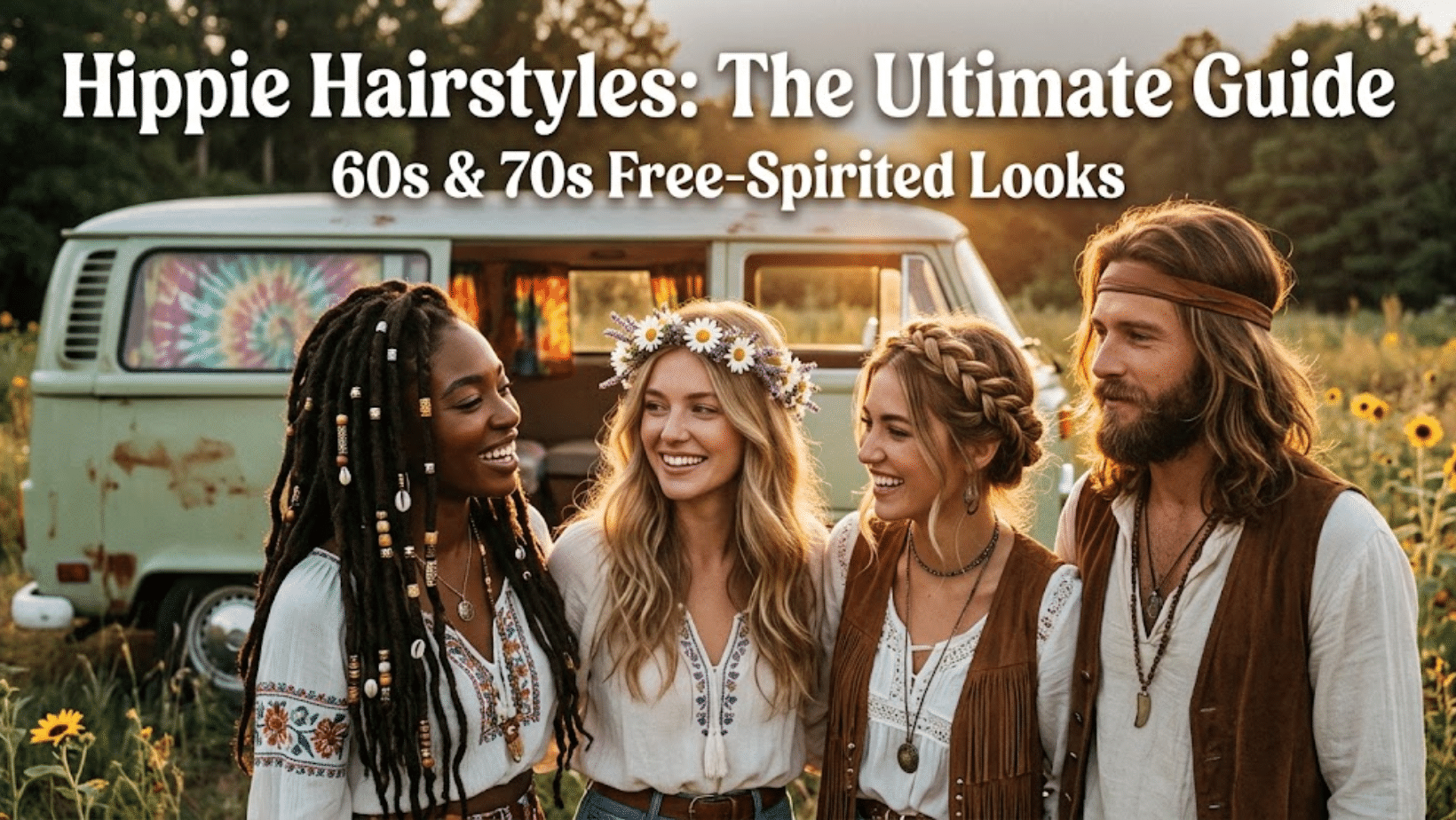
Hippie Hairstyles: The Ultimate Guide to 60s and 70s Free-Spirited Hair for Women and Men
There is a moment in every era when hair stops being “just hair” and becomes a statement. In the late 1960s, that moment arrived with flower crowns, center parts, flowing curls, headbands, and long natural hair that refused to be controlled.
Hippie hairstyles were not simply a beauty trend; they were a visible declaration of freedom, individuality, peace, and rebellion against rigid social expectations.
At Nakuru Locks and Braiding, we see the hippie spirit every day in soft boho locs, textured braids, beads, curls, and relaxed protective styles.
Whether you want a full 70s revival or a subtle modern boho look, this guide explains hippie hairstyles for women, men, short hair, long hair, and every hair texture.
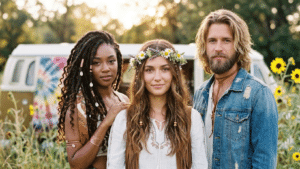
What hairstyle do hippies wear?
The most iconic hippie hairstyle is long, loose, natural-looking hair, often parted in the middle and worn down over the shoulders.
Historical fashion sources describe hippies as wearing their hair long and natural, rejecting the polished, structured styles of earlier decades.
Common hippie hairstyles include:
-
Long straight hair with a center part
-
Loose natural waves or curls
-
Flower crowns and floral accents
-
Headbands, scarves, and braided crowns
-
Half-up, half-down styles
-
Braids with beads, shells, or ribbons
-
Natural afros and textured curls
-
Long dreadlocks or locs
-
Shaggy layered cuts
-
Men’s long hair, moustaches, and feathered styles
For women, the look often centered on softness, volume, and movement. For men, it often meant growing hair past the ears or collar, sometimes with a beard or moustache.
The Beatles’ “mop top” helped normalize longer hair for men, while hippies pushed the look even further.
Is hippie style 60s or 70s?
Hippie style is rooted in both the 1960s and 1970s, but its strongest cultural peak was the late 1960s into the early 1970s.
The hippie movement emerged in the 1960s as a youth counterculture connected to anti-war protest, communal living, folk and rock music, and rejection of mainstream consumer culture.
In hair terms:
-
1960s hippie hair: long hair, center parts, headbands, flowers, natural texture, and the first major wave of men growing their hair long.
-
1970s hippie hair: softer layers, feathered cuts, shags, big curls, loose waves, and more polished bohemian styling.
-
Modern hippie or boho hair: a contemporary interpretation using braids, locs, waves, beads, scarves, and relaxed updos.
So if someone asks, “Is hippie style 60s or 70s?” the best answer is: it began in the 60s and matured into the 70s. The 60s created the rebellion; the 70s softened it into a wearable fashion language.
What kind of style is hippie?
Hippie style is a counterculture-inspired, free-spirited aesthetic built around comfort, nature, handmade details, color, and self-expression.
It rejected the stiff, artificial fashion of the early 1960s and embraced loose silhouettes, vintage clothing, secondhand pieces, tie-dye, embroidery, fringe, beads, and natural fabrics.
In hair, hippie style usually means:
-
Minimal heat and minimal stiffness
-
Natural texture
-
Loose, romantic shapes
-
Accessories with meaning or personality
-
A slightly undone, lived-in finish
-
Individuality over perfection
A hippie hairstyle should feel effortless, but it does not have to be messy. A neat braid with beads, a defined afro, or a polished set of goddess locs can still carry the same free-spirited energy.
Hippie hairstyles for long hair
Long hair is the classic hippie canvas. The original look was simple: grow it long, part it in the center, and let it fall naturally. Hippies were known for long hair worn over the shoulders and back, often without heavy styling.
1. Center-parted flowing hair
This is the purest 60s and 70s hippie hairstyle. Create a clean middle part, add light waves or leave natural texture, and finish with a light oil or serum for shine.
Best for: Long straight, wavy, or loosely curled hair.
2. Flower-child waves
Use a large-barrel curling iron, flexi rods, or overnight braids to create soft, irregular waves. Add a small flower behind the ear for a true Woodstock-inspired finish.
3. Braided headband
Take a small section from behind one ear, braid it across the crown, and pin it behind the opposite ear. Leave the rest of the hair loose.
4. Half-up, half-down hippie hair
Pull back the top section and secure it with a ribbon, leather tie, or beaded cuff. Leave the lower half loose for movement.
5. Boho side braid
Create a loose three-strand or fishtail braid over one shoulder. Pull small pieces loose around the face to soften the style.
6. Beaded braids and locs
Add beads, wooden cuffs, shells, or metallic rings to box braids, twists, or locs. This is especially beautiful on protective styles and works well for long natural hair.
At Nakuru Locks and Braiding, long faux locs, butterfly locs, goddess locs, and distressed bohemian locs are excellent ways to achieve the long hippie look without waiting years for natural hair growth. Our salon creates flowing locs with curls, beads, shells, and textured ends for a bohemian finish.
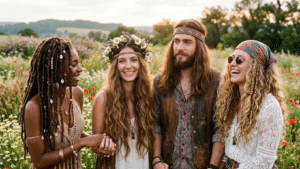
Hippie hairstyles for short hair
You do not need waist-length hair to wear hippie hair. Short hair can look just as free-spirited when styled with texture, accessories, and soft shapes.
1. Textured pixie with a headband
A tousled pixie with a thin fabric headband instantly gives 60s mod-meets-hippie energy.
2. Curly bob with a center part
A chin-length or shoulder-length bob with a middle part feels retro without requiring long hair.
3. Short natural afro
A rounded afro is one of the most powerful expressions of natural beauty and individuality. Add a colorful headwrap, beads, or a floral clip.
4. Mini twists or short locs
Short twists, comb coils, or starter locs create definition while keeping the style low-maintenance. Short locs can also be styled with flat twists, bantu knots, barrel rolls, or simple updos as they grow.
5. Half-up mini pigtails
Even short hair can be divided into two small pigtail sections, braided, and finished with ribbons or beads.
6. Shaggy layers
A soft shag with curtain bangs gives the 70s rock-and-roll hippie feel. It works especially well with waves, curls, and natural volume.
Hippie hairstyles female
For women, hippie hairstyles range from romantic and delicate to bold and textured. The key is movement, softness, and personal expression.
Best hippie hairstyles for women
| Hairstyle | Description | Best hair type |
|---|---|---|
| Center-parted waves | Loose, romantic waves with a middle part | Straight, wavy, relaxed |
| Flower crown curls | Curls or waves decorated with fresh or faux flowers | All textures |
| Braided crown | A braid wrapped around the head like a halo | Medium to long hair |
| Half-up half-down | Top section tied back, rest left loose | Medium to long hair |
| Boho fishtail braid | Loose, pulled-apart braid over one shoulder | Long hair |
| Beaded box braids | Braids finished with wooden, metallic, or colored beads | Natural hair and extensions |
| Goddess locs | Soft locs with curly ends | Natural hair with extensions |
| Butterfly locs | Distressed, romantic locs with loose texture | Natural hair with extensions |
| Afro puffs | One or two puffs with a headband or scarf | Natural coily hair |
| Headwrap style | Fabric wrapped around the hair, with curls or locs left out | All textures |
Butterfly locs and goddess locs are particularly strong modern hippie choices because they combine the softness of curls with the structure of locs. Nakuru Locks and Braiding describes butterfly locs as loose, curly, and romantic, while goddess locs mix braids with loose curls for an elegant, voluminous look.
70s hippie hairstyles female
The 1970s shifted hippie hair from raw rebellion toward a softer, more glamorous version of freedom. Women’s hairstyles moved from the structured looks of the early 60s to longer, looser, feathered tresses.
Iconic 70s female hippie hairstyles
-
Feathered layers: Soft, face-framing layers brushed away from the face
-
The shag: Layered cut with volume at the crown and curtain bangs
-
Big natural curls: Voluminous curls worn loose and untouched
-
Long straight hair with a center part: The classic hippie silhouette
-
Braided headband with loose waves: Romantic and festival-ready
-
Afro with a headband: Bold, natural, and expressive
-
Hippie ponytail: Low or mid ponytail secured with a scarf or ribbon
-
Boho updo: Messy bun, twisted crown, or pinned curls with face-framing pieces
The 70s look is ideal for anyone who wants hippie energy without looking like a costume. Keep the finish soft, use minimal product, and let some pieces fall naturally around the face.
Hippie hairstyles men
Hippie hairstyles for men are about length, texture, and a relaxed attitude. In the 1960s, long hair on men attracted significant public criticism because it challenged conventional grooming standards; hippies embraced it as part of their identity.
Popular hippie hairstyles for men
-
Long center-parted hair: Straight or slightly wavy hair worn down
-
Mop-top: Fuller hair with bangs, inspired by the Beatles era
-
Shaggy layers: Medium-length hair with texture and movement
-
Curtain hairstyle: Center or middle part with hair framing the face
-
Long curls or waves: Natural texture left loose
-
Dreadlocks or locs: Long, free-hanging, tied back, or styled in a bun
-
Man bun or top knot: Practical and still bohemian
-
Beard plus long hair: The classic 60s and 70s counterculture combination
-
Tapered locs: Clean sides with locs on top for a modern finish
For men who want the hippie look with a sharper, contemporary edge, a taper or fade with locs on top is a strong choice. Nakuru Locks and Braiding notes that tapered locs, loc top knots, and shoulder-length free-hanging locs are popular male loc styles.
Hippie hairstyles 1960s
The 1960s hippie hairstyle was more raw and symbolic. It was closely tied to the Flower Power movement, anti-war protest, folk music, and a rejection of conformity. Hippies often wore old or homemade clothing and grew their hair long as a visible break from mainstream society.
Signature 1960s hippie hair
-
Very long, straight hair
-
Center part
-
Natural texture
-
Headbands and scarves
-
Flowers tucked into the hair
-
Loose braids
-
Men’s long hair and moustaches
-
Afros and natural curls
-
Minimal heat styling
A 1960s-inspired look today can be created with a middle part, soft waves, a fabric headband, and a small braid at the front. Avoid overly sleek finishes; the charm is in the softness.
Easy hippie hairstyles
Hippie hair does not need to be complicated. In fact, the best versions look relaxed rather than overworked.
1. Five-minute headband style
Brush or finger-style your hair, place a wide fabric headband across the crown, and leave the rest down.
2. Loose side braid
Create a side part, braid loosely over one shoulder, and pull a few strands free around the face.
3. Half-up twist
Take two front sections, twist them backward, and secure them at the crown with a clip or ribbon.
4. Scarf ponytail
Pull your hair into a low ponytail and tie a printed scarf around the band.
5. Bead-accented braids
Add two or three beads to the ends of braids, twists, or locs. This is quick, affordable, and instantly bohemian.
6. Messy low bun
Twist your hair into a low bun, leave out a few face-framing pieces, and add a small flower or beaded pin.
7. Bantu knots with a headwrap
For natural hair, create a few soft bantu knots and finish with a printed headwrap. This is protective, expressive, and easy to customize.
Hippie hairstyles for natural and textured hair
Hippie style is not only for long straight hair. Natural afro-textured hair has always had a powerful place in the aesthetic because it celebrates texture, volume, and individuality.
Excellent hippie-inspired natural hairstyles include:
-
Rounded afros
-
Twist-outs and braid-outs
-
Afro puffs
-
Bantu knots
-
Flat twists
-
Cornrows with beads
-
Thread twists
-
Sisterlocks
-
Traditional locs
-
Faux locs and butterfly locs
Protective styling is especially valuable for natural hair because it reduces daily manipulation, but it must be gentle.
The American Academy of Dermatology warns that tight braids, locs, weaves, and buns can contribute to traction alopecia when they pull on the scalp; styles should be comfortable, not painful.
At Nakuru Locks and Braiding, our stylists focus on low-tension installation and scalp comfort, especially for braids, twists, sisterlocks, and dreadlocks.
Boho vs hippie: what is the difference?
Boho is short for bohemian. It is a broader, more fashion-led aesthetic inspired by artistic, vintage, global, romantic, and free-spirited influences. Hippie refers more specifically to the 1960s and 1970s counterculture movement and its visual language.
| Feature | Hippie style | Boho style |
|---|---|---|
| Origin | 1960s–70s youth counterculture | Bohemian artistic culture, later revived through 70s fashion and modern trends |
| Attitude | Political, communal, rebellious | Personal, romantic, artistic, curated |
| Colors | Bright tie-dye, psychedelic prints, rainbow tones | Earthy tones such as rust, sage, cream, mustard, and chocolate |
| Hair | Long, loose, natural, headbands, flowers | Soft waves, braids, low buns, textured locs, relaxed finish |
| Accessories | Peace signs, beads, fringe, headbands | Layered jewelry, hats, scarves, delicate handmade details |
| Modern use | Retro or festival-inspired | Everyday wearable, polished, versatile |
In short: all hippie style can look boho, but not all boho style is hippie. A tie-dye shirt, peace-sign necklace, and flower crown read strongly hippie. A cream peasant blouse, suede boots, soft waves, and layered gold jewelry read more boho.
How to create a modern hippie hairstyle
Step 1: Start with healthy hair
Healthy texture is the foundation of the look. Use a moisturizing shampoo, conditioner, and lightweight leave-in product. For locs and braids, keep the scalp clean and lightly oiled.
Step 2: Embrace texture
Use braids, twists, flexi rods, or a diffuser to create waves and curls. Avoid making the style too perfect.
Step 3: Choose one focal accessory
Pick one statement element: a headband, flower, beads, scarf, shells, or a braid. Too many accessories can make the look feel like a costume.
Step 4: Keep the finish soft
Pull out a few strands around the face, loosen braids slightly, and avoid excessive gel or shine.
Step 5: Protect your hair
If you wear braids, twists, or locs, avoid excessive tension. Nakuru Locks and Braiding recommends gentle installation, daily light oiling, and satin protection to maintain scalp health.
Best hippie-inspired salon styles
If you want a longer-lasting version of the hippie look, these salon styles are ideal:
-
Butterfly locs: Soft, distressed, romantic, and perfect for boho styling
-
Goddess locs: Elegant locs with loose curls
-
Bohemian faux locs: Textured, lightweight, and festival-ready
-
Knotless box braids with beads: Comfortable, versatile, and expressive
-
Fulani-inspired braids: Beautiful patterns with beads and cuffs
-
Sisterlocks: Fine, versatile locs that can be styled in updos, curls, or free-hanging looks
-
Traditional locs: Long, bold, and deeply connected to natural hair culture
-
Two-strand twists: Soft, textured, and easy to restyle
Nakuru Locks and Braiding specializes in braiding, locks, artificial dreadlocks, sisterlocks, thread twists, extensions, and spa services, making it a strong destination for both classic and modern hippie-inspired protective styles.
FAQ: Hippie hairstyles
What is the most iconic hippie hairstyle?
Long, loose hair with a center part is the most iconic. It was commonly worn by hippies in the 1960s and became a symbol of freedom and nonconformity.
Can hippie hairstyles work on short hair?
Yes. Short afros, curly bobs, textured pixies, mini twists, starter locs, headbands, and scarves all work beautifully for short hair.
Can men wear hippie hairstyles?
Absolutely. Long hair, shags, curls, moustaches, dreadlocks, man buns, and tapered locs are all popular hippie-inspired styles for men.
Are hippie and boho the same?
No. They overlap, but hippie refers to a specific 1960s–70s counterculture, while boho is a broader fashion aesthetic with artistic, vintage, and global influences.
What hair accessories do hippies wear?
Headbands, scarves, flowers, beads, ribbons, shells, wooden cuffs, and braided crowns are classic hippie accessories.
Are dreadlocks a hippie hairstyle?
Dreadlocks are associated with hippie and bohemian aesthetics, but they also have deep cultural, spiritual, and historical significance in African, Rastafarian, and other communities. They should be worn with cultural awareness and respect.
How do I make my hair look hippie without cutting it?
Use a center part, soft waves, a headband, a loose braid, or a half-up style. Beads and scarves can transform your current length instantly.
Are braids protective for hippie hairstyles?
Yes, when installed gently. Braids, twists, and locs can protect natural hair, but they should not cause pain, tension, or scalp irritation.
Related articles from Nakuru Locks and Braiding
-
Artificial Dreadlocks & Locs 2026: Styles, Prices & Removalnakurulocksandbraiding
-
Traditional Locs Styles for Men & Womennakurulocksandbraiding
-
Short Protective Hairstyles: Stylish & Easy to Maintainnakurulocksandbraiding
-
Best Dreadlocks Styles: Latest Locs Trendsnakurulocksandbraiding
-
SZA Hairstyle Braids: Beads, Hair Type & Extensionsnakurulocksandbraiding
-
Starter Locs: Two-Strand Twists vs Comb Coilsnakurulocksandbraiding
References
-
Encyclopedia.com, “Headwear, 1961–79” — history of hippie hair, long hair, headbands, and 1960s–70s styling.
-
Living Spaces, “Boho vs. Boho-Chic Styles” — boho fashion origins, layering, accessories, and boho-chic styling.
-
Bohemian For Life, “Hippie Clothes vs Boho” — comparison of hippie and boho roots, colors, prints, and accessories.
-
Hairfinder, “Sixties Hairstyles” — 1960s hippie hair, flower power, headbands, and long-hair culture.
Leave a Reply