
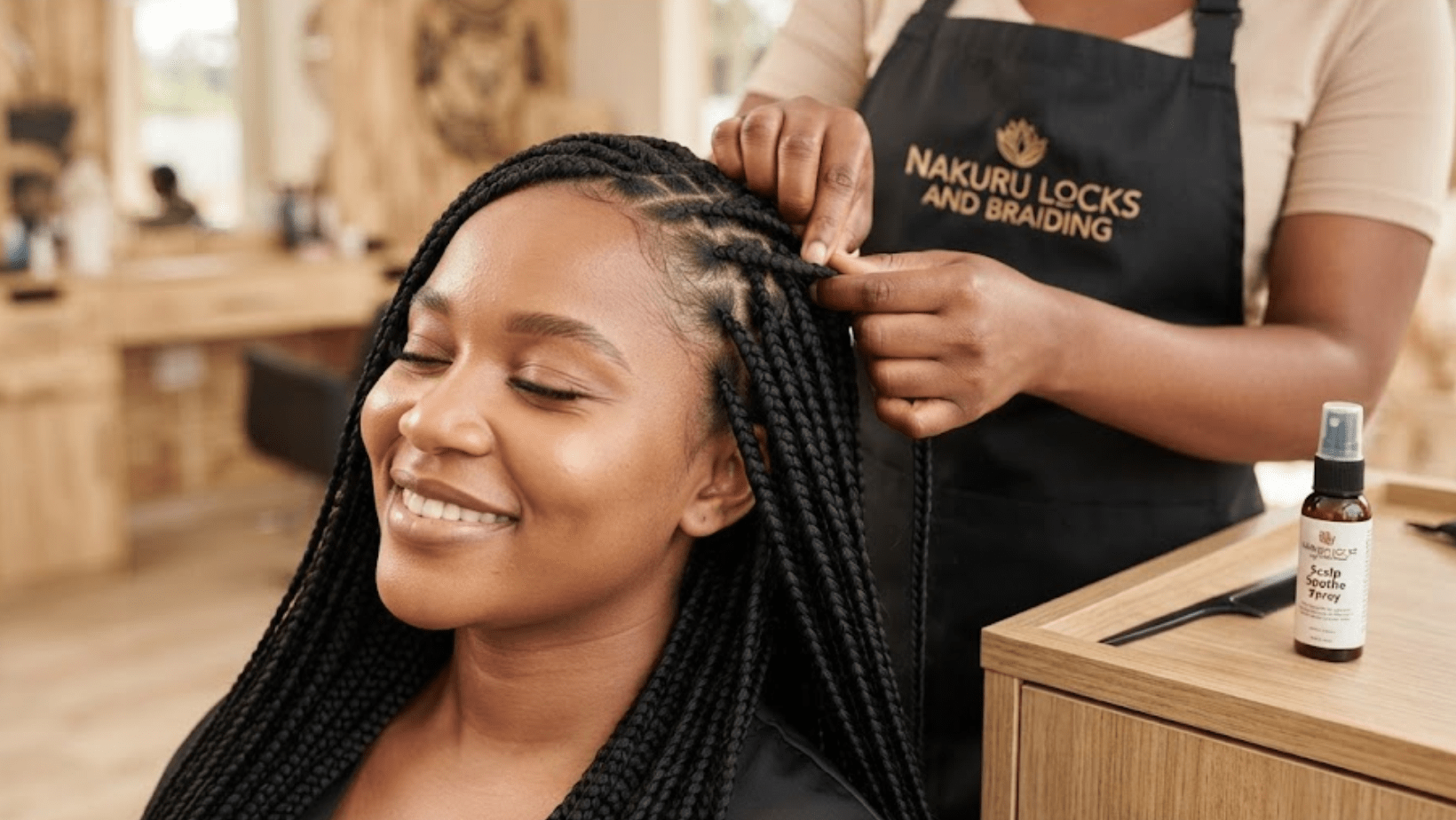
How to Loosen Tight Braids Safely: Instant Home Remedies and Overnight Relief
You leave the salon feeling polished, but by bedtime, every braid seems to pull at your scalp. The style may look beautiful, yet the throbbing around your temples, tight cornrows, or tender hairline can make sleeping difficult.
At Nakuru Locks and Braiding, we believe a protective hairstyle should protect your hair—not cause ongoing pain. This guide explains how to loosen tight braids instantly, how to sleep with tight braids, which natural remedies may help overnight, and when tight braids should be removed rather than adjusted.
Important: Pain, stinging, scalp tenting, crusts, bumps, or a visibly pulled hairline are warning signs that the style may be causing excessive tension. The American Academy of Dermatology advises changing a hairstyle immediately when these symptoms appear.
Can tight braids kill you overnight?
It is extremely unlikely that tight braids alone would kill a healthy person overnight. However, very tight or heavy braids can cause significant scalp pain, skin irritation, headaches, hair breakage, and traction alopecia—a type of hair loss caused by repeated pulling on the follicles.
The more realistic concern is not sudden death but damage that worsens while you sleep. Sleeping in a high ponytail, bun, or tightly gathered braids adds extra tension to the roots. Continuous pulling can eventually cause thinning around the temples, forehead, edges, or nape. In advanced cases, traction-related hair loss may become permanent.
Seek urgent medical help if tight braids are accompanied by severe swelling, facial swelling, breathing difficulty, fainting, a serious allergic reaction, fever, or rapidly worsening pain. Otherwise, remove or loosen the source of tension as soon as possible and arrange medical advice if symptoms persist.

Signs your braids are too tight
Your braids may be too tight if you notice:
-
Persistent pain rather than mild installation tenderness.
-
Stinging, burning, throbbing, or a tight headache.
-
Redness, bumps, pimples, pustules, or crusts.
-
Hairline skin that appears raised or “tented.”
-
Difficulty moving your forehead or scalp comfortably.
-
Broken hairs, thinning edges, or a receding hairline.
The simplest test is this: if the hairstyle hurts, it is too tight. Tight cornrows, loc styles, extensions, and braided updos can all create traction when they continuously pull on the scalp.
How to Loosen Tight Braids Instantly
The safest approach is to begin with moisture, warmth, and gentle movement. Do not yank the braid, pull the extension hair, or use scissors near your natural hair.
1. Release the hairstyle
If your braids are tied into a bun, ponytail, half-up style, or high puff, let them hang freely. Do not sleep with tight braids pulled upward because the added weight places more stress on the hairline.
If only a few braids are painful, separate them from the rest and leave them loose. Pay particular attention to the temples, front hairline, and nape, which are often more sensitive.
2. Apply a warm, damp towel
A warm towel is one of the simplest home remedies for tight braids.
1. Soak a clean towel in comfortably warm water.
2. Wring it out so it is damp rather than dripping.
3. Place it over the tightest areas for 10–15 minutes.
4. Rewarm the towel if necessary.
5. Gently massage the scalp with your fingertips afterward.
Use warm—not scalding—water. Excessive heat can irritate the scalp or burn the skin. A warm towel may soften the hair at the roots and make the braids feel less rigid, but it cannot correct a braid that has been attached under excessive tension.
3. Use a light conditioning spray
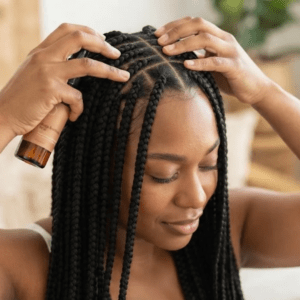
A conditioning spray can add moisture and slip around the roots. Apply it sparingly to the scalp and braid bases, especially where the braids feel tight.
You can use:
-
A commercial braid spray.
-
A lightweight leave-in conditioner diluted according to its label.
-
A simple mist of clean water followed by a small amount of leave-in conditioner.
Allow the product to sit for several minutes. Then gently move the braid from side to side at the root. Avoid saturating the hair, since excessive moisture can create frizz, odor, or slippage.
4. Massage the scalp gently
Use the pads of your fingers, not your fingernails. Massage in small circular movements around—not directly against—the most painful areas.
Stop if the massage increases pain, pulls the braid, or causes bleeding. A massage may temporarily improve comfort, but it should not be used to force a tight braid to remain in place.
5. Gently loosen the braid base
For individual braids, hold the braid close to the root to prevent pulling on the natural hair. Use a clean pencil, the rounded end of a rat-tail comb, or another smooth tool to gently lift the braid at its base.
Move the tool slightly from side to side. Do not push it sharply into the scalp or twist aggressively. This method may create a little space at the braid base without completely undoing the style, but it is unsuitable when the scalp is swollen, broken, or very painful.
A clean tool is essential. Dirty tools can transfer bacteria to irritated skin.
Natural Remedies for Tight Braids
Many people search for how to loosen tight braids instantly naturally. Natural methods can improve comfort, but “natural” does not automatically mean safe or effective.
Warm water
Warm water can soften the outer hair and make the braid feel less stiff. Use a warm damp towel or let comfortably warm shower water run over the braids briefly. Avoid very hot water and do not scrub the scalp.
Diluted leave-in conditioner
A small amount of diluted leave-in conditioner can provide slip at the roots. Test the product on a small area first, particularly if your scalp is sensitive.
Lightweight oil
A few drops of a light oil, such as jojoba or olive oil, may reduce friction during a gentle scalp massage. Apply only a small amount. Heavy oiling can cause buildup and does not remove the underlying tension.
Do not apply undiluted essential oils directly to the scalp. Tea tree, peppermint, lavender, and similar oils can cause irritation or allergic reactions. If you use an essential-oil product, follow the manufacturer’s dilution instructions and stop if burning or itching develops.
Steam
Warm humidity may soften the braid surface and improve comfort. A warm shower can provide gentle steam, but avoid leaning over boiling water. Steam burns can be serious, and steam will not make an excessively tight installation safe.
How to Loosen Tight Braids Overnight Naturally
If the discomfort is mild and there are no warning signs, you can try a gentle overnight routine.
Overnight routine
1. Remove any tight ponytail, bun, clips, or bands.
2. Lightly mist the roots with water or a conditioning spray.
3. Place a warm, damp towel over the tight areas for 10–15 minutes.
4. Gently massage the scalp with your fingertips.
5. Leave the braids hanging loose.
6. Sleep on a satin or silk pillowcase, or wear a loose satin bonnet.
7. Avoid wrapping the braids tightly or tying them above your head.
Do not expect tight braids to become completely loose overnight. Moisture and warmth may reduce stiffness and discomfort, but they cannot reverse excessive pulling at the follicle.
If you still have pain when lying down, wake with a headache, or notice increased tenderness in the morning, do not continue wearing the style simply because it looks intact. Ask a professional stylist to loosen the affected braids or remove the style.
How to Sleep With Tight Braids
The safest answer to “how to sleep with tight braids” is to reduce tension before going to bed.
-
Keep braids down rather than in a bun or high ponytail.
-
Do not use tight elastic bands at the roots.
-
Avoid sleeping in a head wrap that compresses the hairline.
-
Use a satin or silk pillowcase to reduce friction.
-
Sleep on your back or side if one area is especially tender.
-
Do not place heavy braids above your head.
-
If the braids remain painful, remove or loosen them before sleeping.
A satin bonnet may protect the hairstyle from friction, but it does not make a tight style safe. The bonnet should fit loosely and should not press against painful roots.
How to Loosen Tight Cornrows
Cornrows can feel especially tight because the hair is attached close to the scalp in continuous rows. Do not pull across the row or drag a comb underneath it.
Try this method:
1. Remove any hair ties, beads, cuffs, or accessories adding weight.
2. Spray a small amount of water or braid spray along the tight row.
3. Apply a warm, damp towel for 10 minutes.
4. Use your fingertips to press gently beside the cornrow.
5. If appropriate, lift the cornrow slightly with the rounded end of a clean tool.
6. Leave the cornrows loose and uncovered afterward.
If the cornrow causes stinging, bumps, scalp tenting, or visible pulling, do not keep manipulating it. The safest option may be to undo that row or remove the entire style.
Cornrows should not be so tight that the scalp looks raised between sections. The AAD lists cornrows and tightly braided hair among styles that can contribute to traction alopecia when they pull continuously.
Spray to Loosen Tight Braids
A braid spray may reduce dryness, itching, and friction, but it cannot magically undo a tight braid. Choose a lightweight product designed for braided or natural hair.
Simple conditioning mist
You can make a basic spray by combining:
-
Three parts clean water.
-
One part lightweight leave-in conditioner.
Shake before use and spray lightly at the roots. Prepare a small amount, keep it clean, and discard it if it changes smell, color, or texture.
Avoid adding many ingredients to a homemade spray. Oils, herbs, fragrances, and essential oils may irritate sensitive skin or make the mixture spoil faster. If you have eczema, allergies, sores, or an irritated scalp, use a plain product or ask a healthcare professional for advice.
What to avoid
Avoid sprays containing ingredients that cause burning, excessive cooling, or itching. A tingling sensation is not proof that a product is working. Do not spray alcohol-heavy products onto broken or inflamed skin.
How to Loosen Braids With Hot Water
Hot water is often mentioned as a quick remedy, but it must be used carefully.
Warm water can soften synthetic hair and relax the feel of a braid. However, hot water can burn the scalp, especially when the braids are close to the skin. It can also make synthetic extension hair dangerously hot and cause discomfort around the ears, forehead, and neck.
A safer method is:
1. Use comfortably warm water, never boiling water.
2. Wet a clean towel and wring it out.
3. Apply the towel to the braid roots for a few minutes.
5. Check the temperature on your inner wrist first.
6. Keep the towel away from the eyes and face.
Stop immediately if the scalp feels hot, burning, or irritated.
Do not pour hot water directly over the scalp at home. If the ends were dipped in hot water during installation, that process should be performed by a trained stylist who can protect the scalp and skin.
How to Loosen Braids Without Messing Them Up
If the style is otherwise healthy and you want to preserve it, work gradually.
-
Start with only the painful braids.
-
Loosen the roots rather than pulling the length.
-
Use moisture and warmth before manipulating the braid.
-
Hold each braid near the base while moving it gently.
-
Remove heavy accessories first.
-
Avoid combing, brushing, or unraveling the braid unnecessarily.
-
Do not repeatedly tighten the hair after loosening it.
-
If the braid remains painful, prioritize scalp health over keeping the style intact.
Sometimes preserving the appearance of the hairstyle requires removing only a few front braids or cornrows. A professional stylist may be able to reinstall those sections with wider parts and less tension.
When to Remove Tight Braids
Home remedies are not enough when the scalp is being injured. Remove the braids, or have a professional remove them, if you experience:
-
Pain that does not improve after gentle loosening.
-
Stinging, burning, or throbbing.
-
Scabs, crusts, sores, or bleeding.
-
Pus-filled bumps or significant swelling.
-
A receding or visibly thinned hairline.
-
Hair coming out from the roots.
-
Raised or tented scalp between braids.
-
Severe headache or pain around the eyes and temples.
The AAD notes that prolonged pulling can lead to shiny bald skin where hair may no longer grow back. Early action gives the hair follicles a better chance of recovery.
The NHS also advises seeking medical advice if you are worried about hair loss, because hair loss can have several causes and should not automatically be attributed to braids.
Prevention at Your Next Appointment
The best way to loosen tight braids is to prevent excessive tension during installation.
Before your appointment:
-
Tell the stylist immediately if a section hurts.
-
Ask for a low-tension installation.
-
Choose lighter or shorter extensions.
-
Avoid very small braids on fragile edges.
-
Request wider parts around the temples and hairline.
-
Avoid a tight updo immediately after installation.
-
Give your scalp a break between protective styles.
-
Do not keep braids longer than recommended for your hair and scalp.
At Nakuru Locks and Braiding, protective styling should balance beauty, comfort, and hair health. Knotless braids and feed-in techniques can reduce the concentrated pull created by bulky extension hair when installed correctly. Our protective-style guide emphasizes low tension, lighter styles, scalp access, and timely removal when pain or bumps develop.
For professional advice in Nakuru, visit Nakuru Locks and Braiding at Mt. Sinai Building, Bazaar Road, Nakuru City, or contact the salon by phone or WhatsApp at +254 723 168 188.
Frequently Asked Questions
How do I loosen tight braids instantly at home?
Remove any bun or ponytail, apply a warm damp towel for 10–15 minutes, mist the roots lightly with water or leave-in conditioner, and gently massage the scalp. If the braids remain painful, loosen or remove them rather than repeatedly manipulating the roots.
How do I loosen tight braids overnight naturally?
Use a light conditioning mist, apply gentle warmth, and sleep with the braids hanging loose on a satin pillowcase. Do not tie them into a tight bun or wrap them firmly. Persistent pain means the style should be loosened or removed.
Can I use hot water to loosen braids?
Use warm water rather than hot water. A warm damp towel is safer than pouring hot water directly over the scalp. Hot water can burn the skin and synthetic extension hair.
What is the best spray to loosen tight braids?
A lightweight braid spray or diluted leave-in conditioner can add moisture and slip. Spray lightly at the roots and avoid products that burn, sting, or irritate the scalp.
Can tight braids kill you overnight?
Tight braids are not generally expected to cause death overnight, but they can cause scalp injury, severe pain, and traction-related hair loss. Seek urgent care for severe swelling, breathing problems, fainting, or signs of a serious allergic reaction.
How can I loosen braids without messing them up?
Loosen only the roots of painful braids using moisture, warmth, and gentle side-to-side movement. Hold the braid near its base, avoid pulling the length, and remove only the affected sections if necessary.
How do I loosen tight cornrows?
Remove accessories, mist the row lightly, apply a warm towel, and gently lift the cornrow at the base with your fingertips or a clean rounded tool. If you notice scalp tenting, sores, bumps, or persistent pain, undo the cornrow.
Should I take painkillers for tight braids?
Pain medicine may mask discomfort without correcting the tension. It should not be used to keep wearing a hairstyle that hurts. Address the cause by loosening or removing the braids and seek medical advice when needed.
What do people on Reddit recommend for tight braids?
Online discussions commonly mention warm towels, braid spray, diluted conditioner, and removing tight updos. These are personal experiences rather than medical guidance, so use caution and prioritize established warning signs such as pain, stinging, bumps, crusts, and hairline thinning.
How long should tight braids hurt?
A hairstyle should not cause ongoing or increasing pain. Mild tenderness may occur after installation, but persistent pain, stinging, bumps, or a pulled hairline means the style should be changed promptly.
Related Articles from Nakuru Locks and Braiding
References
-
American Academy of Dermatology, Hairstyles that pull can lead to hair loss.
-
NHS, Hair loss.
-
Journal review on traction alopecia and hairstyle-related tension.
Nakuru Locks and Braiding
Mt. Sinai Building, Bazaar Road, Nakuru City, Kenya
Phone/WhatsApp: +254 723 168 188
Leave a Reply