

Few hairstyles carry as much history as Rasta locs. They have been a spiritual symbol, a political statement, a fashion trend, and an everyday natural hair choice, sometimes all at once. At Nakuru Locks and Braiding, we see this every week. One client wants classic Rasta locs because of faith or heritage. Another wants a clean, low-maintenance style for work. A third simply wants to stop fighting her natural texture and let it grow.
This guide covers everything people search for about Rasta hairstyles: what they mean, how they differ from dreadlocks, the best Rasta locs styles for men, women, short hair and natural hair, and how to keep them healthy.

What Are Rasta Locs?
Rasta locs are locs worn in a way inspired by Rastafari culture and spirituality. They are usually formed by allowing natural Afro-textured hair to lock over time, although modern clients may also choose neat, sectioned starter locs, crochet locs, or artificial locs that resemble the classic Rasta look.
The word “locs” refers to hair that has been encouraged to mat, coil, and fuse into rope-like strands. “Dreadlocks” is the older, more widely known term, but many people today prefer locs because it is more neutral and avoids the negative history associated with the word “dread.”
Rasta locs can be:
-
Free-form and naturally formed
-
Neatly parted and palm-rolled
-
Crochet-maintained for definition
-
Styled in buns, ponytails, updos, or left hanging
-
Worn long, medium, short, thick, thin, colored, or accessorized
At Nakuru Locks and Braiding, we help clients choose between a traditional Rasta-inspired look and a cleaner, more uniform loc pattern depending on their hair texture, lifestyle, and personal preference.
Rasta vs. Dreadlocks: Are They the Same?
This is one of the most common questions clients ask: Are dreadlocks and Rasta the same?
The short answer is no—but they are closely connected.
|
Term |
Meaning | Cultural connection |
|---|---|---|
|
Dreadlocks |
A general term for matted or locked hair; historically associated with Rastafari | Strongly linked to Rastafari, reggae culture, and Black identity |
|
Locs |
A broader, often preferred modern term for locked hair | Used across many cultures and styling methods |
|
Rasta locs |
Locs worn with Rastafari cultural or spiritual inspiration | Connected to Rastafari beliefs, African identity, and resistance to oppression |
|
Traditional locs |
Locs created through sectioning, twisting, palm-rolling, interlocking, or crochet maintenance | May or may not have a Rastafari spiritual meaning |
|
Faux or crochet locs |
Temporary loc-like styles made with extensions | Fashion and protective styling rather than a permanent loc journey |
Dreadlocks have appeared in many cultures across history, but the modern global popularity of the style was strongly shaped by Rastafari and reggae music, especially through artists such as Bob Marley. Therefore, all Rasta locs can be called dreadlocks or locs, but not every person with dreadlocks is Rasta.
Why Do Rastas Wear Locs?
Rastas wear locs for spiritual, cultural, historical, and political reasons. Rastafari developed in Jamaica in the 1930s and combines African-centered consciousness, biblical interpretation, and resistance to colonial oppression.
For many Rastas, locs represent:
-
A spiritual vow: Some Rastas connect locs to biblical Nazarite teachings, which discourage cutting the hair during a period of separation or devotion.
-
African identity: Locs are viewed as a way to reconnect with African heritage and reject European beauty standards.
-
The Lion of Judah: Rastas often associate locs with the mane of the Lion of Judah, a major symbol connected to Haile Selassie I.
-
Resistance and liberation: Locs became a visible symbol of resistance to racism, colonialism, and social conformity.
-
Natural living: Rastafari “livity” encourages a balanced, natural way of life, and locs reflect an acceptance of natural hair in its uncombed, uncut state.
It is important to respect that Rasta locs can carry deep religious meaning. A person may wear locs simply because they love the style, but it is helpful to understand the heritage behind the look.
Classic Rasta Locs
Classic Rasta locs usually refer to natural, free-flowing locs that are allowed to mature with minimal manipulation. They may look slightly organic rather than perfectly uniform, with visible roots, natural frizz, and varied thickness.
Classic Rasta locs often involve:
-
Allowing hair to lock naturally or with light palm-rolling
-
Avoiding frequent combing
- Keeping the hair clean and moisturized
-
Letting locs grow without trimming
-
Wearing them loose, tied back, or covered with a wrap or tam
This style suits clients who want an authentic, low-manipulation loc journey. However, “low manipulation” does not mean “no care.” Clean scalp, moisture, separation, and professional maintenance still matter.
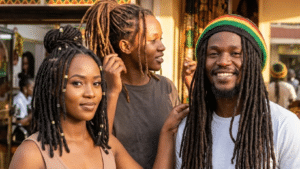
Rasta Locs Styles for Men
Rasta locs styles for men range from bold and free-form to sharp, groomed, and professional. The best choice depends on hair length, face shape, occupation, and how much maintenance you want.
Popular Rasta hairstyles for men include:
-
Classic shoulder-length Rasta locs: A timeless, natural look with medium to thick locs.
-
Free-form Rasta locs: Hair locks with minimal sectioning for an organic, rugged appearance.
-
Neat Rasta locs with clean parts: Uniform sections and defined roots for a polished finish.
-
Short Rasta locs: Ideal for men beginning their loc journey or preferring a low-profile style.
-
Rasta locs with a taper or fade: Locs on top with faded or tapered sides for a modern barbering look.
-
Half-up Rasta ponytail: Practical for work, sports, or hot weather.
-
High Rasta bun or top knot: Keeps longer locs off the neck while showing length.
-
Barrel roll locs: Rolled locs create a sculpted crown effect, popular for events and photos.
-
Rasta locs with beads or cuffs: Small accessories add personality without changing the loc structure.
- Colored Rasta tips: Subtle burgundy, blonde, honey, or red tones can add dimension.
For men, the most important detail is tension. Locs should never be installed or retwisted so tightly that they cause pain, bumps, or hairline thinning. Tight hairstyles can contribute to traction alopecia, so comfortable tension and regular scalp checks are essential.
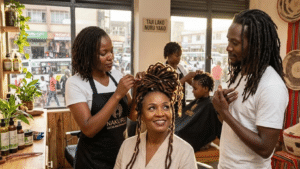
Rasta Locs Styles for Females and Ladies
Rasta locs styles for females offer endless versatility. Whether you have a TWA, shoulder-length natural hair, or long mature locs, there is a Rasta-inspired style that can suit your face shape and lifestyle.
Beautiful Rasta locs styles for ladies include:
-
Classic free-hanging Rasta locs: Simple, elegant, and easy to personalize.
-
Rasta locs with curly tips: Adds softness and movement.
-
Goddess Rasta locs: Wavy or curly extensions blended into locs for a romantic finish.
-
Butterfly Rasta locs: Soft, textured loops create volume and a boho appearance.
-
Rasta locs bob: A chic, shorter option that frames the face.
-
Rasta locs ponytail: Sleek, playful, and perfect for active days.
-
Rasta locs bun: A protective and elegant option for work or formal occasions.
-
Half-up, half-down Rasta locs: A balanced everyday style.
-
Rasta locs with beads, shells, or cuffs: Adds cultural flair and individuality.
-
Rasta locs updo: Twists, rolls, and pinned sections create a regal look.
-
Rasta locs with shaved sides: Bold, edgy, and low-maintenance around the perimeter.
-
Colored Rasta locs: Burgundy, auburn, caramel, blonde, or honey highlights.
For ladies with natural hair, Rasta locs can be started on virgin natural hair, transitioning hair, or previously relaxed hair once the relaxed ends are cut or grown out. Our stylists assess hair density, scalp condition, and desired loc size before recommending a sectioning pattern.
Rasta Locs Styles for Short Hair
You do not need long hair to begin Rasta locs. Rasta locs for short hair can look neat, stylish, and full of personality from the very first installation.
Great short Rasta loc options include:
-
Short starter locs: Small, neat sections that begin the long-term loc journey.
-
Two-strand twist starter locs: A defined beginning method for coily and kinky textures.
-
Comb-coil starter locs: Ideal for shorter natural hair with a strong coil pattern.
-
Short crochet Rasta locs: Extensions create instant length and fullness.
-
Short faux locs bob: A removable protective style with a mature loc appearance.
-
Tapered Rasta locs: Shorter sides with slightly longer locs on top.
-
Mini Rasta locs: Small locs that offer flexibility as hair grows.
-
Rasta Bantu knots: Short locs can be twisted into knots for a bold protective look.
-
Flat-twisted short locs: Adds shape and keeps the hairline comfortable.
Short locs require gentle handling because the roots are still developing. Avoid excessive product, tight styling, and frequent pulling. A satin scarf, bonnet, or pillowcase helps reduce friction while you sleep.
Rasta Hairstyles for Natural Hair
Rasta hairstyles for natural hair celebrate coils, kinks, and texture rather than hiding them. Natural hair can be started as locs through several methods, including:
-
Free-forming: Hair locks with little to no parting or product.
-
Twist and rip: Sections are gently separated and encouraged to lock.
-
Palm rolling: Small sections are rolled between the palms to encourage cylindrical locs.
-
Two-strand twists: Twists are maintained until they fuse into locs.
-
Comb coils: Great for shorter natural hair and defined starter locs.
-
Interlocking: A tool-based maintenance method that pulls new growth through the base of the loc.
-
Crochet maintenance: A crochet hook is used carefully to tidy loose hair and maintain the loc shape.
Natural hair is beautiful, but it can also be prone to dryness. Dermatology guidance for curly hair recommends moisturizing regularly, cleansing the scalp when needed, and avoiding excessive heat or rough handling.
Rasta Locs Crochet: What It Means
Rasta locs crochet usually refers to one of two things:
1. Crochet maintenance on natural locs: A loctician uses a crochet tool to pull loose hairs into the loc, tidy frizz, and reinforce the loc structure.
2. Crochet faux locs: Synthetic or human hair extensions are crocheted into cornrows or individual braids to create the appearance of locs without committing to a permanent loc journey.
Crochet faux locs are popular because they provide instant length, volume, and a mature-loc appearance. They can be installed in a single salon session and later removed. At Nakuru Locks and Braiding, artificial locs are designed to be removable while protecting the natural hair underneath.
However, crochet locs should never feel painful. A skilled stylist uses controlled tension, protects the hairline, and avoids overloading fine or fragile edges. If you experience persistent pain, bumps, or thinning, the style should be loosened or removed and a professional or dermatologist consulted.
Simple Rasta Hairstyles
Not every Rasta hairstyle needs hours of styling. Some of the best looks are also the simplest.
Easy simple Rasta hairstyles include:
-
Loose locs with a satin headwrap
- Low Rasta ponytail
-
High bun
-
Two front locs pinned away from the face
-
Side-parted locs
-
Half-up loc style
-
Barrel roll crown
-
Simple beaded accents
-
Locs tucked into a tam or Rasta hat
-
Short locs with a clean hairline
These styles are ideal for beginners, professionals, students, and anyone who wants a neat look without daily manipulation.
Rasta Hair Care: How to Keep Locs Healthy
Healthy Rasta locs begin with a healthy scalp. Locs do not need to be “dirty” to lock properly—clean locs are stronger, lighter, and more comfortable.
A practical care routine includes:
-
Wash regularly: Use a residue-free shampoo and focus on the scalp. Dermatologists advise applying shampoo to the scalp rather than rubbing it through the length of the hair.
-
Moisturize lightly: Use water-based sprays or lightweight oils; avoid heavy waxes that create buildup.
-
Dry thoroughly: Damp locs held against the scalp for long periods can cause odor or scalp irritation.
-
Protect at night: Use a satin or silk bonnet, scarf, or pillowcase to reduce friction.
-
Retighten on schedule: Many clients benefit from professional maintenance every 4–8 weeks, depending on hair growth and loc size.
-
Avoid excessive tension: Pain, bumps, headaches, or thinning edges are warning signs.
-
Keep the scalp clean: Scalp hygiene is especially important when wearing extensions or long-term protective styles.
How Long Do Rasta Locs Take to Mature?
Loc maturity varies by hair texture, loc size, maintenance method, and lifestyle. Traditional locs may take months to years to fully mature; one loc guide notes that traditional dreadlocks can take roughly 10 months to two years to reach a rooted stage.
Starter locs usually pass through stages such as:
1. Starter stage: Fresh twists, coils, or braids.
2. Budding stage: Hair begins to tangle and swell.
3. Teenage stage: Frizz, swelling, and shifting shape are normal.
4. Mature stage: Locs become firmer, more defined, and easier to style.
5. Rooted stage: Locs are fully formed from root to tip.
Patience is part of the beauty of Rasta locs. With good maintenance, your locs can become healthier, longer, and more versatile over time.
Rasta Hairstyles Pictures: What to Look For
When browsing Rasta hairstyles pictures, look beyond length and color. The best reference photos show:
-
Parting pattern: square, brick, diamond, or organice
-
Loc size: micro, small, medium, large, or chunky
-
Finish: neat, free-form, wavy, curled, or colored
-
Styling: bun, ponytail, updo, barrel rolls, or loose locs
-
Hairline health: comfortable tension and no pulling at the edges
Bring several photos to your consultation. At Nakuru Locks and Braiding, our stylists use reference images to match the look you want while adapting it to your natural hair density and scalp needs.

Choosing the Right Rasta Loc Style
Ask yourself:
-
Do I want permanent natural locs or removable faux locs?
-
Do I prefer a neat, uniform look or a free-form Rasta appearance?
-
How much time can I commit to maintenance?
-
Is my scalp sensitive or prone to buildup?
-
Do I want short, medium, or long locs?
-
Do I need a style suitable for work, school, sports, or formal events?
A consultation is the safest way to choose. Nakuru Locks and Braiding offers free 15-minute consultations in-salon or through WhatsApp video to discuss hair health, style ideas, and personalized quotes.
FAQ: Rasta Locs and Rasta Hairstyles
What is the difference between Rasta and dreadlocks?
Rasta refers to Rastafari culture, spirituality, and identity. Dreadlocks refers to locked hair. Rastas often wear dreadlocks, but not everyone with dreadlocks is Rasta. The term “locs” is often preferred because it is broader and less tied to negative historical language.
Are dreadlocks and Rasta the same?
No. Dreadlocks are a hairstyle; Rastafari is a religious and cultural movement. However, dreadlocks became globally associated with Rastafari through Jamaican Rasta culture and reggae music.
Why do Rastas wear locs?
Rastas wear locs as a sign of faith, African identity, natural living, separation from oppressive systems, and connection to symbols such as the Lion of Judah.
Can I get Rasta locs if I am not Rasta?
Yes. Many people wear Rasta-inspired locs as a hairstyle without following Rastafari beliefs. It is respectful to understand the cultural and spiritual history behind the style.
Can Rasta locs be done on short natural hair?
Yes. Short natural hair can be started as comb coils, two-strand twists, or small starter locs. Crochet faux locs are another option for instant length.
How long do Rasta locs last?
Natural locs are permanent unless cut or combed out. Crochet or faux locs are temporary and commonly last around 8–16 weeks with proper care.
Do Rasta locs damage natural hair?
Locs do not inherently damage hair when installed and maintained correctly. Damage is more likely when locs are too tight, neglected, overloaded with product, or repeatedly styled under tension.
How often should I wash Rasta locs?
Most people can wash every one to two weeks, depending on scalp oil, sweat, product use, and lifestyle. Use a residue-free shampoo and focus on the scalp.
Can men wear Rasta locs?
Absolutely. Rasta locs styles for men include short starter locs, free-form locs, taper cuts, buns, ponytails, barrel rolls, and long classic Rasta locs.
What is the best Rasta hairstyle for ladies?
There is no single best style. Popular choices include classic long locs, loc buns, butterfly locs, goddess locs, loc bobs, ponytails, and beaded Rasta locs.
Book Rasta Locs in Nakuru
Nakuru Locks and Braiding specializes in braiding, locks, artificial dreadlocks, sisterlocks, thread twists, extensions, and scalp treatments.
The salon is located at Mt. Sinai Building, Bazaar Road, Nakuru City, and offers a hygienic environment with sanitized tools and personalized consultations.
To book a Rasta locs installation, retwist, crochet maintenance, or faux locs style, call or WhatsApp 0723 168 188. The salon is open Monday to Saturday from 8:00 AM to 8:00 PM; Sunday appointments are available by booking.
Related Articles from Nakuru Locks and Braiding
References
-
Encyclopaedia Britannica, “Rastafari: History, Beliefs, & Facts.”
-
Encyclopaedia Britannica, “Dreadlocks: Hairstyle, History, Cultural Appropriation.”
-
BBC, “Rastafari at a glance.”
-
BBC, “Rastafari: Worship and customs.”
-
Smithsonian Education, “Dread History: The African Diaspora, Ethiopianism, and Rastafari.”
-
Scientific American, “Locs Represent Resistance for Black People in the U.S.”
-
American Academy of Dermatology, “Tips for healthy hair.”
-
American Academy of Dermatology, “6 curly hair care tips from dermatologists.”
Leave a Reply