
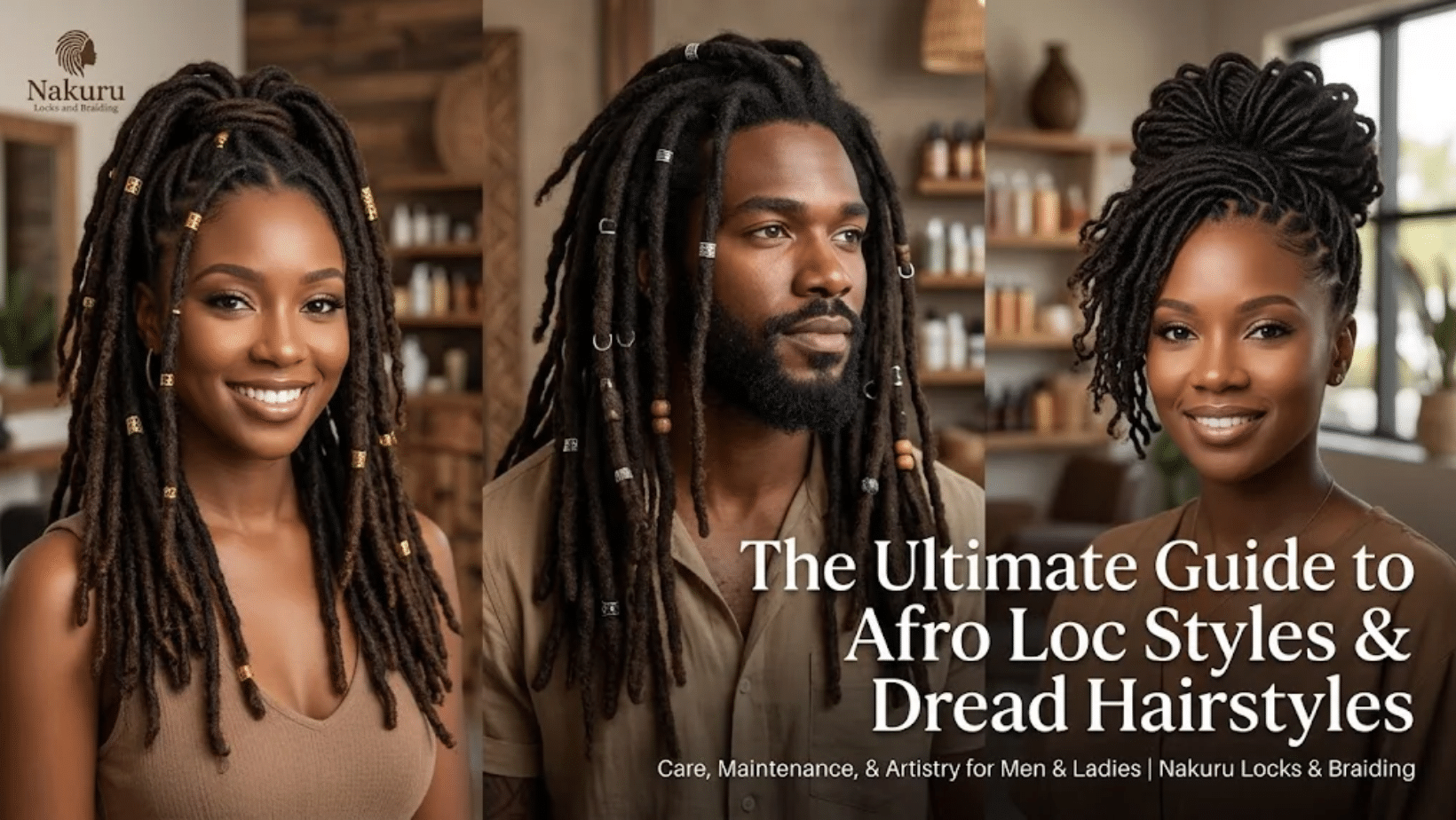
Afro Loc Styles: The Complete Guide to Afro Dread Hairstyles for Ladies and Men
From the red-ochre locs of East African communities to waist-length soft locs on social media, Afro loc styles carry history, identity, and endless creative possibility.
Whether you call them Afro dread hairstyles, Afro locs, dreads, or simply locks, these rope-like strands can be styled for the office, a wedding, the gym, or a bold streetwear look—on Black hair of nearly every length and texture.
At Nakuru Locks and Braiding, locs are more than a service: they are an afrocentric expression of culture, creativity, and pride. This guide explains the major Afro loc styles for ladies and men, how they work on natural Black hair, and how to choose the right look for long or short hair.
What Are Afro Loc Styles?
Afro loc styles are hairstyles created by sectioning, twisting, braiding, crocheting, or allowing Afro-textured hair to mat into rope-like strands called locs or dreadlocks.
The terms overlap, but many people prefer “locs” because “dreadlocks” has painful associations with the transatlantic slave trade, while “locs” is a broader, more neutral term.
Locs can be permanent—grown and maintained on natural hair—or temporary, using synthetic or human-hair extensions installed through braiding, twisting, or crochet. Artificial dreadlocks create the appearance of mature locs without the long-term commitment.
Afro hair’s natural curl pattern makes it especially well suited to locs: coils and kinks interlock readily, helping the hair form durable, defined strands. Traditional locs usually range from roughly 20 to 100 locs per head, depending on hair density and the desired size.
A Global Heritage Behind Afro Dreads
Locs are not a single-country trend. Variations have appeared across Africa, Asia, Europe, and the Americas for millennia, but they are especially closely associated with Black culture and African heritage.
In Africa, communities including the Akan, Fulani, Kikuyu, Maasai, and Wolof have worn different forms of locks.
In Kenya, Maasai warriors have historically worn thin, red-dyed locs as symbols of strength and status, while the Mau Mau uprising of the 1950s is often linked in popular history with locs as a sign of resistance.
The modern word “dreadlocks” is strongly tied to the Rastafari movement, which began in Jamaica in the 1930s. For many Rastafari wearers, locs represent spiritual reverence and resistance to oppression; the style later reached a global audience through reggae music, particularly Bob Marley.
For a global audience, the respectful approach is simple: recognize locs as cultural expression, not merely a fashion trend. Ask your stylist about the meaning behind a style, avoid caricatures, and use inclusive language such as locs, locks, or dreadlocks according to the wearer’s preference.
Afro Loc Styles for Ladies
Afro loc styles for ladies range from soft, romantic faux locs to sleek professional updos and dramatic waist-length dreads. The best choice depends on your hair length, scalp sensitivity, lifestyle, and whether you want a temporary or permanent style.
Soft locs and faux locs
Faux locs and soft locs are temporary Afro dread hairstyles created with extensions. Soft locs use lighter, wrapped or wavy textures for movement and a natural finish, making them one of the most popular choices for ladies.
They suit clients who want the loc look for several weeks without committing to permanent locs. They can be installed at shoulder length, mid-back length, or waist length, and styled in ponytails, buns, or half-up looks.
Butterfly locs
Butterfly locs are a distressed, textured version of faux locs with loose, curly loops along the strand. They create a soft, bohemian effect and are especially flattering for long Afro hair or added extensions..
This style works beautifully as a half-up, half-down look, a high ponytail, or loose shoulder-length locs. Because the texture is intentionally imperfect, butterfly locs also camouflage new growth well during wear.
Goddess locs
Goddess locs combine defined locs with loose curls, usually at the ends or throughout the style. They give volume, elegance, and a feminine finish, making them popular for weddings, holidays, and photoshoots.
For ladies with long natural hair, goddess locs can be installed with layered lengths to frame the face. For shorter hair, crochet extensions add instant fullness and length.
Sisterlocks and micro locs
Sisterlocksare tiny, uniform locs created with a specialized interlocking technique. They resemble fine strands of hair but behave like locs, offering exceptional styling versatility for updos, curls, braids, and sleek professional looks.
Micro locs are similarly small and dense, giving a fuller, hair-like appearance. These styles are ideal for ladies who want locs but prefer a refined, lightweight look rather than chunky dreads.
Traditional loc updos for ladies
Mature natural locs offer countless Afro dread hairstyles for ladies:
-
Crown or halo updo: locs wrapped around the head for a regal, formal finish.
- High ponytail: polished, elongating, and easy for busy days.
-
Low chignon: a timeless option for work, church, or evening events.
-
Side-swept locs: soft framing around the face with dramatic length.
-
Pipe-cleaner curls: locs wrapped on rods or wire to create bouncy ringlets.
-
Double buns or space buns: playful, secure, and youthful.

Afro Dread Hairstyles for Men
Afro dread hairstyles male clients often want clean partings, strong shape, and styles that transition easily from casual to formal. In addition, Afro locs for men can be short and tapered, shoulder-length, or grown long and tied into buns and braids.
Afro Dread Hairstyles for Men (Afro Locs Men)
The search term Afro dread hairstyles male has exploded as men embrace locs as a long-term, low-maintenance style. Here are the most popular choices for Afro locs men.
1. Starter coils. Tight, neat coils on short hair. This is the best beginning for most men and gives a clean, professional look from day one.
2. Two-strand twist locs. Slightly longer than coils, with a defined, textured finish.
3. Loc fade and taper. The sides and back are cut short while the top keeps its locs. A fresh barbering line keeps the style sharp.
4. High-top Afro locs. Locs stand upright on top while the sides are faded. It is a throwback with a modern twist.
5. Shoulder-length locs. Natural, relaxed and versatile. Ideal for men who want to tie hair back for work.
6. Man bun locs. Gathered neatly at the crown, this keeps long locs out of the face.
7. Braided locs with cornrows. The sides or front are braided into straight-back cornrows, with locs flowing from the top or back. This is the best-known version of Afro locs braids for men.
8. Loc undercut. The lower part of the head is shaved while the upper locs are kept long, which keeps the style cool and lightweight.
9. Beard and loc pairing. A well-shaped beard balances thick locs and defines the jawline.
Tip for men: locs start thin and shrink as they tighten. If you want thick, mature locs, be patient through the awkward middle stage. Many men find that month four to month nine is the hardest, and also the point where the biggest transformation begins.
Classic Rasta locs
Classic Rasta-style dreadlocks are rope-like strands formed through locking, twisting, or natural matting. They can be worn free-hanging, tied back, or styled into buns, and they remain one of the most recognizable Afro dread hairstyles worldwide.
Freeform locs
Freeform locs form with minimal manipulation and little structured parting. The result is organic, individual, and lower-maintenance, appealing to men who want their hair to develop its own pattern.
Wicks and barrel locs
Wick locs are thick, chunky locs—sometimes only a few large strands across the whole head. They create a bold, sculptural Afro dread look and are popular in urban Kenyan and diaspora fashion scenes.
Viking or barrel locs are thick, straight-back styles often associated with men’s dread braids. They create a strong silhouette and pair well with tapered sides, line-ups, or undercuts.
Men’s loc braids and updos
Afro locs braids for men involve plaiting mature locs together, either across the scalp or down the length. Popular male styles include:
-
Top knot or man bun: practical for work, sport, and travel.
-
Loc twists or braided updos: polished for weddings and events.
-
Dreadlock mohawk: shaved or tapered sides with a full centre strip.
-
Two-strand twist-out locs: defined texture with a softer finish.
-
Braided loc ponytail: secure, athletic, and stylish.
Afro Loc Styles for Long Hair
Long Afro locs create some of the most striking hairstyles because the length allows volume, movement, and intricate styling. For ladies, waist-length free-hanging locs, braided halos, and low chignons are classic choices; for men, long locs work well in buns, braids, and ponytails.
Long locs also need thoughtful care. Heavy styles can pull at the scalp, so avoid excessively tight ponytails and choose lightweight extensions when adding length. Soft hair ties without metal parts help reduce breakage and tension.
For instant long locs without waiting years, dreadlocks with extensions can be attached through braiding, twisting, or crochet. Extensions may use Kanekalon, wool, or human-hair-like fibres, and can be blended to match your natural loc colour and thickness.
Afro Loc Styles for Black Hair
Afro loc styles are especially compatible with Black hair because tightly coiled textures mesh and lock efficiently. Still, “Black hair” is not one texture: 4A–4C coils, looser curls, fine hair, and coarse hair all need slightly different approaches.
Best starting methods
| Method | How it works | Best suited to |
|---|---|---|
|
Comb coils |
Small sections are twisted with a comb or fingers | Short, tightly coiled natural hair |
|
Two-strand twists |
Two sections are wrapped around each other | Medium-length hair and neat, defined beginnings |
|
Braids or plaits |
Hair is braided to establish loc sections | Longer hair or looser curl patterns |
|
Interlocking |
A tool pulls the hair end through the base | Secure root maintenance and long-term locs |
|
Crochet/instant locs |
Hair is crocheted into a mature loc appearance | Clients wanting immediate definition |
Moisture and scalp care
Locs protect the hair from daily manipulation, but the scalp and loc strands still need moisture. A simple LOC method—liquid or leave-in, oil, then cream—helps layer hydration into Afro hair without weighing locs down.
Keep the scalp clean, avoid heavy wax buildup, sleep with a satin or silk covering, and schedule professional maintenance when the roots begin to grow out. Dreadlock reties at Nakuru Locks and Braiding typically take about one to two hours, while full installations vary far more by style and length.
Afro Locs Braids: Hybrid Styles
Afro locs braids combine locs with braiding techniques for added structure and design. A stylist may braid locs into cornrows at the scalp, plait several locs into one thick rope, or blend front braids into hanging locs.
Popular hybrid ideas include:
-
Braided loc ponytail: sleek at the base, full at the ends.
-
Fulani-inspired loc braids: cultural cornrow patterns with hanging locs, done loosely to protect the scalp.
-
Front braid into locs: a face-framing braid transitioning into free locs.
-
Loc mohawk braids: braided sides with a voluminous loc centre.
-
Bohemian loc braids: locs mixed with curls, beads, cuffs, or coloured extensions.
These styles are especially useful for special occasions because they keep long locs controlled while still showing their texture and length.
How to Choose Your Afro Loc Style
Choose your Afro loc style by answering four questions:
1. Temporary or permanent? Faux, soft, butterfly, and goddess locs are temporary; traditional locs, sisterlocks, and freeform locs are long-term commitments.
2. What length do you want? Extensions can create instant length; natural locs require patience as they grow and mature.
3. How much maintenance do you prefer? Freeform locs need less structured upkeep, while sisterlocks and neat traditional locs require regular retightening.
4. What is your daily routine? A high ponytail or bun suits active lifestyles, while loose waist-length locs may need more protection during sleep, workouts, and travel.
For a first loc style, many clients begin with two-strand twists or comb coils, then decide later whether to continue into permanent locs. Those wanting an immediate mature look often choose crochet or faux locs instead.
How to Choose the Right Afro Loc Style for You
Selecting a style is a mix of practical and personal questions:
- Hair length: Short hair suits coils or twists. Medium hair suits two-strand twists or interlocking. Long hair suits crochet or instant locs.
- Lifestyle: Active people and swimmers may prefer smaller, tighter locs. Office workers may prefer neat, medium locs.
- Face shape: Round faces often look good with volume on top. Longer faces suit side-swept or bob locs.
- Maintenance time: Natural locs need regular retightening. Extensions need careful removal and checking.
- Budget: Natural locs cost less over time. Crochet and extension styles cost more up front.
- Workplace or school rules: Check any dress code, and know your rights where protections exist .
A consultation before any installation is the best way to match your style to your hair. Ask your stylist how they will protect your edges.
Afro Loc Care: Expert Maintenance Tips
Healthy locs are the result of consistent, gentle care. Our advice reflects common dermatology guidance on Black hair and scalp health.
1. Washing. Wash every one to two weeks with a residue-free shampoo. Residue and buildup make locs heavy and dull, and can irritate the scalp.
2. Moisture. Use a light, water-based spray or a leave-in followed by a small amount of natural oil such as jojoba or almond. Avoid heavy petroleum, thick waxes and creams that trap lint.
3. Retightening. Most people retighten every four to eight weeks. Over-retightening causes thinning and breakage, so patience is important.
4. Scalp care. Keep your scalp clean and watch for itching, redness, flaking, bumps or tenderness. If symptoms persist, see a dermatologist.
5. Sleep protection. A satin or silk bonnet or scarf reduces friction and lint.
6. Lint and buildup. Avoid wearing locs against fuzzy fabrics, and rinse thoroughly.
7. Avoid heavy chemicals. Bleach, strong dyes and repeated relaxer use on the same hair can damage locs.
Protecting Your Hairline
Beautiful locs should never cost you your hairline. Research on African girls and women has linked certain styling practices, particularly tight styles and traction-heavy hairdressing, with traction alopecia, a form of hair loss caused by repeated pulling on the follicles.
The American Academy of Dermatology also lists tight hairstyles among the causes of this kind of hair loss and recommends giving your hair a break from styles that pull.
Warning signs to take seriously:
- Bumps or small pimples around the hairline
- Pain, burning or tenderness after a style
- Thinning at the temples, nape or edges
- A feeling that your eyebrows are being lifted
If any of these occur, ask your stylist to loosen or remove the style. For ongoing hair loss, consult a qualified dermatologist. This article is general information and not medical advice.
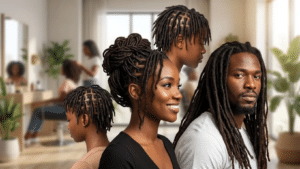
At Nakuru Locks and Braiding, our standard is simple: a style should look good and feel comfortable. We prefer a slightly slower, gentler installation over a tight one that looks sharp on day one and causes damage by month three.
Common Mistakes to Avoid
1. Rushing the process. Locs mature in stages. Starter locs, budding, teenage and mature phases each look different.
2. Washing too little or too much. Both can cause problems.
3. Using heavy products. Buildup is hard to remove.
4. Over-retwisting. More is not better.
5. Choosing the wrong size. Locs too thin may break; too thick may be heavy.
6. Ignoring scalp symptoms.
7. Letting inexperienced stylists handle your first set. The first installation determines the pattern for years
FAQ: Afro Loc Styles and Afro Dread Hairstyles
What are Afro loc styles?
Afro loc styles are loc hairstyles made from, or designed to celebrate, naturally coily and kinky hair. They include natural locs, crochet Afro locs, braided locs, updos, bobs and long loc styles.
What is the difference between Afro locs and Afro dreads?
They describe the same family of styles. “Locs” is the preferred modern term for many wearers, while “dreads” and “dreadlocks” remain widely used in search and everyday speech.
Which Afro loc styles are best for ladies?
Shoulder-length locs, bob locs, half-up styles, loc updos, side-swept locs and curled-end locs are among the most popular. The best option depends on your hair length, face shape and lifestyle.
What are the best Afro dread hairstyles for men?
Starter coils, two-strand twist locs, loc fades, high-top locs, man bun locs and braided-loc designs are popular choices for men.
Are Afro locs good for Black hair?
Yes. The coily texture of Afro hair naturally interlocks, which helps locs form and hold. The key is gentle care, moisture and avoiding excessive tension.
Can I have Afro locs with long hair?
Yes. Long hair can be locked using twists, interlocking or instant methods, or you can add Afro-textured loc extensions. Keep the weight manageable to protect your scalp.
How long does it take for Afro locs to mature?
Most natural locs take roughly 12 to 24 months to mature, though timing varies by hair type and care. Extensions and instant locs give length immediately, but your natural hair underneath still needs time to lock.
How often should I wash Afro locs?
Every one to two weeks is a common routine. Dry or very oily scalps may need adjustments.
Do Afro locs cause hair loss?
Locs themselves do not cause hair loss, but very tight installation, heavy weight, frequent over-tightening or tight updos can contribute to traction-related loss. Always report pain or thinning early.
How much do Afro locs cost?
Prices depend on the method, loc size, hair length and whether extensions are used.
Can I swim or exercise with locs?
Yes. Rinse and dry thoroughly after swimming to prevent odour and buildup, and consider tying locs up during exercise.
Can locs be removed?
Locs can be combed out, but it is a slow process and some shedding is normal. Always consult a professional before taking them down.
Book Afro Locs in Nakuru
Nakuru Locks and Braiding offers braiding, artificial dreadlocks, sisterlocks, thread twists, extensions, and spa services, with stylists experienced in creating afrocentric loc styles for ladies and men.
Whether you want butterfly locs, goddess locs, Viking dread braids, sisterlocks, or a fresh retwist, a consultation helps match the style to your hair length, scalp health, and lifestyle.
Related Articles from Nakuru Locks and Braiding
Sources
-
- Britannica, “Dreadlocks: Hairstyle, History, Cultural Appropriation, & Locs” — history, terminology, African and Rastafari associations.
-
- Byrd, A. D., & Tharps, L. L. (2014). Hair Story: Untangling the Roots of Black Hair in America (revised ed.). St. Martin’s Press.
-
- Khumalo, N. P., Jessop, S., Gumedze, F., & Ehrlich, R. (2008). Determinants of marginal traction alopecia in African girls and women. Journal of the American Academy of Dermatology, 59(3), 432-438.
-
- Khumalo, N. P., Jessop, S., Gumedze, F., & Ehrlich, R. (2007). Hairdressing and the prevalence of scalp disease in African adults. British Journal of Dermatology, 157(5), 981-988.
-
- American Academy of Dermatology Association. Hair loss and hair care guidance for traction alopecia and Black hair (aad.org).
-
- Encyclopaedia Britannica and Wikipedia entries on “Dreadlocks” (history of locked hair across cultures, including Africa and the Mau Mau association).
-
- The CROWN Act (Create a Respectful and Open World for Natural Hair): thecrownact.com.
Leave a Reply